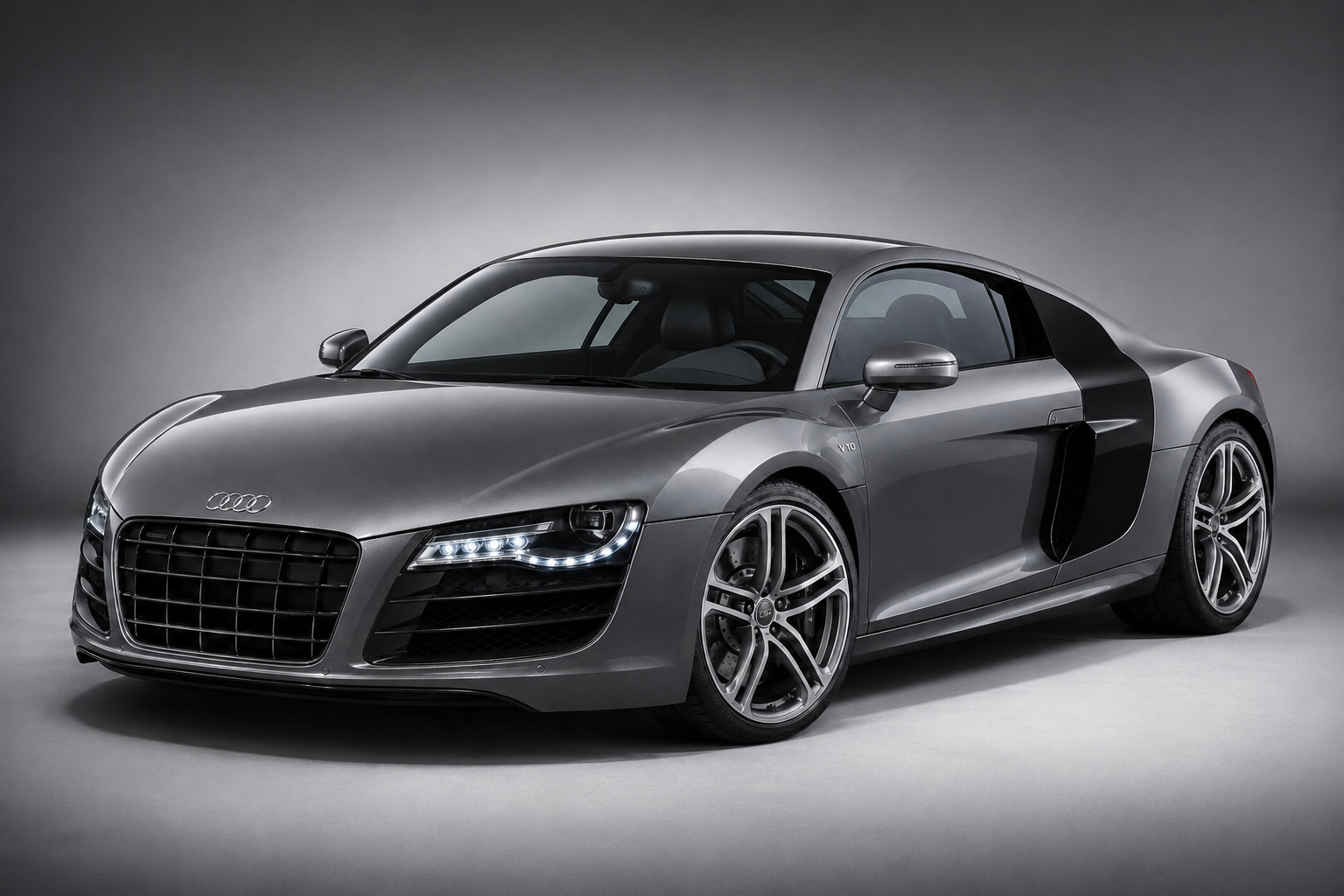
Launched in 2007 with a 4.2-litre naturally-aspirated V8 shared in principle with the RS4 and joined in 2009 by the 5.2-litre V10 derived from the Lamborghini Gallardo, the first-generation Type 42 R8 packaged supercar performance in an aluminium spaceframe (ASF) chassis with quattro all-wheel drive, a gated six-speed manual or single-clutch R tronic automated gearbox, and — for the first time in the segment — genuine everyday usability. The Spyder convertible arrived in 2010; the sharper V10 plus in 2013 alongside the seven-speed S tronic dual-clutch that replaced R tronic; and the range closed in 2014–2015 with the limited R8 LMX, the first production car with laser high-beam headlights.
The Type 42 ran until 2015, when it was replaced by the second-generation Type 4S (a distinct car with a different chassis architecture and no manual option — outside the scope of this guide). It is now widely regarded as the last R8 to combine a naturally-aspirated engine, an open-gate manual gearbox and the original first-generation aluminium spaceframe.
The Type 42 R8 occupies a distinct place in the modern supercar market: a mid-engined, naturally-aspirated supercar that can genuinely be used every day, with Audi build quality, parts supply and dealer support. It is also the only modern supercar to have offered a gated six-speed manual gearbox alongside a naturally-aspirated V8 or V10 — a combination that has become disproportionately collectible since manual production ended. For collectors, the manual coupes — and particularly the V10 plus manual and the limited-run R8 GT and R8 LMX — anchor the long-term narrative.