Car Collector International
Research · Buyer's Guides

Jaguar

10 guides · 1936–2005

Founded by William Lyons on a formula of grace, space and pace at an impossible price, Jaguar delivered two of the most significant sports cars ever made: the XK120, the world's fastest production car in 1948, and the E-type, which Enzo Ferrari reputedly called the most beautiful car in the world. Five Le Mans wins in the 1950s with the C- and D-types built the competition legend; the Mk 2 saloon and XJ6 defined British sporting luxury for a generation. The company is currently undertaking the boldest reinvention in its history — an all-electric relaunch previewed by the Type 00 concept — which leaves the classic catalogue, from XK to E-type to XJS, carrying the marque's identity in the meantime.
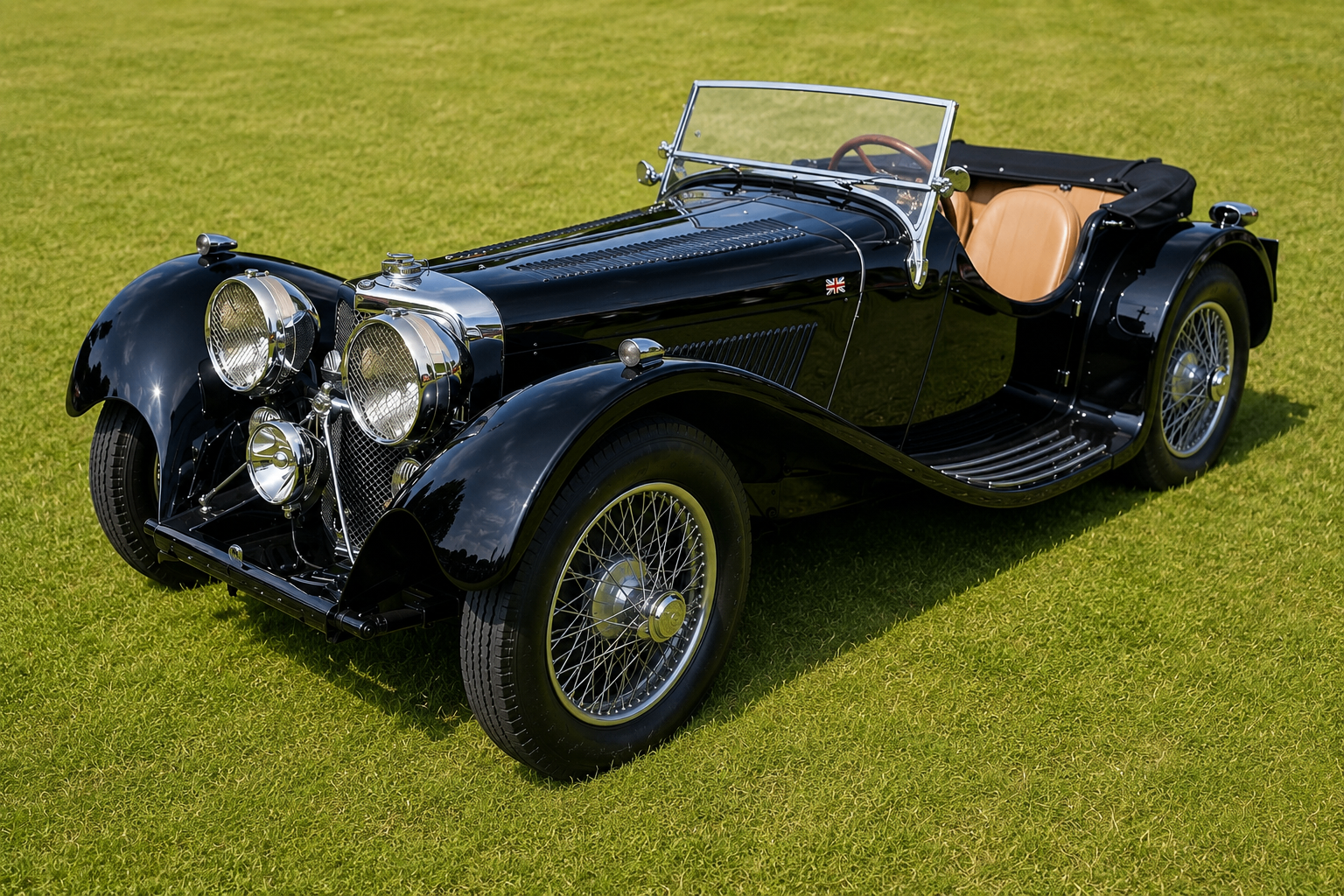
Jaguar SS 100 in black, front three-quarter view on manicured concours lawn showing the twin chrome headlamps, chrome mesh grille with British-flag badge, long louvred bonnet, cutaway doors and chrome wire wheels characteristic of the 1936–1940 short-chassis pre-war Jaguar roadster.
Classic · 1936–1940

Jaguar SS 100

The pre-war Jaguar — a short-chassis two-seat open roadster on a 104-inch wheelbase, built by SS Cars Ltd. of Coventry between 1936 and 1940 in 2½-Litre and (from 1938) 3½-Litre form; the direct forebear of every Jaguar sports car that followed and the definitive British pre-war open sports car.
Open guide →
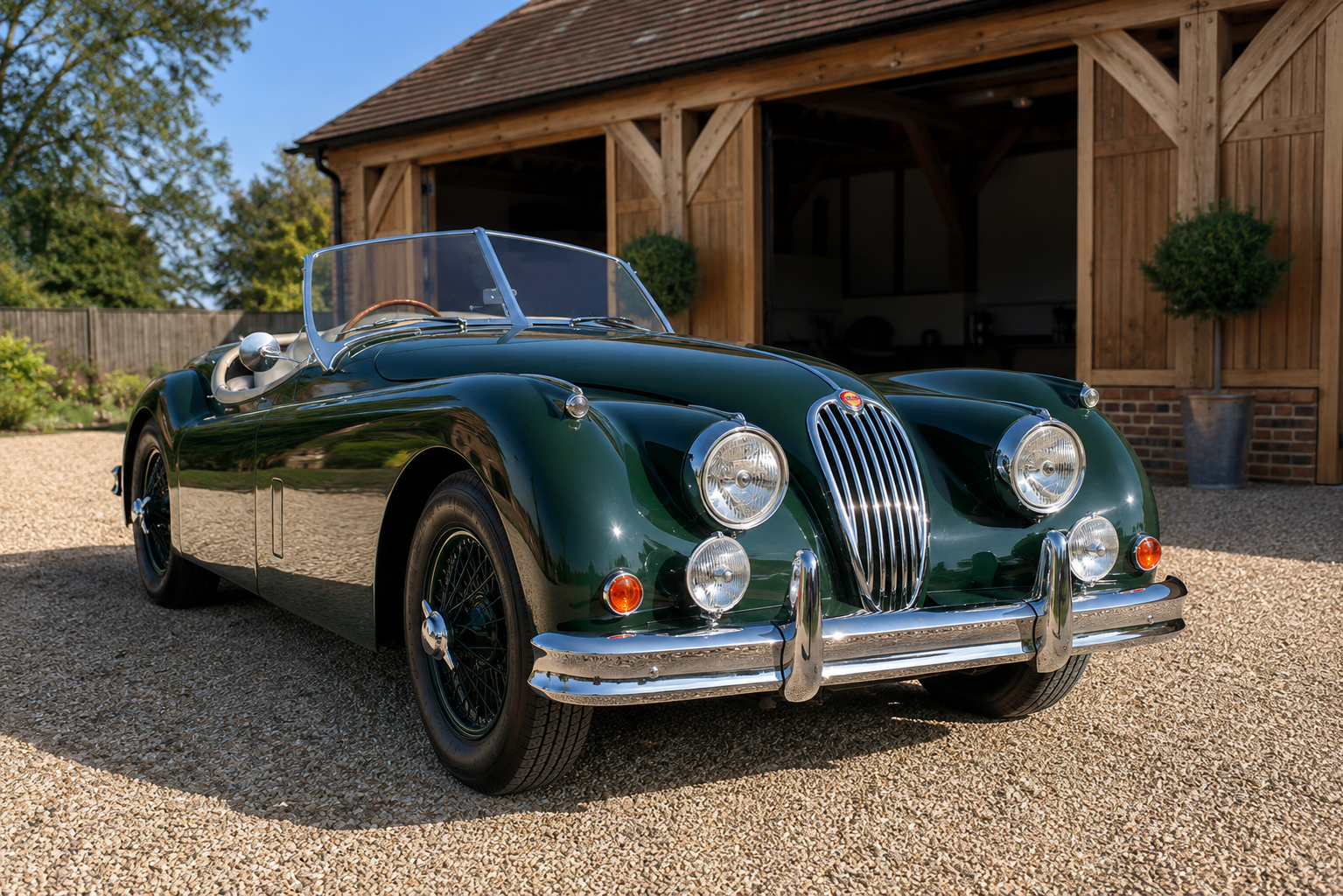
British racing green Jaguar XK roadster with the top down and chrome wire wheels, front three-quarter view parked on gravel in front of a timber-framed barn on a sunny day.
Classic · 1948–1961

Jaguar XK

Jaguar's post-war sports car dynasty — the XK120, XK140 and XK150, built around the twin-cam XK inline-six.
Open guide →
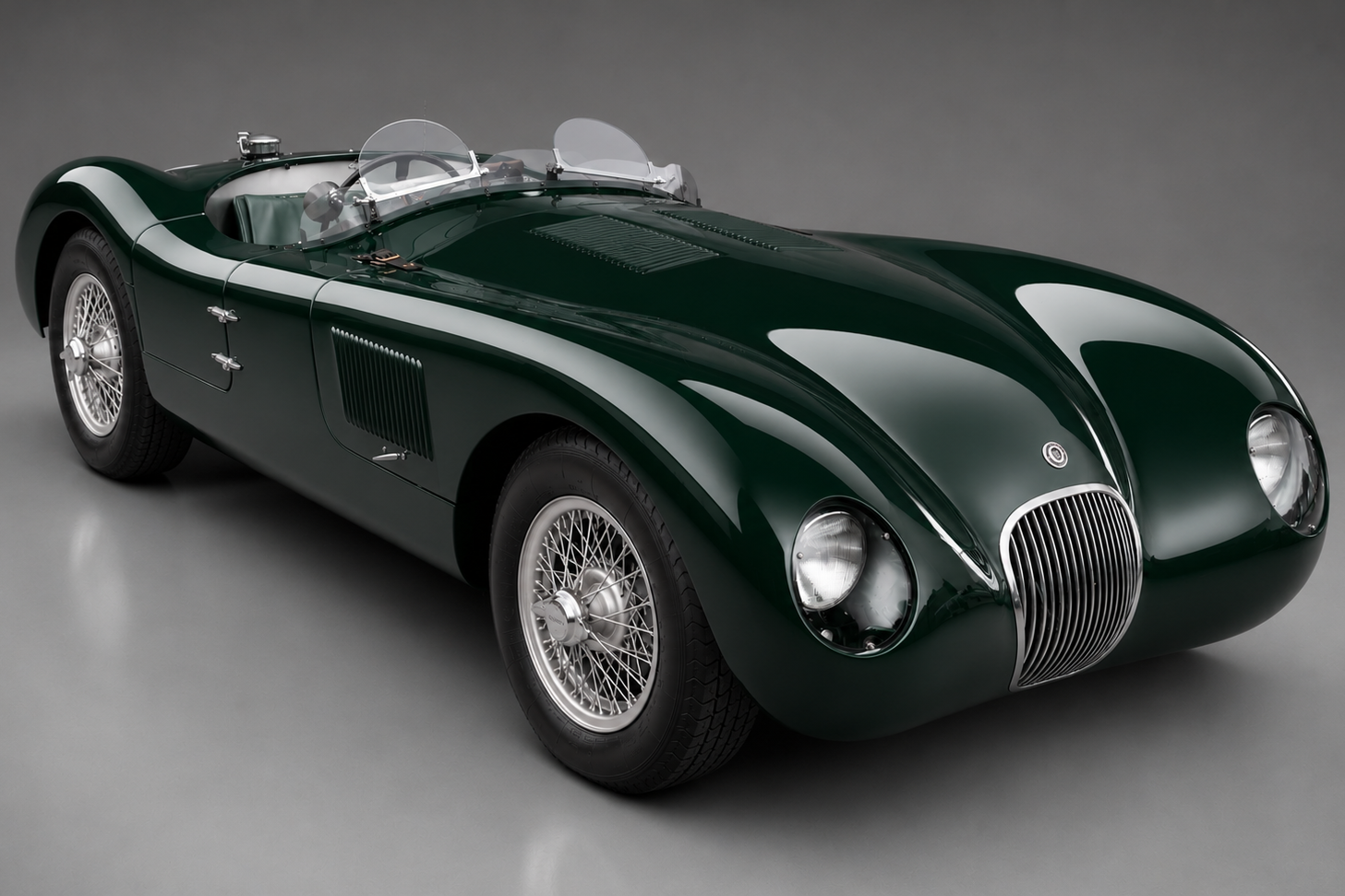
Jaguar C-Type in British Racing Green, front three-quarter studio view on a grey backdrop showing the aluminium body, wire wheels, twin aero-screens and chrome grille.
Classic · 1951–1953

Jaguar C-Type

Jaguar's first purpose-built competition car — two Le Mans wins in three years, and the first car to win the race on disc brakes.
Open guide →
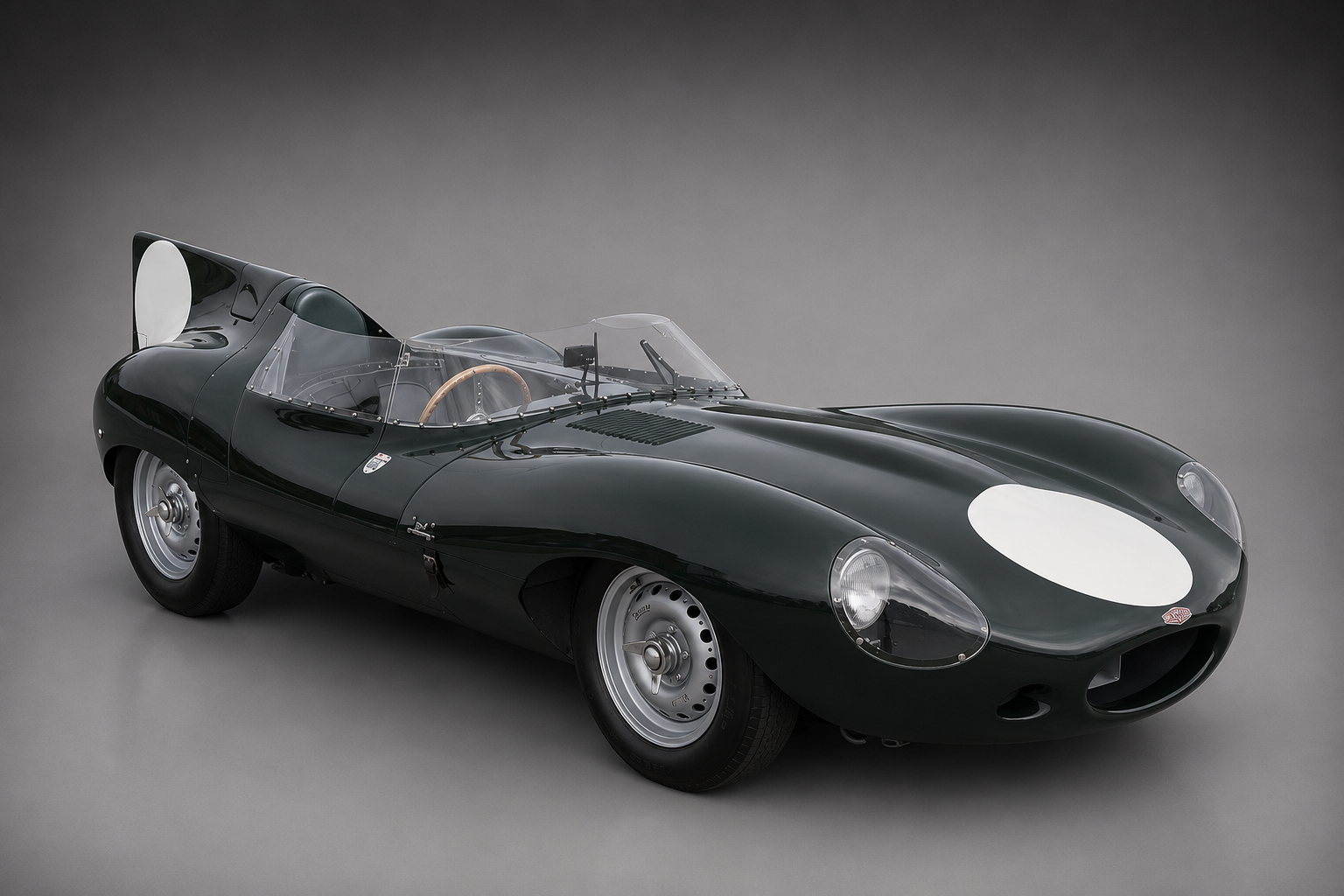
British racing green Jaguar D-Type racing car with tall rear fin and white roundels on the nose and flank, front three-quarter studio view on a plain grey backdrop showing the low aerodynamic bodywork and open cockpit.
Classic · 1954–1957

Jaguar D-Type

Le Mans-winning, monocoque-construction Jaguar racing car — three consecutive Le Mans victories and the basis of the XKSS.
Open guide →
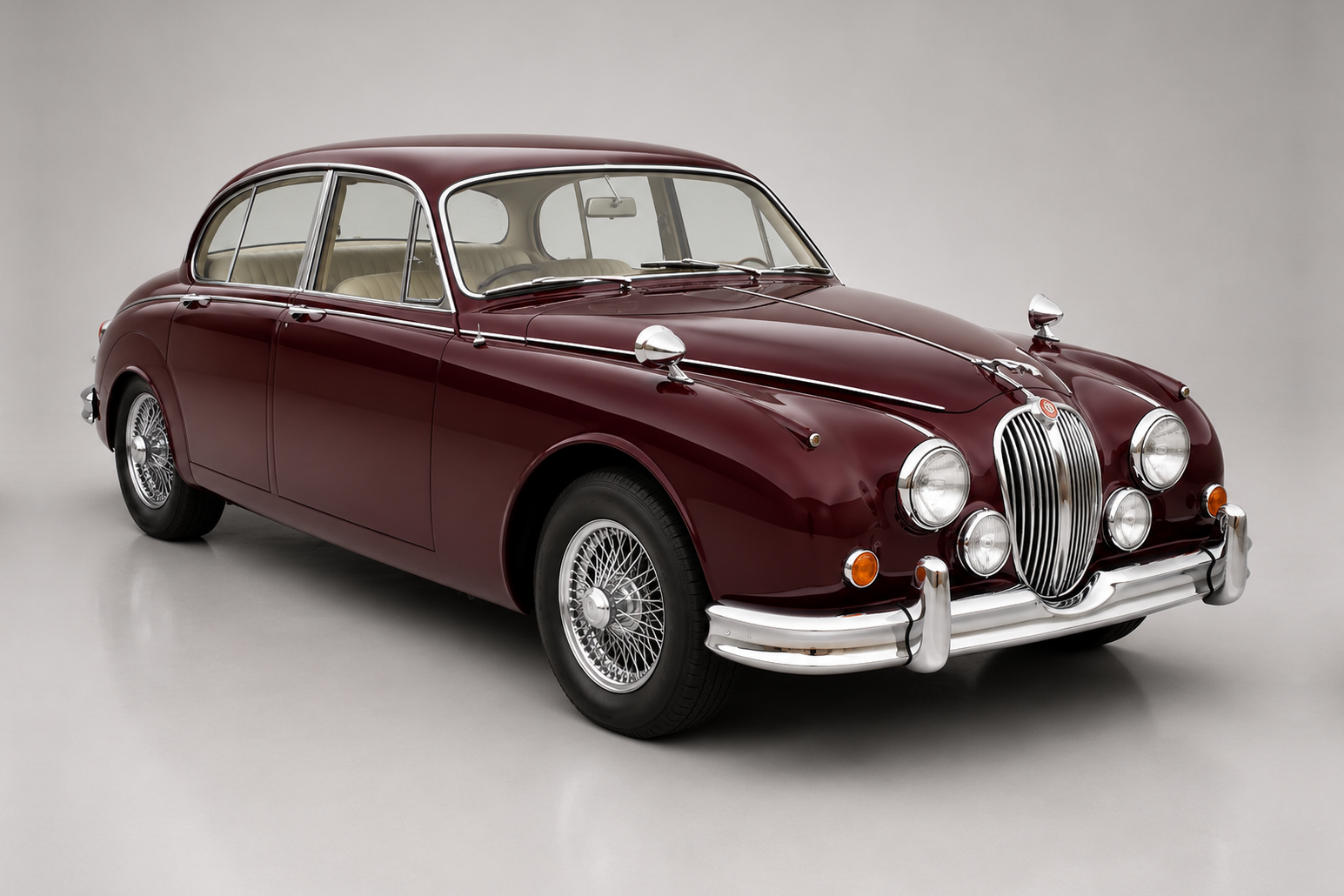
Maroon Jaguar Mk2 saloon photographed in a studio, front three-quarter view showing the chrome vertical-bar grille, twin round headlamps with driving lamps, curved bonnet, wire wheels, chrome bumpers and Lyons-era sports-saloon proportions.
Classic · 1959–1969

Jaguar Mk2 (incl. 240/340)

Lyons' 'grace, pace and space' sports saloon — in 3.8 form, the fastest production saloon in the world in its day.
Open guide →
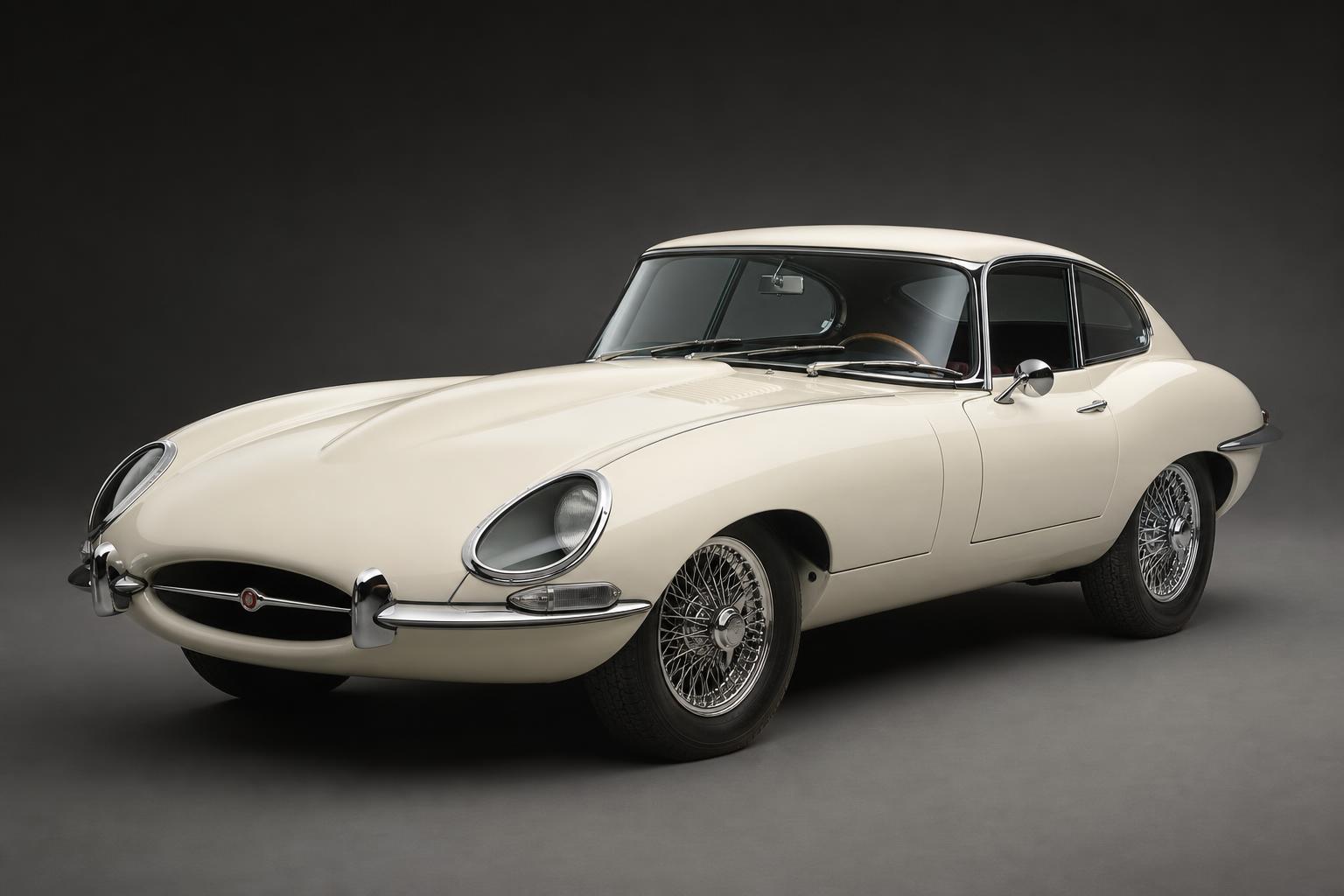
Jaguar E-Type
Classic · 1961–1975

Jaguar E-Type

The car Enzo Ferrari reportedly called the most beautiful ever made — and the defining British sports car of the 1960s and early 1970s.
Open guide →
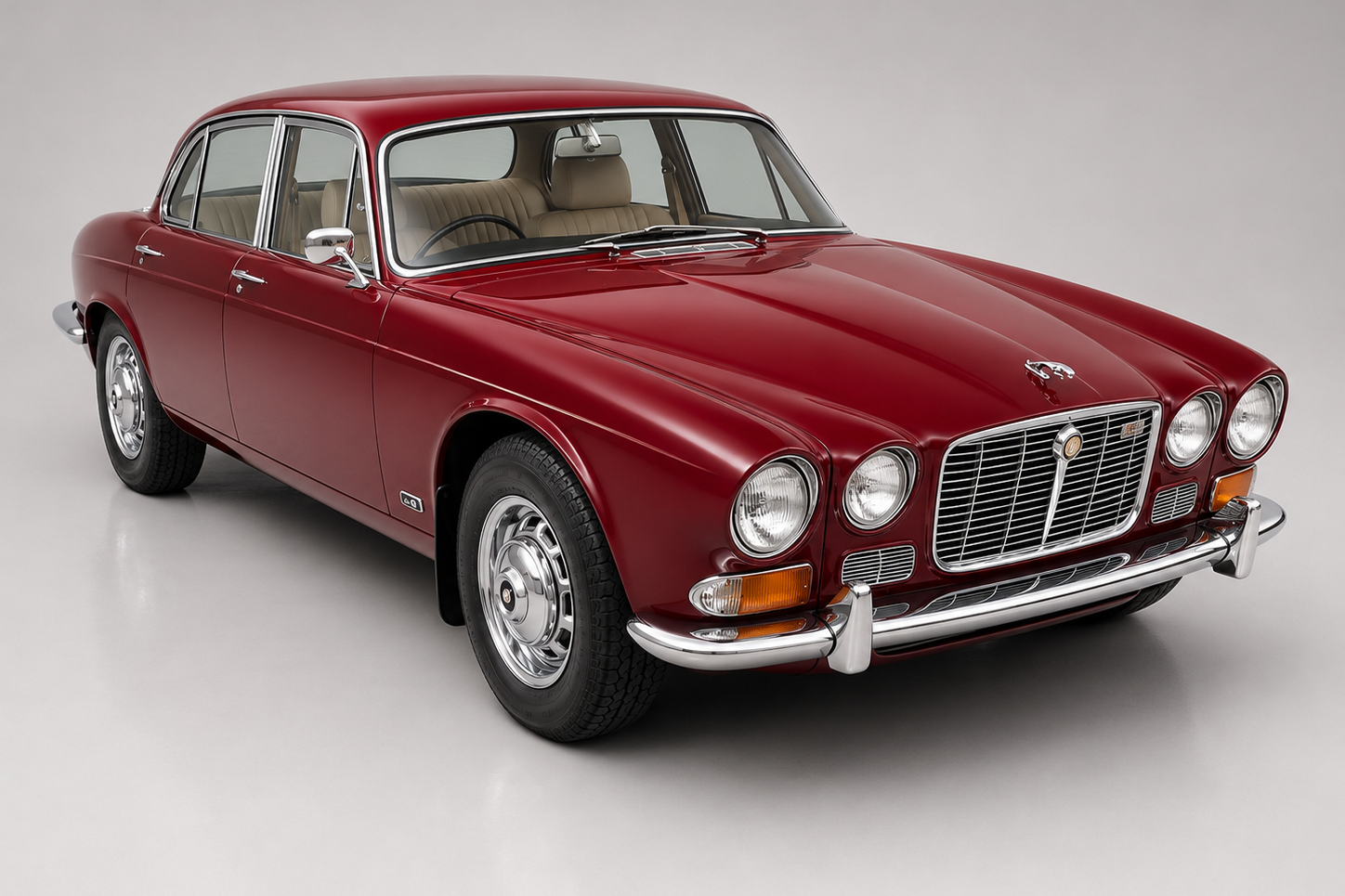
Deep red Jaguar XJ6 Series 1 saloon photographed in a studio, front three-quarter view showing the four round headlamps, slim chrome grille with leaping-cat badge, chrome bumper with over-riders, subtle side crease and elegant Lyons-era saloon proportions.
Classic · 1968–1973

Jaguar XJ6 Series 1

The last saloon developed under Sir William Lyons — 'the finest Jaguar ever'.
Open guide →
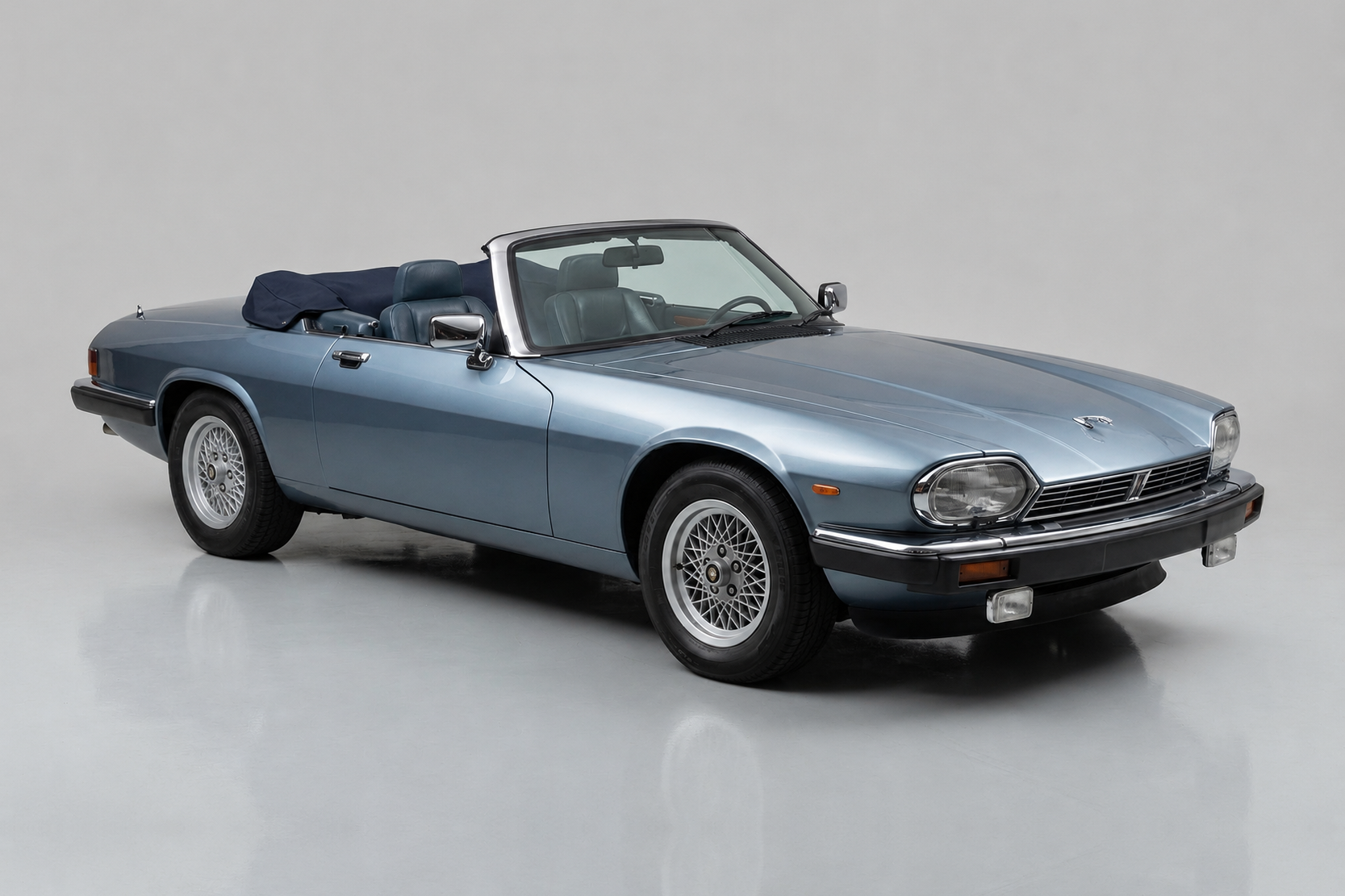
Light blue Jaguar XJS convertible photographed in a studio, front three-quarter view with the roof down and tonneau cover fitted, showing the flush headlamps, chrome grille surround, side crease, mesh-style alloy wheels and long-bonnet grand-tourer proportions.
Classic · 1975–1996

Jaguar XJS

The E-Type's controversial successor — outlived its critics across twenty years and seven months.
Open guide →
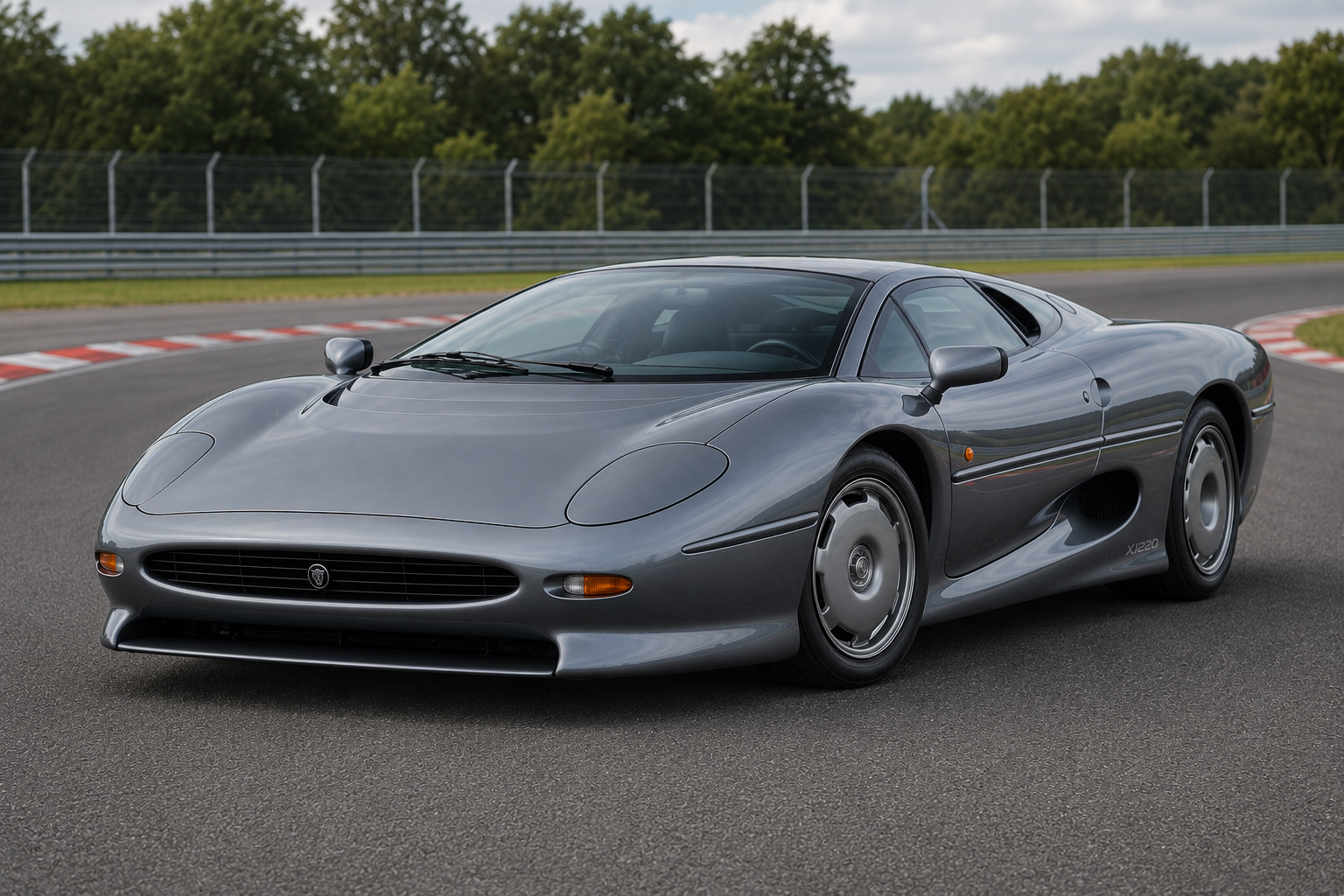
Jaguar XJ220
Supercar · 1992–1994

Jaguar XJ220

Jaguar's 1990s 217 mph supercar: controversial when new, increasingly respected now.
Open guide →
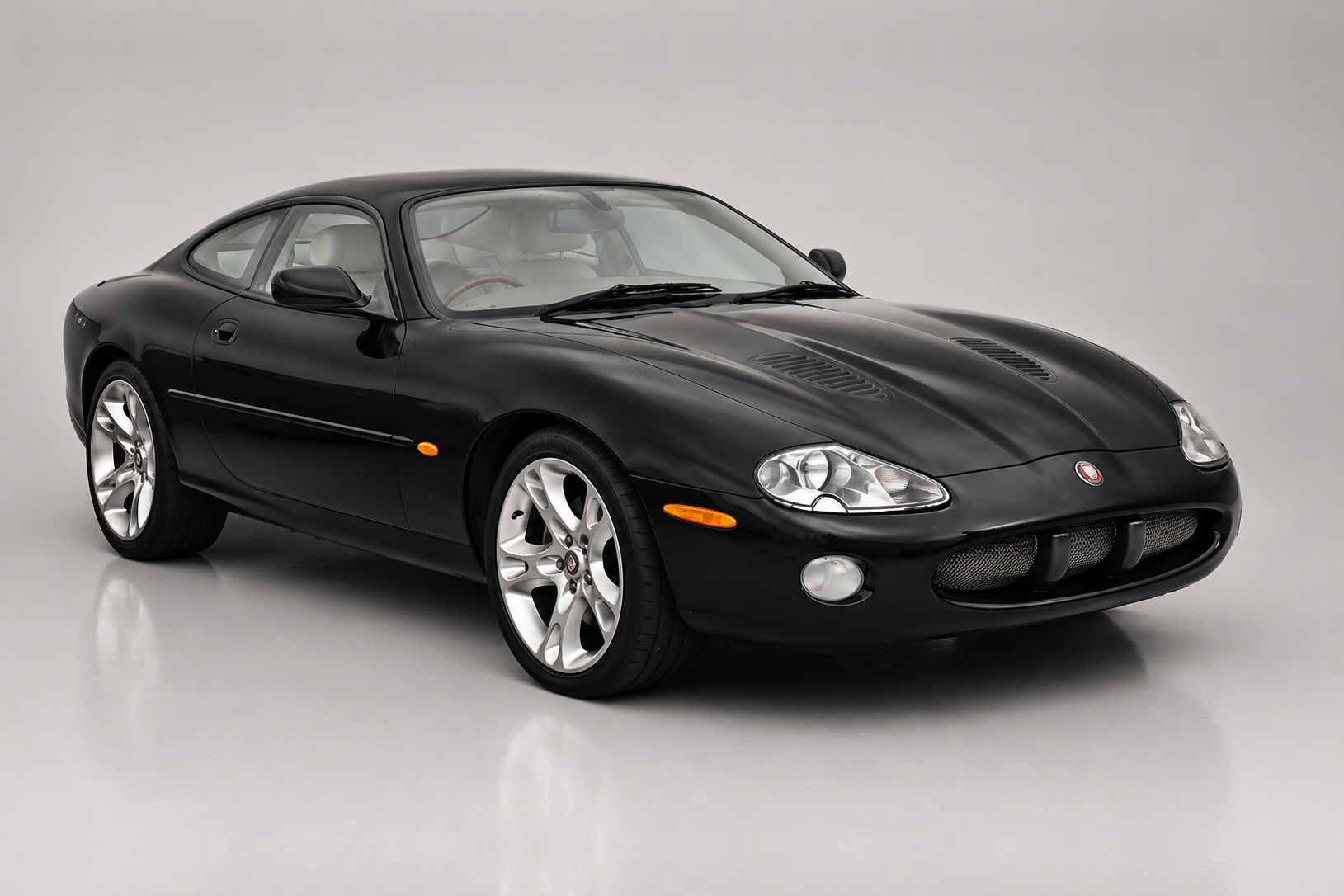
Black Jaguar XKR (X100) coupé photographed in a studio, front three-quarter view showing the twin oval headlamps, mesh oval grille with growler badge, bonnet louvres, chrome side strake and multi-spoke alloy wheels.
Modern Classic · 1996–2005

Jaguar XK8 / XKR (X100)

Jaguar's first V8 road car — Geneva debut 5 March 1996; XJS-derived platform shared with the Aston Martin DB7.

Open guide →