Maserati
The Maserati brothers built pure racing machinery — a 250F won Fangio his final title in 1957 — and the road-car marque that grew from it has always carried that pedigree with Latin warmth: the 3500 GT and Sebring of the dolce vita years, the Ghibli that rivalled the Daytona for glamour, the mid-engined Bora and the Khamsin's Bertone daring. The Biturbo era tested the faithful; the modern era, from the 3200 GT to the MC20's carbon-tubbed lineage, has rebuilt the sporting case. For collectors the sweet spots are the 1950s–70s cars, with the racing Birdcages and 250Fs at the very summit of the market.
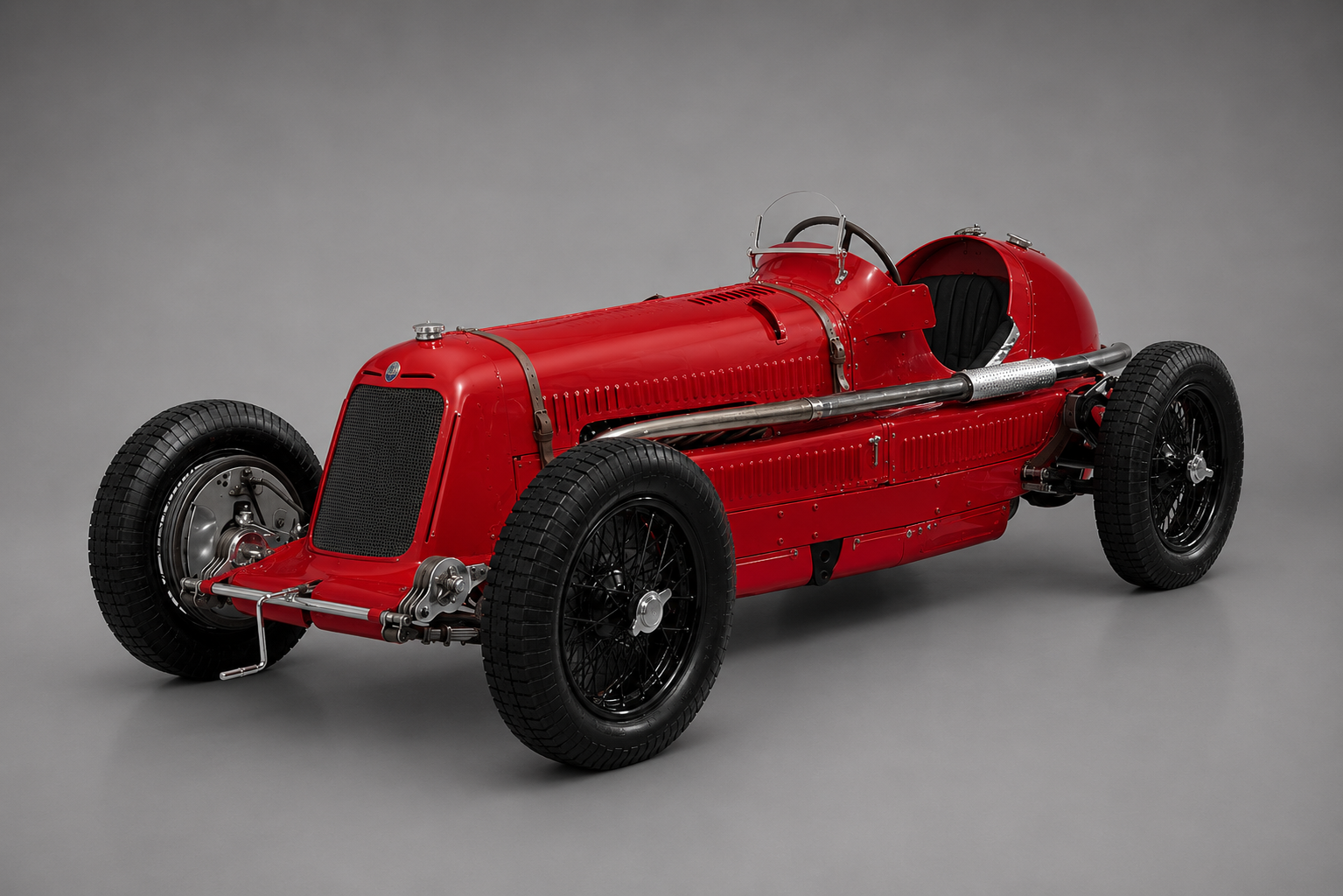
Maserati 8CM / 8CTF
The Maserati straight-eights that won two consecutive Indianapolis 500s (1939, 1940).
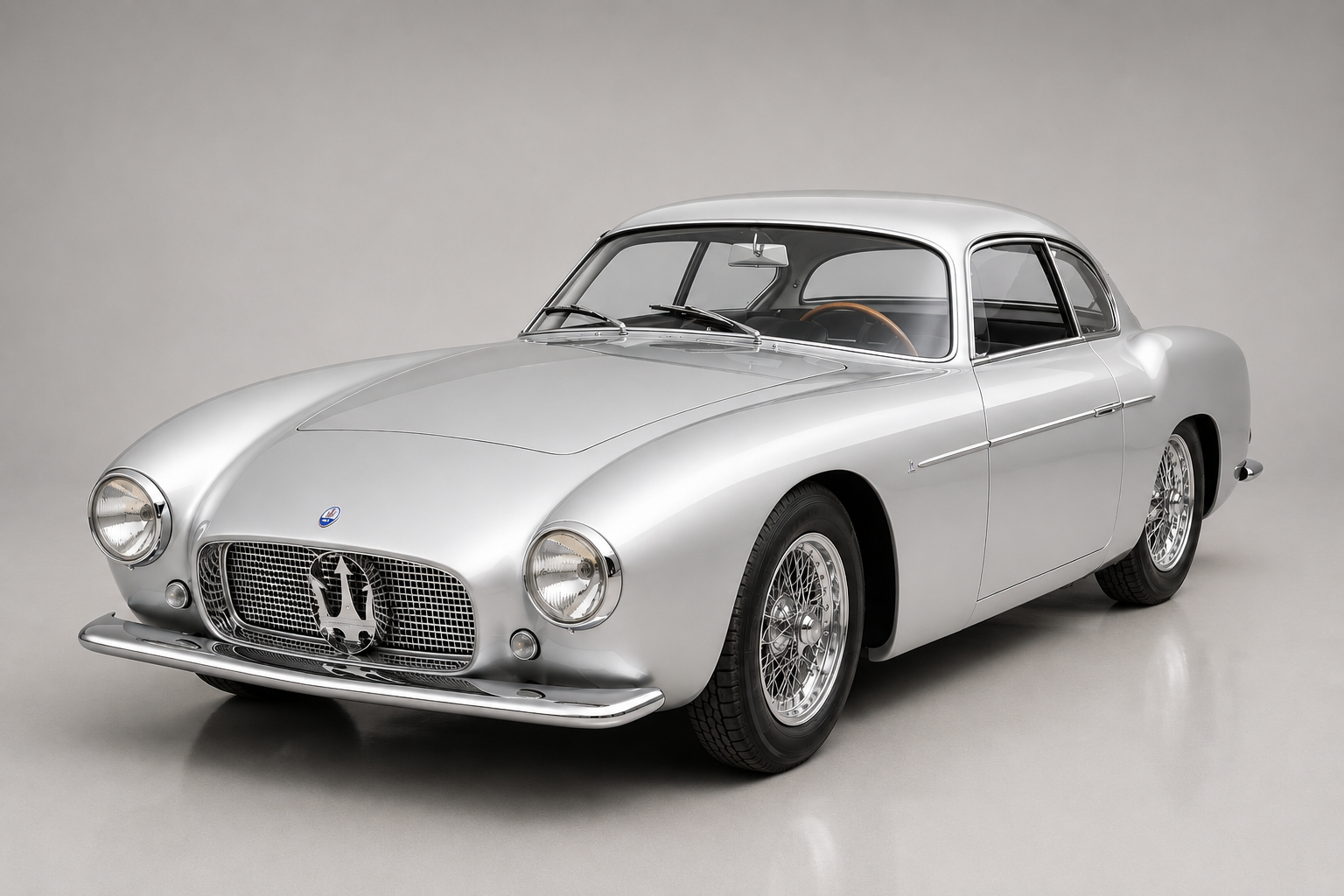
Maserati A6 (1500 / G 2000 / G/54)
Maserati's first road cars — built after the brothers' departure under Orsi ownership; A6 1500, A6G 2000 and A6G/54.
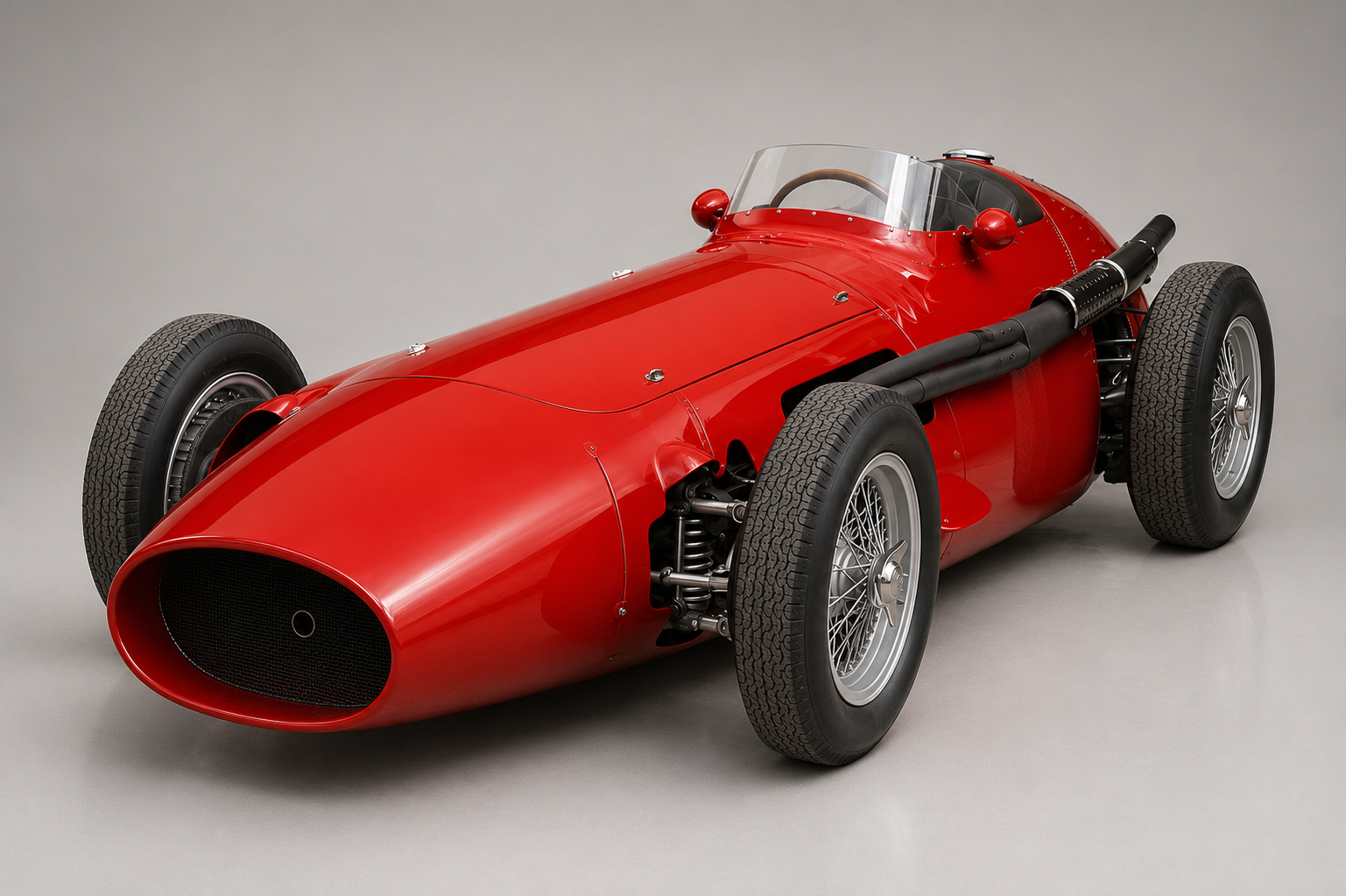
Maserati 250F
The definitive front-engined Grand Prix car — Fangio's fifth World Championship, the 1957 Nürburgring drive, and 46 GPs of history.
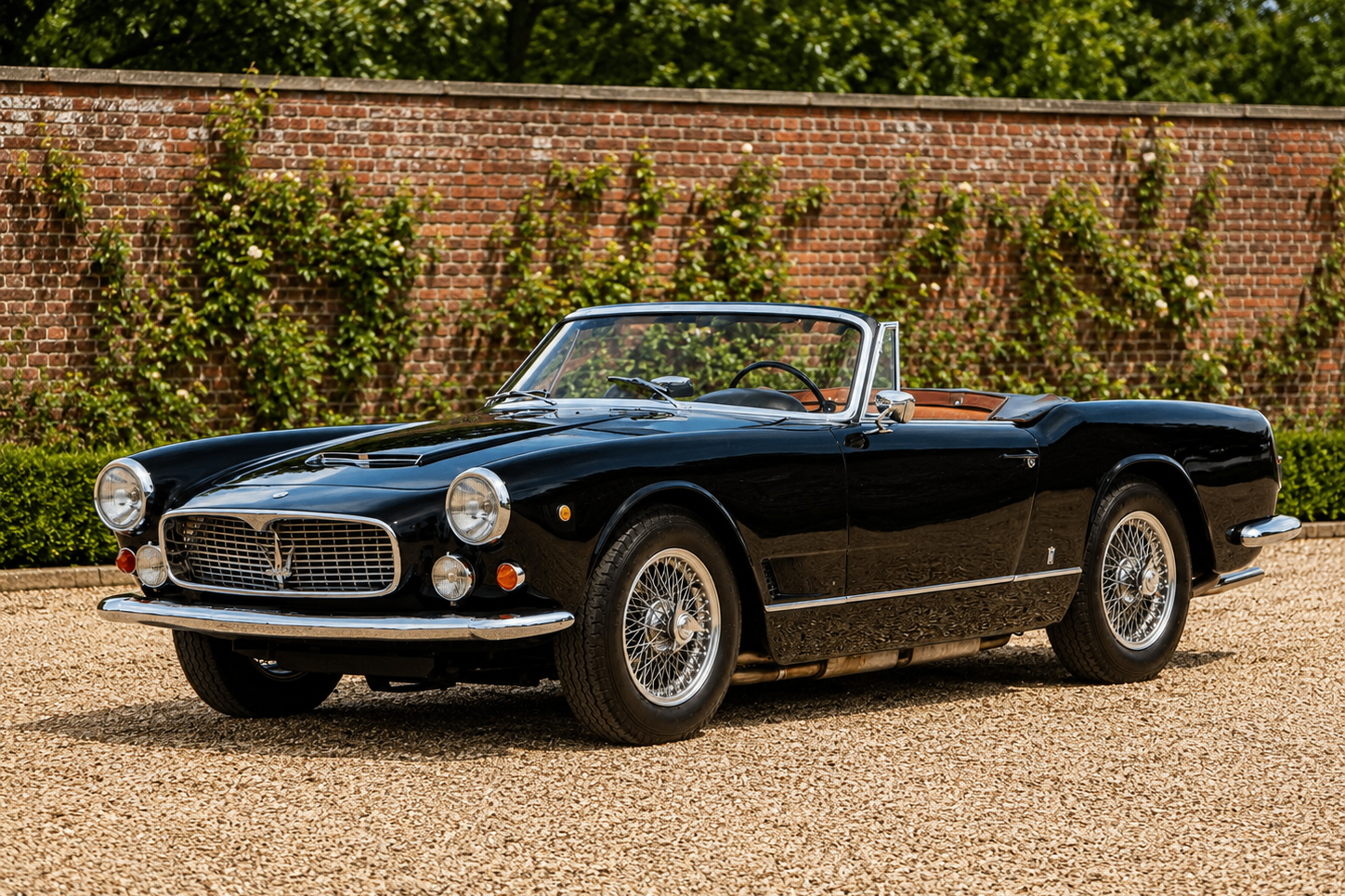
Maserati 3500 GT
Maserati's first series-production road car — a hand-built Modenese GT with a detuned 350S-derived twin-cam 3.5-litre six, produced 1957–1964 in Touring Superleggera coupé, Vignale Spyder and a handful of coachbuilt one-off forms; the car that transitioned Maserati from a boutique racing constructor into a viable road-car manufacturer.
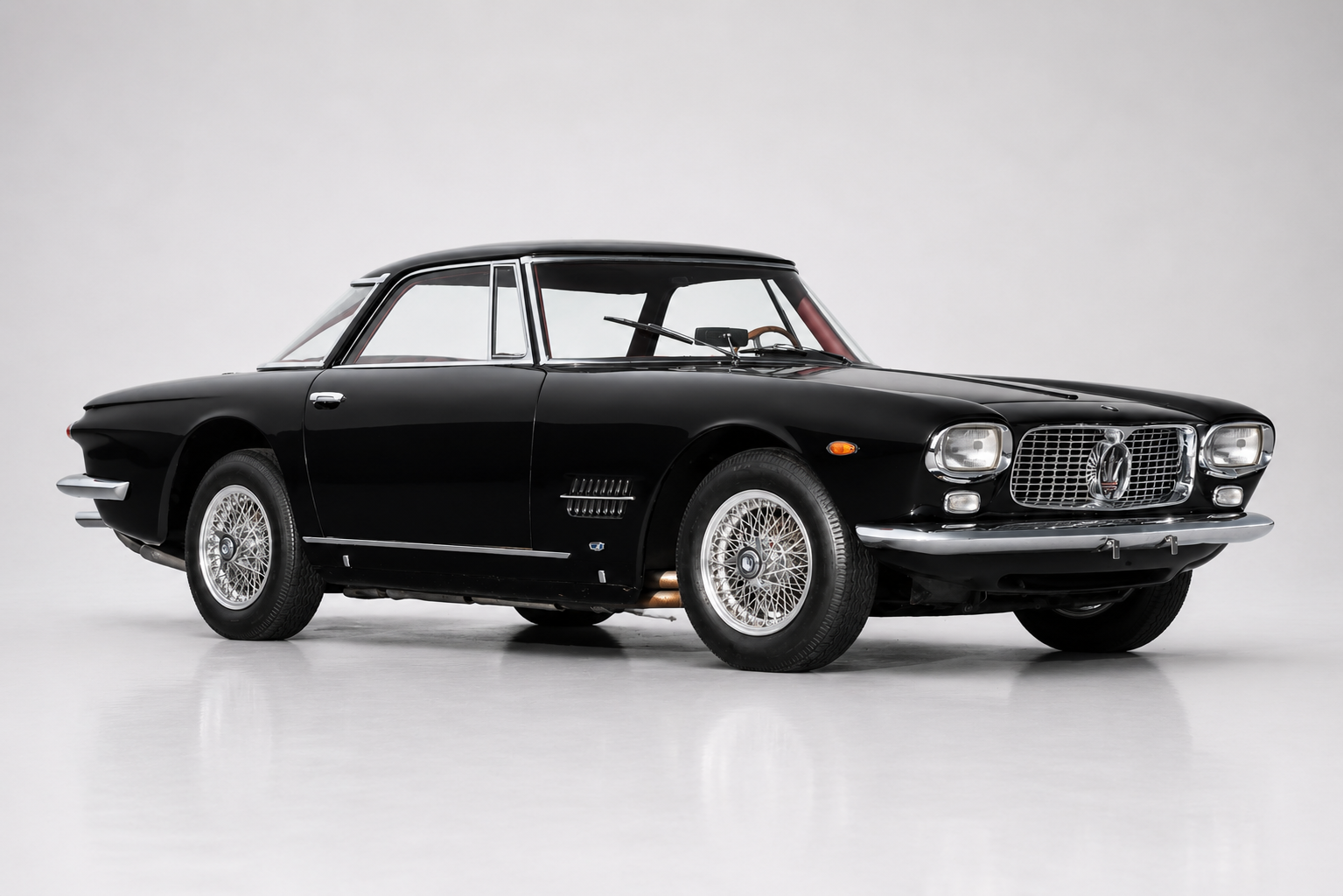
Maserati 5000 GT
The Shah of Persia's commission — Alfieri's 450S racing V8 in a reinforced 3500 GT chassis; 34 built across eight coachbuilders.
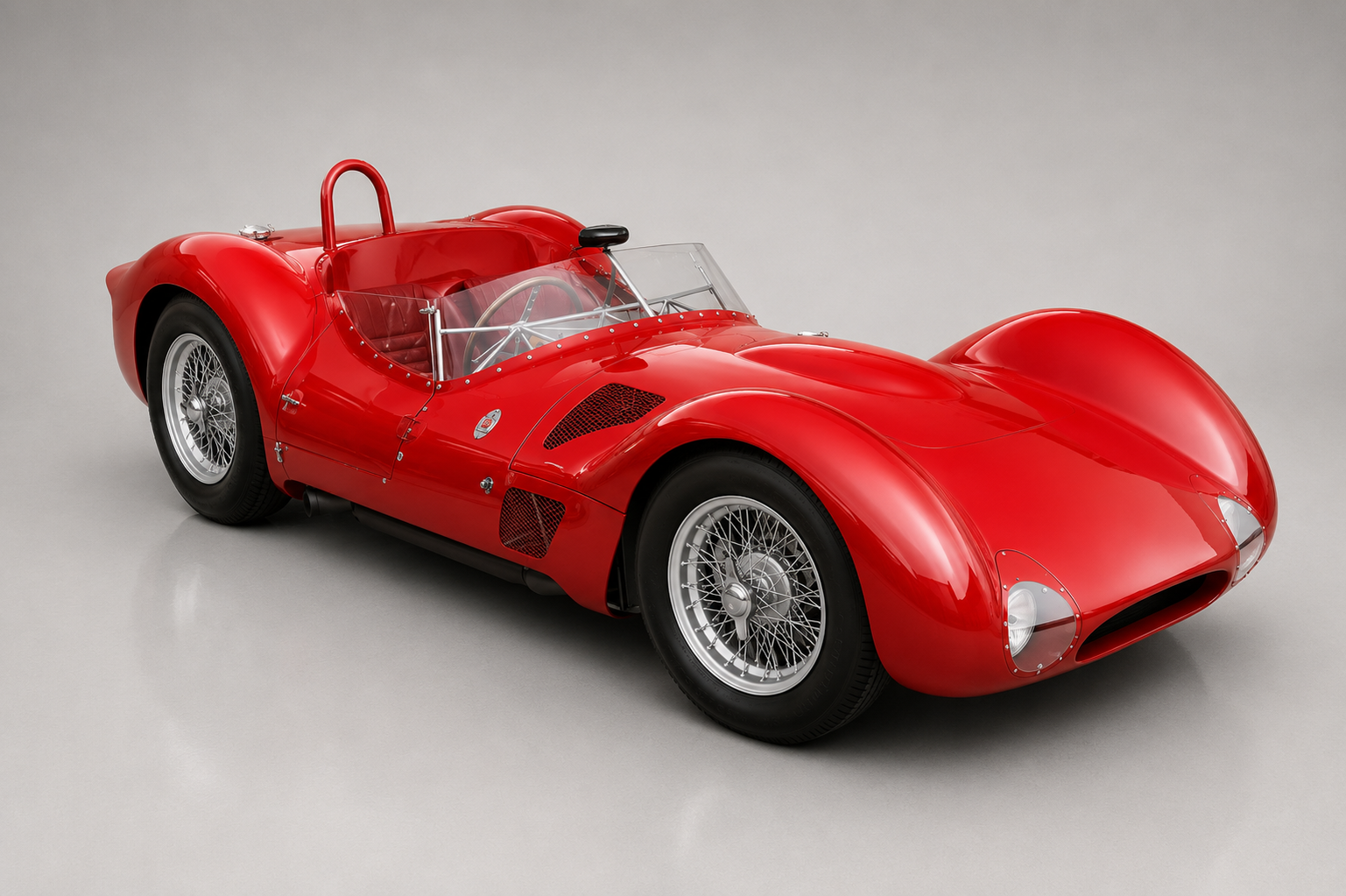
Maserati Tipo 60/61 "Birdcage"
Alfieri's spaceframe masterpiece — ~200 small-diameter tubes at 36 kg, engine canted 45°, Moss on debut at Reims 1959.
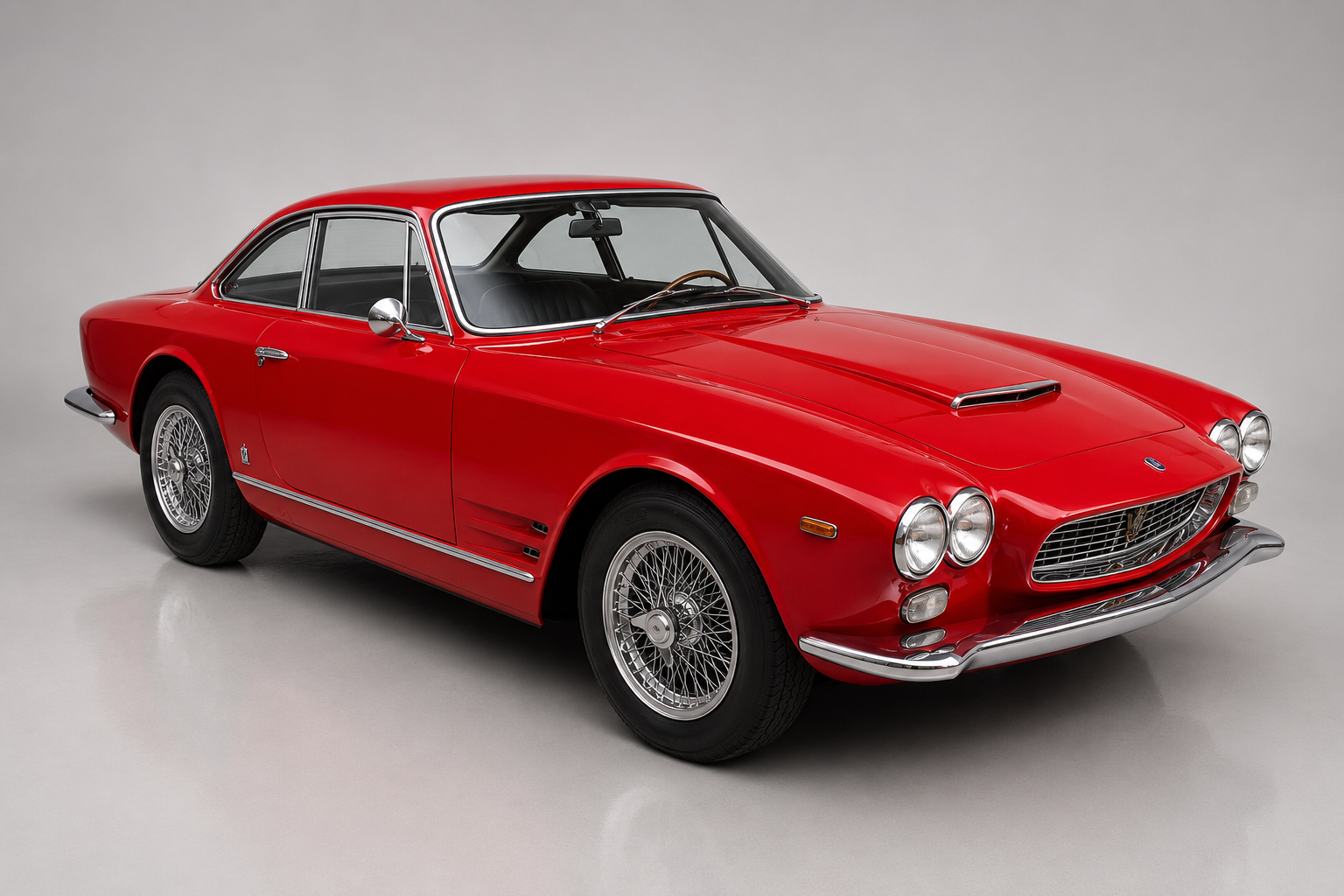
Maserati Sebring
The shortened-wheelbase 3500 GTI development for the American market — Michelotti at Vignale, named for Maserati's Sebring wins.
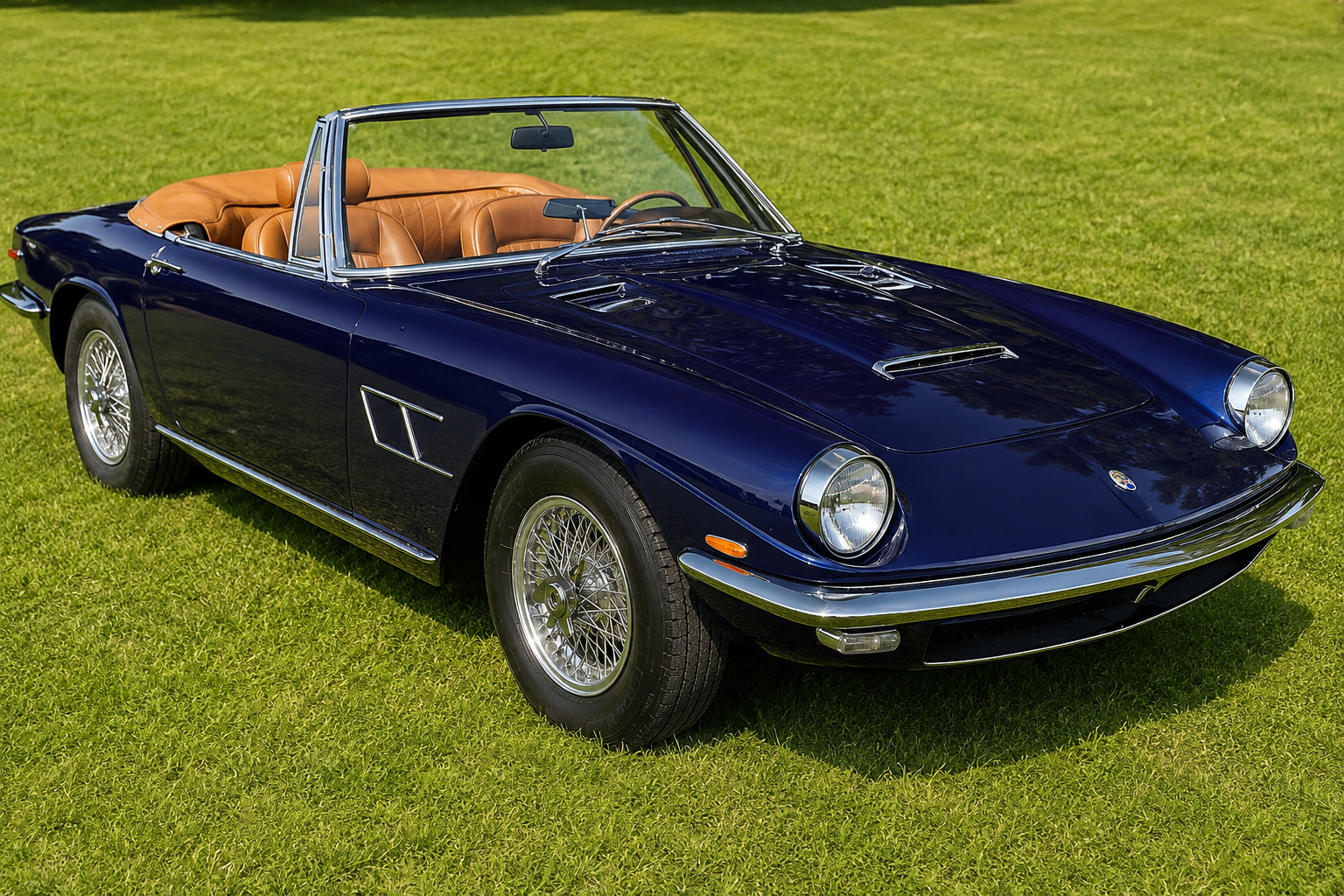
Maserati Mistral
The last Maserati road car to run the twin-plug DOHC six derived from the 350S sports-racer — a Frua-designed, Maggiora-bodied two-seat GT built 1963–1970 in coupé and small-production Spyder form; the direct successor to the 3500 GT / Sebring and immediate predecessor of the V8-powered Ghibli.
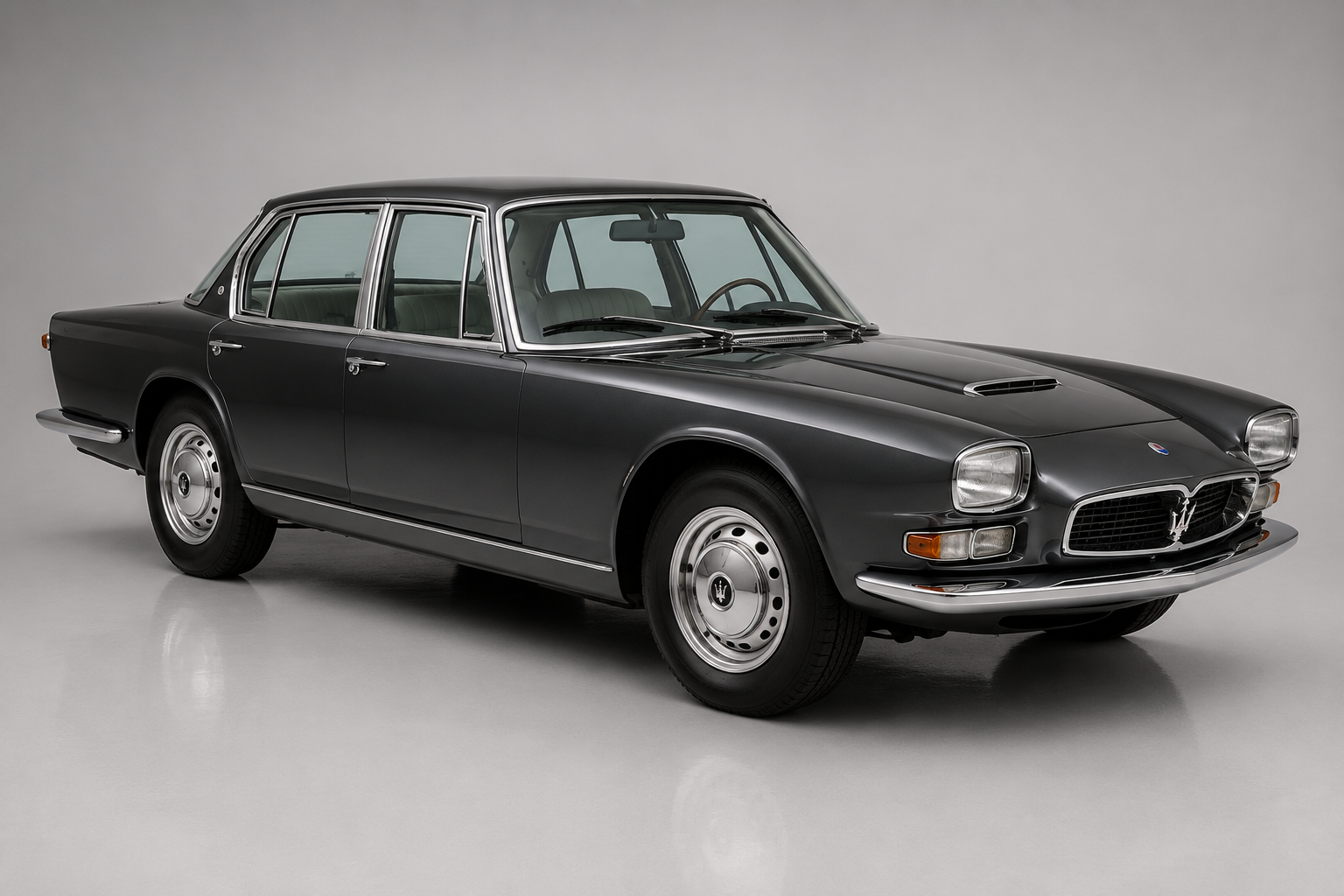
Maserati Quattroporte I
The world's template for the super-saloon — Frua design, Vignale build, Turin October–November 1963.
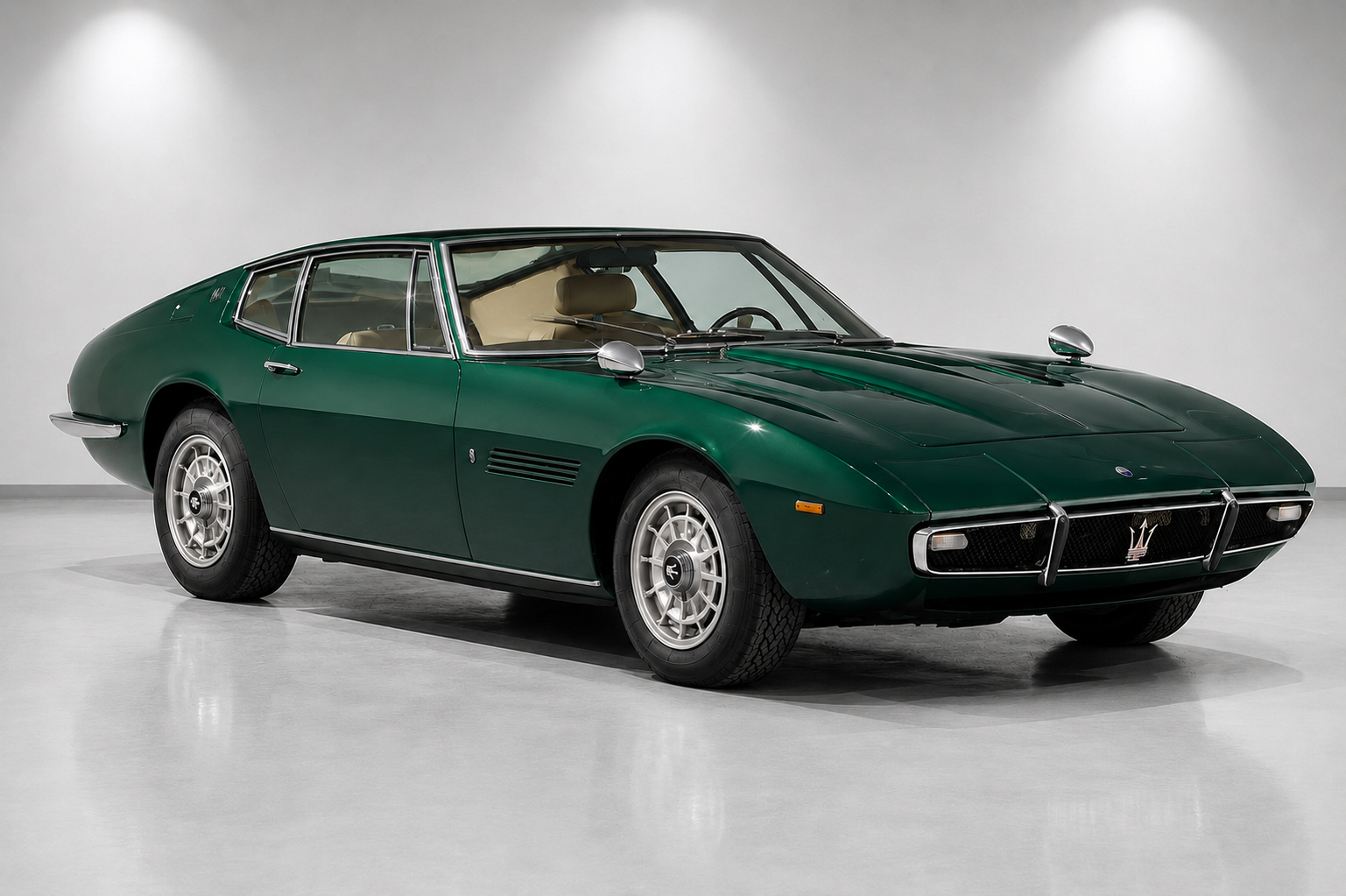
Maserati Ghibli (Tipo 115)
Giorgetto Giugiaro at Ghia — the long-bonneted Maserati V8 GT, in 4.7- and 4.9-litre SS form.
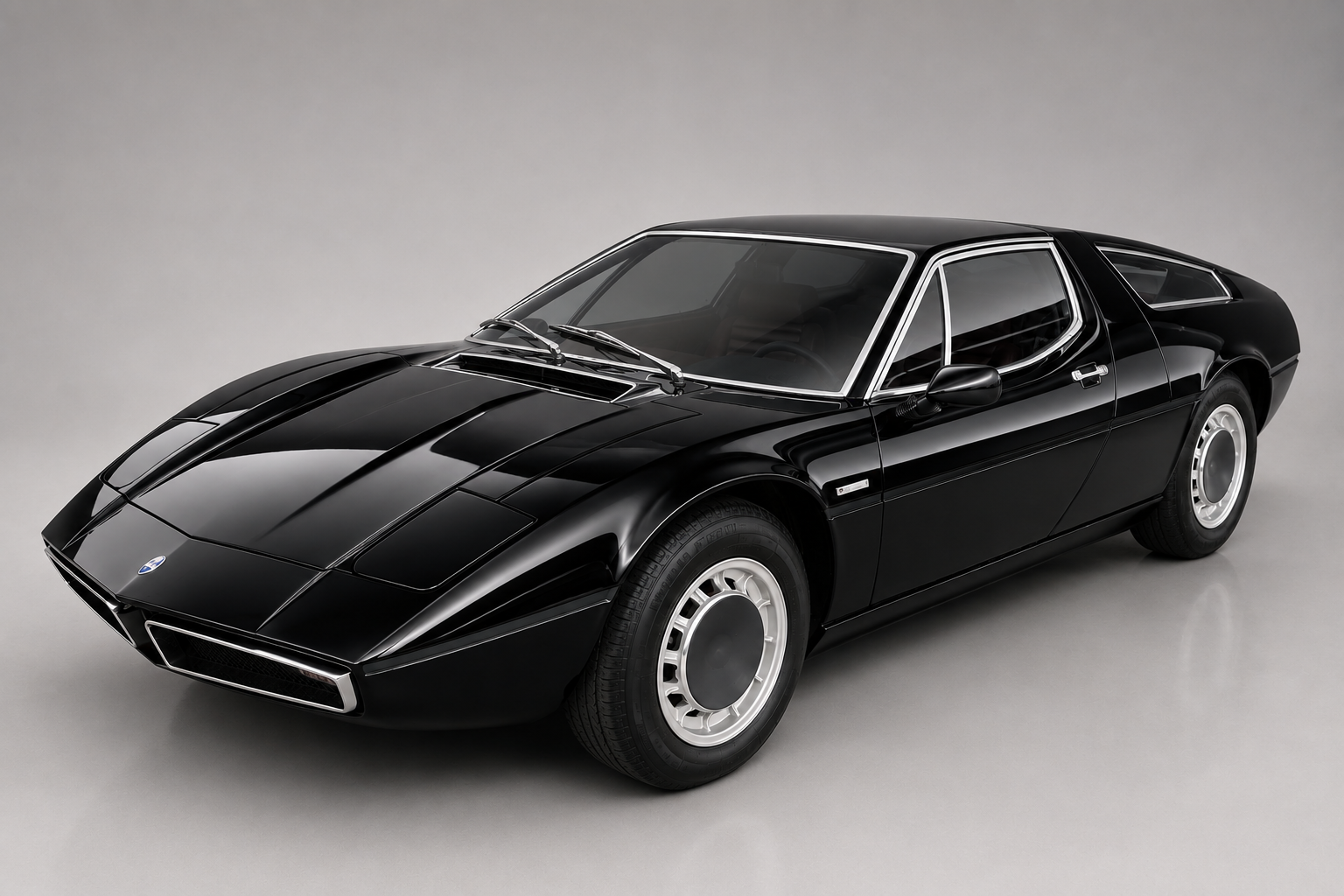
Maserati Bora
Maserati's first mid-engined road car and first monocoque — Giugiaro at Italdesign, Geneva 1971.
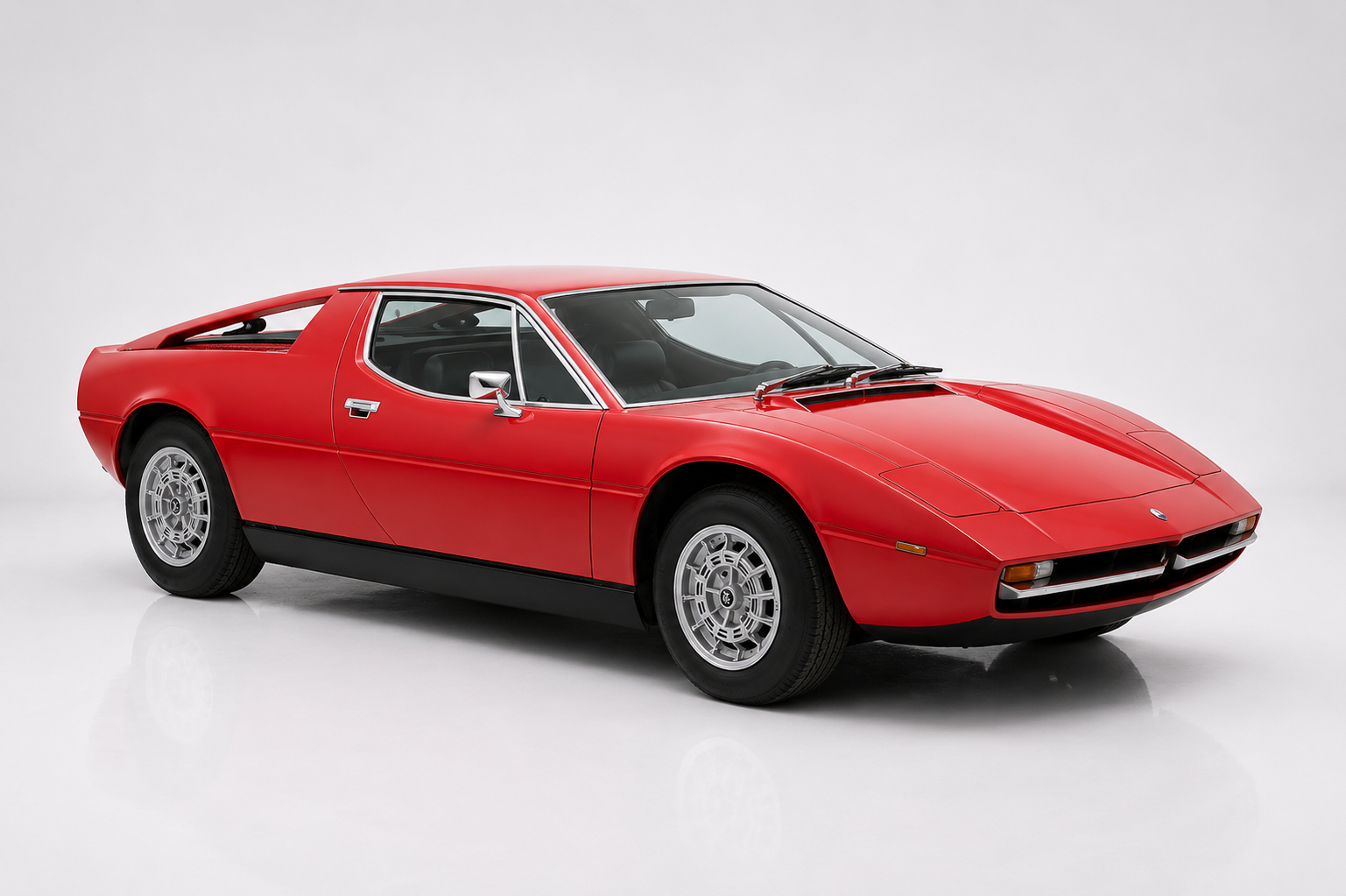
Maserati Merak
The under-the-radar mid-engine Maserati — Giugiaro-designed, Citroën-derived V6, and the attainable Ferrari 308 alternative.
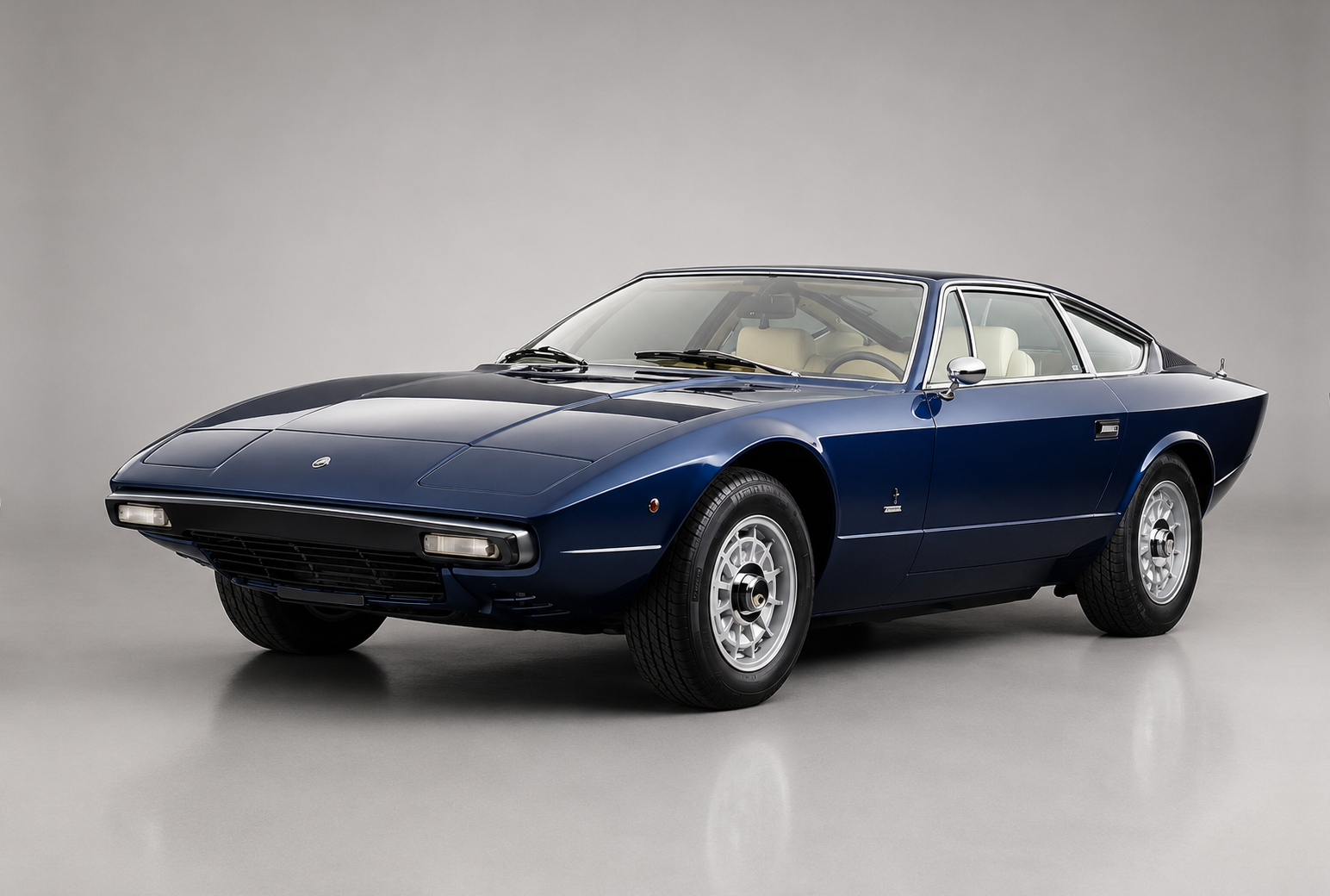
Maserati Khamsin
The Ghibli's true successor — Bertone by Gandini, developed under Citroën ownership for traditionalists who wanted a front-engined V8 GT.
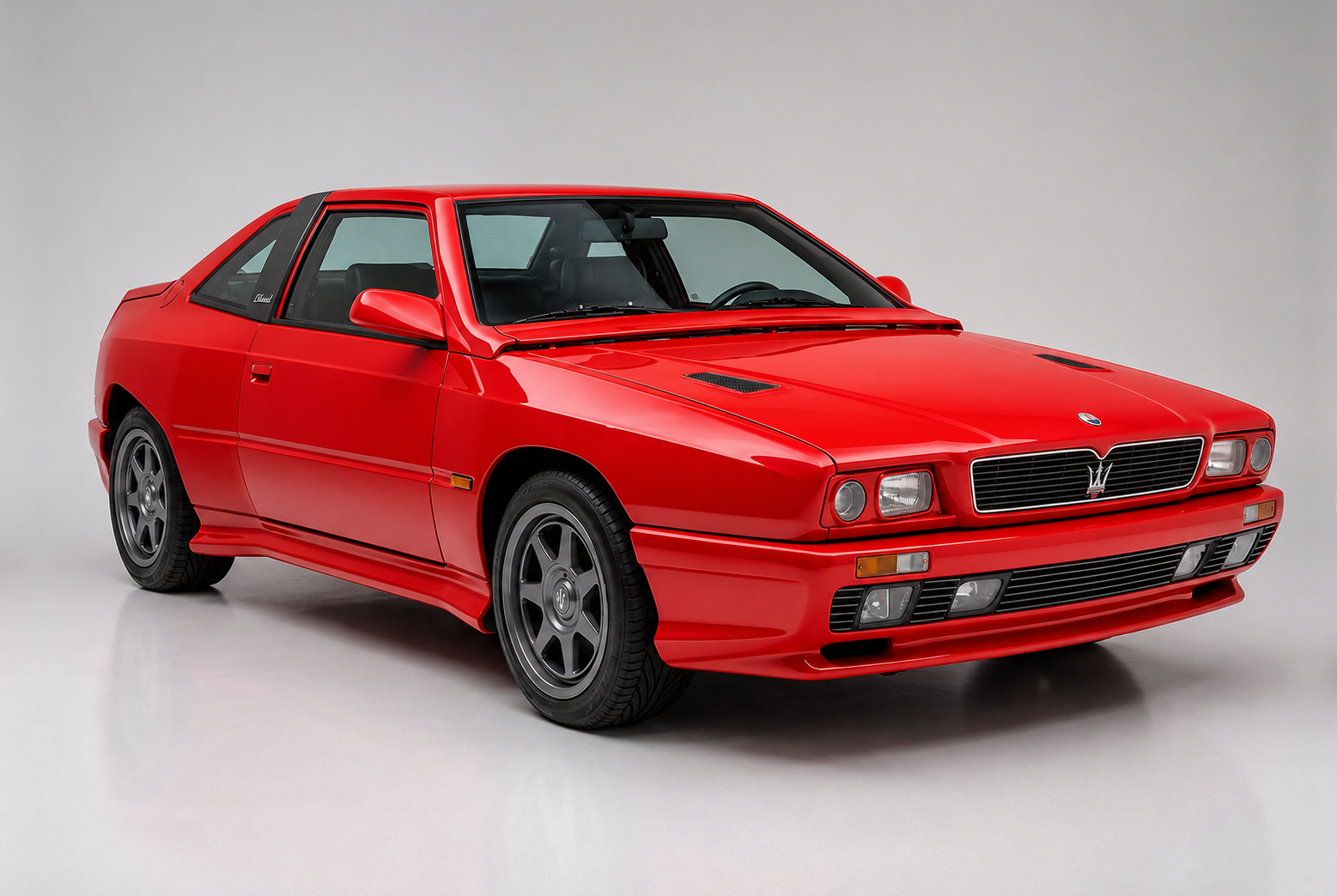
Maserati Shamal
Tipo AM339 — Gandini's Biturbo-era flagship, twin-turbo V8, Getrag six-speed; named for a desert wind.
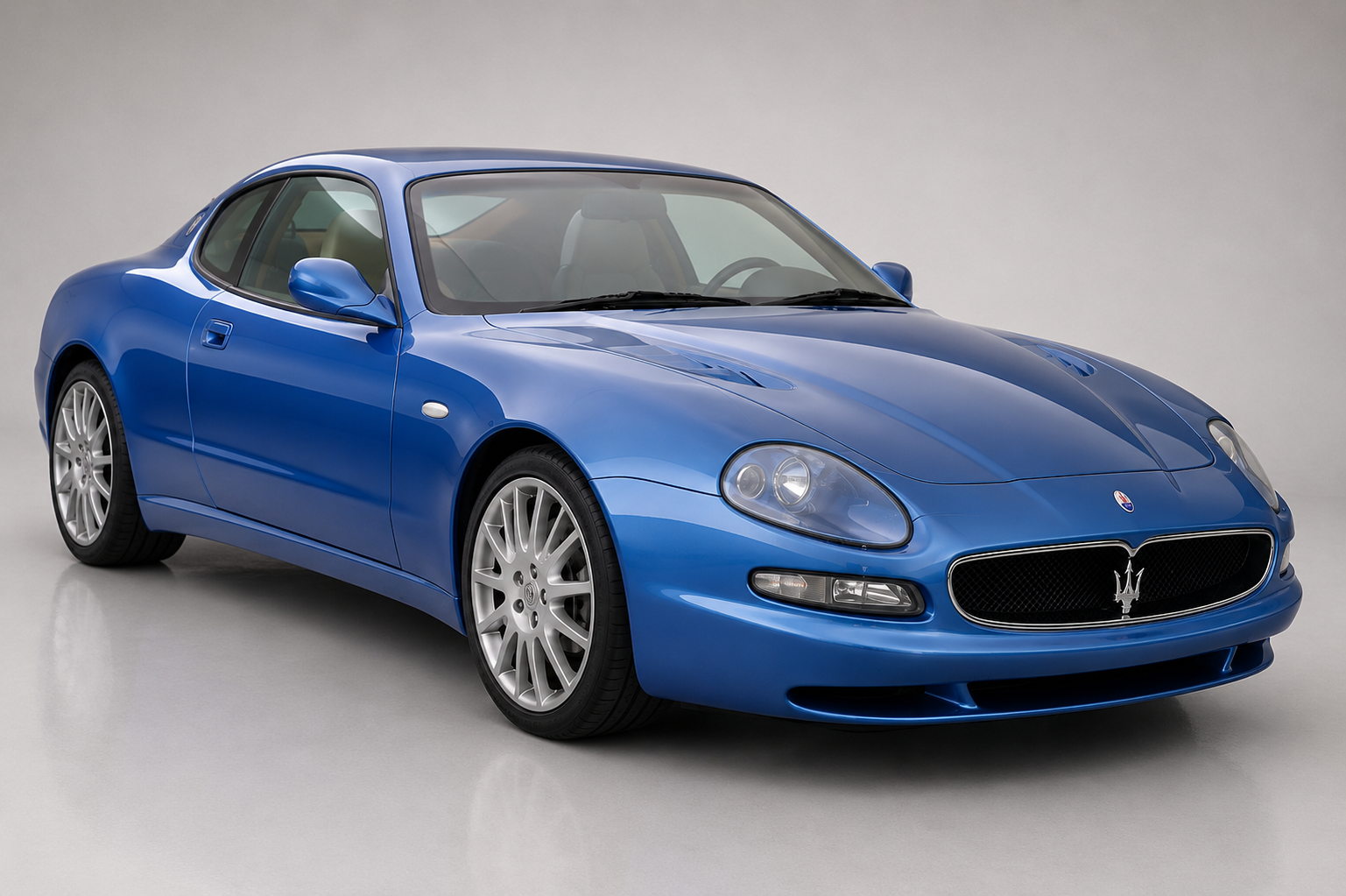
Maserati 3200 GT
Tipo 338 — Giugiaro's return to Maserati, twin-turbo V8, and the boomerang LED tail lights.
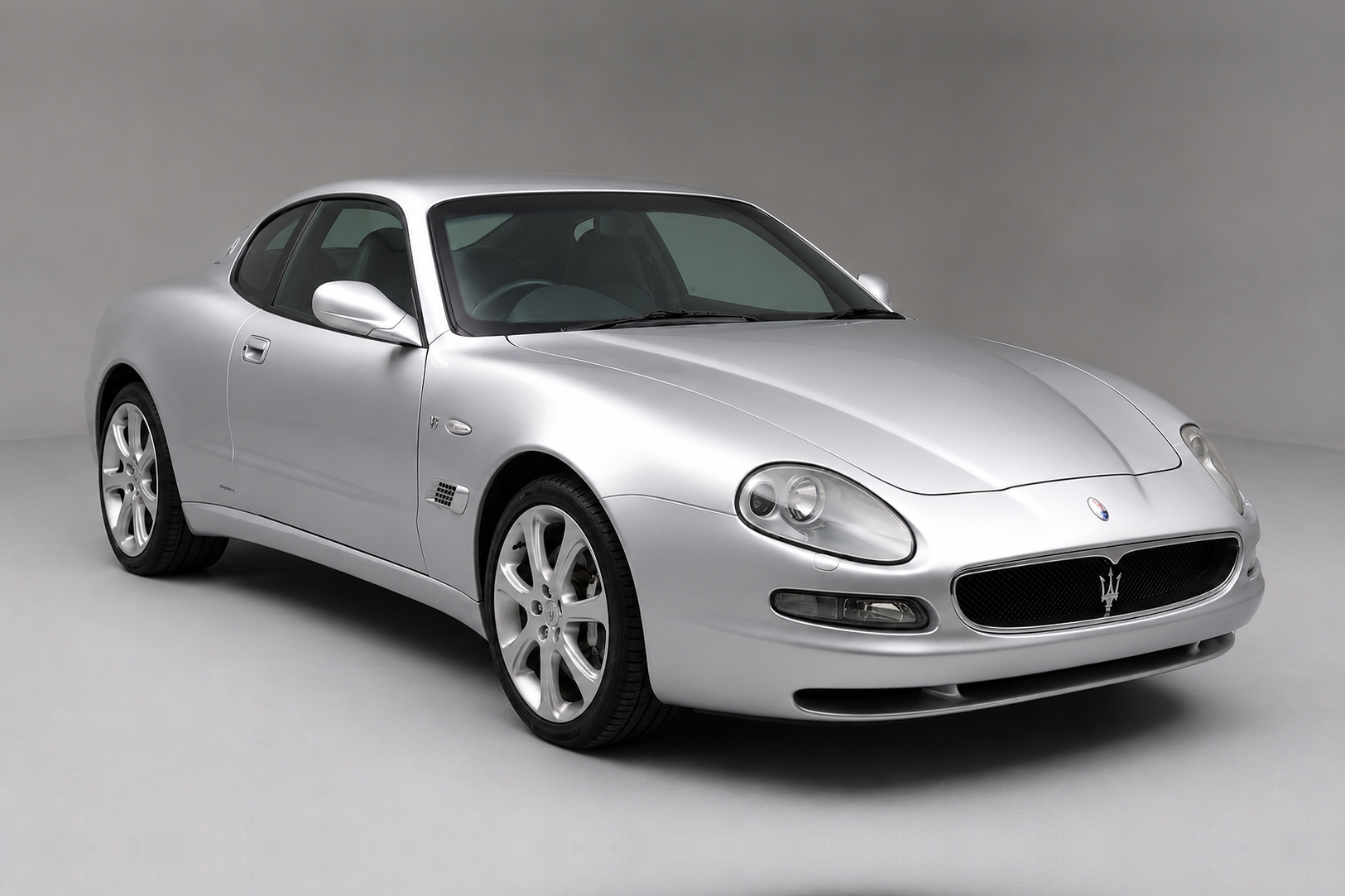
Maserati 4200 / Coupé & Spyder
Tipo M138 — Giugiaro again, Ferrari-Maserati F136R V8, Cambiocorsa the dominant choice; Maserati's American return.
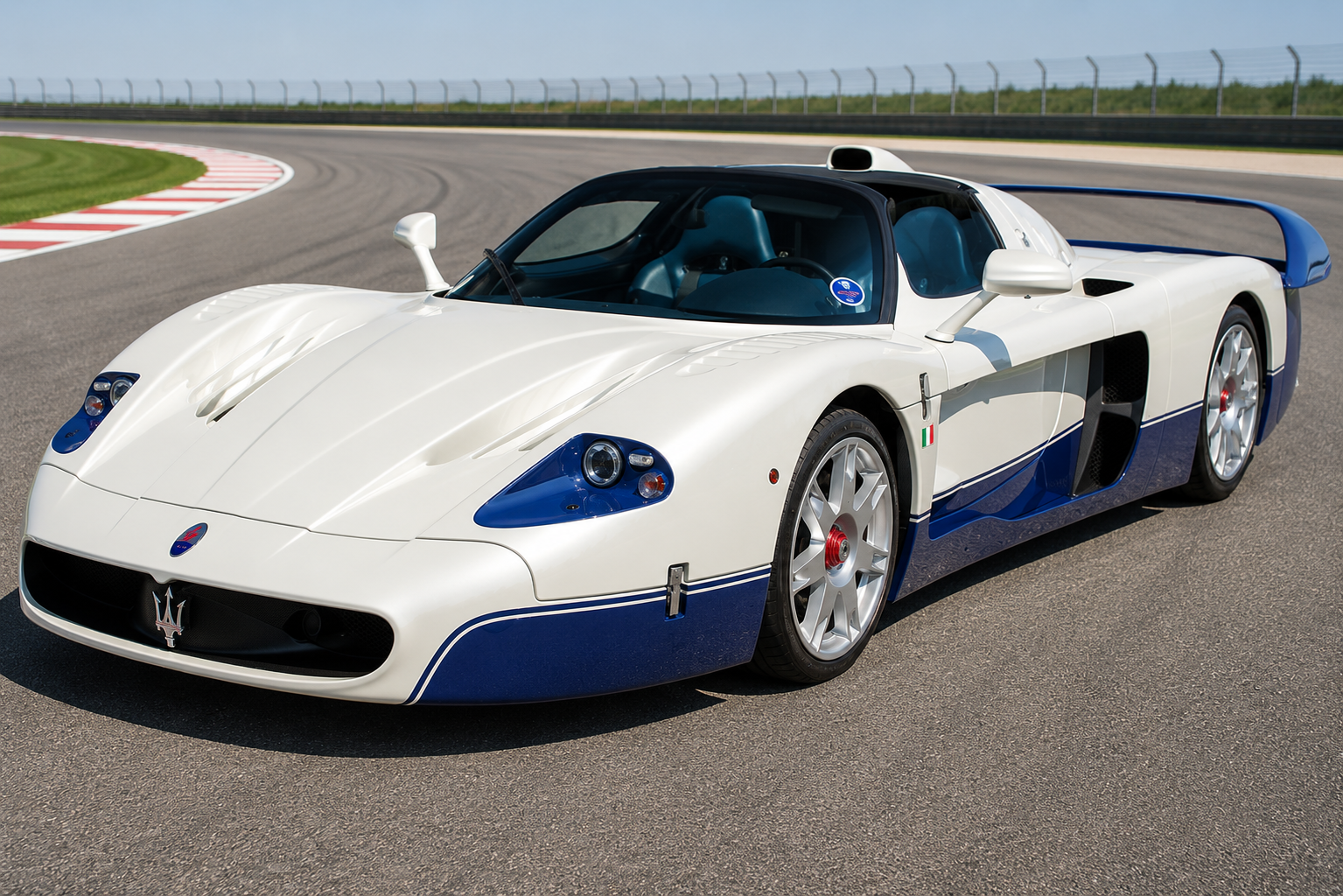
Maserati MC12
Ferrari Enzo-derived homologation hypercar — the GT1-bred Maserati supercar built in fifty cars.
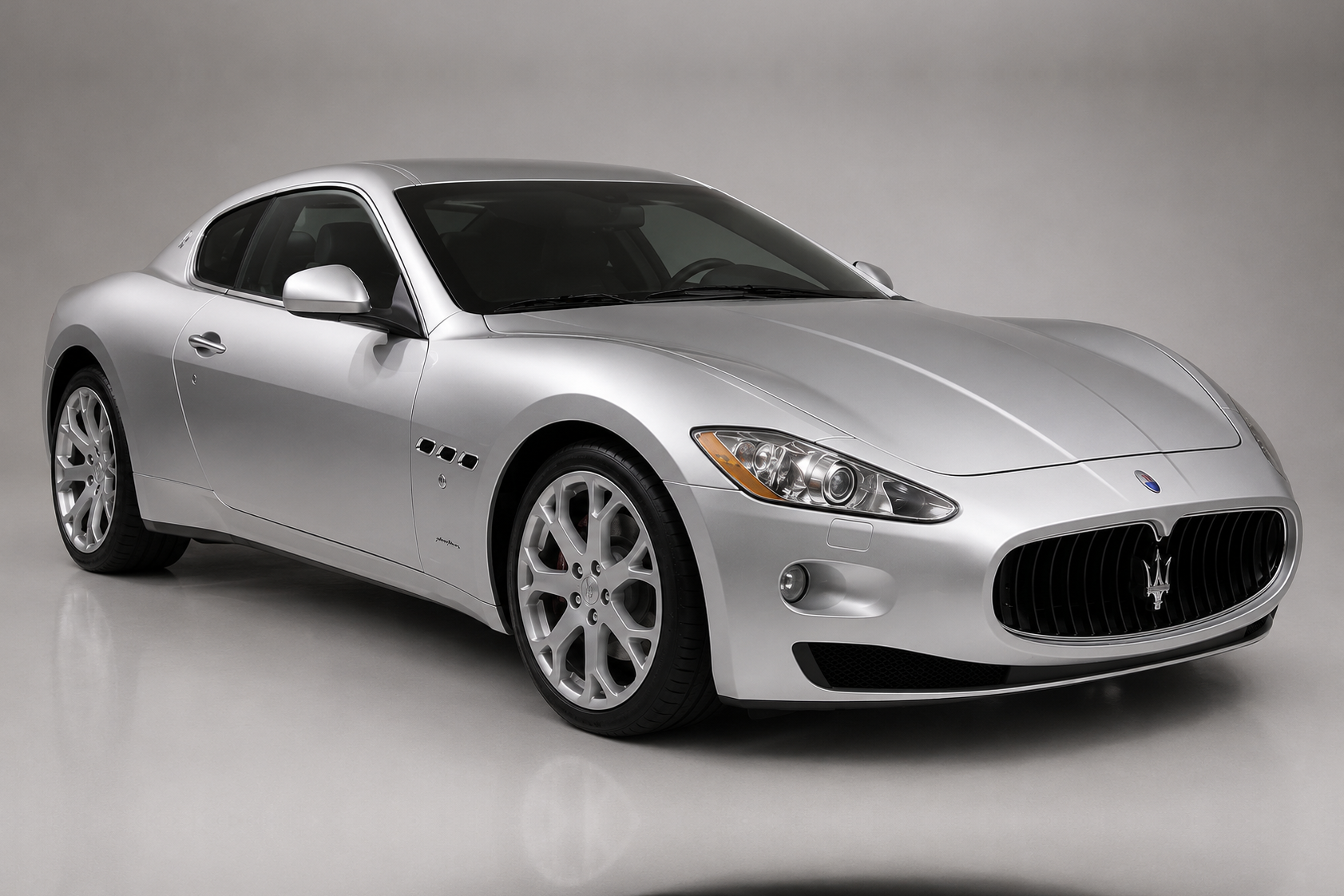
Maserati GranTurismo & GranCabrio (2007–2019)
Tipo M145 — Pininfarina's Castriota-penned 2+2 on a shortened Quattroporte V platform; Geneva 2007 after a record nine-month development.
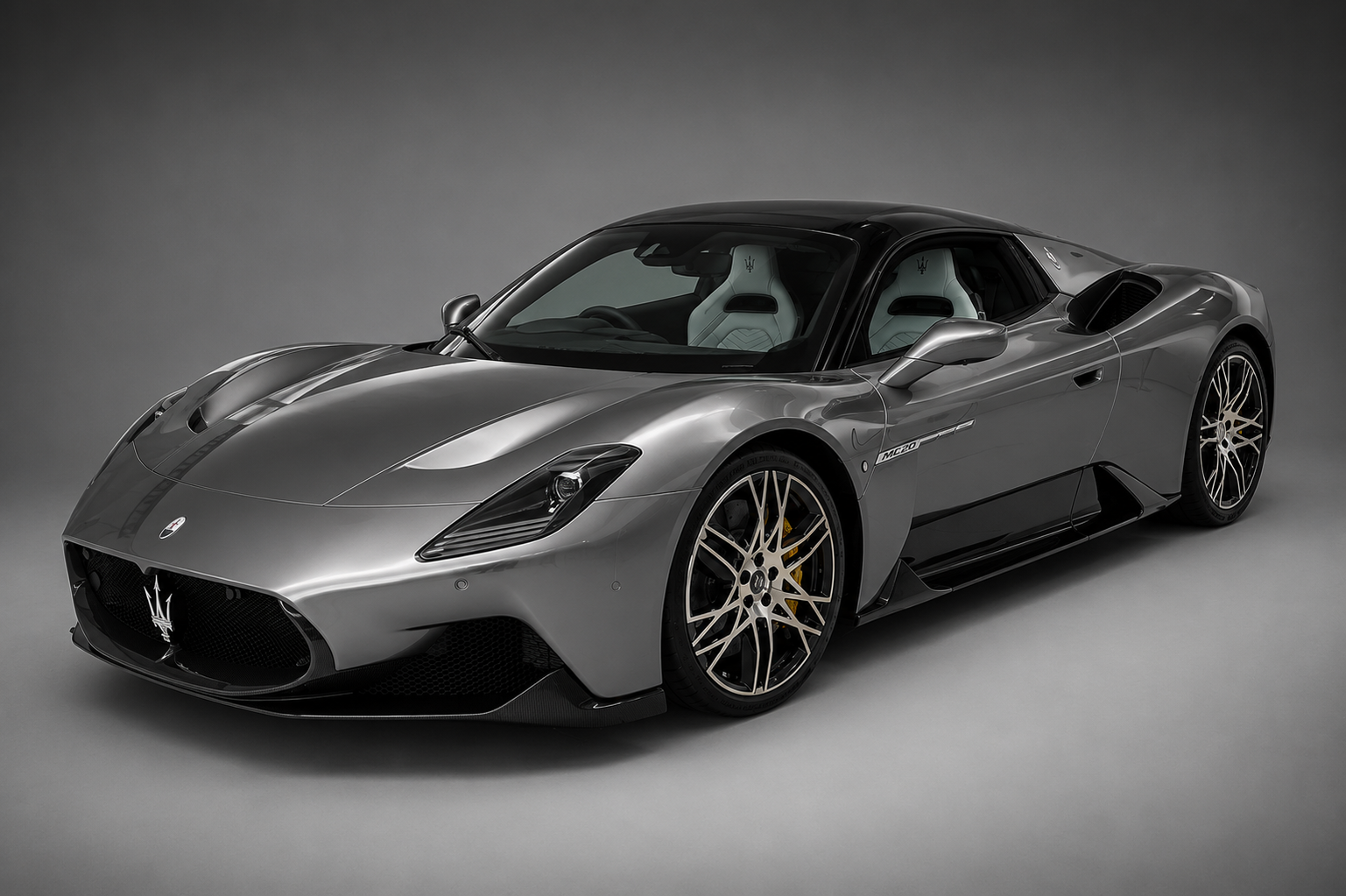
Maserati MC20 / MCPura
Maserati's return to the front rank — a Modena-built carbon-tub mid-engined supercar with a 621 bhp / 630 PS pre-chamber twin-turbo V6, produced 2020–2026 in Coupé and Cielo form and continued for 2026 as the MCPura.