
Car Collector International

The Watch List

The models we believe are approaching an inflection point — undervalued relative to their significance, or showing early signals of appreciation. Updated when the evidence warrants it.

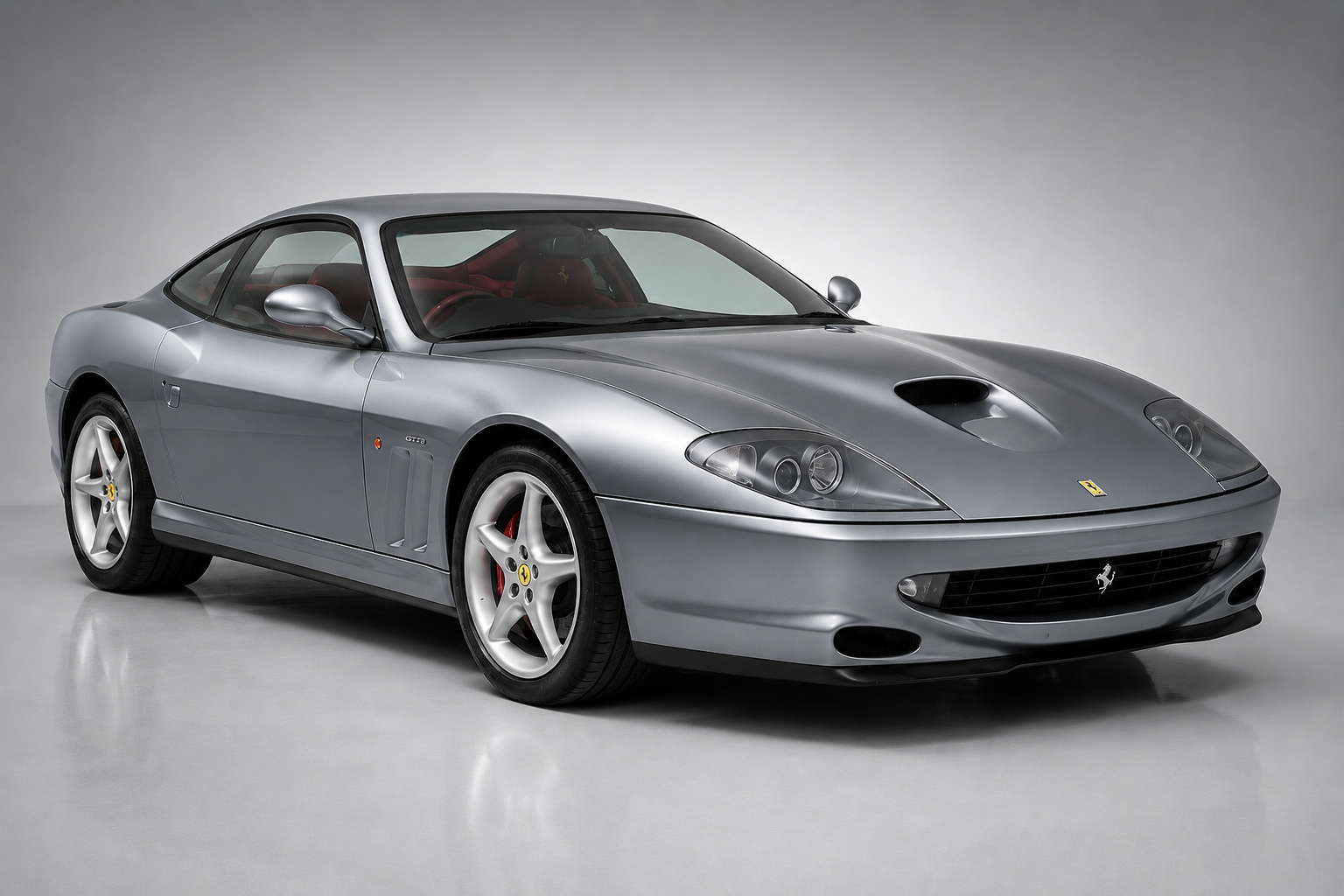
Silver Ferrari 550 Maranello coupe in a grey studio setting, front three-quarter view showing the long bonnet with central scoop, faired-in headlamps, oval lower grille, red brake calipers behind five-spoke alloy wheels and red leather interior.

Ferrari 550 Maranello — The Last Pure Front-Engined Ferrari V12

Added June 2026

Read the full buyer's guide →

There is a case to be made that the Ferrari 550 Maranello is the most historically significant Ferrari currently trading at a discount to its place in the company's story.

The context matters. When the 550 arrived in 1996 it ended a 22-year absence of the front-engined V12 Ferrari berlinetta — a gap that had opened when the 365 GTB/4 Daytona was discontinued in 1974. The 550 was not merely a fast car; it was a statement that Ferrari believed the configuration that defined the company's road-car identity through the 1950s and 1960s had a future. It was followed by the 575M, the 599 GTB and the 812 Superfast, each more powerful and technologically complex than the last.

The 2026 auction season has offered a useful lens. The Ferrari 599 GTO — a more technically complex car with HGTE suspension and a paddle-shift gearbox — has been achieving results above £1.5 million for strong examples. The 550 Maranello, with its simpler naturally aspirated 5.5-litre V12, manual-only gearbox, and the unmediated driving character that serious collectors now actively seek, trades at a small fraction of that. On historical significance alone — it reopened a chapter of Ferrari's history — the differential is hard to justify.

The 550 Barchetta Pininfarina, produced in 448 units, has already begun to separate meaningfully from the standard coupé in value terms. This is the pattern: first the limited-run variants re-rate, then the standard cars follow as the model's significance is reassessed by the market.

The argument is not that the 550 will become a 599 GTO. It is that a car with genuine Ferrari significance, a proper manual gearbox, a 5.5-litre naturally aspirated V12 and a production run of just over 3,000 examples is not rationally priced relative to its nearest neighbours in the Ferrari timeline.

Values to watch: standard manual coupés in clean condition; the Barchetta as a separate and more urgent proposition.

Read the buyer's guide →

The Watch List reflects editorial opinion only. See our disclaimer.
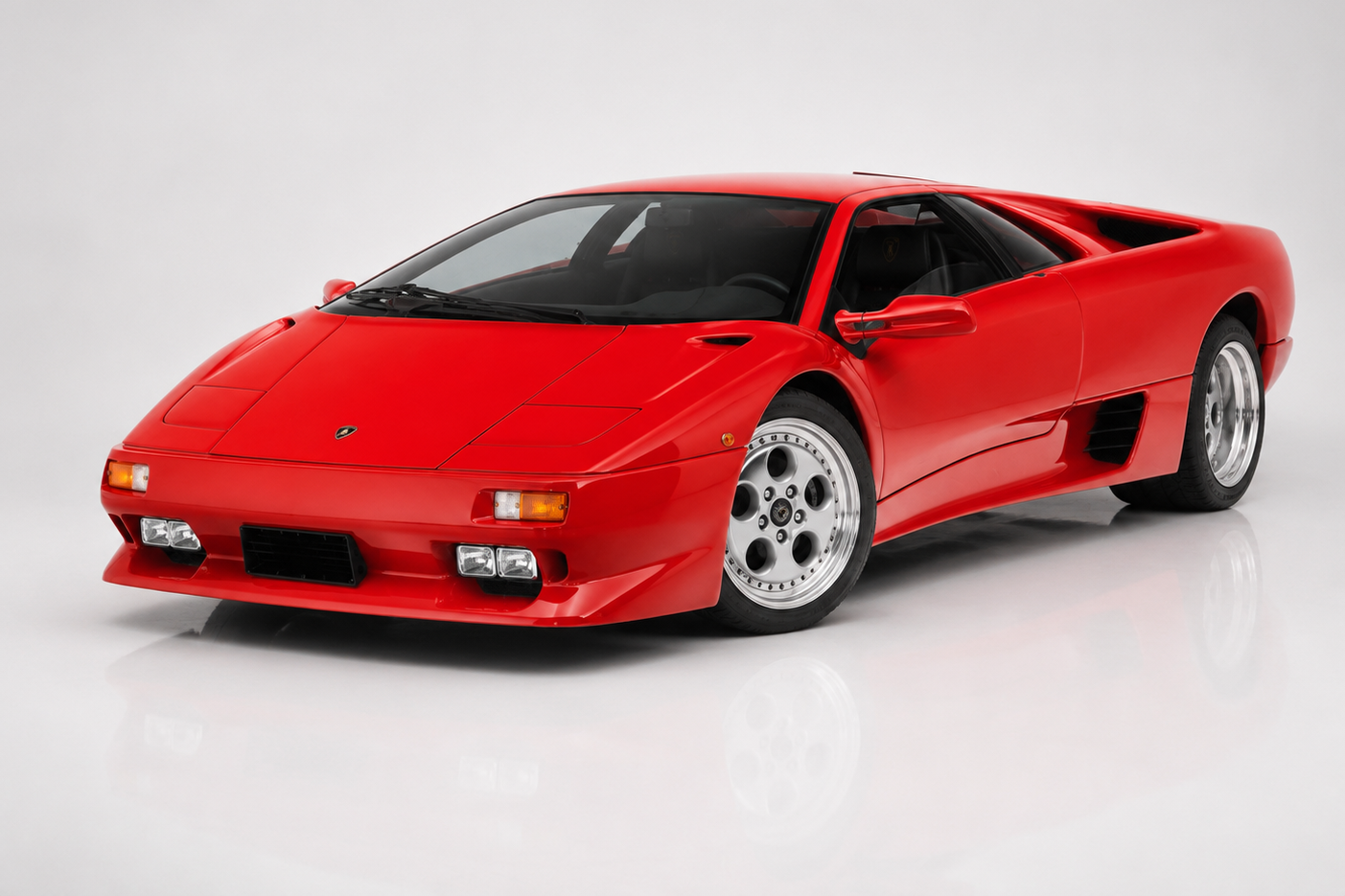
Red Lamborghini Diablo photographed in a studio, front three-quarter view showing the low wedge nose, pop-up headlamps era front lamps, scissor-door coupe silhouette and five-hole split-rim alloy wheels.

Lamborghini Diablo — Stranded Between Two Markets

Added June 2026

Read the full buyer's guide →

The Lamborghini Diablo occupies an uncomfortable position in the current market — and that discomfort is precisely the opportunity.

The Countach, the Diablo's predecessor, has reestablished itself firmly in the upper tier of the collector market. LP400 Periscopio examples now trade in the multi-million-dollar range, and even late Quattrovalvole and 25th Anniversary cars have responded to the general reassessment of 1970s and 1980s Italian supercar significance. The Murciélago, the Diablo's successor, has similarly begun to move: the LP670-4 SuperVeloce is now firmly above £500,000, and the LP640 has followed.

The Diablo — produced from 1990 to 2001 and representing eleven years of Lamborghini's most visceral design philosophy — sits between these two appreciating models and remains significantly more accessible than either.

The March 2026 Lamborghini Miura P400 SV world record at Broad Arrow Amelia Island ($6.605 million) is a directional signal worth reading carefully. When the market reassesses the significance of analog Lamborghini V12 machinery, it tends to move across the range rather than in isolation. The Miura's re-rating preceded the Countach's move; the Countach's move logically precedes the Diablo's.

Within the Diablo range, the hierarchy is reasonably clear. The Diablo GT — 80 units, 575 hp, rear-wheel drive, the most extreme road-going Diablo built — is the variant most likely to separate first and most dramatically. The VT 6.0 (the final AWD evolution, produced 2000–2001 in small numbers) is the most refined and the most immediately driveable of the series. The original rear-wheel drive Diablo, increasingly seen as the purest expression of the design, has a compelling long-term case.

The argument is simply this: the Countach is already expensive, the Murciélago is moving, and the car between them — produced for over a decade, available in multiple significant variants, and representing the last Lamborghini built before electronics and computerised systems fundamentally changed the character of the range — is not priced to reflect that position.

Values to watch: Diablo GT above all others; VT 6.0 final-year examples; original 1990–1993 rear-wheel drive cars.

Read the buyer's guide →

The Watch List reflects editorial opinion only. See our disclaimer.
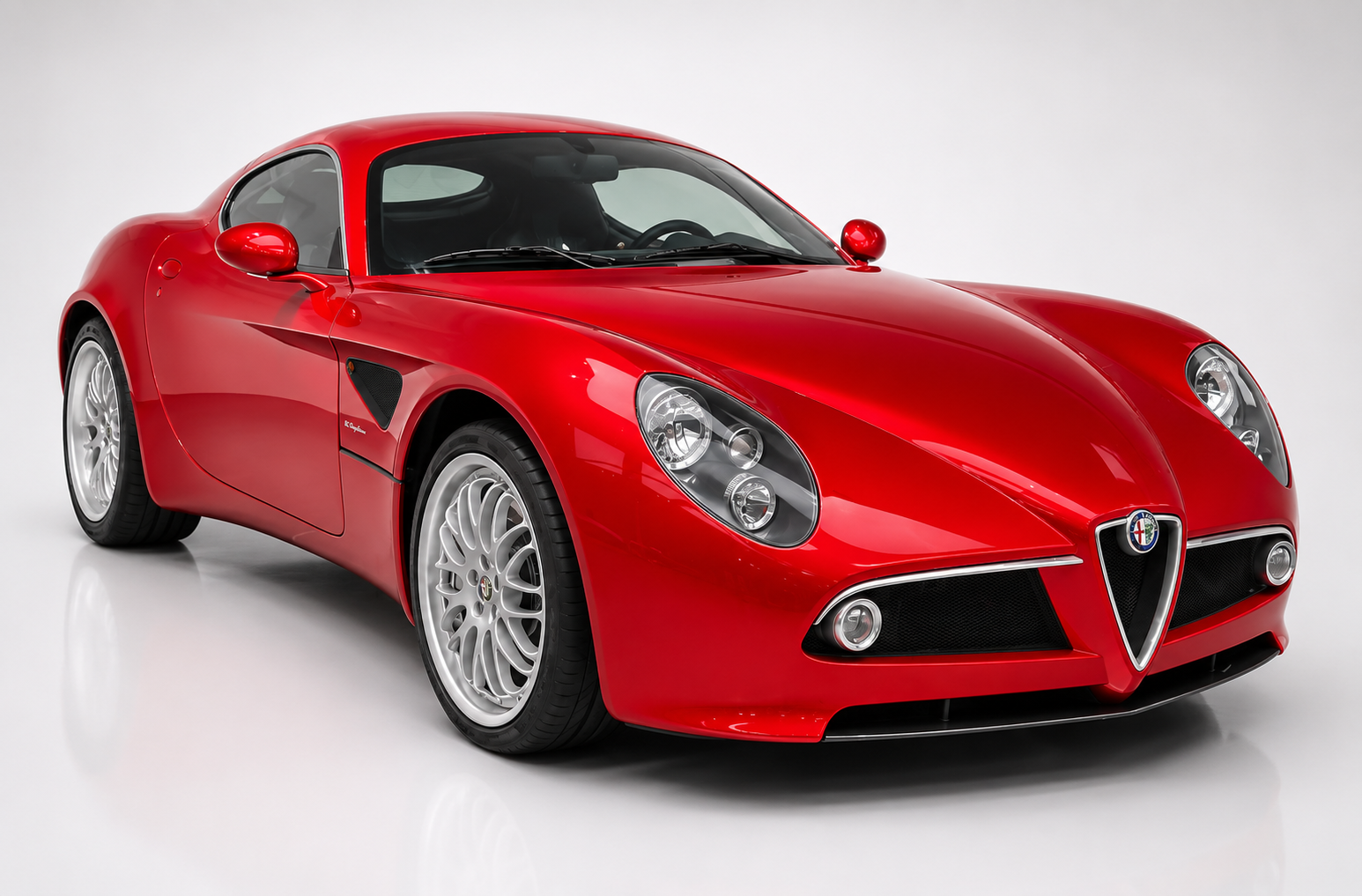
Red Alfa Romeo 8C Competizione coupé in a bright studio, front three-quarter view showing the shield grille, twin round headlights under clear covers, sculpted bonnet, side gill vent behind the front wheel and silver multi-spoke alloy wheels.

Alfa Romeo 8C Competizione — Unrepeatable and Underpriced

Added June 2026

Read the full buyer's guide →

The Alfa Romeo 8C Competizione has the credentials of a serious collector car. The market has not yet fully agreed with that assessment, and that gap is the argument.

The 8C was produced between 2007 and 2010 in two body styles — a coupé (500 units) and a Spider (500 units, 2008–2010) — making 1,000 total. The engine was a 4.7-litre V8 co-developed with Maserati and derived from Ferrari architecture, producing 450 hp. The gearbox was a 6-speed automated manual transaxle. The body was designed by Alfa's Centro Stile under Wolfgang Egger and built by Maserati at Modena. Every material fact about the 8C points toward collector significance: Italian, rare, beautiful, with Ferrari group DNA, and a price at launch that made it unambiguously a halo car.

The 2026 auction season provides specific data to frame the opportunity. A 2005 Maserati MC12 — the 50-unit homologation special also built with Ferrari V12 architecture and at Modena — achieved $9.46 million at Mecum Indianapolis to set a new marque record for Maserati. The principle that Italian exotics with Ferrari Group connections and Modena provenance command exceptional premiums appears well-established.

The 8C is not the MC12. It is a road car rather than a homologation special, and its production scale is larger. But it is genuinely beautiful in a way that few cars of any era are, it shares the Italian-exotic-with-Ferrari-DNA narrative, and it represents something that will not be repeated: the last V8-engined road car Alfa Romeo has built, before the brand's focus moved conclusively toward SUVs and electrification.

The Spider (500 units) trades at a premium to the coupé. Both are currently accessible relative to their historical and material significance. The gap between what the 8C is and what it currently costs has been narrowing quietly for several years. The 2026 Italian exotic narrative makes the direction of travel clearer.

Values to watch: Spider above coupé at all condition grades; coupés in rare original colours over red or black.

Read the buyer's guide →

The Watch List reflects editorial opinion only. See our disclaimer.