Car Collector International

The Collectability Index

A framework for thinking about long-term collectability rather than short-term price movement. Each entry assesses a specific car against a consistent set of criteria: production numbers, mechanical and engineering significance, competition history, design importance, cultural resonance, and the condition and availability of surviving examples. The Index is a collector's tool, not a financial ranking.

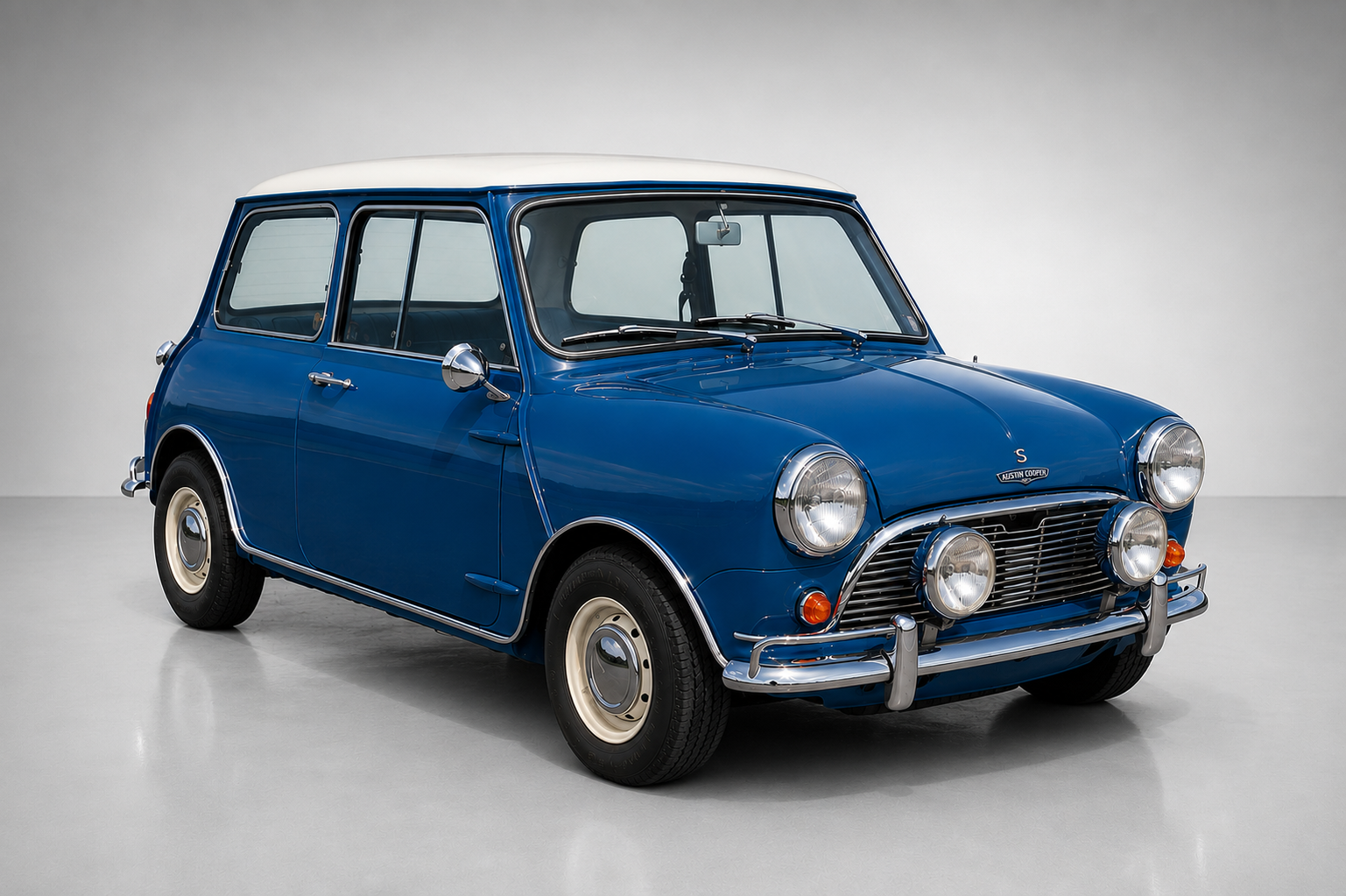
Blue classic Mini Cooper S with white roof in a studio setting, front three-quarter view showing the chrome grille with 'Austin Cooper' badge, chrome bumper with over-riders, round headlamps and body-colour steel wheels with chrome hub caps.

Mini Cooper S (Classic) · 1963–1971

Read the full buyer's guide →

Production
The Cooper S spanned three distinct engine sizes across its run — the 970S (a homologation special built in roughly 1,000 units specifically to qualify for the under-1000cc racing class), the 1071S, and the higher-volume 1275S that carried the model through to the end of production in 1971. Even the rarest variants remain genuinely findable rather than effectively unobtainable, which sets the Cooper S apart from almost everything else in this Index.
Engineering significance
Alec Issigonis's transverse-engine, front-wheel-drive layout — packaging an entire car around the smallest possible footprint — became the template effectively every small car in the world has followed since. Few cars in this Index can claim to have reshaped how an entire category of vehicle is engineered; the Mini Cooper S is one of them.
Competition history
Outright winner of the Monte Carlo Rally in 1964, 1965 and 1967, against works teams running cars three to four times its power. A fourth apparent win in 1966 — the Mini took the top three places on the road — was stripped on a contested headlight technicality, a decision even rival French rally fans were reportedly embarrassed by. Few giant-killing stories in motorsport are as well documented or as widely retold.
Design importance
The Cooper S didn't change the standard Mini's silhouette so much as prove it didn't need to — the same compact, upright two-box shape that defined the standard car, with no concession to performance beyond what the engineering required. That restraint is itself part of the car's enduring appeal.
Cultural resonance
The 'David versus Goliath' framing of the Monte Carlo wins made the Cooper S a genuine folk hero in period, and the Mini more broadly became one of the defining cultural objects of 1960s Britain. Few classic cars carry as much recognition outside enthusiast circles.
Condition & availability
A mature, deep specialist network and decades of parts support make ownership genuinely practical. Hagerty's own price guide puts most Cooper S variants — including the rare 970S — within a £14,000–£47,000 range depending on specification and condition, a fraction of what comparable competition pedigree commands elsewhere in this Index.

Why it sits in the Index

The Mini Cooper S scores at or near the top of CCI's framework on engineering significance, competition history and cultural resonance — the same criteria that put the Ferrari 250 GTO at the apex of this Index — while remaining genuinely attainable. That combination is precisely the point of building a framework rather than a price-ordered list.
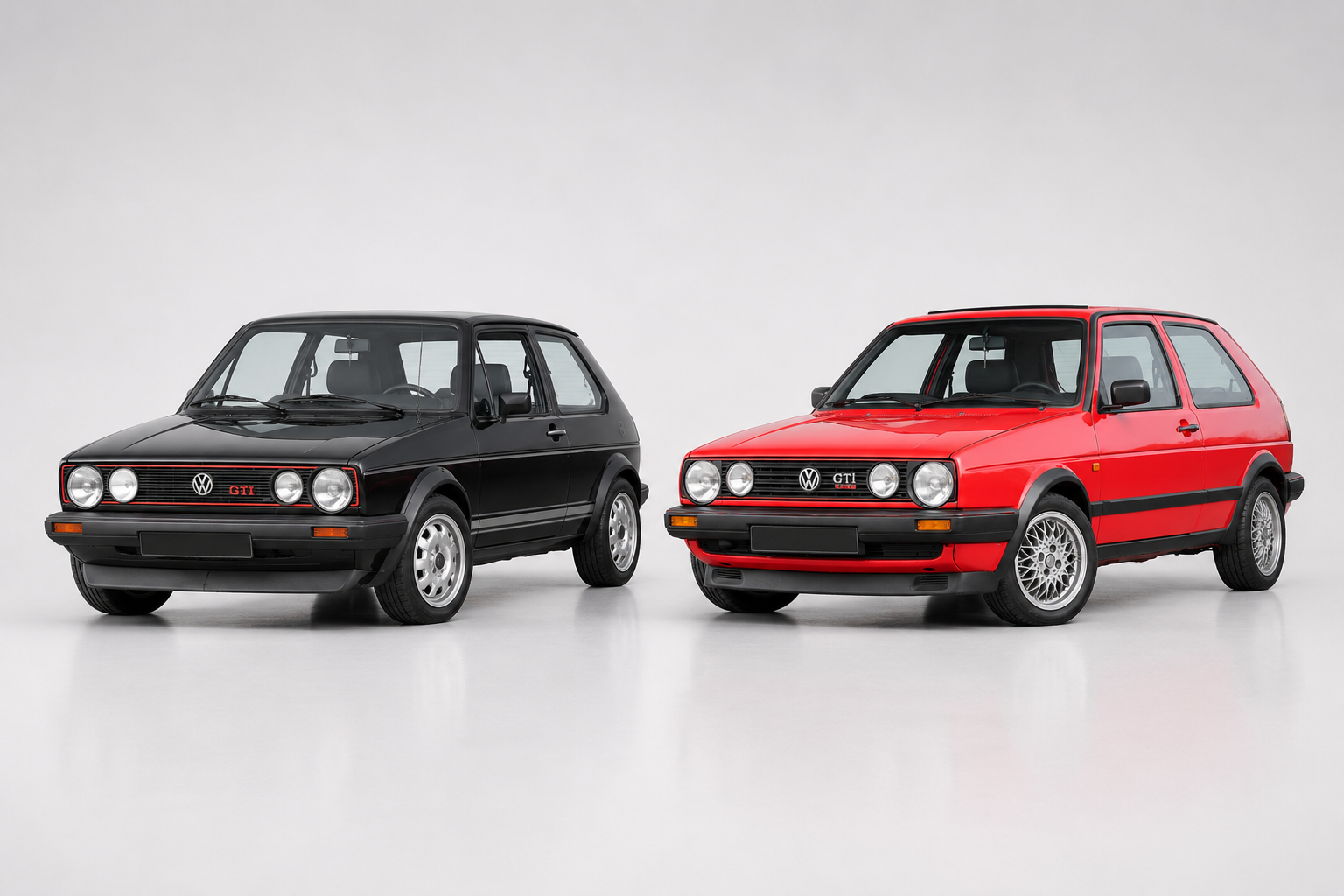
Black Mk1 Golf GTI and red Mk2 Golf GTI 16V side by side, front three-quarter view.

Volkswagen Golf GTI Mk1 · 1976–1983

Read the full buyer's guide →

Production
Volkswagen expected to sell around 5,000 units — the minimum required to homologate the car for Group One touring car racing. It sold 462,000 before production ended in 1983, one of the largest gaps between expectation and outcome of any car in this Index.
Engineering significance
A 108 hp fuel-injected 1.6-litre engine in a car weighing around 810 kg was, on paper, an unremarkable specification. What made the GTI significant was the coherence of the whole package — firmer suspension, larger brakes, a close-ratio gearbox — applied to an ordinary, practical hatchback rather than a dedicated sports car body.
Competition history
The GTI's significance was never primarily about racing pedigree, and the Index doesn't pretend otherwise — its importance lies in what it did to the production car market rather than the results column. Where the Mini Cooper S earns its place through what it won, the Golf GTI earns its through what it started.
Design importance
The red grille surround, the golf-ball gearknob and the tartan seat trim became visual shorthand for an entire genre of car, referenced and re-referenced by every manufacturer that has built a hot hatch since.
Cultural resonance
Widely regarded — though not technically the first of its kind, a distinction usually credited to the 1970s Simca 1100Ti — as the car that created and popularised the hot hatch as a mainstream category, turning a niche enthusiast idea into one of the best-selling formulas in the entire industry.
Condition & availability
Survivors are less common than the production numbers suggest, since the GTI was bought and used as an everyday car by most of its original owners rather than preserved from new. Genuinely original, unmodified examples command a real premium over the many modified or restored cars in circulation.

Why it sits in the Index

The Golf GTI scores moderately on engineering significance and not at all on competition pedigree, yet ranks among the highest possible scores on cultural resonance and design importance — proof that CCI's framework rewards different kinds of significance rather than only the kind that wins races or sets lap records.

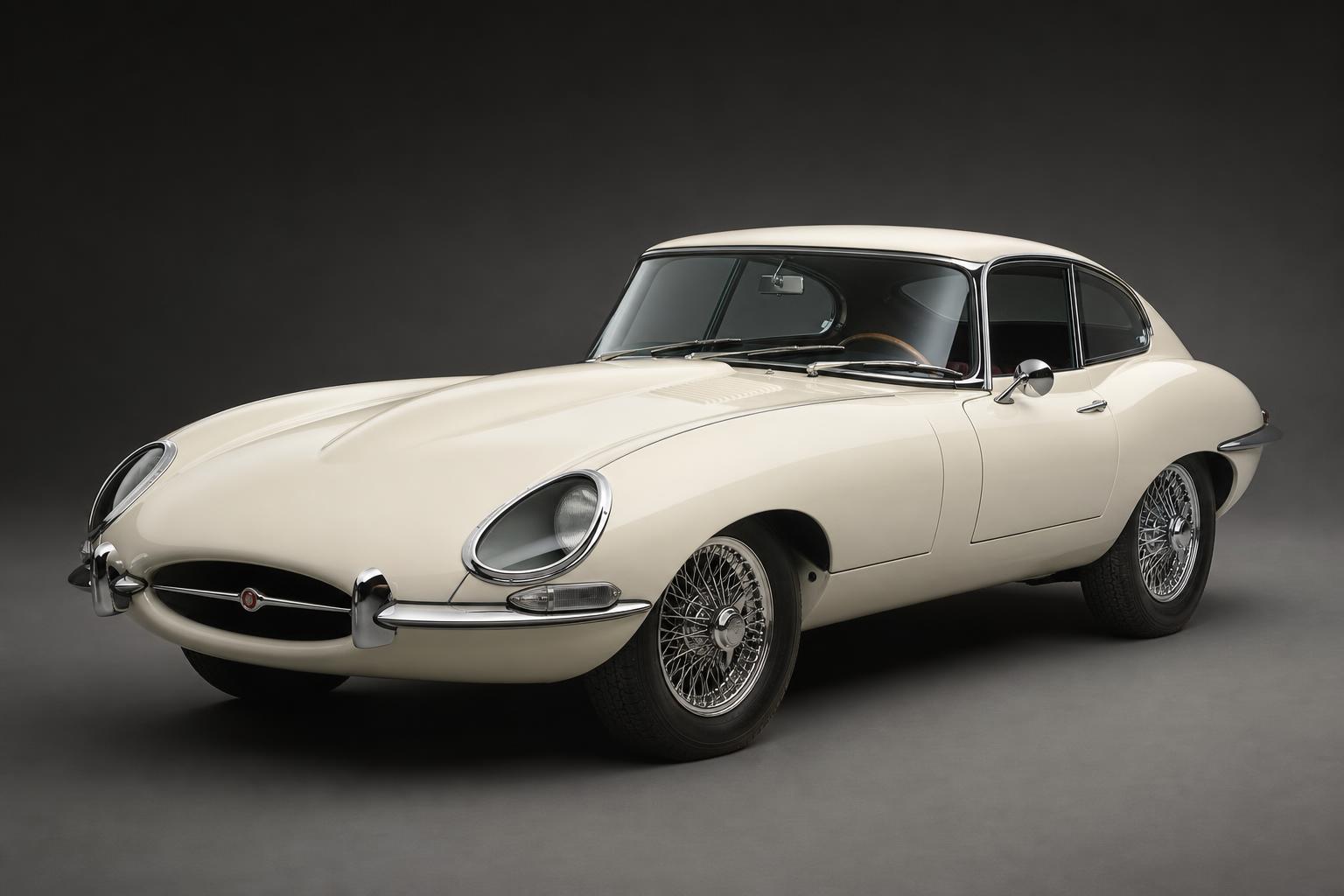
Jaguar E-Type — featured in CCI's Collectability Index

Jaguar E-Type Series 1 · 1961–1968

Read the full buyer's guide →

Production
38,419 Series 1 cars built across roadster, fixed-head coupé and 2+2 body styles — genuinely substantial for a car of this calibre, which keeps ownership accessible even as the most desirable specifications command real premiums. Within that total sits the true rarity: only 12 Lightweight competition E-Types were built of a planned 18, and they now trade in the £5–8 million range.
Engineering significance
Independent suspension at all four corners, disc brakes front and rear, and a riveted/bonded monocoque tub were all genuine firsts for an accessible road car in 1961 — engineering that had filtered down directly from Jaguar's D-Type Le Mans programme rather than being developed for road use from scratch.
Competition history
The 12 factory Lightweights were built specifically to take the E-Type racing, and Briggs Cunningham entered a team of three at the 1963 Le Mans 24 Hours. Specialists who race them in historic events today report performance genuinely competitive with the Ferrari 250 GTO of the same era — a claim that says as much about the E-Type's chassis as it does about marketing.
Design importance
Malcolm Sayer's aerodynamically-developed bodywork, drawn from his work on the C-Type and D-Type racers, produced one of the most widely recognised automotive silhouettes ever built. The line from nose to tail has rarely been bettered for sheer visual coherence.
Cultural resonance
Reportedly described by Enzo Ferrari as the most beautiful car ever made, and adopted instantly by the era's biggest cultural figures — Frank Sinatra is said to have ordered one on sight at its 1961 launch. Few cars are as immediately legible as a symbol of their decade.
Condition & availability
A large surviving population and a deep, mature specialist network make sourcing a good example straightforward at almost any budget level, from usable drivers to concours-standard cars — genuine rarity is reserved for the Lightweights and the earliest 'flat-floor' cars.

Why it sits in the Index

The E-Type demonstrates that collectability isn't only about scarcity. It scores moderately on production numbers and highly on every other measure — engineering, design, competition pedigree and cultural weight — which is exactly the kind of profile the Index exists to surface. It remains one of the most complete arguments for long-term significance at a price point still meaningfully below the era's Italian equivalents.

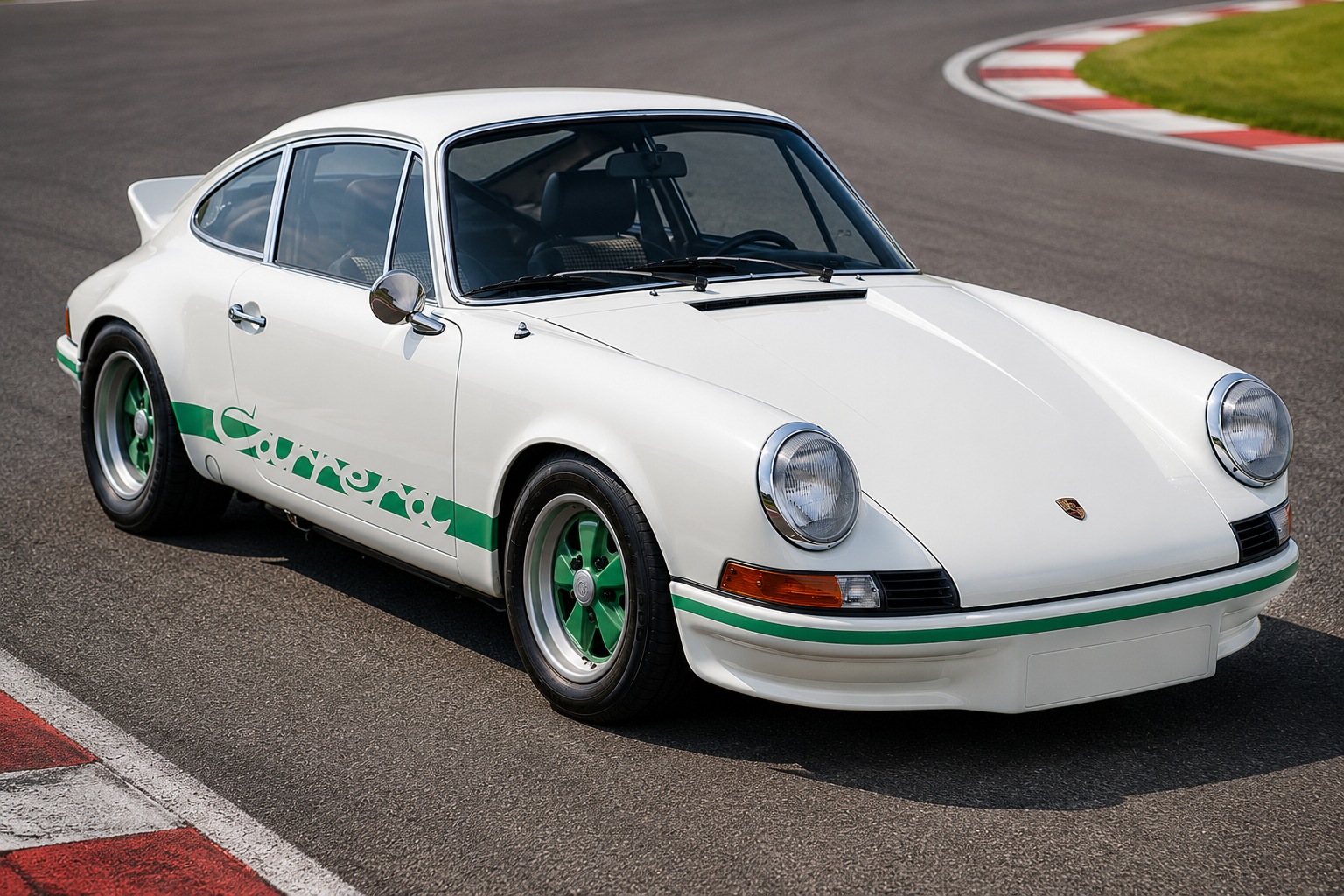
White Porsche 911 Carrera RS 2.7 with green Carrera side script, green Fuchs wheels and ducktail rear spoiler, photographed front three-quarter on a race circuit with red-and-white kerbing.

Porsche 911 Carrera RS 2.7 · 1972–1973

Read the full buyer's guide →

Production
1,580 examples in total — 1,308 Touring, 200 Lightweight ('Sport,' M471), 17 unconverted homologation cars and 55 factory RSR competition cars — confirmed directly by Porsche's own records. Originally planned as a 500-unit homologation run that sold out within weeks, forcing two further production batches.
Engineering significance
The RS 2.7 was the car that established the formula every subsequent Porsche RS has followed — a lightened, homologation-driven variant of the standard car rather than a separate model. Its wind-tunnel-developed ducktail spoiler was a genuine engineering solution to measured rear-end lift, not a styling exercise, and the widened rear track to accommodate larger wheels set the visual template for every wide-body 911 that followed.
Competition history
Built to homologate the 911 for FIA Group 4 GT racing, the RS 2.7 and its RSR derivative won the Targa Florio outright in 1973 and took three international and seven national championships in its first season alone, establishing the competition credentials that underpin the entire RS lineage to this day.
Design importance
The ducktail spoiler and 'Carrera' script in period typeface are among the most recognisable visual signifiers in the entire Porsche range, copied and referenced on countless subsequent models without ever quite being matched for their period-correct purity.
Cultural resonance
The RS 2.7 is the car most often cited by Porsche specialists themselves as the definitive air-cooled 911 — not the most powerful, the rarest or the most valuable variant of any era, but the one that established what a 'proper' 911 is supposed to feel like.
Condition & availability
Production records are genuinely complete and the surviving population is closely tracked by marque specialists; the Lightweight in particular carries a well-known forgery risk given the premium it commands over the Touring, making documented provenance essential rather than optional.

Why it sits in the Index

Every criterion in CCI's framework points the same direction for the Carrera RS 2.7 — genuine engineering purpose, genuine competition pedigree, and a design vocabulary the rest of the Porsche range still draws on five decades later. It is, by consensus among the people who know the model best, the car the RS name exists to describe.

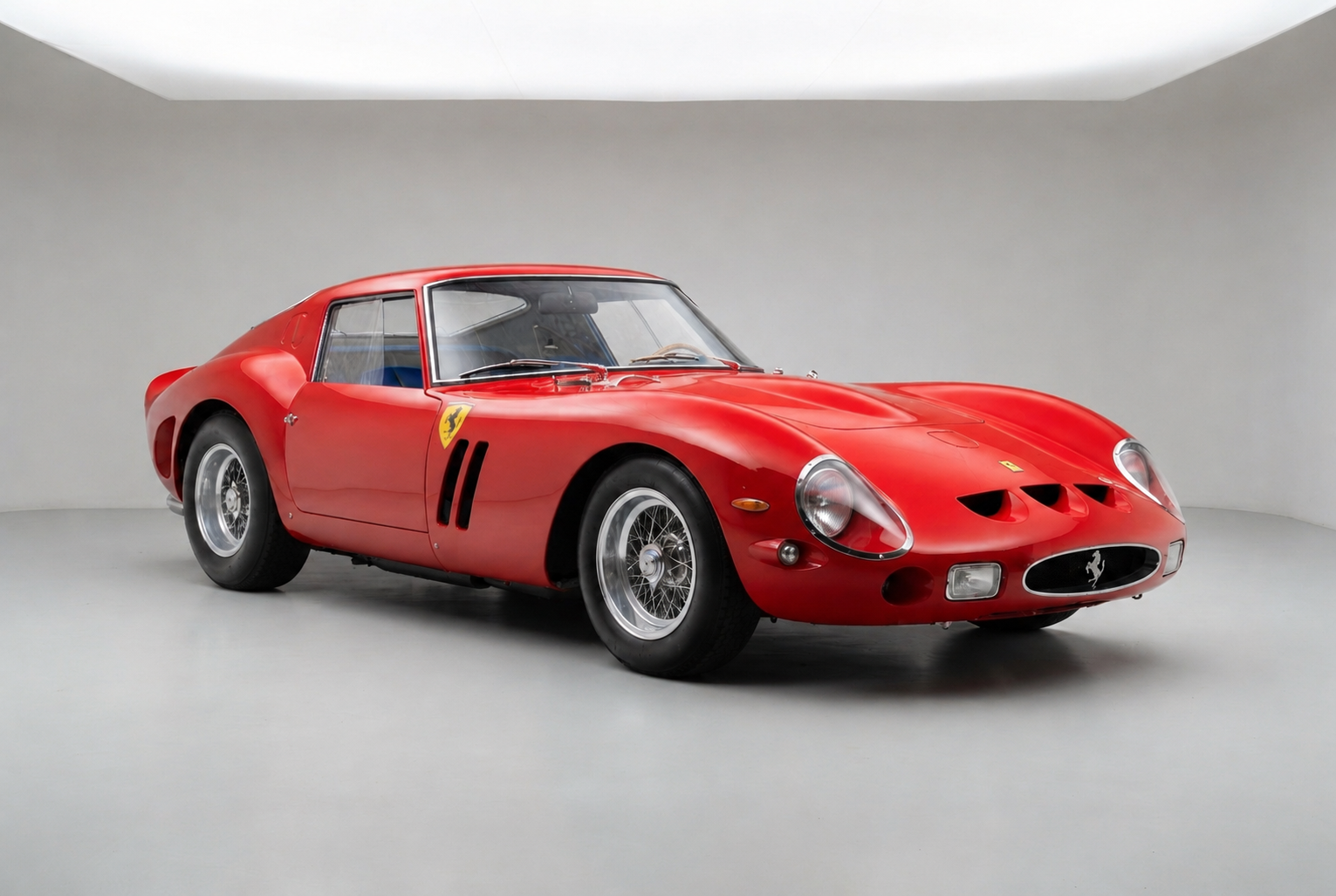
Red Ferrari 250 GTO Series I, front three-quarter studio view on a pale grey backdrop, showing the oval grille with prancing horse badge, covered headlamps, the three D-shaped nose panels, Borrani wire wheels and the yellow Scuderia shield on the door.

Ferrari 250 GTO · 1962–1964

Read the full buyer's guide →

Production
36 examples — 33 with the original 3.0-litre Series I bodywork and 3 with the revised 1964 Series II body — making it among the most production-constrained cars ever to compete at the top level of international motorsport while still being road-registrable.
Engineering significance
Developed directly from the 250 GT SWB competition programme under Giotto Bizzarrini before his departure from Ferrari, the GTO's chassis and aerodynamic package represented the final, most refined expression of the front-engined V12 GT racer before mid-engined cars made the formula obsolete.
Competition history
The GTO won the FIA International Championship for GT Manufacturers in 1962, 1963 and 1964, along with class wins at Le Mans and victories in the Tour de France Automobile — a competition record few road-legal cars from any era can match.
Design importance
Scaglietti's coachwork, developed through extensive wind-tunnel and track testing rather than styling-led design, remains one of the most studied automotive shapes in history — form following function so completely that the result became, almost incidentally, one of the most celebrated designs ever produced.
Cultural resonance
The 250 GTO is the car against which every other collector car's value and significance is measured, a status that exists independently of any single auction result and has held for decades rather than reflecting a current market moment.
Condition & availability
Every chassis is individually documented and tracked by marque historians; the population is effectively closed and has been for sixty years, with ownership changes happening privately as often as at public auction.

Why it sits in the Index

The 250 GTO is the reference point the rest of this Index is calibrated against — the car that scores at or near the maximum on every criterion simultaneously, which is precisely why it sits alone at the top of the collector car hierarchy rather than merely near it.