
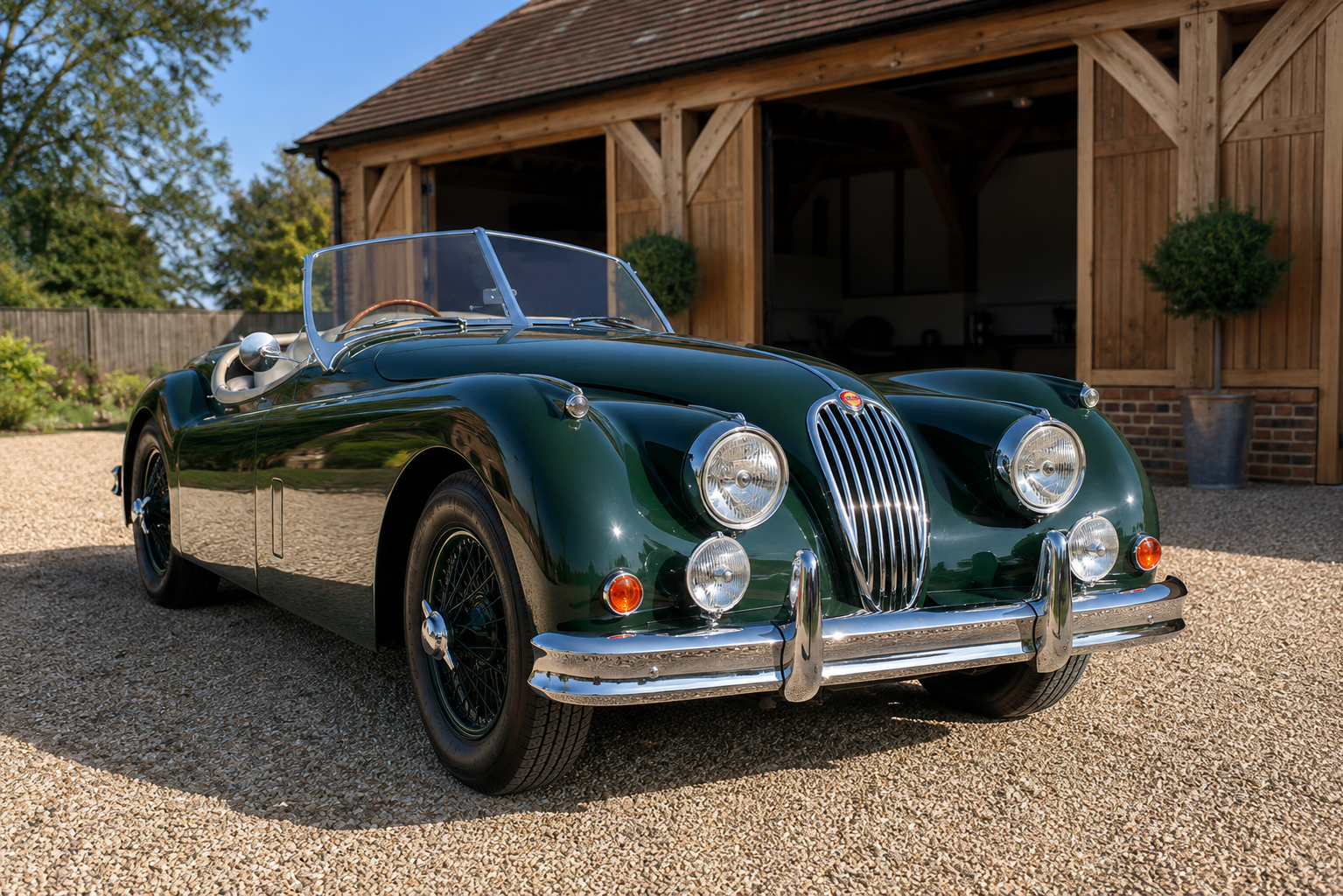
XK120 Aluminium Roadster · 1948–1950
242 (of which 184 LHD confirmed by RM Sotheby's Miami 2025 Lot 278; ~58 RHD by arithmetic — derived, not sourced)
- Distinguishing features
- Hand-formed aluminium panels over an ash frame — the launch specification of the XK120. Volume production switched to steel bodies in early 1950. Chassis numbers fall in early 660xxx (RHD) and 670xxx (LHD) sequences.
- Value premium
- Roughly 2–3× a comparable matching-numbers steel XK120 Roadster. Restored, matching-numbers alloy cars have traded at $407,000–$495,000 in verified RM Sotheby's sales (Monterey 2015 Lot 213; Amelia Island 2014 Lot 141). Preserved / unrestored examples trade well below that band — the Miami 2025 Lot 278 unrestored car sold at $89,600.
- Inspection points
- Magnet test the body panels to confirm aluminium construction throughout. Verify the chassis number falls within the alloy sequence (approximately 660001–660058 RHD and 670001–670184 LHD) and cross-check against a JDHT Heritage Certificate. Inspect the ash frame for rot, wood-worm and prior repair — a compromised frame is a fundamental structural issue.
- Authentication
- Steel-bodied XK120s have been re-panelled in aluminium to imitate alloy cars; only the original 242 chassis are genuine. Demand a JDHT Heritage Certificate confirming original alloy construction and continuous chassis identity.