
Car Collector International
Classic · 1933

Pierce-Arrow Silver Arrow

The streamlined 1933 Silver Arrow — five-passenger sedan with a 175 bhp V12 and the boldest American body of its year.

Car Collector International Editorial
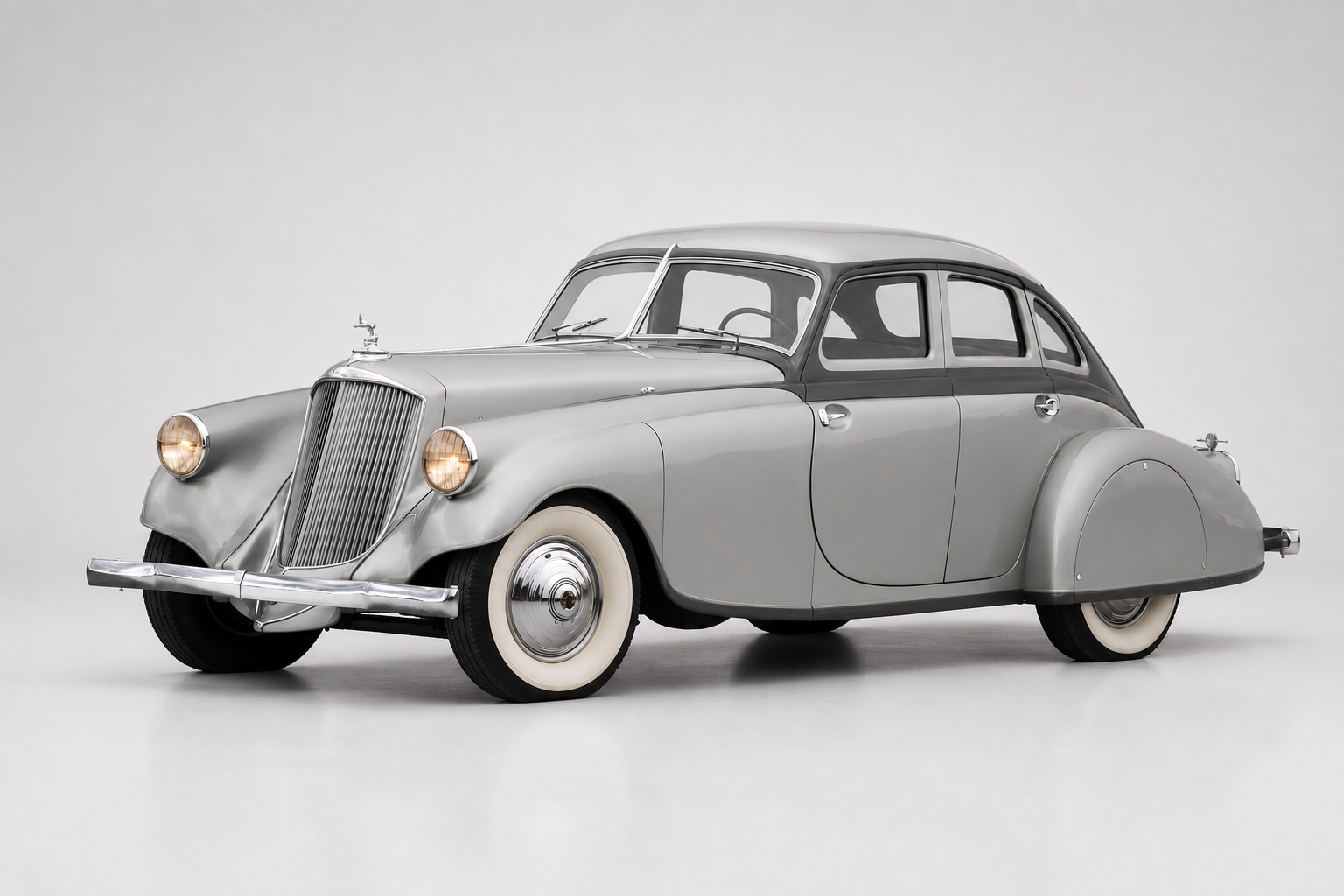
Silver 1933 Pierce-Arrow Silver Arrow streamlined fastback sedan in a studio, front three-quarter view showing the enclosed front fenders, low-set headlamps flanking the tall grille, archer radiator mascot, full rear wheel spats and whitewall tyres.
Overview

Why this car matters

The 1933 Pierce-Arrow Silver Arrow was a five-passenger streamlined sedan — flush front fenders into the doors, integrated spare-wheel storage and a smooth fastback profile. Powered by a 7,568 cc 175 bhp V12, only five Silver Arrows were built at the Studebaker plant for the 1933 Chicago World's Fair, with three known to survive today. A small follow-up production of Silver Arrow coupes (less radical bodywork) was offered in 1934–1935.

Among the most influential American streamlined designs of the 1930s; the original 1933 cars are essentially museum pieces.

Variants

Range and production

VariantYearsProductionNotes
Silver Arrow 193319335Streamlined sedan; three survive.
Silver Arrow Coupe 1934–19351934–1935Not separately recordedLess radical body; mainstream production.
Buyer's Guide

What to look for

Provenance and originality

For pre-war and vintage cars such as the Pierce-Arrow Silver Arrow, provenance is paramount. Chassis and engine number matching, period coachbuilder records, factory build sheets where available, continuous ownership documentation, original handbooks and any competition or concours history are the foundation of value. Verified 1933 World's Fair car provenance; 1934–1935 cars trade as standard Pierce-Arrow coupes.

Mechanical inspection priorities

Pierce-Arrow V12 is robust if maintained; standard pre-war American luxury service items. A pre-purchase inspection by a recognised marque specialist should include compression and leak-down testing, magneto and ignition checks, chassis straightness and frame survey, axle and steering wear assessment, brake system review (mechanical or hydraulic per period), and an extended road test on varied terrain to expose carburation, cooling and gearbox issues that only emerge under sustained running.

Body, chassis and originality of coachwork

Pre-war coachwork is rarely truly original after a century of use. Establish whether the body is original to the chassis (period photographs, build records, coachbuilder plates), whether it has been re-bodied at any point, and the standard of any restoration. Quality of timber framing, ash health, panel beating and paint depth are all critical. Concealed structural rot, re-bodies presented as original, and 'tribute' cars built on later or unrelated chassis must be priced accordingly.

Specification and event eligibility

Verified original 1933 World's Fair Silver Arrow (three survive); the 1934–1935 Silver Arrow coupes are a separate, more accessible category. For vintage cars, event eligibility — Mille Miglia, Goodwood Revival, Pebble Beach, VSCC events, Le Mans Classic — can underwrite a substantial proportion of market value. Verify FIA/FIVA papers, period race history where claimed, and the car's standing with the relevant marque registry before purchase.

Ownership

Living with it

Typical mileage
300–2,000 miles typical for vintage use; rally cars higher
Service interval
Annual full service; pre-event check before any rally or tour
Annual running cost
$8,000 – $35,000 depending on use, storage and event programme
Fuel economy
10–18 mpg typical; heavy carburetted engines run rich
Insurance
Use a specialist agreed-value vintage policy with declared value reviewed annually. Premiums reflect declared value, storage, event use and driver experience with pre-war machinery.

Maintenance planning

Vintage cars require disciplined preventive maintenance: lubrication regimes, magneto service, carburettor synchronisation, brake adjustment, and timber and trim conservation. A car used regularly and serviced annually by a specialist will outlast a stored example neglected for decades.

Specialist access and parts

Pierce-Arrow Society and a small US specialist community. Confirm the availability of marque specialists, period-correct fasteners, coachwork trim, instruments and tyres before committing. A car requiring fabricated one-off parts will absorb time and cost that a similar example with active specialist support will not.
Common Problems

Known issues by system

Body

Streamlined aluminium body originality (only 5 built in 1933)

CriticalValue impact: original 1933 Silver Arrow vs. later sedan is fundamental
Symptoms — All five 1933 Silver Arrow cars are known; later production sedans are different cars.
Inspection — Verify with Pierce-Arrow Society register.
Engine

Pierce V-12 bearing wear and timing gear noise

Major$20,000 – $45,000
Symptoms — Low hot oil pressure, timing gear whine.
Inspection — Hot oil pressure; listen for timing gear noise; specialist required.
Coachwork

Concealed-headlight fender and streamlined trunk integrity

Major$15,000 – $40,000
Symptoms — Rust at fender / body seams, headlight pod alignment.
Inspection — Detailed body survey.
Parts

Pierce-Arrow specialists are scarce

MajorVariable
Symptoms — Component failures require specialist sourcing.
Inspection — Pierce-Arrow Society network is essential.
Auctions

Recent results

DateAuctionCarMileageResult
2024-08-29
Worldwide Auctioneers
Auburn
1934 Silver Arrow Coupe (production model)
Lot 645.
$235,200
Sold
2023-04-29
Worldwide Auctioneers
The Enthusiast Auction, Auburn
1935 Silver Arrow Model 845 (production model)
Lot 71.
$103,040
Sold
Investment

Long-term outlook

Blue ChipHorizon: 10+ years

1933 cars are essentially permanent assets; 1934–1935 production coupes are stable.

Our view, not advice. This section is Car Collector International's editorial judgement on where this model sits in the collector market, based on the production, specification and market data set out in this guide. It is not a recommendation to buy or sell and it is not investment advice. Values can fall as well as rise.

Recommended

The trusted network

Specialists

  • Pierce-Arrow marque specialist
    View →
    UK / Europe
    Pierce-Arrow Silver Arrow restoration, mechanical service and originality reviews.
  • Pre-war coachwork specialist
    View →
    International
    Timber framing, ash conservation, panel beating and period-correct paint for pre-war coachwork.
  • Concours preparation studio
    View →
    International
    Concours preparation, detailing and event support for pre-war and vintage cars.
  • Hagerty
    View →
    USA / UK / EU
    Agreed-value collector insurance specialising in pre-war and vintage cars.
  • Lockton Performance
    View →
    UK / EU
    Specialist agreed-value cover for significant pre-war and competition cars.

Storage

  • Windrush Car Storage
    View →
    London & Cotswolds, UK
    Climate-controlled storage and collection management for pre-war and classic cars.
  • AutoVault
    View →
    Essex, UK
    Dehumidified storage at 55% RH in purpose-built sealed buildings, with maintenance programmes and individual motor-trade insurance cover.
  • Classic Car Club Manhattan
    View →
    New York, NY
    Secure urban storage for collector and pre-war cars.

Transport

  • CARS UK
    View →
    UK & Europe
    Enclosed concours and event transport for pre-war and vintage machinery.
  • Reliable Carriers
    View →
    USA (national)
    Enclosed coast-to-coast transport for pre-war American and European cars.
  • FERRLOG
    View →
    Italy / Europe
    Air-ride enclosed transport for Italian and European collector cars.

Enjoyed this guide?

Get new buyer's guides and collector market intelligence delivered to your inbox. No spam. We respect your inbox.

The valuation figures in this guide are for research purposes only and do not constitute financial or investment advice. See our full disclaimer.