
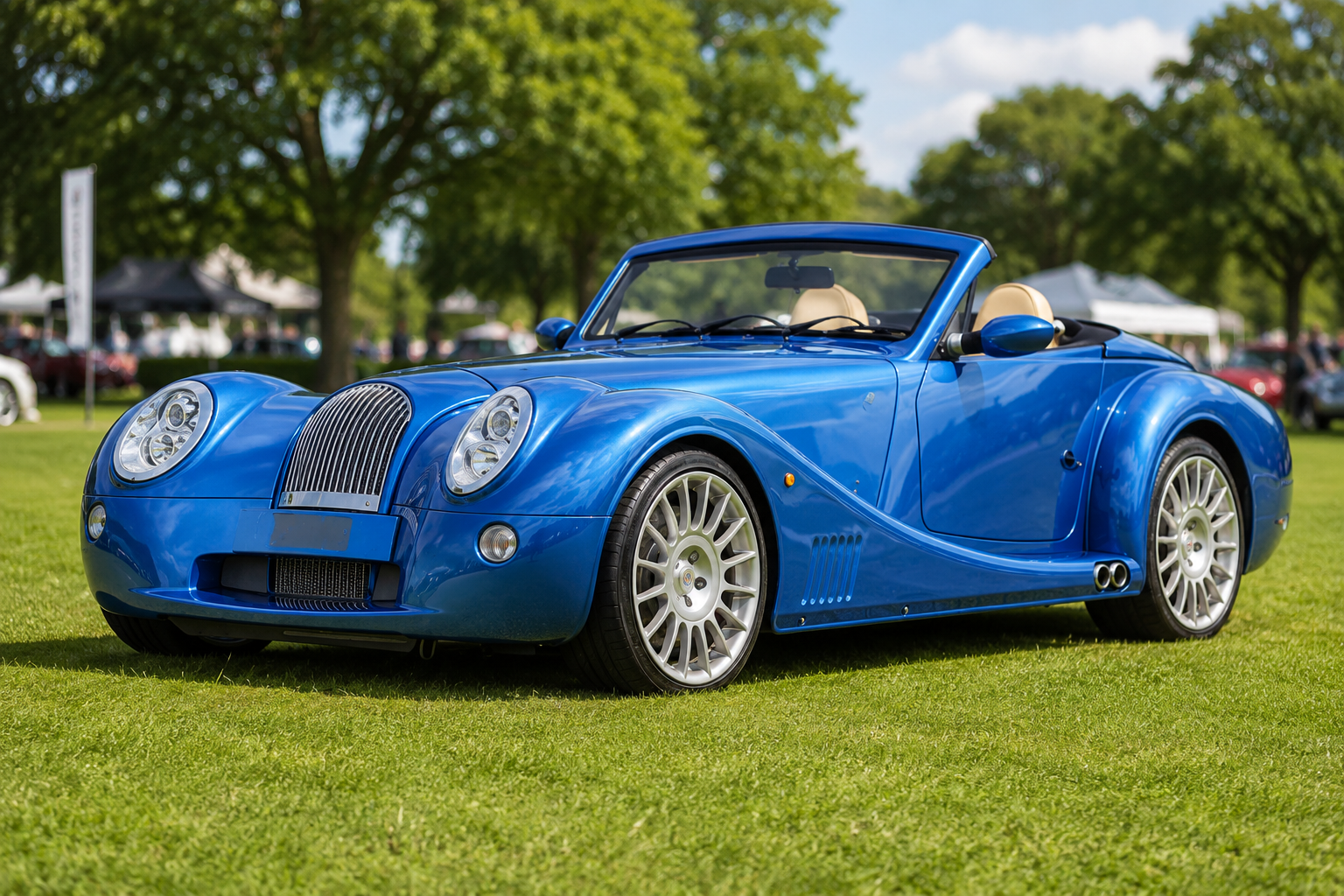
- Engine — Series 1 (2000–2004)
- 4.4L BMW M62TUB44 V8 — 282 bhp / 286 PS at 5,500 rpm; 322 lbf·ft / 430 N·m at 3,750 rpm (source: Wikipedia, fetched 6 July 2026)
- Engine — GTN (2004)
- 4.6L Alpina BMW V8 — 330 bhp / 334 PS (source: Wikipedia, fetched 6 July 2026: 'the 4.6L Alpina BMW engine used on Alpina B10 and on BMW X5 4.6iS – 4619cc, 330bhp (246kW)')
- Engine — Series 2 / 3 / AeroMax
- 4.4L BMW N62B44 V8 with DIVA inlet manifold — 333 bhp / 338 PS at 6,100 rpm; 331 lbf·ft / 450 N·m at 3,600 rpm (source: Wikipedia, fetched 6 July 2026)
- Engine — Series 4 / 5, Aero SuperSports / Coupe, Aero GT, Plus 8 (2012–2019)
- 4.8L BMW N62B48 V8 — 362 bhp / 367 PS; 370 lbf·ft (source: Wikipedia, fetched 6 July 2026; RM Sotheby's Open Roads March 2021 Lot 223 Aero SuperSports catalogue, fetched, verbatim: '362 hp, 361 lb-ft 4.8-liter BMW V-8')
- Transmission
- Getrag six-speed manual across the range; ZF 6HP26 six-speed automatic optional from Series 4 (2007) onward and standard on many Aero SuperSports, Aero Coupe and AeroMax cars (RM Sotheby's London 2017 Lot 108 AeroMax fetched: 'this car is fitted with the optional automatic transmission'; Bonhams Chantilly 2015 Lot 30 AeroMax fetched: 'has the six-speed automatic transmission').
- Chassis
- Bonded-aluminium alloy chassis (Morgan's first — 'the first Morgan vehicle with an aluminium chassis and frame as opposed to traditional Morgan vehicles ('trads') that have an aluminium skinned wooden body tub on a steel chassis', Wikipedia, fetched 6 July 2026), with ash frame elements retained as a link to the traditional cars.
- Suspension
- Series 1 – 4: fully independent, double wishbones all round with inboard shock absorbers, Eibach coil springs, Koni dampers, rose-jointed suspension; NO anti-roll bars ('It does not use anti-roll bars, an oddity in a modern sporting car', Wikipedia, fetched). Series 5 / Aero GT: completely new front and rear suspension WITH anti-roll bars, outboard conventional wishbones and coil-over units (Wikipedia, fetched).
- Brakes
- Cast-iron discs with AP Racing six-pot calipers at the front and two-pot calipers at the rear (Wikipedia, fetched 6 July 2026).
- Wheels
- Series 1: centre-lock magnesium wheels. Series 2 onward: conventional five-stud wheels; PCD 114.3mm, 5-hole, hub 68mm, ET 30. Fitments 8.5J × 18 (225/40R18 front, 245/40R18 rear) or 8.5J × 19 (225/35R19 front, 245/35R19 rear) — Wikipedia, fetched. AeroMax / Aero SuperSports / Aero Coupe often on Rays alloys (introduced with AeroMax).
- Body
- Aluminium body panels formed by Superform ('Whilst the car structure comes as pre-formed bonded aluminium elements significant work goes into hand making the overall vehicle', Wikipedia, fetched). Roadster (Series 1 – 4, Series 5), boat-tail Coupé (AeroMax), Targa (Aero SuperSports), fixed-roof Coupé (Aero Coupe).
- Performance — Series 1
- 0–62 mph in 4.8 seconds; top speed 160 mph / 257 km/h (source: Wikipedia, fetched 6 July 2026)
- Performance — GTN
- 0–60 mph in 4.3 seconds; top speed 175 mph / 266 km/h (source: Wikipedia, fetched 6 July 2026)
- Performance — Series 4 / SuperSports
- Top speed ~170 mph / 270 km/h; 0–100 km/h 4.3 seconds (manual) or 4.1 seconds (automatic) — Wikipedia, fetched. RM Sotheby's Open Roads March 2021 Lot 223 (Aero SuperSports) fetched: '0 to 60 mph in just 4.5 seconds and tops out at 170 mph'.
- Kerb weight
- ~1,180 kg / 2,596 lb (Series 4 factory spec, Wikipedia fetched); the RM Sotheby's Aero SuperSports catalogue (Lot 223, fetched) quotes 2,524 lb ('Weighs just 2,524 lbs thanks to its hand-made aluminum skin and chassis').
- Production window
- 2000–2018, Malvern Link, England. Factory capacity 'up to 14 cars a week (Aeros and trads)' (Wikipedia, fetched).
- Chassis-number examples (fetched)
- SA9AER0MAX48A0043 (2011 AeroMax, RM Sotheby's London 2017 Lot 108); SA9AEROMAX48A0100 (2009 AeroMax #100 of 100, Bonhams Chantilly 2015 Lot 30); SA9FASSA4BE004100 (2010 Aero SuperSports, RM Sotheby's Open Roads March 2021 Lot 223).