
Car Collector International
Classic · 1968–2004

Morgan Plus 8

The Rover-V8 Morgan that outlived every rival ash-framed sports car — thirty-six years of hand-built, unfashionable, defiantly analogue engineering.

Roadster
Car Collector International Editorial
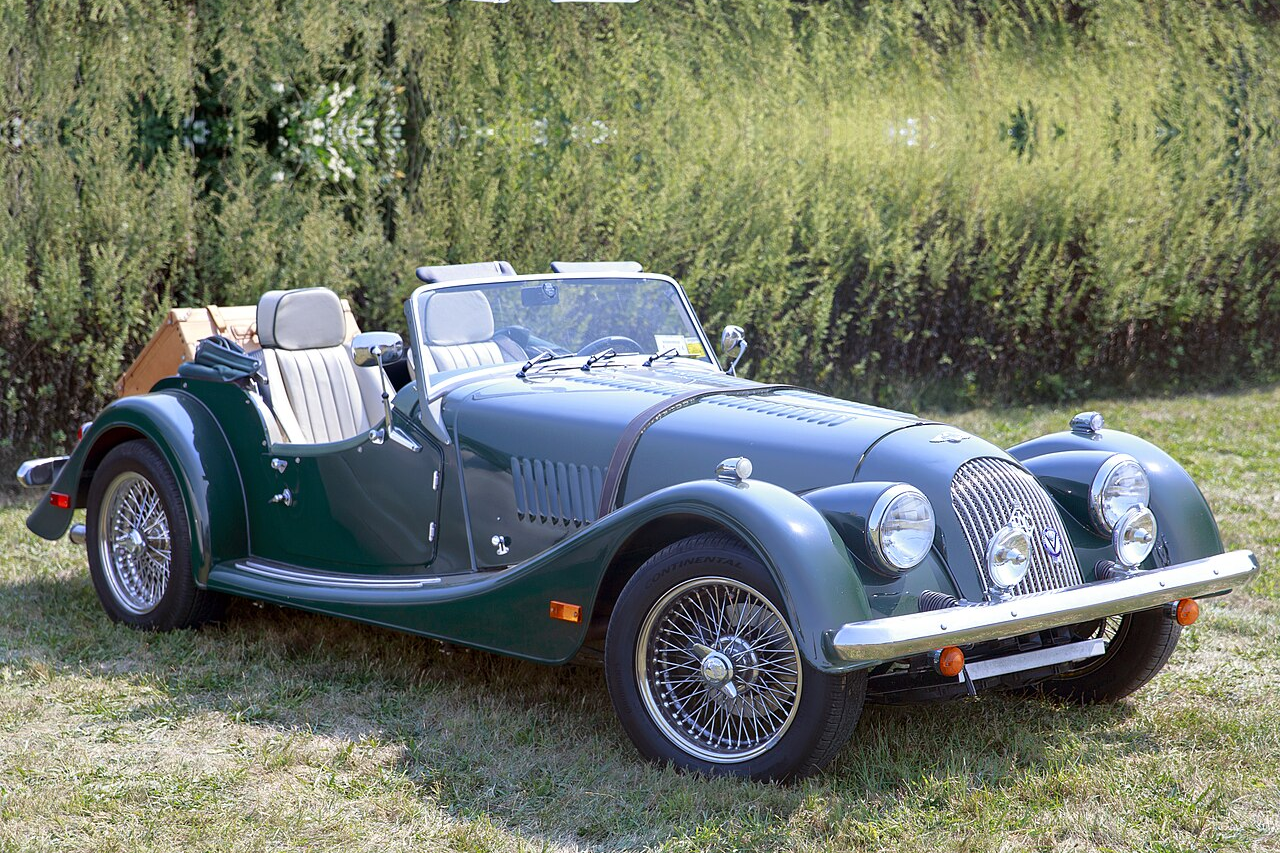
Morgan Plus 8 in British Racing Green, front three-quarter view on grass with wire wheels, chrome grille and twin sidemount headlamps.
Overview

Why this car matters

Launched at the 1968 Earls Court Motor Show, the Morgan Plus 8 dropped the ex-Buick Rover 3.5-litre alloy V8 into the traditional Morgan sliding-pillar chassis and ash-framed body. It replaced the Triumph-engined Plus 4 and, in doing so, saved the company: the order book stretched to years within months. Production continued in slowly evolving form until 2004, when the discontinuation of the Rover V8 finally ended a thirty-six-year run.

Beneath the pre-war silhouette, the Plus 8 evolved almost continuously — Moss to Rover 3500S to LT77 and finally R380 gearboxes; 3.5 to 3.9 to 4.6 litres; SU carburettors through Strombergs to Bosch L-Jetronic, then Lucas 14CUX and finally GEMS injection. Chassis and body widths grew from 57 to 64 inches (with an optional 67-inch widebody) to accept modern tyres. The car remained resolutely a Morgan: separate chassis, hand-formed aluminium panels over a steel and ash frame, and a driving experience utterly unlike anything else on sale by the time it retired.

This guide covers the 1968–2004 Rover-V8 cars. The 2012–2018 BMW-V8 revival — built on the Aero platform — is a separate car and outside the scope of this guide.

The Plus 8 is the most significant Morgan of the modern era. It kept the company solvent through the 1970s and 1980s, gave the traditional Morgan its only genuine performance credentials against contemporary Porsches and TVRs, and did so while retaining the ash frame and sliding-pillar suspension that Morgan customers explicitly bought the car for. Collector interest concentrates on unmodified UK and European examples with continuous history, on the earliest 3.5-litre Moss-gearbox cars for their pre-1972 charm and outright rarity, and on the late Le Mans and 35th Anniversary editions that bookended production. US-market propane-converted cars (1974–1992) and later Range Rover-spec petrol cars are a separate market with a smaller buyer base and different price behaviour.

Variants

Range and production

VariantYearsProductionNotes
Plus 8 3.5 (Moss gearbox)1968–1972Original 3.5-litre Rover V8 with 10.5:1 compression and twin SU HS6 carbs, Moss 4-speed non-synchro 1st. Narrow-body, steel wheels then wire or Rostyle. The purist's Plus 8; roughly 700 produced.
Plus 8 3.5 (Rover 3500S 4-speed)1972–19779.25:1 compression to suit lower-octane fuel; adopted the Rover 3500S 4-speed all-synchromesh gearbox. Chassis and body widened from 1976 for wider tyres.
Plus 8 3.5 (LT77 5-speed)1977–1990Rover SD1 engine and LT77 5-speed gearbox; Stromberg CD175 carburettors from 1981, Bosch L-Jetronic EFI from late 1983 (~204 bhp). The most numerous specification.
Plus 8 3.9 (14CUX)1990–1996Rover 3.9-litre with Lucas 14CUX injection; smoother, more torque, more usable in modern traffic.
Plus 8 4.0 (R380 5-speed)1995–2004R380 replaces LT77; 4.0-litre Rover V8 running 14CUX then GEMS management. The definitive late-run specification.
Plus 8 4.61996–2004Optional 4.6-litre Rover V8; the fastest and most torque-rich pre-Aero Plus 8.
Plus 8 Le Mans Edition2002Homage to the 1962 Le Mans-winning Plus 4; distinguishing paintwork, badging and interior. Small production run.
Plus 8 35th Anniversary2003100100-car anniversary edition with walnut dashboard, mesh grille inserts, Le Mans-style gear knob and rear badge. The last celebratory Rover-V8 Plus 8.
Collector Variants

Limited & special editions

The models below represent the most significant limited and special edition variants — factory-produced cars that command meaningful premiums over standard examples and warrant specific attention from serious collectors.

Plus 8 35th Anniversary Edition · 2003

100
Distinguishing features
Announced in 2003 to mark thirty-five years of Plus 8 production and to signal the model's imminent discontinuation. Fitted with a walnut dashboard, mesh inserts behind the grille bars, a Le Mans-style gear knob, unique rear-panel badging and specific paint and trim options. Mechanically a late 4.0-litre R380 Plus 8; the significance is presentation and the closing-chapter status.
Value premium
Approximately 25–45% above an equivalent late R380 Plus 8 in the same condition, driven by the 100-car build and the model's role as the last celebratory Rover-V8 Plus 8.
Inspection points
Confirm the walnut dashboard, mesh grille inserts, rear anniversary badge and gear knob are all original factory items rather than later retrofits. Verify the specification against the original Morgan build sheet or a factory letter.
Authentication
35th Anniversary cars carry unique factory paperwork and were sold with a numbered brochure. A Morgan Motor Company build record naming the car as an Anniversary Edition is the standard confirmation; retrofit conversions of standard late Plus 8s exist and should be priced as standard cars.

Plus 8 Le Mans Edition · 2002

Verify — production figure unconfirmed; sold as a limited edition marking the 40th anniversary of the 1962 Le Mans class-winning Morgan Plus 4
Distinguishing features
Homage to the 1962 Le Mans-winning TOK 258 Plus 4, applied to the late-run 4.0-litre R380 Plus 8. Distinguishing paintwork (dark green with a contrasting stripe), Le Mans badging, unique interior trim and detail changes. Announced ahead of the 35th Anniversary Edition and positioned as a driver-focused celebratory model.
Value premium
Approximately 20–35% above an equivalent late R380 Plus 8 in the same condition, subject to originality of paint and trim.
Inspection points
Verify paint scheme, Le Mans badging and interior specification against Morgan factory records. Confirm the specification has not been created from a standard car during a later repaint.
Authentication
Confirm via the Morgan build sheet or a factory letter naming the car as a Le Mans Edition; period photographs and continuous history from delivery are strongly supportive.

Production figures sourced from official marque records and specialist registers. Verify chassis documentation with the relevant marque register before purchase.

Buyer's Guide

What to look for

Provenance and originality

The strongest Plus 8s have continuous UK or European history from new, a full chassis and engine-number match to the Morgan build record, and paperwork covering every major mechanical rebuild. Insist on the original Morgan build sheet or factory letter confirming specification (colour, trim, wheels, gearbox, engine size), a stamped service book where present, and MOT continuity. US-market cars must have documentation of the propane conversion and, for later cars, of any reversion to petrol; undocumented drivetrain swaps are common and materially reduce value.

Chassis, ash frame and body

Every pre-purchase inspection must lift the car. The steel chassis rots from the outrigger tubes, spring hangers and rear crossmember; the ash frame rots at the sills, A-pillars and door bottoms wherever water has been trapped behind aluminium panels. Fresh paint over untouched timber is the classic warning. Budget for a full chassis-off body-off rebuild if the ash is soft — this is a five-figure job even at a sympathetic specialist and can exceed the value of a mid-tier car.

Mechanical inspection priorities

The Rover V8 is generally robust but hates chronic overheating: dropped cylinder liners on 3.9 and 4.6 engines are the single most expensive failure mode and are triggered by tired radiators, failing water pumps and neglected coolant. Compression- or leak-down test, inspect the coolant for oil emulsion and check the block for external weeping between the heads and block. Confirm the correct fuel system is fitted for the year (SU / Stromberg / L-Jetronic / 14CUX / GEMS) and that it is functioning without piggy-back fixes. Moss-gearbox cars need a specialist familiar with the box; later LT77 and R380 cars are conventional but suffer synchro wear if abused cold.

Specification strategy

The market rewards two ends of the range: the earliest Moss-gearbox 3.5-litre cars for their purity and rarity, and the last 4.0 / 4.6 R380 cars — especially the Le Mans and 35th Anniversary editions — for their usability and named-edition status. Middle-period Stromberg and early L-Jetronic cars are the most affordable entry into ownership but require the same chassis and ash inspection as any other Plus 8. Colour and trim originality matters; a documented factory colour combination is worth paying for.

Pricing

What to pay

Project — ash rot, corroded chassis or incomplete history
USD$22,000 – $35,000
GBP£15,000 – £22,000
EUR€18,000 – €26,000
Complete but structurally compromised cars requiring a chassis-off rebuild; only viable if the specification is desirable and paperwork is present.
Good — usable middle-period cars (3.5 EFI or 3.9), tidy but not concours
USD$38,000 – $55,000
GBP£24,000 – £34,000
EUR€28,000 – €40,000
Sound chassis and ash, honest paint, running and used regularly; the working owner's Plus 8.
Excellent — well-documented cars in desirable specifications (4.0 / 4.6 R380, late LT77)
USD$60,000 – $85,000
GBP£38,000 – £55,000
EUR€44,000 – €62,000
Recent full service, verified originality, strong colour and trim, ready to drive or show.
Concours / named editions — Le Mans Edition, 35th Anniversary, earliest Moss-gearbox cars
USD$90,000 – $150,000+
GBP£58,000 – £95,000+
EUR€68,000 – €110,000+
Named factory editions, exceptional early cars, and museum-standard restorations with full documentation.

Regional ranges authored independently — each reflects its local market, not an FX conversion

Ownership

Living with it

Typical mileage
1,500–4,000 miles typical for collector use
Service interval
12 months / 3,000 miles for a minor service; major service and fluids every 24 months
Annual running cost
$3,500 – $9,000 (excluding depreciation)
Fuel economy
16–22 mpg combined depending on engine and driving
Insurance
Agreed-value classic policies (Hagerty, A-Plan, Adrian Flux, Lockton) with limited annual mileage and secure storage typically run $500–$1,400 per year on cars valued below $80,000.

Maintenance planning

The Rover V8 itself is inexpensive to service — parts are cheap and widely available — but the ash-framed body and separate chassis need annual inspection. Budget for periodic sill and floor work, an eventual chassis re-lacquer or re-galvanise, and a hood every 8–12 years. Cars stored damp deteriorate far faster than cars driven and dried out regularly.

Parts and specialist access

Mechanical parts are among the easiest in the classic world: Rover V8 components are still made new, and the LT77 / R380 gearboxes share with Land Rover. Body, chassis, ash frame and trim work must go to a Morgan specialist — a handful in the UK (led by Melvyn Rutter, Techniques and Allon White) and a smaller network in the US and continental Europe.

Common Problems

Known issues by system

Body — Ash frame

Rot in the sills, A-pillars and door bottoms

Critical$8,000 – $30,000+ depending on extent and cosmetic requirement
Symptoms — Sagging doors, panel gaps closing at the base of the door, soft timber probed through the sill panel, fresh underseal or paint over the ash.
Inspection — Lift the car, remove the sill covers where possible, probe with a bradawl. Ash renewal on a Plus 8 is a body-off job.
Body — Chassis

Corrosion in outrigger tubes, spring hangers and rear crossmember

Major$3,000 – $15,000+
Symptoms — Perforation at the sill-to-chassis interface, cracked or repaired outriggers, wet underseal.
Inspection — Remove wheels, inspect chassis with a torch and probe; look for evidence of prior weld repairs.
Engine — Rover V8 (3.9 / 4.6)

Dropped cylinder liners after overheating

Critical$6,000 – $12,000 (top-end rebuild with liner sleeves)
Symptoms — Coolant loss without external leak, mayonnaise on the oil cap, rough running, exhaust steam.
Inspection — Compression or leak-down test cold; sniff test the coolant expansion tank for combustion gases; inspect the water pump and radiator condition.
Cooling

Tired original radiators and marginal cooling in traffic

Moderate$500 – $1,600
Symptoms — Rising temperature at idle, coolant expelled from expansion tank, electric fan constantly running.
Inspection — Idle-test to full temperature with air-con off; inspect radiator core for corrosion and past re-cores.
Suspension — Sliding pillars

Worn kingpins and stub axles

Moderate$800 – $2,400 per side
Symptoms — Vague steering, uneven tyre wear, knocking over bumps, failure to hold alignment.
Inspection — Jack the front and check for vertical play at the wheel; ask for evidence of the one-shot oiler being used.
Electrics

Corroded looms, earths and Lucas-era switchgear

Minor$300 – $2,000
Symptoms — Intermittent lights and instruments, dim headlamps, fuel gauge inaccuracies.
Inspection — Cycle every electrical function on the test drive; inspect the fusebox and earth points at the bulkhead.
Fuel system — later cars

GEMS or 14CUX fuelling faults and dying fuel pumps

Moderate$400 – $1,800
Symptoms — Hot-start reluctance, uneven idle, check-engine light on OBD-equipped cars.
Inspection — Diagnostic read on later cars; on carburetted cars, check for fuel weep and float-level issues.
Trim and weather sealing

Aged hood, side screens and rubber seals

Minor$1,000 – $3,500 for a new hood set fitted
Symptoms — Water ingress into the cockpit and, worse, into the sills and ash frame; cracked side screens; leaking windscreen surround.
Inspection — Look for water staining on the carpets and inside the sill panels; hoods older than eight years are due for renewal.
Valuation

Current value bands by region

Concours
USD
$95,000
GBP
£62,000
EUR
€72,000
+1% 12-mo
Excellent
USD
$68,000
GBP
£44,000
EUR
€52,000
0% 12-mo
Good
USD
$46,000
GBP
£28,000
EUR
€34,000
0% 12-mo
Fair
USD
$32,000
GBP
£20,000
EUR
€24,000
-1% 12-mo
Project
USD
$22,000
GBP
£15,000
EUR
€18,000
-2% 12-mo

Each region quoted in its local currency — independent market readings, not FX conversions

The Plus 8 sits in a stable, thinly-traded corner of the classic market. Values have moved sideways for several years: named editions (Le Mans, 35th Anniversary) and the earliest Moss-gearbox cars have firmed, while middle-period Stromberg and early L-Jetronic cars in average condition have drifted slightly. The 2000 Plus 8 4.6 sold through Bonhams' The Market platform in September 2025 at £22,493 is representative of a good, honest late car; strong-history UK examples on retail forecourts sit meaningfully above that.

The governing factor for any Plus 8 is condition of the chassis and ash frame, not model year. A concours 3.5-litre and a concours 4.6 R380 are separated by less than the cost of one bad ash rebuild — buy the best-inspected car you can, not the highest-specification project.

Auctions

Recent results

DateAuctionCarMileageResult
2025-09-10
Bonhams — The Market
Online
2000 Plus 8 4.6
Rare colour combination; one family from new; documented service history.
low, family-owned
£22,493
Sold
2026-04-19
Bonhams
Goodwood Members' Meeting
1970 Plus 8 3.5 (Moss gearbox)
Chassis R7178; only two owners from new — 1970 narrow-body car.
two-owner
£16,100
Sold
2026-04-19
Bonhams
Goodwood Members' Meeting
1970 Plus 8 3.5 (Moss gearbox)
Chassis R7250; original UK-market Moss-gearbox car.
unrecorded
£13,225
Sold
2019-12-04
Bonhams
The Bond Street Sale
1974 Plus 8 four-seater
Chassis R.7817 — formerly owned by DJ and radio presenter John Peel; sold without reserve.
unrecorded
£21,275
Sold

Verified from each auction house's own results page (Bonhams Cars and Bonhams' The Market platform). The Plus 8 is a thinly-traded model at auction — most transactions occur privately through UK Morgan specialists — so headline auction results should be read alongside retail asking prices at Melvyn Rutter and Techniques.

Investment

Long-term outlook

StableHorizon: 5–10 years

The Plus 8 is a preservation and use asset rather than an appreciation play. Production is closed, the car is culturally significant to Morgan and to British sports-car history, and demand from a loyal enthusiast base is steady — but the buyer pool is small and the model has never attracted speculative capital of the kind that lifted 964 Turbos or R34 GT-Rs.

The most defensible thesis is at the extremes: earliest Moss-gearbox 3.5-litre cars and named late editions (Le Mans, 35th Anniversary) with full documentation, which trade above the standard range and are unlikely to lose ground. Middle-period cars are best bought to drive, not to store.

Recommended

The trusted network

Specialists

  • Melvyn Rutter
    View →
    Herefordshire, UK
    The pre-eminent independent Morgan specialist; sales, restoration, ash-frame renewal and mechanical work on all Rover-V8 Plus 8s.
  • Techniques
    View →
    Bristol, UK
    Morgan restoration and mechanical specialist; chassis-up rebuilds and concours preparation.
  • Allon White Sports Cars
    View →
    Bedfordshire, UK
    Long-standing Morgan main-dealer service, parts and restoration.
  • Morgan Motor Cars USA
    View →
    USA (specialist network)
    US-based Morgan servicing and restoration network for propane-converted and later petrol US-market cars.

Storage

  • Windrush Car Storage
    View →
    Cotswolds, UK
    Climate-controlled storage well suited to ash-framed classics that need dry, stable conditions.
  • Autovault
    View →
    Bicester, UK
    Climate-controlled storage at Bicester Heritage with full security and condition monitoring.
  • Classic Remise
    View →
    Düsseldorf, DE
    Showroom-style enthusiast storage for continental European owners.

Transport

  • CARS UK
    View →
    UK & Europe
    Enclosed event and specialist transport for classic Morgans across the UK and Europe.
  • Reliable Carriers
    View →
    USA (national)
    Enclosed coast-to-coast transport for imported and US-market classic sports cars.

Own a Morgan Plus 8?

Join Car Collector International's owners register for valuation updates, auction alerts and members-only events.

Register interest

The valuation figures in this guide are for research purposes only and do not constitute financial or investment advice. See our full disclaimer.