
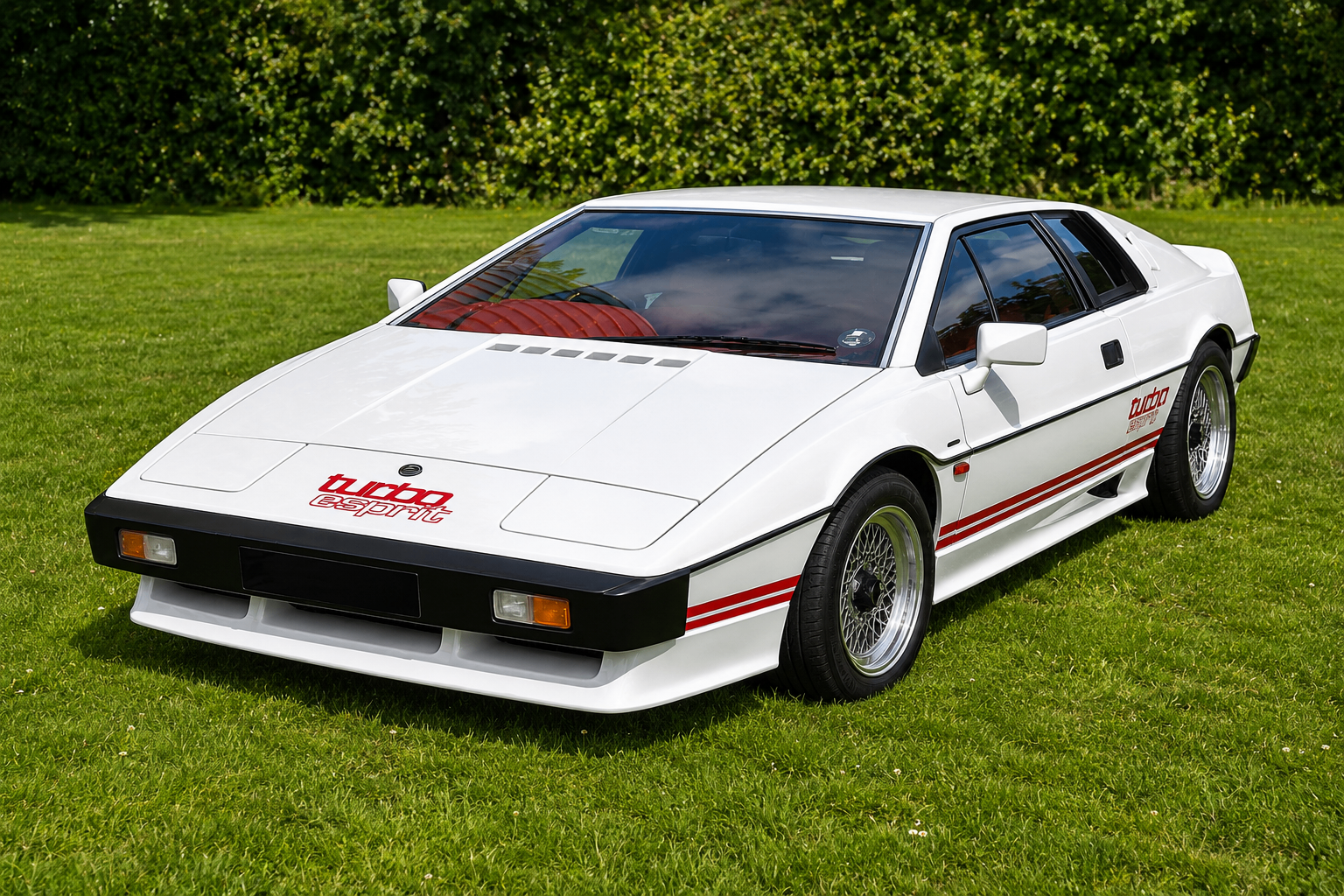
Esprit S2 JPS Commemorative · 1978–1979
147 (Walton / Angus) or 185 (Ferguson / Iconic) — see note
- Distinguishing features
- Black-and-gold John Player Special livery commemorating Lotus's 1978 F1 Constructors' Championship. Series 2 mechanicals with numbered dash plaque, gold pinstriping, gold-painted wheels and JPS-specific interior trim. Regional breakdowns cited across the two figures: 94 UK / 26 US / 27 ROW (Walton / Angus) versus 100 UK / 55 US / 30 Europe (Ferguson / Iconic / Barn Finds / Speedholics).
- Value premium
- Modest to firm — typically 15–35% over a comparable standard S2 in equivalent condition, driven by the numbered edition status, F1-championship association and the visual distinctiveness of the JPS livery. Fully original, unrepainted JPS cars with intact numbered plaque and correct interior trim command the top of that range; repainted cars (or standard S2s converted to JPS livery) sit at or near standard S2 money.
- Inspection points
- Confirm the numbered dash plaque matches the car's chassis file, that the JPS colour and pinstriping are original rather than a later respray of a standard S2, and that the gold-anodised wheels are original items rather than reproductions. All standard Esprit S2 checks apply: gelcoat condition, backbone chassis corrosion, 907 engine head-gasket history, Citroën gearbox condition and Lucas electrical integrity.
- Authentication
- Two production totals circulate, both independently sourced: 147 (94 UK / 26 US / 27 ROW), per Jeremy Walton's Lotus Esprit: The Complete Story and the Lotus Esprit World factory-verified table (Brian Angus); and 185 (100 UK / 55 US / 30 Europe), per Andrew Ferguson's contemporary Team Lotus correspondence and consistently repeated across multiple Iconic Auctioneers, Barn Finds and Speedholics listings. The two totals have not been reconciled in any source found; 147 is used as the primary figure here as the more rigorously sourced (book + named registrar) of the two, but 185 should not be treated as a minor outlier. Cross-reference the individual car's chassis number and numbered plaque against the Lotus Esprit World / Club Lotus JPS register for its provenance regardless of which total is definitive.