
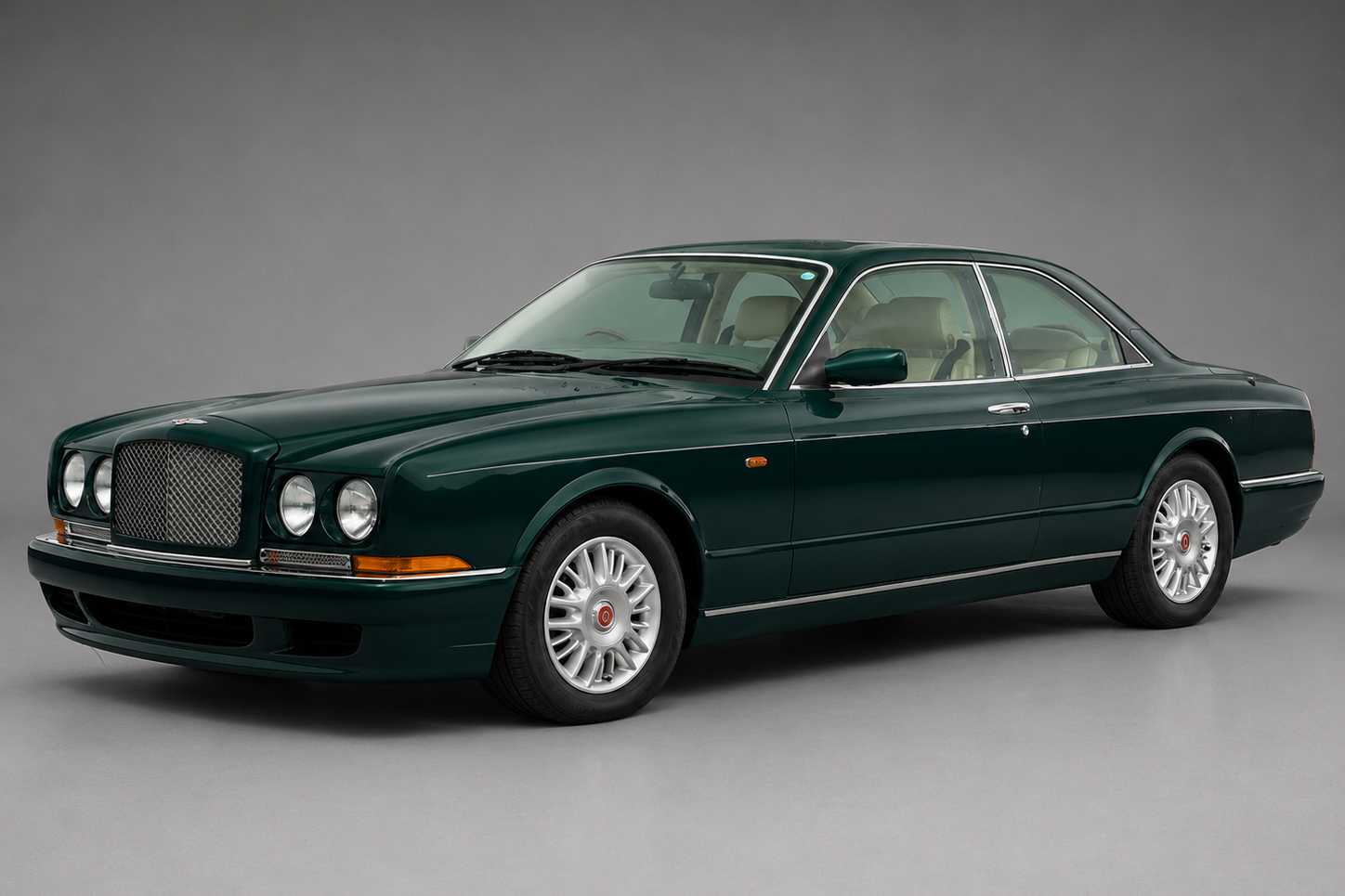
Continental T Le Mans · 2001–2002
5 (RRSilverSpirit chassis-range data; published references production table — sources agree)
- Distinguishing features
- Le Mans Series treatment applied to the short-wheelbase Continental T: wide arches, quad exhausts, Le Mans front-quarter badging, five-spoke wheels with red calipers, drilled pedals, unique treadplates and dark-green instrument dials. Available only in Silver Storm, Black Oriole or Le Mans Racing Green.
- Value premium
- Meaningful multiple of a standard Continental T; verified public auction data is essentially non-existent — treat all valuation as indicative until a public sale sets a mark.
- Inspection points
- Confirm the Le Mans package is factory-fitted (Bentley Heritage at Crewe will confirm original spec by VIN); confirm all Le Mans-specific interior components are present and un-refurbished; standard Continental T mechanical checks — chargecooler, turbo, torsion bars, self-levelling.
- Authentication
- Bentley Heritage build sheet is the only fully reliable authentication. Le Mans Series cars carry unique chassis-book documentation and dealer delivery paperwork; VIN check against RRSilverSpirit Continental T Le Mans registry (chassis SCBZU25E71CH67538 – SCBZU25EX2CX01516) is a useful pre-check.