
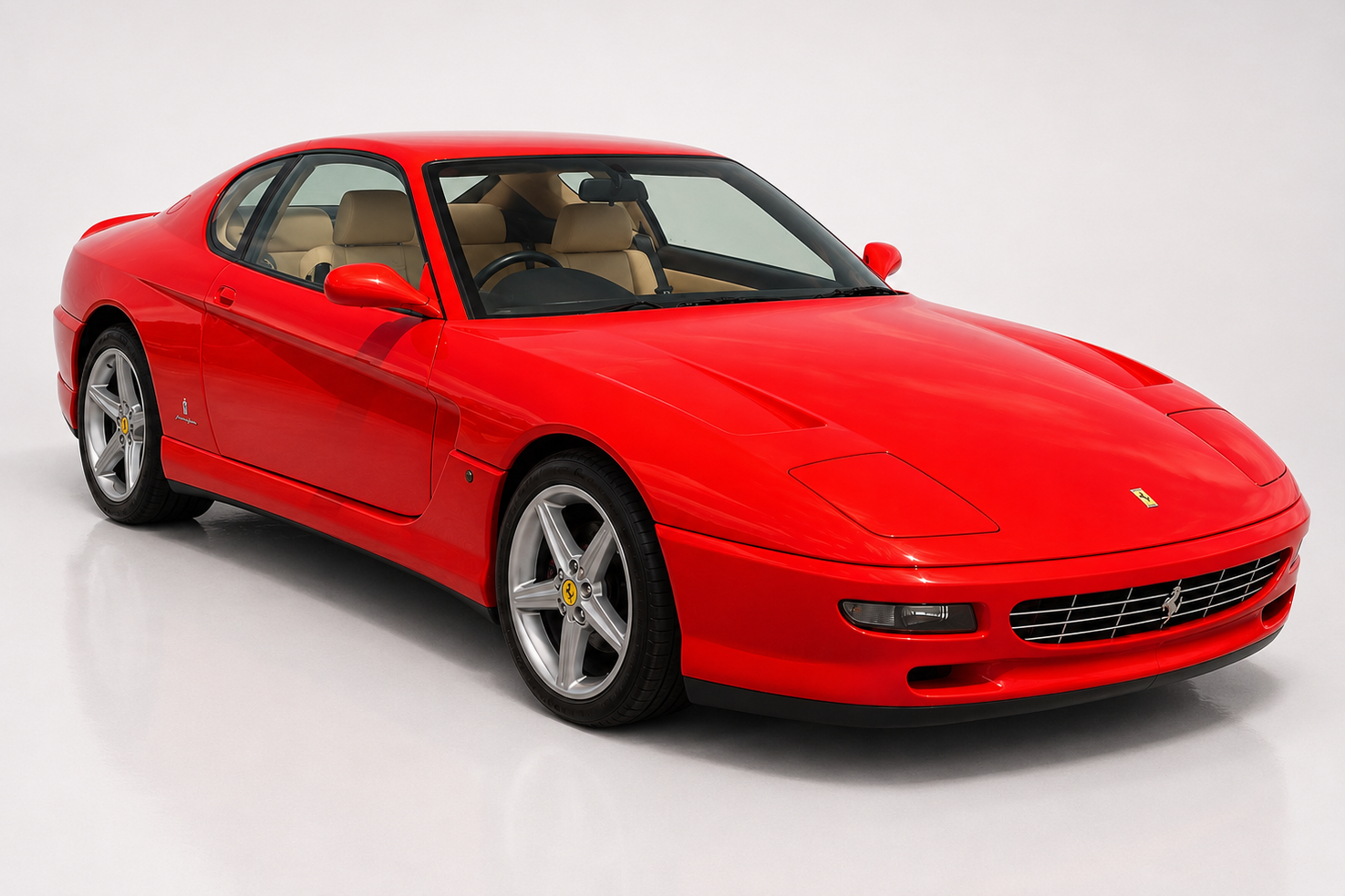
456 GT Venice — Shooting Brake (5-door estate) · 1996–1998 (approx.)
7 built by Pininfarina (widely reported); Prince Jefri Bolkiah is understood to have taken 6, the seventh car's disposition is disputed
- Distinguishing features
- Bespoke Pininfarina five-door shooting-brake bodywork on the standard 456 GT platform, commissioned by Prince Jefri Bolkiah / the Brunei royal family. Lengthened roofline, purpose-designed rear side doors, sculpted C-pillar, functional rear wiper and integrated tailgate spoiler. Mechanical package unchanged from the 5.5-litre V12 456 GT donor car. Reported cost of ~US$1.5m per car at time of commission.
- Value premium
- No public auction reference. All known examples remain in the Brunei royal collection or in private / museum hands; any public sale would be a private-treaty event rather than a live-room market print. Treat as unquantified but categorically above any standard 456 by an order of magnitude.
- Inspection points
- Because none of these cars has traded publicly, provenance must be established directly against Pininfarina and Ferrari records via a marque historian (Marcel Massini) before any transaction. Confirm the bodyshell is a Pininfarina-built Venice and not a later independent conversion of a standard 456.