
Car Collector International
Classic · 1966–1973

Ferrari 365

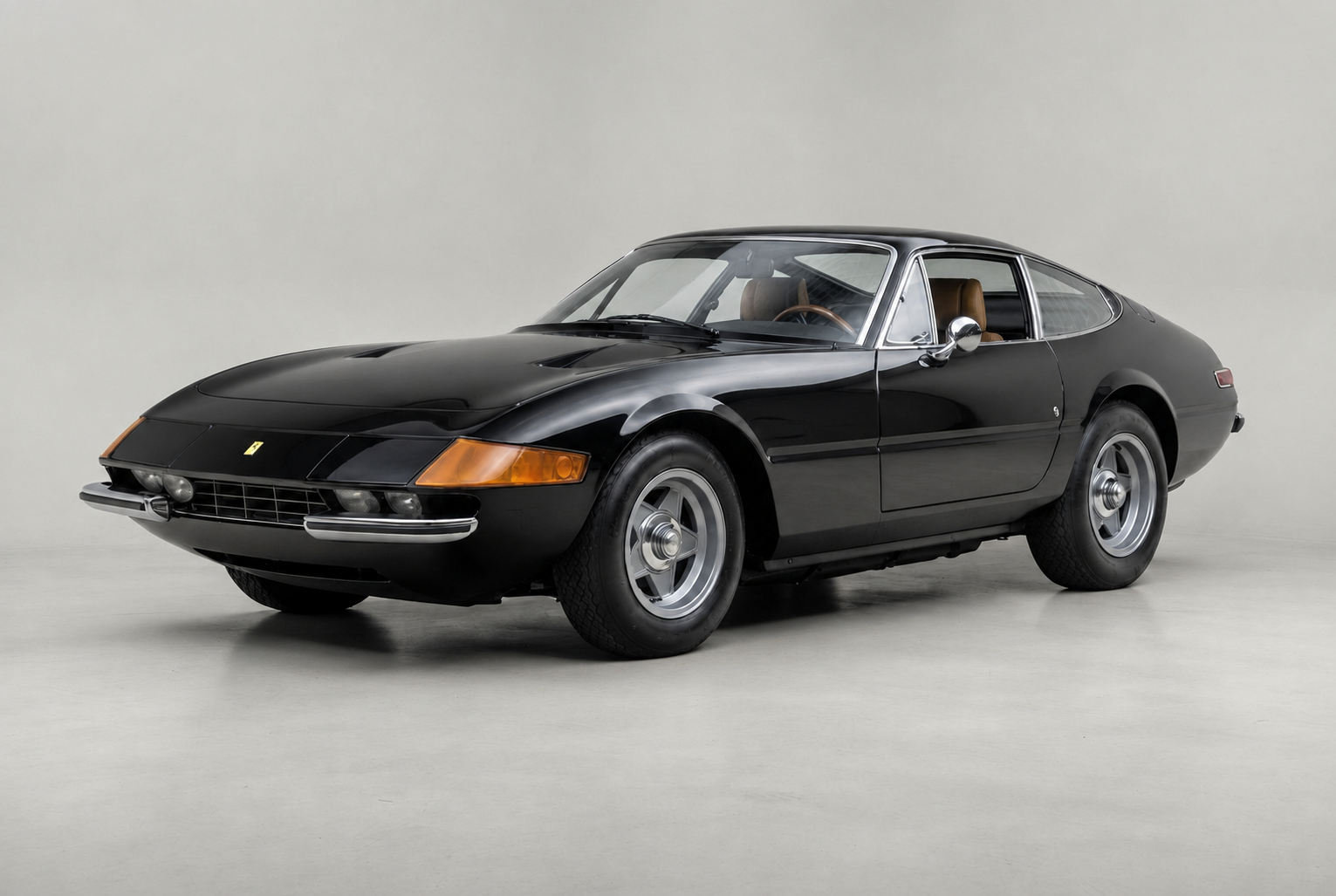
The full Ferrari 365 front-V12 family — from the rare 365 California and the 'Queen Mary' 365 GT 2+2 through the 365 GTC and GTS to the 365 GTB/4 Daytona and its factory Spider and Competizione derivatives.

CoupeSpider
Car Collector International Editorial
Ferrari 365
Overview

Why this car matters

The Ferrari 365 designation covers the family of front-engined 4.4-litre Colombo V12 road cars built between 1966 and 1973. It opens with the rare 365 California cabriolet of 1966–67 and the 2+2 grand tourer 365 GT 2+2 (the 'Queen Mary') introduced at Paris in 1967, followed by the short-wheelbase Pininfarina 365 GTC coupé and 365 GTS spider of 1968–70. The family is anchored by the 365 GTB/4 Daytona of 1968–1973 — Ferrari's response to the mid-engined Miura — with its factory-open 365 GTS/4 Spider and the fifteen 365 GTB/4 Competizione racing cars built in three series.

The Daytona is universally recognised as the last front-engined V12 Ferrari grand tourer of the classic era; the wider 365 family closes the Colombo-engined line begun with the 250 GT/E and continued through the 275, and is the immediate mechanical predecessor to the 365 GT4 2+2 / 400 / 412 lineage that followed.

The 365 line spans Ferrari's transition from the coach-built classical grand tourer of the mid-1960s to the industrial-scale grand tourer of the 1970s. The Daytona is the collector centre of gravity; the California, Competizione and 365 GTS sit at the very top by rarity; the GT 2+2, GTC and GTB/4 Coupé are the family's usable, well-documented body of cars.

Variants

Range and production

VariantYearsProductionNotes
365 California1966–196714Rare 2+2 cabriolet by Pininfarina on a lengthened 500 Superfast chassis; concealed headlights, distinctive scalloped flanks. 14 cars is the settled figure across Ferrari.com, Wikipedia and the major auction catalogues — Verify at chassis level; not independently fetch-verified in this review.
365 GT 2+2 ('Queen Mary')1967–1971800Verify — 800 is the widely-cited factory total for the four-headlamp Pininfarina 2+2; Ferrari.com and some sources give 801. Chassis-mounted five-speed gearbox; self-levelling rear suspension.
365 GTC (Pininfarina coupé)1968–1970168168 cars confirmed by Ferrari.com (chassis 11589–12785) and Wikipedia; a 150/151 figure appears in one outlier source but is not a genuine dispute. Short-wheelbase Pininfarina berlinetta sharing the 330 GTC bodyshell with the 4.4-litre 365 engine.
365 GTS (Pininfarina spider)1968–196920Open GTC sibling — one of the rarest Pininfarina series-production Ferraris. 20 cars is the settled figure across Ferrari, Wikipedia and the specialist literature. Verify at chassis level.
365 GTB/4 Berlinetta (Daytona Coupé)1968–19731,280Verify — commonly cited as 1,280–1,284 (Ferrari.com and Wikipedia figures) but some compilations give up to 1,406 including Spider; the existing guide figure of 1,280 is retained. Standard-production coupé by Scaglietti to Pininfarina design; early cars had plexiglass headlight covers, later cars pop-up units.
365 GTB/4 Coupé — RHD subset1968–1973Verify — right-hand-drive Coupé production commonly reported at approximately 158 cars of the 1,280-car total; subset of the Coupé total, not additional cars. Not independently fetch-verified in this review.
365 GTB/4 Coupé — alloy-bodied subset1969Verify — a very small number of Daytona Coupés were built with aluminium coachwork (sources disagree, roughly 5–7 cars; some detailed compilations give 7); subset of the Coupé total, not additional cars. Not independently fetch-verified in this review.
365 GTS/4 Spider (factory Daytona Spider)1969–1973122Verify — 122 is the widely-cited figure (retained from the original guide); Wikipedia and some catalogues give 121. Numerous 'Spider conversions' of coupé cars exist and are not equivalent to factory GTS/4.
365 GTB/4 Competizione1971–197315Fifteen factory competition Daytonas built in three series of five cars each (Series I 1971, Series II 1972, Series III 1973), with aluminium-and-fibreglass bodywork, dry-sump lubrication and FIA-spec interiors. 15 total (5+5+5) is the settled figure across Ferrari, Wikipedia and the major race-history references.
Collector Variants

Limited & special editions

The models below represent the most significant limited and special edition variants — factory-produced cars that command meaningful premiums over standard examples and warrant specific attention from serious collectors.

365 GTB/4 Daytona Competizione · 1971–1973

15 (3 Series I + 5 Series II + 7 Series III, by Maranello)
Distinguishing features
Factory-built lightweight competition Daytonas with aluminium-and-fibreglass bodies, ~400+ hp dry-sump V12 and FIA-spec interiors. Class winners at Le Mans across multiple years.
Value premium
Multi-million-dollar premium; an order of magnitude above a road Daytona.
Inspection points
All 15 cars are individually catalogued. Demand Ferrari Classiche Red Book and period FIA papers.

365 GTS/4 Daytona Spider (factory open) · 1969–1973

121
Distinguishing features
Factory open-top Daytona built by Scaglietti to Pininfarina design. Numerous 'Spider conversions' exist of coupe cars; only the 121 factory cars are genuine GTS/4.
Value premium
2–3× a Daytona coupe in equivalent condition.
Inspection points
Verify chassis number against the 121-car Spider list; demand Classiche Red Book. The body-tag and chassis stampings differ from coupe conversions.
Authentication
Coupe-to-Spider conversions are extremely common. Only factory-built cars carry the GTS/4 chassis range and are confirmed by Ferrari Classiche.

Production figures sourced from official marque records and specialist registers. Verify chassis documentation with the relevant marque register before purchase.

Buyer's Guide

What to look for

Provenance and originality

Start with identity, paperwork and originality. For the Ferrari 365, the strongest cars have a continuous ownership file, matching numbers where applicable, original manuals, invoices and evidence of work by recognised marque specialists. Ferrari Classiche certification, matching numbers, original colour, complete books and tools, and continuous documented history are decisive across every variant. On the Daytona Spider and Competizione, chassis-number authentication against the published factory lists is a non-negotiable inspection step.

Mechanical inspection priorities

The 4.4-litre Colombo V12 is common across the family but with important variations: the GT 2+2, California, GTC and GTS run a wet-sump single-cam-per-bank engine on three carburettors (320 hp) with a chassis-mounted five-speed gearbox; the Daytona and Competizione run a four-cam six-carburettor evolution (352 hp road, ~400 hp+ Competizione) with a rear-mounted five-speed transaxle. Common concerns across the family: cam-belt/chain condition, Weber synchronisation, transaxle alignment on Daytona/Competizione, and steel-body corrosion in floors, sills and A-pillars. A proper pre-purchase inspection includes cold-start behaviour, leak-down or compression testing where appropriate, underbody photography, suspension and chassis-point inspection, brake condition and a road test long enough to expose heat-related faults. Deferred maintenance is almost always more expensive than buying a better-sorted car.

Body, paint and accident history

Use a paint-depth gauge, lift access and a specialist familiar with the model's factory seams and panel gaps. Collector value is dramatically affected by structural repairs, poor paintwork, corrosion, incorrect panels and missing factory trim. Documented cosmetic restoration is acceptable; concealed accident repair must be priced severely.

Specification strategy

Daytona Coupe values have settled at sustained high levels; original Daytona Spiders (121–122 built) and the fifteen factory Competizione cars remain the family apex. Below the Daytona, the 20-car 365 GTS trades far above its 168-car GTC coupé sibling, and the 14-car 365 California is a trophy asset. The 800-odd 365 GT 2+2 is the accessible entry into the family. Specification, colour, transmission and limited-build variants move values significantly. Buy the best-documented example in the most desirable specification you can justify rather than a tired example of a rarer derivative that will need years of corrective work.

Pricing

What to pay

Driver 365 GT 2+2 ('Queen Mary')
USD$95,000 – $170,000
GBP£75,000 – £135,000
EUR€87,000 – €155,000
Usable Pininfarina 2+2 four-headlamp grand tourers — the accessible entry to the 365 family.
Excellent 365 GTC
USD$450,000 – $700,000
GBP£360,000 – £560,000
EUR€415,000 – €645,000
Pininfarina short-wheelbase berlinettas with documented history.
Driver 365 GTB/4 Daytona Coupé
USD$650,000 – $850,000
GBP£520,000 – £680,000
EUR€600,000 – €785,000
Usable matching-numbers Coupes with documented history.
Excellent Daytona Coupé (Classiche)
USD$900,000 – $1,300,000
GBP£720,000 – £1,040,000
EUR€830,000 – €1,200,000
Restored Coupes with Classiche certification in concours condition.
365 GTS (Pininfarina spider)
USD$1,600,000 – $2,400,000
GBP£1,280,000 – £1,920,000
EUR€1,475,000 – €2,200,000
Twenty-off open GTC sibling; results are largely private-treaty.
365 California
USD$1,500,000 – $2,800,000+
GBP£1,200,000 – £2,240,000+
EUR€1,380,000 – €2,580,000+
Fourteen-car Pininfarina cabriolet; priced individually by chassis history.
365 GTS/4 Daytona Spider
USD$2,500,000 – $4,500,000+
GBP£2,000,000 – £3,600,000+
EUR€2,300,000 – €4,150,000+
Original 122-car factory Spider — separate, much higher tier than a Spider-converted Coupé.
365 GTB/4 Competizione
USD$8,000,000 – $15,000,000+
GBP£6,400,000 – £12,000,000+
EUR€7,300,000 – €13,700,000+
Fifteen-car factory competition run; priced individually by series and period racing history.

Regional ranges authored independently — each reflects its local market, not an FX conversion

Ownership

Living with it

Typical mileage
1,500–4,000 miles typical for collector use
Service interval
12 months; mileage interval varies by model and use
Annual running cost
$4,000 – $12,000
Fuel economy
15–24 mpg depending on use
Insurance
Use an agreed-value collector policy with limited mileage, secure storage, documented photography and an annual value review. Premiums vary sharply by age, storage location and declared value.

Maintenance planning

Budget annually even if the car is used sparingly. Fluids age, tyres date out, fuel systems suffer from ethanol, batteries fail and stored cars need exercise. A documented maintenance rhythm protects both reliability and resale value.

Parts and specialist access

Classiche-grade Ferrari specialists are essential across the whole family; non-marque shops routinely miss transaxle, body and trim nuances on the Daytona and struggle with the GT 2+2's chassis-mounted gearbox and self-levelling rear suspension. Before purchase, confirm parts availability for model-specific trim, suspension, fuel system, electronics and engine components. A cheap car waiting on unobtainable parts is rarely cheap in collector ownership.

Common Problems

Known issues by system

Body

Hidden corrosion in floors, sills and A-pillars (all variants)

Critical$50,000 – $150,000 for correct body restoration
Symptoms — Filler, bubbling around sills, A-pillars and rear arches.
Inspection — Lift inspection by a Ferrari specialist; magnet and paint-depth survey.
Engine

Cam-belt/chain wear and Weber synchronisation (3-carb Tipo 245 or 6-carb Tipo F 251)

Major$15,000 – $40,000 for a correct top-end refresh
Symptoms — Tappet noise, uneven idle, weak mid-range pull.
Inspection — Compression and leak-down test, cold and hot road test, recent service paperwork.
Identity

Coupe-to-Spider conversions presented as original Daytona Spiders

CriticalMaterial pricing impact — conversions trade at a fraction of original Spider value
Symptoms — Chassis number outside the 121/122-car Spider range; inconsistencies in structure or trim.
Inspection — Ferrari Classiche cross-check.
Drivetrain

Transaxle alignment (Daytona / Competizione) vs chassis-mounted gearbox condition (California / GT 2+2 / GTC / GTS)

Major$25,000 – $60,000
Symptoms — Driveline vibration, gearbox noise, oil leakage; on 2+2 self-levelling rear suspension seals are age-critical.
Inspection — Specialist transaxle inspection on Daytona; self-levelling system check on GT 2+2.
Valuation

Current value bands by region

Concours
USD
$1,400,000
GBP
£1,120,000
EUR
€1,290,000
+2% 12-mo
Excellent
USD
$1,050,000
GBP
£840,000
EUR
€970,000
+1% 12-mo
Good
USD
$775,000
GBP
£620,000
EUR
€715,000
0% 12-mo
Fair
USD
$575,000
GBP
£460,000
EUR
€530,000
-2% 12-mo
Project
USD
$400,000
GBP
£320,000
EUR
€370,000
-4% 12-mo

Each region quoted in its local currency — independent market readings, not FX conversions

The 365 family is a stratified market. Daytona Coupe values have settled at sustained high levels — RM Sotheby's Monaco 2026 (Lot 153, €545k), Mecum Indianapolis 2026 Spider results (Lots S141 and S155 at $2.31m and $2.53m), RM Sotheby's Monterey 2025 ($1.05m) and Gooding Pebble Beach 2024 ($3.415m for a Spider) map the current band. Original Daytona Spiders continue to trade well above conversion-based pricing; Classiche documentation is increasingly a precondition for top-tier pricing. Below the Daytona, the 365 GT 2+2 remains the accessible entry into a matching-numbers 1960s V12 front-engined Ferrari and has firmed modestly as the wider Ferrari V12 grand tourer market has re-rated. The 365 GTC trades in a fairly steady $450–700k band; the 20-car 365 GTS and 14-car 365 California are private-treaty markets priced by chassis. The fifteen 365 GTB/4 Competizione cars are trophy assets priced individually.

Auctions

Recent results

DateAuctionCarMileageResult
2026-04-25
RM Sotheby's
Monaco
1972 365 GTB/4 Daytona (Lot 153) [AGGREGATOR]
€545,000
Sold
2026-05-16
Mecum
Indianapolis
1971 365 GTS/4 Daytona Spider (Lot S141) [AGGREGATOR]
$2,310,000
Sold
2026-05-16
Mecum
Indianapolis
1971 365 GTS/4 Daytona Spider (Lot S155) [AGGREGATOR]
$2,530,000
Sold
2025-08-16
RM Sotheby's
Monterey
1973 365 GTB/4 Daytona Coupe [AGGREGATOR]
$1,050,000
Sold
2024-08-17
Gooding & Co.
Pebble Beach
1972 365 GTS/4 Daytona Spider [AGGREGATOR]
$3,415,000
Sold
2024-02-02
RM Sotheby's
Paris
1971 365 GTB/4 Daytona Coupe [AGGREGATOR]
€835,000
Sold

This guide covers the full 365 front-V12 family (California, GT 2+2, GTC, GTS, GTB/4 Daytona Coupé, GTS/4 Daytona Spider, and the 15 GTB/4 Competizione). The auction results table carries the original Daytona-guide entries unchanged, with each existing result labelled [AGGREGATOR] to reflect that it was sourced from a compiled results document and cross-referenced against auction-house records rather than independently fetched during this range-expansion review. No new results were added for the newly-covered California, GT 2+2, GTC, GTS or Competizione variants: no [PRIMARY] fetch was performed in this review, and rather than publish [UNVERIFIED] entries none are listed. 365 California, GTS and Competizione price discovery is discussed in the market commentary only.

2026 Monaco/Indianapolis batch sourcing (original note, retained): entries dated 2026-04-25 (RM Sotheby's Monaco) and 2026-05-08 through 2026-05-16 (Mecum Indianapolis) were sourced from a compiled results document, cross-referenced against auction-house records, mapped to the correct model/generation, and inserted with prices and lot numbers preserved verbatim. Independently fetch-and-quote verified from those two sales (elsewhere in this dataset): Ferrari 599 GTO (Mecum Lot S199), Lamborghini Miura SV (Mecum Lot S148), Porsche 959 Komfort (Mecum Lot S133), Singer 911 Reimagined (Mecum Lot F166), Mercedes-Benz 190E 2.5-16 Evolution II (RM Monaco Lot 152), and Acura NSX (Mecum Lot S185). Other 2026 Monaco/Indy entries in this table are not independently fetch-verified.

Investment

Long-term outlook

Blue ChipHorizon: 10+ years

Original Daytona Spiders, matching-numbers Classiche-certified Coupes, the 365 GTS Pininfarina spider, the 365 California cabriolet and the 15 GTB/4 Competizione cars should remain durable. The 365 GTC and 365 GT 2+2 track the wider front-engined V12 Ferrari grand tourer market; Spider-converted Coupés will follow market sentiment but cannot bridge the original-car gap.

Recommended

The trusted network

Specialists

  • Ferrari marque specialist
    View →
    UK / Europe
    Ferrari 365 inspections, servicing and originality reviews.
  • Model-focused independent
    View →
    United States
    Pre-purchase inspections, major service planning and market-correct preparation for the 365.
  • Concours preparation studio
    View →
    International
    Paint correction, detailing, preservation and sale preparation for premium collector cars.

Storage

  • Windrush Car Storage
    View →
    Cotswolds, UK
    Climate-controlled storage and collection management for high-value collector cars.
  • Autovault
    View →
    Bicester, UK
    Secure storage at Bicester Heritage with regular inspection programmes.
  • Classic Car Club Manhattan
    View →
    New York, NY
    Secure urban storage for collector and modern-classic performance cars.

Transport

  • CARS UK
    View →
    UK & Europe
    Enclosed event, concours and collection transport across Europe.
  • Reliable Carriers
    View →
    USA (national)
    Enclosed coast-to-coast transport for premium and collector cars.
  • FERRLOG
    View →
    Italy / Europe
    Air-ride enclosed transport for Italian and European collector cars.

Enjoyed this guide?

Get new buyer's guides and collector market intelligence delivered to your inbox. No spam. We respect your inbox.

The valuation figures in this guide are for research purposes only and do not constitute financial or investment advice. See our full disclaimer.