
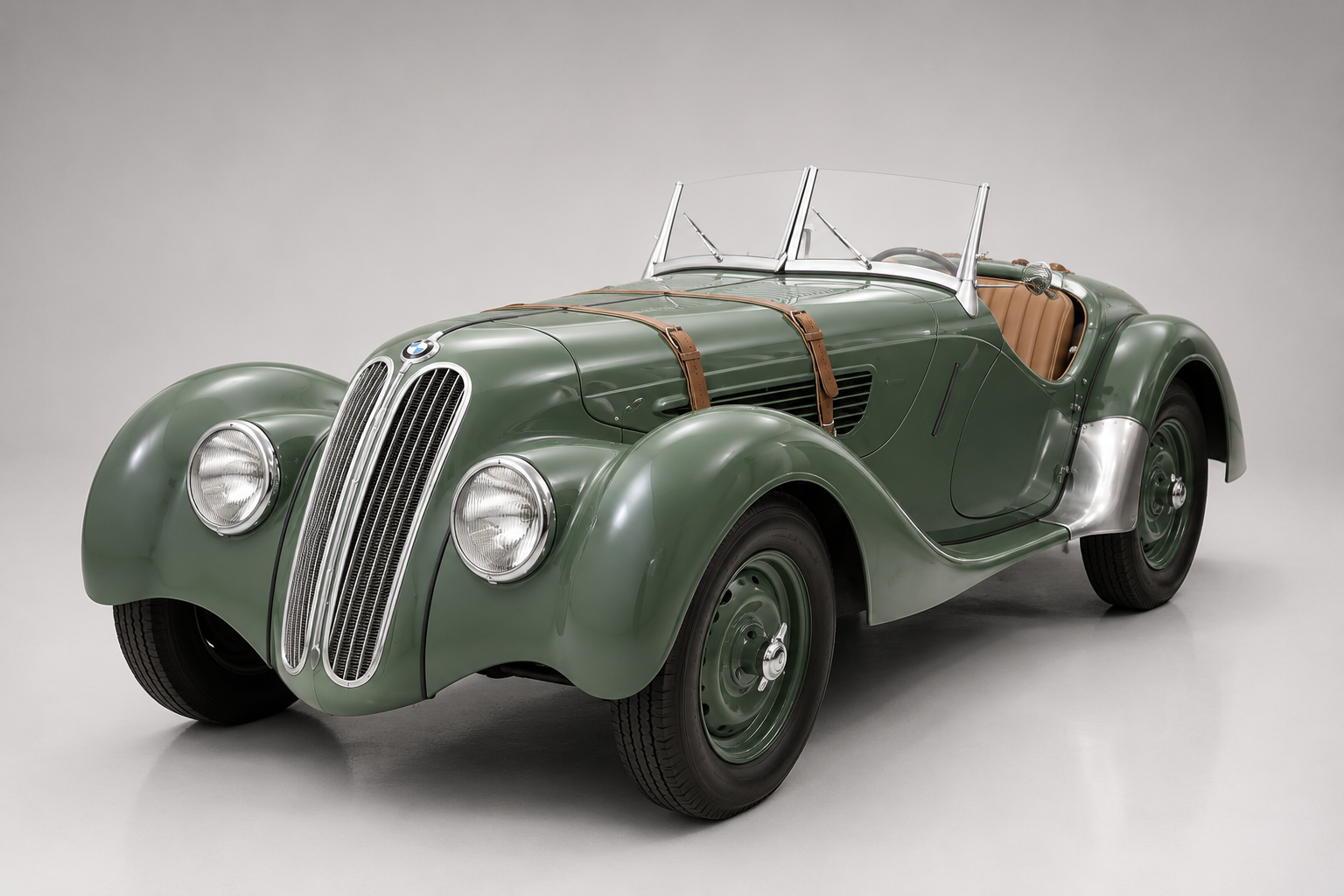
328 Mille Miglia Coupé (Touring 'Berlin-Rome') · 1939–1940
3
- Distinguishing features
- Three factory competition coupés built by Carrozzeria Touring of Milan on the 328 tubular chassis, using Touring's Superleggera construction (aluminium panels over a small-diameter steel tube framework). Full-envelope aerodynamic bodywork with faired-in headlamps, tailored to the proposed 1940 Berlin–Rome road race. Works-tuned M328 engine with polished porting and higher compression, uprated triple-Solex induction and a shorter final drive. The Huschke von Hanstein / Walter Bäumer car won the 1940 Mille Miglia (Gran Premio di Brescia) outright; the same chassis, restored, returned to win the Mille Miglia Storica in 2004 — the only car in history to win both the original and the modern revival.
- Value premium
- Effectively priceless in open-market terms: no example has traded publicly in living memory, and the surviving cars are museum-held. Any hypothetical sale would be a multiple of the strongest 328 road roadster result — well into eight figures, and negotiated privately rather than at auction.
- Inspection points
- Confirm chassis identity against the BMW Group Classic archive in Munich and the standing 328 registers (Simons, Schrader). Verify the Touring Superleggera framework has not been reworked outside period practice, that the aluminium skin is original or documented period repair, and that the works-specification engine internals and induction are period-correct. Continuous documented ownership, period photographs from the 1940 Mille Miglia and subsequent events, and any FIA/FIVA papers are essential.
- Authentication
- Only three were built and each is individually known and registered. A car claiming to be a Touring 'Berlin-Rome' coupé is either one of the three documented chassis or it is a later re-creation on a standard 328 (or 326/327-derived) chassis — the latter should be priced strictly as a tribute. BMW Group Classic and the international 328 registers can confirm chassis identity; period competition history must be corroborated in the same records, not accepted on seller narrative alone.