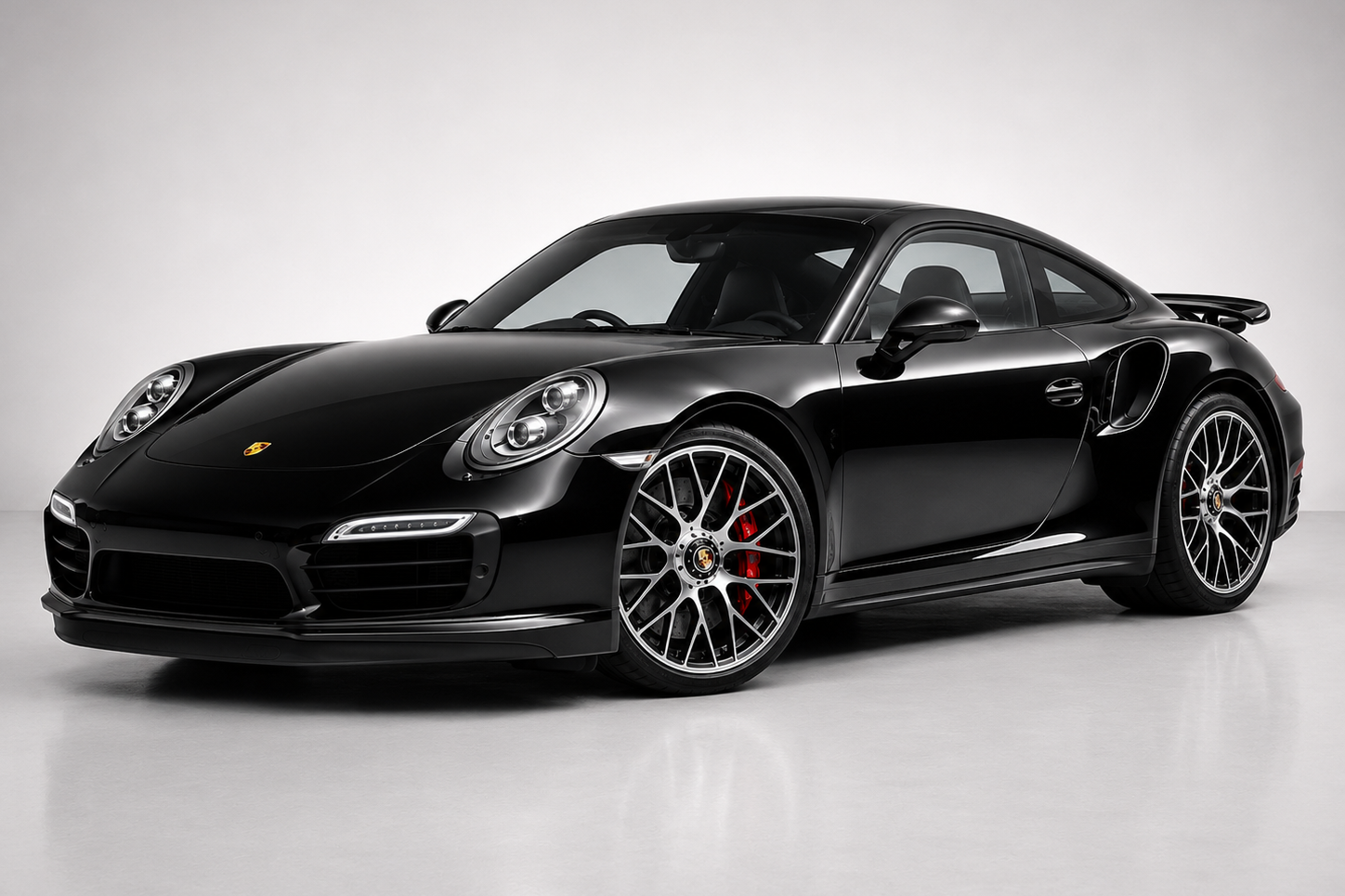
Unveiled at the 2011 Frankfurt Motor Show and produced until the arrival of the 992 in late 2019, the Porsche 911 type 991 was a genuine generational reset. It was 56 mm longer in wheelbase than the outgoing 997, 45 mm wider, and built on an entirely new chassis architecture that finally banished the last vestiges of the original 1963 floorpan. For the first time, every 911 body panel was made from aluminium, electric power steering replaced the old hydraulic rack, and a seven-speed manual gearbox was offered alongside the increasingly dominant PDK twin-clutch transmission.
The 991.1 generation (2011–2014) carried over naturally-aspirated 3.4-litre and 3.8-litre flat-sixes in the Carrera and Carrera S, before the 991.2 facelift (2015–2019) replaced them with a new family of 3.0-litre twin-turbo engines. The move to turbocharging was controversial at the time, but it brought a useful step in torque, efficiency and real-world pace. Today, with the 991 out of production and the market beginning to separate the memorable variants from the ordinary ones, it is the generation collectors are starting to take seriously.
The 991 is the 911 that Porsche re-engineered rather than evolved. It introduced the wider, more modern proportions that define the 992, it delivered the last gated seven-speed manual in a mainstream 911, and it spawned some of the most compelling driver's cars of the modern era — the 911 R, the 991.2 GT3 with its 4.0-litre engine, and the 50th Anniversary Edition. For buyers priced out of air-cooled 911s but unwilling to accept the digital complexity of the 992, the 991 represents a sweet spot of analogue feel, daily usability and relative value.