Car Collector International
Classic · 1974–1989

Porsche 911 (G-Series)

Porsche's impact-bumper 911 — five naturally-aspirated sub-generations (911 / Carrera 2.7 MFI / Carrera 3.0 / 911 SC / Carrera 3.2) alongside the 930 Turbo, 1974–1989.

CoupeTargaCabrioletSpeedster
Car Collector International Editorial
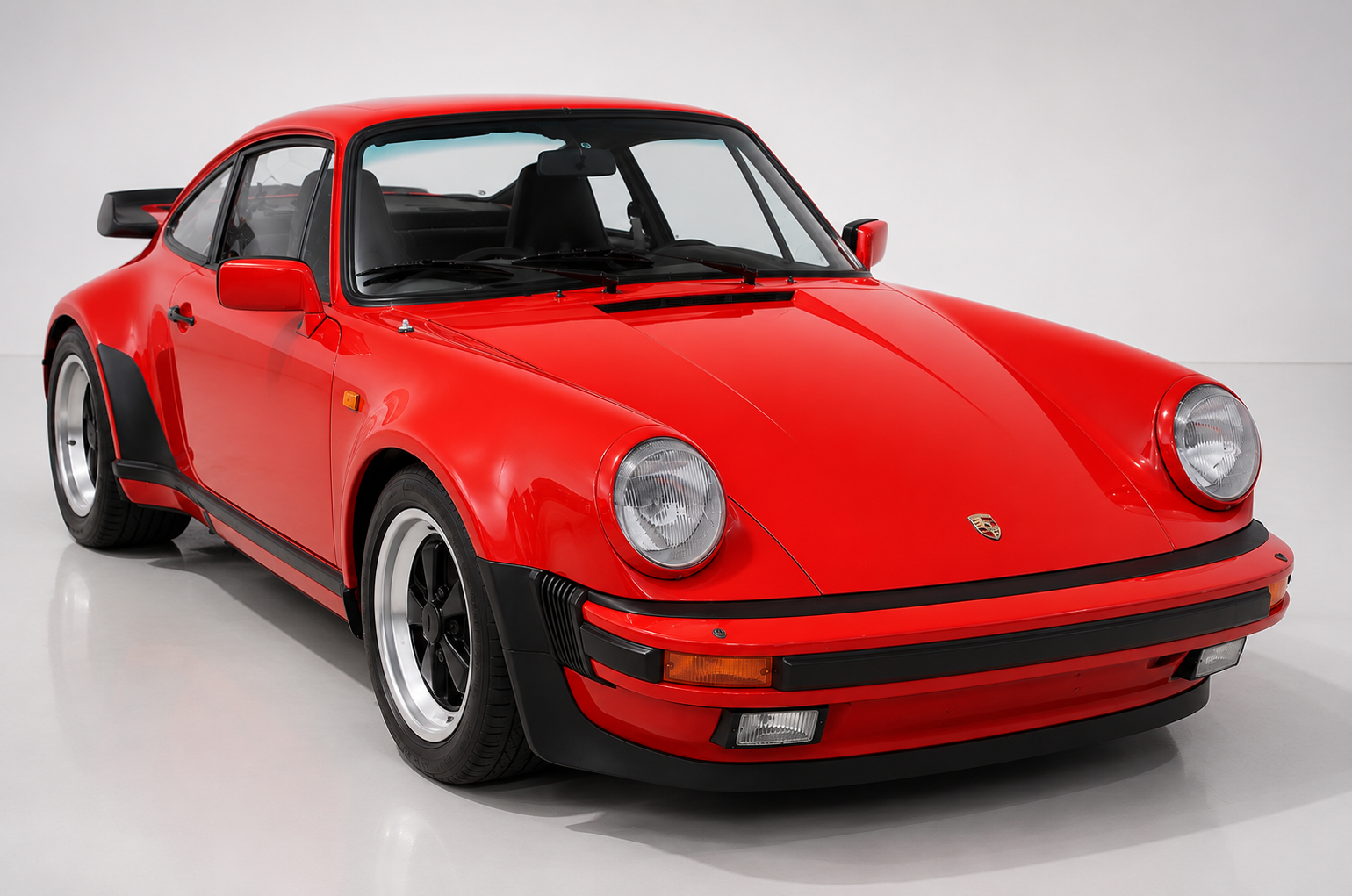
Red Porsche 911 Turbo (930) 3.3 coupe photographed front-three-quarter on grass, showing whale-tail spoiler and flared rear arches. The hero image currently anchors the 930 Turbo content; a naturally-aspirated hero is under editorial review.
Overview

Why this car matters

The G-Series 911 is the longest continuous 911 generation, in production for fifteen model years from 1974 to 1989. It replaced the pre-impact-bumper F-Series and preceded the 964. Across those fifteen years Porsche built five naturally-aspirated sub-generations — the 911 / 911S / Carrera 2.7 (1974–1977), Carrera 3.0 (1976–1977), 911 SC (1978–1983) and Carrera 3.2 (1984–1989) — plus the 930 Turbo (1975–1989), which shares the same bodyshell but is treated in its own valuation group in this guide.

The 1974–1977 impact-bumper cars ran the last of the magnesium-case flat-sixes. The 2.7 base 911 was joined by the 911S and, at the top of the range, the Carrera 2.7 with the 210 PS mechanical fuel-injected (MFI) engine — an evolution of the 1973 2.7 RS unit (covered in its own dedicated guide on this site). MY1974 production is well-documented at the chassis-range level: Stuttcars' G-Series table itemises 4,014 (911 Coupe), 3,110 (911 Targa), 1,359 (911S Coupe), 898 (911S Targa), 1,564 (Carrera Coupe) and 433 (Carrera Targa); the PCGB production document derived from engine totals reports 4,004 / 3,100 / 1,349 / 888 for the same four base variants — a consistent ±10 gap that likely reflects a chassis-vs-engine counting convention. Both totals are cited here without adjudication.

For 1976–1977 the range was rebuilt around the aluminium-case Type 930/02 engine. The RoW Carrera 2.7 MFI was replaced by the Carrera 3.0 with 200 PS CIS injection; the RoW 911S was discontinued and its badge retained only for the US market; the European base car became the '911 Lux'. Total Carrera 3.0 production is agreed across three specialist sources — Stuttcars, JTCars and Elferspot's article body — at 3,687 units (2,564 Coupes, 1,123 Targas). Elferspot's spec box shows 3,651 and PCGB engine totals sum to roughly 3,661; the 3,687 figure is the consensus.

The 911 SC (1978–1983) is the volume car of the G-Series and the entry point to the range for most buyers today. Total production is contested across two fetched sources: Stuttcars' 911 SC page infobox gives 60,625 while its own production-table sum and article body give 60,265, and JTCars gives 60,740. The Coupe and Targa ran across all six model years; the Cabriolet arrived for 1983 only, and Stuttcars' two pages give 4,124 (G-Series table) and 4,187 (SC-specific table) for that single-year Cabriolet run. The SC engine (Type 930/03 / 930/09 / 930/10) is fundamentally the 3.0-litre unit with revised camshafts, Bosch K-Jetronic CIS injection and — from 1981 — an increase to 204 PS; from 1980 all SCs used the airbox that made the notorious 1978–1979 airbox failure obsolete.

The Carrera 3.2 (1984–1989) is the most-produced G-Series sub-generation and the last of the classical air-cooled 911s before the 964 chassis rebuild. Total production is genuinely contested and no fourth research round will resolve it: JTCars gives 70,044, Elferspot's spec box gives 76,473 (35,670 Coupe / 19,987 Cabriolet / 18,468 Targa), and Stuttcars' G-Series table sums to approximately 80,383. This guide reports all three totals in the range 70,000–80,000 rather than picking a winner. The Coupe (K-Jetronic / DME Motronic 2) ran across all six model years; the Cabriolet from 1984; the 1989 Speedster (widebody dominant, 171 narrow-body per Stuttcars) closed the generation. The G50/00 five-speed replaced the 915 gearbox from MY1987.

The 930 Turbo (1975–1989) is treated in its own valuation group. Total 930 production is generally given as approximately 21,589–21,650 cars: sources agree on the 3.3-litre total of 18,770 (1978–1989) but disagree on the 3.0-litre count (1975–1977) — Wikipedia's infobox and RM Sotheby's Paris 2025 Lot 112 catalogue both give 2,819, while Stuttcars' itemised table gives 2,880, and both are treated as Verify. The intercooled 3.3 arrived for 1978 with 300 PS DIN; the US withdrawal 1980–1985 for emissions, the 1986 US reintroduction with Targa and Cabriolet, and the 1989-only Getrag G50 five-speed are the market inflection points. Sonderwunsch Flachbau (M505/M506) and Werksleistungssteigerung (WLS 330 PS) options carry independent premiums documented in the Collector Variants section below.

A G-Series buyer needs to approach the car first as a body-and-provenance purchase and only second as a mechanical one. Rust in the wheel arches, sills, longitudinals, battery box, and Targa and Cabriolet A-pillars is common across all fifteen model years. Correct-colour repaints without a paper trail materially reduce value. The 3.0/3.2 and 3.3 Turbo engines are robust in original condition but expensive to rebuild once neglected. Porsche Classic Certificate of Authenticity (COA) has become the decisive market signal for engine and specification originality; cars without one trade below their apparent condition regardless of sub-generation.

The G-Series is the definitive impact-bumper 911 — fifteen model years, five naturally-aspirated sub-generations and the 930 Turbo, all on a shared bodyshell. It is the entry point to air-cooled 911 collector ownership (via the 911 SC) and the platform for the market's most sought-after air-cooled derivatives (Carrera 2.7 MFI, Carrera 3.2 Speedster, 930 Sonderwunsch cars).

Variants

Range and production

VariantYearsProductionNotes
911 / 911S / Carrera 2.7 (MY1974)1974Stuttcars G-Series table: 911 Coupe 4,014, 911 Targa 3,110, 911S Coupe 1,359, 911S Targa 898, Carrera Coupe 1,564, Carrera Targa 433. PCGB engine-total document reports 4,004 / 3,100 / 1,349 / 888 for the four base variants — a consistent ±10 chassis-vs-engine gap. Carrera 2.7 uses the 210 PS MFI Type 911/83 engine (RoW) or 175 hp Type 911/93 CIS engine (US).
911 / 911S / Carrera 2.7 (MY1975)1975Stuttcars: 911 Coupe 1,238 / Targa 998; 911S Coupe 2,695 / Targa 1,783 (RoW+US combined); Carrera 2.7 MFI RoW Coupe 518 / Targa 197; US Carrera 2.7 CIS Coupe 395. PCGB splits US and RoW separately with ±10 chassis-vs-engine gap.
911 Lux / 911S US / Carrera 3.0 (MY1976)1976Stuttcars: 911 Lux Coupe 1,868 / Targa 1,576; US 911S Coupe 2,209 / Targa 2,179; Carrera 3.0 Coupe 1,093. PCGB attributes 479 Targas to MY1976 (Stuttcars places the same 479 under MY1977) — see MY1977 note. First year of the aluminium-case Type 930/02 3.0-litre CIS engine (200 PS).
911 Lux / 911S US / Carrera 3.0 (MY1977)1977Stuttcars: 911 Lux Coupe 2,449 / Targa 1,724; US 911S Coupe 3,771 / Targa 2,747; Carrera 3.0 Coupe 1,473 (plus Targa 646 confirmed by PCGB).
Carrera 3.0 (total 1976–1977)1976–19773,6873,687 units total (2,564 Coupes + 1,123 Targas) per Stuttcars model page, JTCars and Elferspot article body — consensus figure across three specialist sources. Elferspot spec box gives 3,651 and PCGB engine totals sum to approximately 3,661; both are cited here without adjudication of the ~36-car gap.
911 SC (1978–1983)1978–1983Total Verify: Stuttcars infobox 60,625, Stuttcars production-table sum and article body 60,265, JTCars 60,740. Stuttcars table by year (all bodystyles combined): 1978: 9,486; 1979: 10,989; 1980: 9,103; 1981: 7,996; 1982: 10,055; 1983: 12,636. Cabriolet 1983 only: 4,124 (Stuttcars G-Series table) or 4,187 (Stuttcars 911 SC article). Type 930/03 / 930/09 / 930/10 3.0-litre CIS engine, 180 PS (1978–1980), then 188 PS (1981), then 204 PS (1981–1983 RoW).
Carrera 3.2 (1984–1989)1984–1989Total Verify (three sources genuinely disagree): JTCars 70,044; Elferspot spec box 76,473 (35,670 Coupe / 19,987 Cabriolet / 18,468 Targa); Stuttcars G-Series table sum ~80,383 (36,494 Coupe / 19,502 Targa / 22,283 Cabriolet / 2,104 Speedster). Reported here as ~70,000–80,000 rather than picking a winner. Type 930/20 / 930/21 3.2-litre DME Motronic engine, 231 PS RoW / 207 hp US. 915 gearbox 1984–1986; G50/00 five-speed from MY1987.
930 Turbo 3.01975–1977Total Verify: 2,819 per Wikipedia's Porsche 930 infobox — corroborated by RM Sotheby's Paris 2025 Lot 112 ('One of 2,819 examples of the 930 Turbo to feature an air-cooled, flat-six, 3.0-litre engine'); 2,880 per Stuttcars' itemised year-by-year Porsche G-Series production table (284 in 1975, 644+530 in 1976, 695+727 in 1977). Original whale-tail Turbo; 260 PS (256 hp DIN) European spec, 234 hp US-spec 1975. Four-speed transaxle. BaT lot #222,734 describes the 1975 as 'one of a reported 284 examples built for the model's initial year of production.'
930 Turbo 3.3 (intercooled)1978–198918,770Wikipedia (Porsche AG production figures). Enlarged 3,299 cc engine with air-to-air intercooler; 300 PS (296 hp DIN); tea-tray spoiler; larger 917-derived brakes. Withdrawn from US/Japan 1980–1985 for emissions.
930 Turbo 3.3 US-reintroduction Coupe1986–1989Emissions-compliant 282 hp US-spec 3.3. Volume varies by year: Gooding cites '806 US-Specification Models Built for 1979' before withdrawal (Lot 182, Amelia Island 2025); 1988 ROW Coupes cited as 677 by Gooding Amelia 2023 Lot 133. Year-by-year splits Verify against Porsche AG delivery ledgers.
930 Turbo 3.3 Targa / Cabriolet1987–1989Open bodystyles introduced with US reintroduction. Production splits by body style Verify — Porsche AG does not publish a definitive Targa- or Cabriolet-only figure and Wikipedia does not break out 18,770 by body style.
930 Turbo 3.3 (1989 G50 five-speed)1989Only model year with the Getrag G50 five-speed manual. Total 1989 production commonly cited around 700 US-market Coupes but no consolidated worldwide figure is published in Wikipedia — Verify against Porsche AG factory records.
Collector Variants

Limited & special editions

The models below represent the most significant limited and special edition variants — factory-produced cars that command meaningful premiums over standard examples and warrant specific attention from serious collectors.

911 Carrera 2.7 MFI (1974–1975) · 1974–1975

Verify — Stuttcars' G-Series production table itemises 1,997 for MY1974 (1,564 Coupe + 433 Targa) and 715 for MY1975 (518 Coupe + 197 Targa RoW), summing to 2,712 worldwide Carrera 2.7 MFI cars. PCGB's engine-total document reports a ±10-unit lower figure per body-style row and separately splits US-market CIS-injected Carrera 2.7 cars (~518 Coupe + ~236 Targa MY1974). BaT lots #214,016 and #233,266 both describe MY1974 Coupes as 'one of 1,036 European-market examples.' The widely-cited 2,264 figure was not corroborated in this review.
Distinguishing features
Type 911/83 mechanical fuel-injected flat-six (210 PS RoW) — an evolution of the 1973 2.7 RS engine — in the standard 1974-onwards impact-bumper 911 bodyshell. Distinguished from the concurrent US-market Carrera 2.7 (Type 911/93 CIS, 175 hp) by the MFI pump and by RoW-only Carrera side script, ducktail option, and 15" Fuchs. Coupe and Targa built; no Cabriolet.
Value premium
Now the clear stepdown from the 1973 2.7 RS — trades at a multiple of a standard MY1974–1975 911S in equivalent condition. Anchored by RM Sotheby's Monterey 2025 Lot 233 (1974 Carrera 2.7 MFI Targa Lime Green, Sold $302,000), BaT #214,016 (1974 MFI Coupe RoW, Sold $285,000) and BaT #233,266 (1974 MFI Coupe RoW ex-Italian rally, Sold $215,000).
Inspection points
MFI pump calibration and lubrication history by a Bosch MFI specialist; head-stud pulling on the magnesium-case 2.7 engine is a documented issue; leak-down at all six cylinders. Verify the Type 911/83 engine number against the Porsche Kardex — the MFI engine is the defining feature and swapped MFI-to-CIS or CIS-to-MFI cars trade at a heavy discount.
Authentication
Porsche Classic Certificate of Authenticity is decisive; the Kardex confirms the MFI engine number and Carrera specification from new. A US-market CIS Carrera 2.7 with an MFI conversion is not a Carrera 2.7 MFI in the market's terms.

911 SC/RS (1984) · 1984

Verify — JTCars states 20 units (matching the FIA Group B Evolution homologation minimum); Hagerty states 21 units. Sports Car Market catalogues a chassis WP0ZZZ91ZES110021 as the final SC/RS built, consistent with Hagerty's figure. All built by Porsche Motorsport for Group B rally homologation. Within the total, the works-team subset is separately cited as 5 (Stuttgart Market Letter) or 6 (Gooding & Co, Pebble Beach 2016) — not independently re-confirmed in this review.
Distinguishing features
Motorsport-built lightweight 3.0-litre flat-six (roughly 250 PS in road trim, higher in rally trim), aluminium doors/bonnet/deck lid, thin glass, deleted interior trim, 917-derived brakes, Bilstein motorsport dampers and 15" Fuchs. Built to homologate the SC in Group B; developed under Peter Falk at Porsche Motorsport. All road-registered.
Value premium
One of the rarest factory-built 911 road-legal homologation specials. Trades in the same tier as top-of-market 2.7 RS Sport (Lightweight) cars when a genuine, documented example comes to market; auction appearances are rare enough that a single sale sets the tape.
Inspection points
Motorsport build documentation, weight-check against Porsche Motorsport specification, engine number against the SC/RS Kardex extract. All 20/21 chassis numbers are known to the SC/RS registry — verify against the registry before purchase.
Authentication
SC/RS-look conversions built on standard SC platforms exist; the SC/RS is authenticated only by Porsche Motorsport build documentation and the Kardex, not by cosmetic specification.

911 Carrera 3.2 Clubsport (1987–1989) · 1987–1989

Verify — Stuttcars and JTCars both cite 340 units total (of which Stuttcars notes '53 made it to the UK and 28 made it to the U.S'); Auto Motor und Sport states 189 units ('1 von 189'). The discrepancy is not explained in any fetched source — the 189 figure may refer to a specific colour, market or sub-variant count. All Coupes, option code M637.
Distinguishing features
Weight-reduction package: deleted rear seats, sound deadening, air conditioning, radio, undercoat and passenger sun visor; lightweight door cards; hollowed-out door hinges and bumpers; blueprinted 3.2 Motronic engine (rev limit raised from 6,520 to 6,840 rpm); Bilstein sport dampers; shortened shift lever; front and rear spoilers; 16" Fuchs; G50 five-speed and LSD standard. Grand Prix White dominant per Stuttcars ('All but one of these 53 [UK] were finished in Grand Prix White').
Value premium
Clear multiple over a standard Carrera 3.2 G50 Coupe in equivalent condition. Anchored by Bring a Trailer Lot #158,532 (1988 US-market Clubsport, 15,000 miles, Grand Prix White — Sold $310,000 August 2024). US-market cars (28 built) trade at a further premium to European Clubsports because of scarcity in the deepest 911 collector market.
Inspection points
M637 option code on the birth certificate / Kardex; presence of the hollowed-out door hinges and bumpers, deleted trim items, and the specific Clubsport 'Coupe' script on the rear deck lid. G50 gearbox and LSD.
Authentication
Clubsport-look conversions on standard Carrera 3.2 Coupes are not uncommon; a genuine Clubsport is authenticated by Porsche Classic COA reference to option code M637, not by weight-reduction items alone.

911 Carrera 3.2 Speedster (1989) · 1989

Verify — Stuttcars' article body and G-Series production table both cite 2,104 units total, of which 171 in narrow-body ('G-body') configuration and the balance in Turbo-look widebody; Stuttcars' model-page infobox and JTCars both cite 2,274 units. Stuttcars further notes 'about 800 left hand drive Speedsters ended up in the U.S.' BaT Lot #221,086 catalogues the US-market allocation as 'one of 823 US-market examples.' The commonly-cited 161 narrow-body figure was not corroborated in this review; 171 is the fetched figure.
Distinguishing features
Cut-down windscreen, twin humped tonneau cover behind the seats, manual soft top (no power hood), Turbo-look widebody (default) or narrow-body ('G-body') option. Otherwise mechanically standard Carrera 3.2 Motronic 3.2-litre engine, G50 five-speed and (optional) LSD. Closed the 1989 G-Series model year alongside the 930 in its final year.
Value premium
The narrow-body Speedster (171 built per Stuttcars) trades at a clear premium to the Turbo-look widebody (~1,933 built). Widebody US-market Speedsters anchored by BaT Lot #221,086 (1989 US, 9,000 miles, Guards Red, G50 + LSD — Sold $235,000 November 2025). Narrow-body examples are thinly traded and command a further premium when they surface at auction.
Inspection points
Body-configuration verification (narrow-body vs Turbo-look) against Kardex; correct Speedster-specific tonneau, windscreen surround and interior fittings; G50 gearbox and (if fitted) LSD confirmed on the birth certificate.
Authentication
Aftermarket Speedster conversions on Cabriolet donor cars exist; the Speedster is authenticated by chassis number, Kardex reference to the factory Speedster body option, and the specific chassis-range prefix (WP0ZZZ91ZKS15xxxx for European cars; WP0EB0918KS17xxxx for US cars) rather than by tonneau or windscreen alone.

911 Turbo Flachbau (Sonderwunsch M505 / M506) · 1981–1989

948 units total, of which 160 imported to the US per Wikipedia (Porsche 911 (930) article, Flatnose / Slantnose 930S section). Built by Porsche's Sonderwunsch programme; catalogue option from 1986 model year. Numbers vary slightly across secondary sources — Wikipedia's 948 total / 160 US is the most consistently cited figure and is used across the site.
Distinguishing features
935-inspired flat front replacing the 930's pop-up headlamps with 935-style pop-up units; hand-remodelled front fenders under option code M505 (US) / M506 (RoW); European-delivered cars typically also carried the 330 PS WLS performance kit with quad-pipe exhaust and additional oil cooler.
Value premium
Standalone rarity tier well above standard 930 Coupes. Anchored by Gooding Pebble Beach 2025 Lot 21 (1989 930 S Targa, Sold $830,000 — 1 of 3 ROW 930 S Targa) and, for a period Flachbau, Gooding Pebble Beach 2025 Lot for 1989 Flachbau Coupe (Sold $489,500) and RM Miami 2024 Lot 1988 Flachbau Targa (Sold $561,000).
Inspection points
Sonderwunsch build documentation / M505 or M506 option code on the birth certificate; correct front fender construction (hand-remodelled, not bolt-on kit); WLS 330 PS specification for European cars; corrosion under the flat-nose bodywork at the fender-to-longitudinal join.
Authentication
Porsche Classic Certificate of Authenticity is decisive. Period dealer and aftermarket flat-nose conversions exist in significant numbers and trade at a material discount to factory Sonderwunsch cars — the M505/M506 option code and Porsche Werk 1 build documentation are the difference between a Sonderwunsch Flachbau and a converted car. A dedicated Flachbau buyer's guide covers this variant in more depth.

930 Werksleistungssteigerung (WLS, 330 PS 'Works Performance Increase') · 1983–1989

Verify — production figure unconfirmed. Wikipedia describes WLS as 'available on a build-to-order basis from Porsche' from 1983 as a factory-fitted 330 PS (325 hp) performance option; no consolidated total is published in the Wikipedia Porsche 911 (930) article, and specialist secondary sources give varying estimates for the number of WLS cars built. Do not accept a specific figure without factory build-record support.
Distinguishing features
Factory-fitted uprated 330 PS engine specification with quad-pipe exhaust system and additional oil cooler; remodelled front spoiler to accommodate the additional cooler, and (on many cars) additional ventilation holes in the rear fenders and modified rockers. RoW-market only; delivered on 3.3-litre Coupes, Targas and Cabriolets and on European-market Flachbau cars.
Value premium
Firm premium over standard 3.3 Coupes when Porsche Classic COA confirms factory WLS build. Independent of Flachbau — a WLS car in standard bodywork is a distinct thing from a Flachbau, though the two options often overlap on late-1980s European cars.
Inspection points
WLS specification recorded on the Porsche Classic COA / birth certificate; original quad-pipe exhaust and additional oil cooler present and factory-mounted; matching-numbers engine.
Authentication
Aftermarket 330 PS conversions are not uncommon; factory WLS build is authenticated only by Porsche Classic COA reference to the option code, not by exhaust configuration alone.

1989 model-year 930 (Getrag G50 five-speed) · 1989 model year only

Only model year with the G50 five-speed manual per Wikipedia (Porsche 911 (930), Model history). Total 1989 worldwide production is not broken out in the Wikipedia article; contemporary US market data widely cited in the specialist press indicates roughly 700 US-market Coupes for 1989 — Verify against Porsche AG delivery records.
Distinguishing features
Getrag G50/50 five-speed manual replacing the four-speed 930/34 transaxle used for the previous fourteen model years; hydraulic clutch; revised gearbox oil cooling. Otherwise mechanically identical to the 1988 3.3.
Value premium
Clear premium over comparable 1986–1988 four-speed 3.3 Coupes. Anchored by RM Sotheby's Paris 2025 Lot 133 (1989 G50 Coupe, Sold €161,000, chassis WP0ZZZ93ZKS000304), catalogued as 'the desirable 1989-only Getrag G50 five-speed transaxle'.
Inspection points
G50-specific pilot bearing and clutch condition; correct G50/50 gearbox stamping matching birth certificate; VIN prefix WP0ZZZ93ZKS (RoW) or WP0JB0933K (US) confirming 1989 model year.

Production figures sourced from official marque records and specialist registers. Verify chassis documentation with the relevant marque register before purchase.

Buyer's Guide

What to look for

Provenance and originality

Start with identity, paperwork and originality. For the Porsche 911 (G-Series), the strongest cars have continuous ownership history, matching numbers where applicable, original books and tools, factory build documentation and evidence of work by manufacturer-approved specialists. Porsche Classic COA, original colour (paint-to-sample commands a premium), original engine and transmission stamping, sub-generation-appropriate provenance (1974 Carrera 2.7 MFI, 1989 Speedster, 1989 G50 930), and documented Sonderwunsch or homologation-special options (Flachbau, WLS, SC/RS, Carrera 3.2 Clubsport).

Mechanical inspection priorities

Cold-start behaviour, top-end condition (cams, chain tensioners), leak-down or compression testing, oil-cooler and heat-exchanger integrity, and gearbox synchro condition are the decisive mechanical checks across the naturally-aspirated cars. The 930 Turbo adds a full boost-and-turbo inspection: shaft play, oil consumption under boost, and intercooler condition. 1989 G50 five-speed 930s and all 1987–1989 Carrera 3.2 cars need specific G50 pilot-bearing and synchro inspection; pre-1980 SCs need the airbox-failure history checked; 1978–1983 SCs also need chain-tensioner history (the pressure-fed Turbo-spec tensioners are the correct fix). A proper pre-purchase inspection includes cold-start behaviour, ECU diagnostics and fault-code history (where applicable), leak-down or compression testing, underbody photography, suspension and chassis inspection, brake condition and a long enough road test to expose heat-related faults. Deferred maintenance on a car of this class is almost always more expensive than buying a better-sorted example.

Body, paint and accident history

Use a paint-depth gauge, lift access and a specialist familiar with the model's factory panel gaps and finish standards. Collector value is dramatically affected by structural repairs, refinished panels, poor paintwork and missing factory trim or option content. Documented cosmetic refresh is acceptable; concealed accident or fire damage must be priced severely.

Specification strategy

Sub-generation and specification drive value far more than year alone. Within each valuation group, documented single-owner or long-owner cars with a Porsche Classic Certificate of Authenticity, original paint (or documented single respray), and correct-for-year specification lead. First-year 1974 Carrera 2.7 MFI cars, Carrera 3.2 Speedsters, 1989 G50 five-speed 930s, SC/RS and Carrera 3.2 Clubsport homologation cars, and documented Sonderwunsch derivatives all command clear premiums over their standard-spec siblings. Specification, colour, options and limited-build variants move values significantly. Buy the best-documented example in the most desirable specification you can justify, rather than a tired example of a rarer derivative that will need years of corrective work.

Pricing

What to pay

Project / needs work — any sub-generation
USD$25,000 – $60,000
GBP£20,000 – £45,000
EUR€22,000 – €55,000
Running but needy 911 SC and Carrera 3.2 Coupes and Targas; project 930 3.3 Coupes; modified or non-original engines; no COA. US bracket anchored to lower quartile of 2024–2025 BaT SC and Carrera 3.2 results. UK/EU bracket authored against Hagerty UK Fair-tier data and specialist trade quotations (Autofarm, RPM Technik).
Good driver-quality 911 SC / Carrera 3.2
USD$60,000 – $95,000
GBP£45,000 – £70,000
EUR€55,000 – €80,000
Honest 911 SC Coupes and Targas and Carrera 3.2 Coupes/Cabriolets with documented ownership and correct engine. US anchored to BaT #214,426 ($62,500, 1978 SC Targa), #183,259 ($62,000, 1982 SC Coupe), #214,327 ($68,500, 1983 SC Coupe), #218,061 ($91,000, 1988 Carrera 3.2 G50 Coupe) and #190,945 ($91,500, 1988 Carrera 3.2 Cabriolet G50).
Excellent 3.3 Coupe / Carrera 3.0 Targa with COA
USD$110,000 – $180,000
GBP£85,000 – £135,000
EUR€100,000 – €160,000
Low-mileage, original-paint or professionally refinished mid-market cars with Porsche Classic COA. US 930 anchored to BaT #194,044 ($145,000, 1977 3.0 RoW), RM Cliveden House 2025 Lot 157 (£149,500, 1980 3.3 RHD), RM Monterey 2024 Lot 280 ($201,600, 1979 3.3), RM Arizona 2025 Lot 134 ($212,800, 1988 3.3 Coupe COA); Carrera 3.0 anchored to BaT #155,405 ($127,000, 1976 Targa).
Carrera 2.7 MFI / first-year 1975–1976 930 / 1989 G50 930
USD$210,000 – $370,000
GBP£160,000 – £280,000
EUR€185,000 – €335,000
1974–1975 Carrera 2.7 MFI Coupes and Targas; first-year whale-tail 3.0 Coupes; 1989 G50 five-speed 930 Coupes with COA and low miles. US anchored to BaT #222,734 ($371,000, 1975 3.0 Turbo), #214,016 ($285,000, 1974 Carrera 2.7 MFI Coupe), #233,266 ($215,000, 1974 Carrera 2.7 MFI Coupe ex-rally), RM Monterey 2025 Lot 233 ($302,000, 1974 Carrera 2.7 MFI Targa Lime Green), Gooding Pebble Beach 2024 Lot 72 ($324,000, 1977 3.0 ROW); EU anchored to RM Paris 2025 Lot 133 (€161,000, 1989 G50).
Carrera 3.2 Speedster / Clubsport / Sonderwunsch
USD$200,000 – $850,000
GBP£155,000 – £675,000
EUR€180,000 – €790,000
1989 Carrera 3.2 Speedsters, 1987–1989 Carrera 3.2 Clubsport homologation cars, 1984 SC/RS, and documented 930 Sonderwunsch / Flachbau / WLS commissions. US anchored to BaT #221,086 ($235,000, 1989 Speedster) and #158,532 ($310,000, 1988 Carrera 3.2 Clubsport, 1 of 28 US); Gooding Pebble Beach 2025 Lot 21 ($830,000, 1989 930 S Targa, 1 of 3 ROW) sets the ceiling; Flachbau covered in dedicated guide.

Regional ranges authored independently — each reflects its local market, not an FX conversion

Ownership

Living with it

Typical mileage
1,000–4,000 miles typical for collector use
Service interval
12 months; mileage interval varies by model and use
Annual running cost
$5,000 – $18,000
Fuel economy
15–28 mpg depending on use
Insurance
Use an agreed-value collector or specialist supercar policy with limited mileage, secure storage, documented photography and an annual value review. Premiums vary sharply by age, storage location, declared value and driver profile.

Maintenance planning

Budget annually even if the car is used sparingly. Fluids age, tyres and date-coded rubber components must be replaced regardless of mileage, and stored cars need exercise. A documented maintenance rhythm protects both reliability and resale value.

Parts and specialist access

A 911 G-Series-experienced air-cooled Porsche specialist is essential for inspection across all five naturally-aspirated sub-generations and the 930 Turbo; Porsche Classic in Stuttgart supports the COA and provides parts. A specialist body inspection is more important than an engine dyno on every G-Series car regardless of sub-generation. Before purchase, confirm parts availability for model-specific bodywork, electronics, gearbox and engine components. A discounted car waiting on unobtainable parts or a factory service slot is rarely a saving in collector ownership.

Common Problems

Known issues by system

Body (all G-Series)

Structural corrosion — endemic across all fifteen model years

Critical$8,000 – $60,000+ depending on structural extent
Symptoms — Bubbling at wheel arch lips, sill/rocker seams, battery box, front and rear longitudinals, Targa A-pillars and roll hoop base, Cabriolet windscreen frame. Present on 1974 Carrera 2.7 through 1989 Carrera 3.2 and 930 alike; no sub-generation is immune.
Inspection — Lift inspection, borescope of longitudinals, paint-depth gauge, targeted panel removal on suspect cars. Rust risk is broadly higher on 1974–1977 impact-bumper cars (pre-galvanised) than on 1978+ SC and later cars (Porsche introduced fully galvanised bodyshells for the SC).
Engine — SC-specific (1978–1983)

Airbox failure (1978–1979 only) and chain-tensioner failure (all SC years)

Major$1,500 – $4,000 (tensioner conversion); $2,000 – $6,000 (airbox rebuild or damage repair)
Symptoms — SC airbox: backfire on cold start ruptures the plastic airbox; risk applies specifically to 1978–1979 CIS cars before the metal airbox / K-Jetronic revision. Chain tensioners: rattle from the top end at cold start; failure destroys valvetrain. Both are 911 SC-specific and do not apply to the pre-1978 2.7/3.0 cars or the 1984+ Carrera 3.2, which received the pressure-fed 'Turbo-spec' tensioners as standard.
Inspection — SC airbox: confirm metal airbox or K&N conversion; ask for the failure/replacement history. Tensioners: verify pressure-fed conversion has been done on any SC still on the original tensioners.
Engine — Carrera 2.7 MFI-specific (1974–1975)

MFI pump lubrication and top-end wear on the 2.7 MFI engine

Major$8,000 – $25,000 for a proper MFI-engine top-end refresh
Symptoms — The Type 911/83 MFI engine (Carrera 2.7 MFI, 210 PS RoW) shares the pressure-fed head-stud and MFI-pump characteristics of the 1973 Carrera 2.7 RS. Head-stud pulling on magnesium-case 2.7 engines is a documented issue. MFI pump requires specialist calibration.
Inspection — Leak-down at all six cylinders; MFI pump inspection by a Bosch MFI specialist. Verify head-stud condition history. Applies specifically to the 1974–1975 Carrera 2.7 MFI and, in mechanical terms, to the small number of 1974 US-market Carrera 2.7 CIS cars.
Engine / Turbo — 930-specific (1975–1989)

Turbocharger shaft-play, boost delivery and CIS mixture drift on the 930 Turbo only

Major$4,500 – $9,000 for a turbo rebuild; $1,200 – $4,500 for a full CIS overhaul on the Turbo
Symptoms — 930-specific: smoke under boost, delayed spool, oil in intercooler piping, K-Jetronic CIS mixture drift causing hot-start hesitation and over-boost cut-out. Does not apply to any of the naturally-aspirated NA sub-generations.
Inspection — Compressor-wheel play check, boost pressure test, oil analysis; K27/K27S rebuild is available. CIS pressure and fuel-flow test on the Turbo's CIS system by a 930-experienced specialist.
Transmission

915 gearbox synchro wear (1974–1986 NA); G50 pilot bearing (1987–1989 Carrera 3.2 and 1989-only 930); 930/34 four-speed synchros (1975–1988 Turbo)

Moderate$3,500 – $9,500
Symptoms — 915: notchy 2nd-gear shift, especially cold — normal to a point, worn beyond. G50: pilot-bearing whine or driveline vibration, clutch judder — 1987–1989 Carrera 3.2 and 1989-only 930 need G50-specific inspection. 930/34: 2nd-gear crunch on the four-speed Turbo transaxle.
Inspection — Cold and hot shift test; establish which gearbox is fitted (915 vs G50) and inspect accordingly.
Identity / provenance (all G-Series)

Engine, gearbox or bodyshell substitution — matching-numbers is critical across all sub-generations

CriticalValue impact rather than repair cost
Symptoms — Non-matching engine or gearbox stamps, replaced VIN plate, undocumented Flachbau or RS-look conversion, colour-change respray without paper trail. Value impact is severe on Carrera 2.7 MFI, 3.2 Speedster, 3.2 Clubsport, SC/RS and 930 Sonderwunsch cars where originality is the primary value driver.
Inspection — Porsche Classic Certificate of Authenticity is the decisive check across every naturally-aspirated sub-generation and the 930.
Valuation

Current value bands by region

911 / 911S / Carrera 2.7 (1974–1977)

Carrera 2.7 MFI (RoW 210 PS) trades at a clear premium to 911 and 911S — see What to pay tier 4 and BaT #214,016 / #233,266 and RM Monterey 2025 Lot 233. Standard 911 and 911S trade in the concours/excellent bands below.

Concours
USD
$180,000
GBP
£140,000
EUR
€165,000
+4% 12-mo
Excellent
USD
$115,000
GBP
£88,000
EUR
€105,000
+3% 12-mo
Good
USD
$70,000
GBP
£53,000
EUR
€63,000
+1% 12-mo
Fair
USD
$40,000
GBP
£30,000
EUR
€36,000
0% 12-mo

Carrera 3.0 (1976–1977)

Thinly traded — 3,687 total across both years per Stuttcars/JTCars/Elferspot consensus. Values sit between the 911 SC and Carrera 2.7 MFI. Ladder anchored to BaT #155,405 ($127,000, 1976 Targa) and #220,560 ($76,911, 1976 Coupe).

Concours
USD
$155,000
GBP
£118,000
EUR
€140,000
+2% 12-mo
Excellent
USD
$105,000
GBP
£80,000
EUR
€95,000
+1% 12-mo
Good
USD
$72,000
GBP
£55,000
EUR
€65,000
0% 12-mo
Fair
USD
$45,000
GBP
£34,000
EUR
€40,000
0% 12-mo

911 SC (1978–1983)

Entry point to G-Series ownership. Coupe and Targa trade closely; 1983 Cabriolet carries a modest premium. Airbox history (1978–1979) and chain-tensioner conversion are the market-mover checks. Ladder anchored to BaT #214,426, #194,734, #183,259 and #214,327 — a tight $62k–$68k band across sub-generation.

Concours
USD
$120,000
GBP
£92,000
EUR
€108,000
+1% 12-mo
Excellent
USD
$85,000
GBP
£65,000
EUR
€77,000
+1% 12-mo
Good
USD
$60,000
GBP
£46,000
EUR
€54,000
0% 12-mo
Fair
USD
$35,000
GBP
£27,000
EUR
€32,000
0% 12-mo

Carrera 3.2 (1984–1989)

G50 five-speed cars (MY1987–1989) trade at a clear premium to 915-gearbox 1984–1986 cars. Speedster, Clubsport and SC/RS in the Collector Variants section carry their own premium tiers well above this ladder — Speedster anchored to BaT #221,086 ($235,000, 1989 US), Clubsport to BaT #158,532 ($310,000, 1 of 28 US). Standard Coupe/Cabriolet anchored to BaT #218,061 ($91,000) and #190,945 ($91,500).

Concours
USD
$140,000
GBP
£108,000
EUR
€126,000
+3% 12-mo
Excellent
USD
$100,000
GBP
£77,000
EUR
€90,000
+2% 12-mo
Good
USD
$72,000
GBP
£55,000
EUR
€65,000
+1% 12-mo
Fair
USD
$42,000
GBP
£32,000
EUR
€38,000
0% 12-mo

930 Turbo (1975–1989)

Mature market. First-year 3.0 (1975–1976), 1989 G50 five-speed and Sonderwunsch cars sit at the top of the ladder; middle-year 3.3 Coupes make up the bulk of trading. Flachbau covered in dedicated sibling guide. Concours tier anchored to BaT #222,734 ($371,000, 1975 3.0) and Gooding Pebble Beach 2024 Lot 72 ($324,000, 1977 3.0); Excellent tier to RM Arizona 2025 Lot 134 ($212,800) and RM Monterey 2024 Lot 280 ($201,600).

Concours
USD
$310,000
GBP
£240,000
EUR
€280,000
+4% 12-mo
Excellent
USD
$215,000
GBP
£165,000
EUR
€195,000
+2% 12-mo
Good
USD
$140,000
GBP
£105,000
EUR
€125,000
+1% 12-mo
Fair
USD
$85,000
GBP
£62,000
EUR
€75,000
0% 12-mo

Each region quoted in its local currency — independent market readings, not FX conversions

The G-Series market segments sharply by sub-generation, and a single flat ladder understates the spread. The 911 SC (1978–1983) is the stable entry point to air-cooled 911 ownership: driver-quality Coupes and Targas trade $60k–$95k in the US with limited year-to-year movement over 2024–2025. The Carrera 3.2 (1984–1989) is the higher-volume mid-market car; G50 five-speed cars (MY1987–1989) trade at a clear premium to 915-gearbox cars, and driver-quality Coupes and Cabriolets sit in the $85k–$100k band. The 1974–1975 Carrera 2.7 MFI has re-anchored decisively above $200k on BaT and RM lots in 2024–2025 — the 2.7 MFI is now trading as the natural stepdown from the 1973 2.7 RS rather than as an SC-plus car. The Carrera 3.0 (1976–1977) sits between the two, thinly traded and range-bound $75k–$130k. The 930 Turbo market is mature: first-year 3.0 (1975–1976), 1989 G50 five-speed and documented Sonderwunsch cars are the outperformers; middle-year 3.3 Coupes are stable. Across every sub-generation, Porsche Classic Certificate of Authenticity has become the effective floor for top-tier pricing, and modified or converted cars remain difficult sales.

Auctions

Recent results

DateAuctionCarMileageResult
2026-03-17
Bring a Trailer
Online — Lot #233,266
1974 911 Carrera 2.7 MFI Coupe (RoW, delivered new Italy, ex-Italian rally, 1 of 1,036 European-market)
n/a
$215,000
Sold
2025-11-26
Bring a Trailer
Online — Lot #221,086
1989 911 Carrera 3.2 Speedster (US-market, 1 of 823 US, Guards Red, G50 + LSD)
9,000 mi
$235,000
Sold
2025-11-20
Bring a Trailer
Online — Lot #220,560
1976 911 Carrera 3.0 Coupe (RoW, 1 of 1,093 Coupe MY1976, Silver Metallic)
n/a
$76,911
Sold
2025-11-04
Bring a Trailer
Online — Lot #218,061
1988 911 Carrera 3.2 Coupe G50 (21-years-owned, black/black)
51,000 mi
$91,000
Sold
2025-10-11
Bring a Trailer
Online — Lot #214,426
1978 911 SC Targa (Cashmere Beige / Cork, Scheel-Mann seats)
131,000 mi
$62,500
Sold
2025-10-10
Bring a Trailer
Online — Lot #214,327
1983 911 SC Coupe (29-years-owned, Guards Red / beige, Ohio)
75,000 mi
$68,500
Sold
2025-10-08
Bring a Trailer
Online — Lot #214,016
1974 911 Carrera 2.7 MFI Coupe (RoW, delivered new Germany, 1 of 1,036 European-market)
n/a
$285,000
Sold
2025-10-06
Bring a Trailer
Online — Lot #213,542
1977 911 Carrera 3.0 Coupe (RoW, twin-plug rebuild, Clewett EFI, modified — bid-to result, outlier)
n/a
$99,000
Bid To
2025-08-14
RM Sotheby's
Monterey 2025 — Lot 233
1974 911 Carrera 2.7 MFI Targa (Lime Green N8, chassis 9114610168, numbers-matching, 1 of ~631 Targas)
n/a
$302,000
Sold
2025-06-05
Bring a Trailer
Online — Lot #194,734
1979 911 SC Targa (Tourist Delivery, sole CA registration, Grand Prix White / Lobster)
66,000 mi
$64,500
Sold
2025-05-08
Bring a Trailer
Online — Lot #190,945
1988 911 Carrera 3.2 Cabriolet G50 (single-owner until 2024, black/black, Illinois)
19,000 mi
$91,500
Sold
2025-03-11
Bring a Trailer
Online — Lot #183,259
1982 911 SC Coupe (Platinum Metallic / tan, factory LSD, 16" Fuchs)
167,000 mi
$62,000
Sold
2024-10-17
Bring a Trailer
Online — Lot #166,608
1975 911 Carrera 2.7 MFI Coupe (Japanese-market RoW, Grand Prix White — reserve not met)
n/a
$156,975
Bid To
2024-08-20
Bring a Trailer
Online — Lot #158,532
1988 911 Carrera 3.2 Clubsport Coupe (US-market, 1 of 28 US / 340 total per Stuttcars, Grand Prix White, G50 + LSD)
15,000 mi
$310,000
Sold
2024-07-22
Bring a Trailer
Online — Lot #155,405
1976 911 Carrera 3.0 Targa (RoW, 1 of 479 Targa MY1976 per PCGB, Platinum Metallic, sold new Austria — No Reserve)
n/a
$127,000
Sold
2025-12-12
Bring a Trailer
Online — Lot #222,734
1975 930 Turbo 3.0 (US, chassis 9305700238, 1 of a reported 284 first-year)
n/a
$371,000
Sold
2025-08-15
Gooding & Company
Pebble Beach 2025 — Lot 21
1989 930 S Targa (ROW, chassis WP0ZZZ93ZKS010110, 1 of 3 ROW 930 S Targa; Paint-to-Sample Blutorange)
5,289 km (3,286 mi)
$830,000
Sold
2025-05-30
Bring a Trailer
Online — Lot #194,044
1977 930 Turbo 3.0 (RoW, German-market)
n/a
$145,000
Sold
2025-06-30
Bring a Trailer
Online — Lot #198,408
1978 930 Turbo 3.3 Coupe (US, Cockney Brown)
n/a
$225,000
Sold
2025-05-01
RM Sotheby's
Cliveden House 2025 — Lot 157
1980 930 Turbo 3.3 Coupé RHD (chassis 93A0070264, Grand Prix White)
n/a
£149,500
Sold
2025-03-07
Gooding & Company
Amelia Island 2025 — Lot 182
1979 930 (US, chassis 9309801115, 1 of 806 US 1979)
n/a
$126,000
Sold
2025-02-04
RM Sotheby's
Paris 2025 — Lot 133
1989 911 Turbo Coupe (chassis WP0ZZZ93ZKS000304, G50 five-speed)
n/a
€161,000
Sold
2025-02-04
RM Sotheby's
Paris 2025 — Lot 112
1977 911 Turbo (chassis 9307700420)
n/a
€132,250
Sold
2025-01-25
RM Sotheby's
Arizona 2025 — Lot 134
1988 911 Turbo Coupe (chassis WP0JB0931JS050455, Porsche COA matching-numbers)
n/a
$212,800
Sold
2024-08-16
Gooding & Company
Pebble Beach 2024 — Lot 72
1977 930 (RoW, chassis 9307700066, Viper Green Metallic, 1 of 685 ROW 1977)
n/a
$324,000
Sold
2024-08-16
Gooding & Company
Pebble Beach 2024 — Lot 184
1980 930 (Paint-to-Sample Platinum Metallic, chassis 93A0070273)
n/a
$145,600
Sold
2024-08-16
RM Sotheby's
Monterey 2024 — Lot 280
1979 911 Turbo Coupe (chassis 9309800959, Talbot Yellow)
n/a
$201,600
Sold
2024-08-16
RM Sotheby's
Monterey 2024 — Lot 307
1987 911 Turbo Cabriolet (chassis WP0EB0932HS070094, single-owner California)
<59,000 mi
$156,800
Sold
Investment

Long-term outlook

Strong HoldHorizon: 5–10 years

Two distinct trend lines within a single guide. NA market: 1974–1975 Carrera 2.7 MFI has re-rated up decisively (2024–2025 BaT and RM results consistently $215k–$302k) and is now trading as the natural stepdown from the 1973 2.7 RS; Carrera 3.2 Clubsport and Speedster hold their premium tier; 911 SC is stable in the $60k–$95k driver-quality band and the entry point to G-Series ownership. Turbo market: the 930 is mature and well-defined. First-year 3.0 (1975–1976), 1989 G50 five-speed and Sonderwunsch cars are the clear outperformers; middle-year 3.3 Coupes are stable rather than rising; converted or heavily modified cars remain weak. Porsche Classic Certificate of Authenticity has become the effective floor for top-tier pricing across every sub-generation.

Recommended

The trusted network

Specialists

  • Porsche factory-approved specialist
    View →
    UK / Europe
    Porsche 911 (G-Series) inspections, major service planning and originality reviews.
  • Model-focused independent
    View →
    United States
    Pre-purchase inspections, scheduled service and market-correct preparation for the 911 (G-Series).
  • Concours preparation studio
    View →
    International
    Paint correction, PPF, detailing, preservation and sale preparation for premium collector cars.
  • Hagerty
    View →
    USA / UK / EU
    Agreed-value collector and supercar insurance with global recognition.
  • Lockton Performance
    View →
    UK / EU
    Specialist agreed-value cover for modern hypercars and limited-production supercars.

Storage

  • Windrush Car Storage
    View →
    Cotswolds, UK
    Climate-controlled storage and collection management for high-value classic and supercars.
  • Autovault
    View →
    Bicester, UK
    Secure climate-controlled storage at Bicester Heritage with inspection programmes.
  • Classic Car Club Manhattan
    View →
    New York, NY
    Secure urban storage for collector and modern performance cars.

Transport

  • CARS UK
    View →
    UK & Europe
    Enclosed event, concours and collection transport across Europe.
  • Reliable Carriers
    View →
    USA (national)
    Enclosed coast-to-coast transport for premium supercars and classics.
  • FERRLOG
    View →
    Italy / Europe
    Air-ride enclosed transport for Italian and European collector cars.

Own a Porsche 911 (G-Series)?

Join Car Collector International's owners register for valuation updates, auction alerts and members-only events.

Register interest

The valuation figures in this guide are for research purposes only and do not constitute financial or investment advice. See our full disclaimer.