
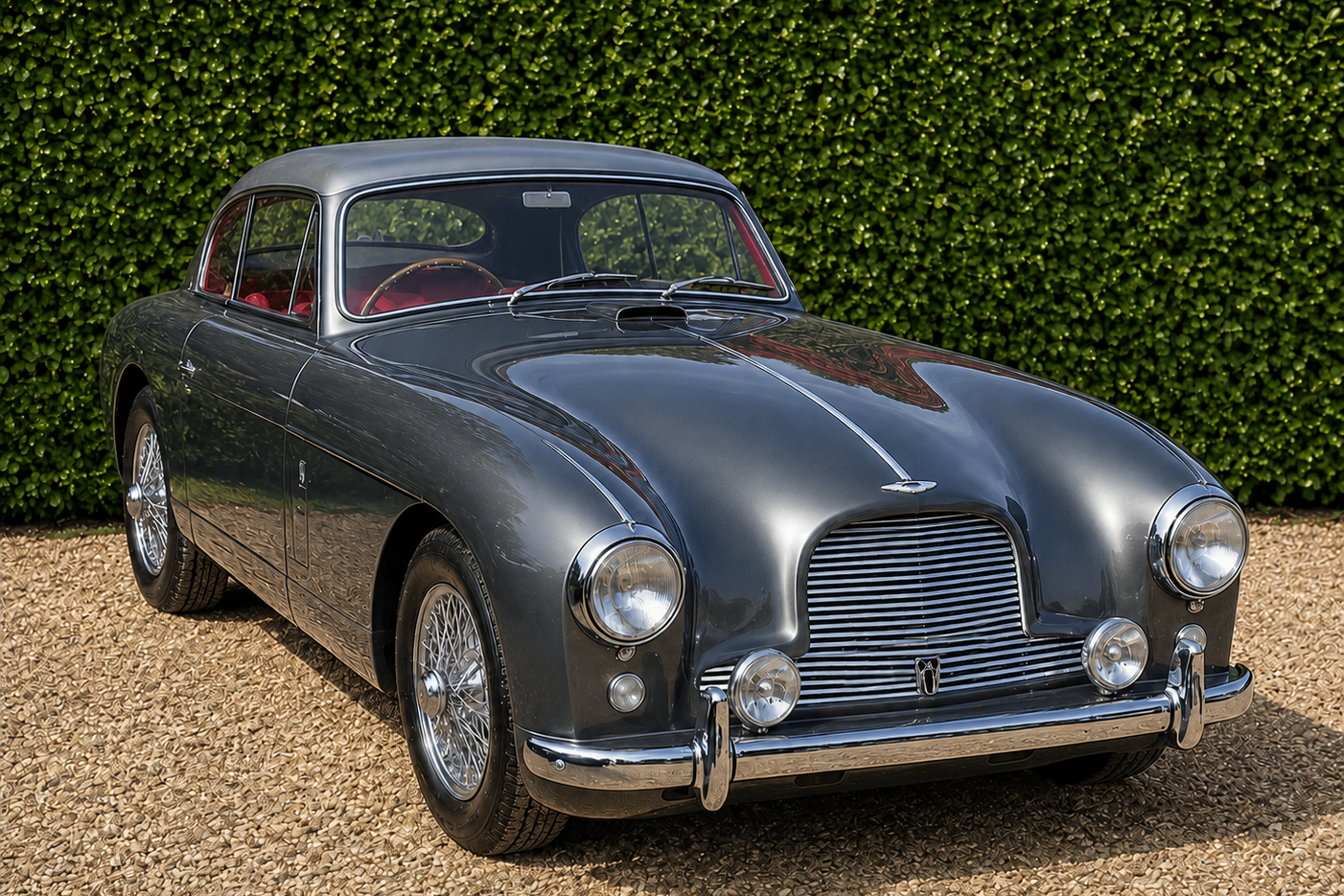
DB2/4 Mk I Bertone Spider (Arnolt commission) · 1953–1954
6 Spiders + 1 sole Bertone Coupé (7 chassis total)
- Distinguishing features
- Six factory DB2/4 Mk I chassis, plus the single Bertone Coupé, dispatched from Feltham to Carrozzeria Bertone in Turin to be bodied to a Giovanni Michelotti design, commissioned by American importer Stanley H. Arnolt II of Chicago. Open two-seat Spider bodywork (or, in the single Coupé, a fixed-head derivative) entirely distinct from the standard Mulliners saloon and drophead — a genuine factory-supplied coachbuilt micro-series, not an aftermarket rebody.
- Value premium
- Effectively unique cars — trade chassis-by-chassis in the seven-figure range, materially above any standard Mk I. Public auction appearances are rare; the sole Bertone Coupé (chassis LML/504) has been the subject of several notable dealer offerings and museum exhibitions.
- Inspection points
- Verify factory DB2/4 Mk I chassis stamping under the Bertone bodywork, correct VB6E or VB6J engine number, and the Bertone-specific body plates and construction details (Michelotti design cues, Bertone-style windscreen surround and interior).
- Authentication
- Aston Martin Heritage Trust build sheet and Bertone construction records are the only reliable proof. Genuine cars are individually documented in the AMOC register; any 'Bertone-bodied' DB2/4 outside the known 7-chassis population is not genuine.