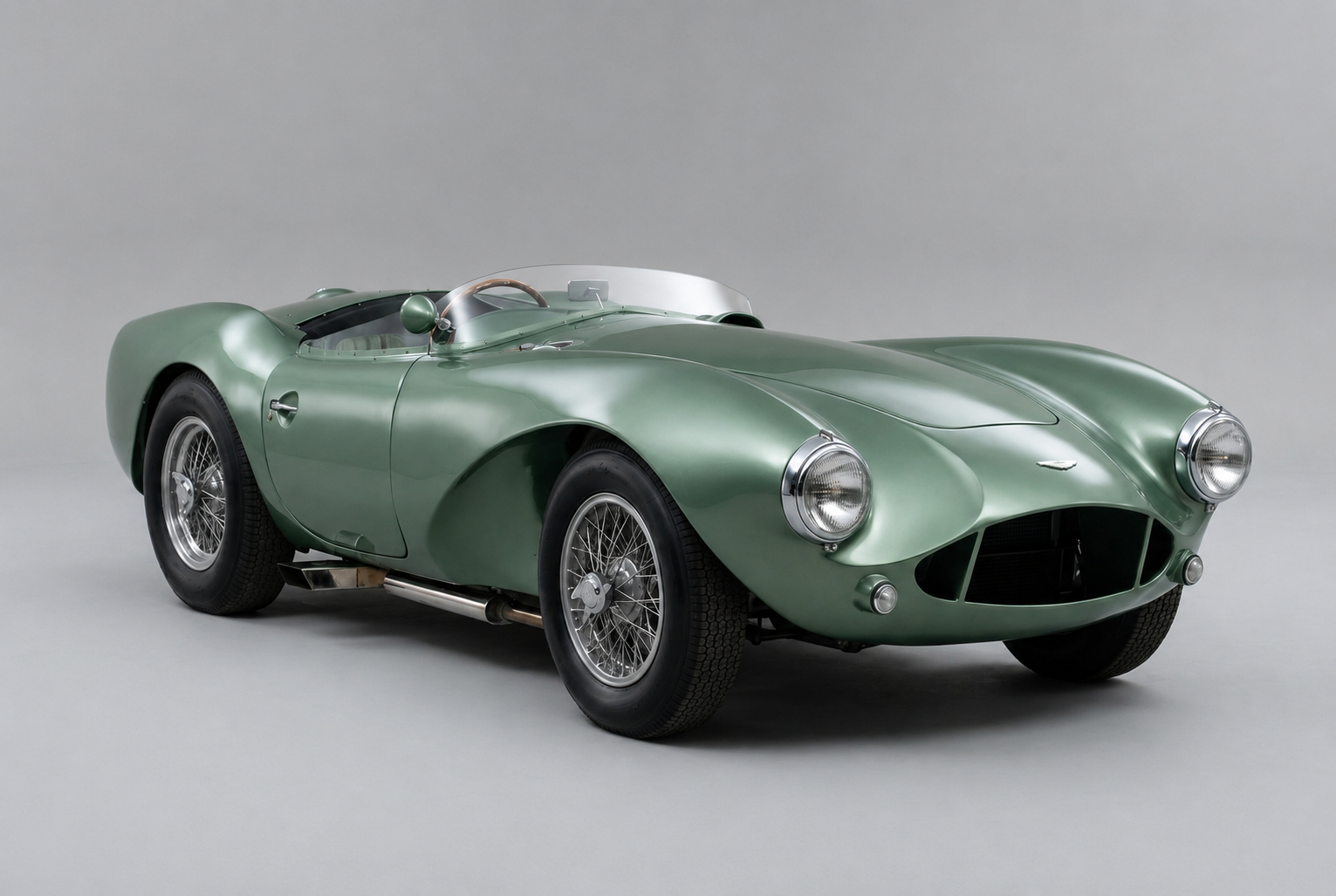
Designed by William Watson (with bodywork by Frank Feeley) to replace the unsuccessful DB3, the DB3S had a shorter wheelbase and lighter chassis; its 2,922 cc twin-cam straight-six produced around 180 bhp at 6,000 rpm (later works cars more), driving through a four-speed manual. Feeley's voluptuous body with cutaway front fenders is among the best-loved shapes of the era.
31 examples built between 1953 and 1957: 11 works/team cars (10 to works specification plus one built to team specification in 1957) and around 20 for privateers. Competition debut May 1953 at Charterhall (Reg Parnell beating the Ecurie Ecosse C-Types); wins followed at the British Empire Trophy, Charterhall, the Goodwood Nine Hours and the RAC Tourist Trophy. The DB3S finished second overall at Le Mans in 1955 and 1956 (Moss/Collins) and took 15 victories across 35 starts in four years of factory competition before the DBR1 replaced it in 1957.
A beautiful and successful 1950s works sports-racer; works cars are among the most coveted competition Astons.