Every model, one definitive hub.
Each Car Collector International buyer's guide is the central reference for that specific vehicle. Written for collectors, edited for owners, and updated as the cars themselves move through the market.
AC
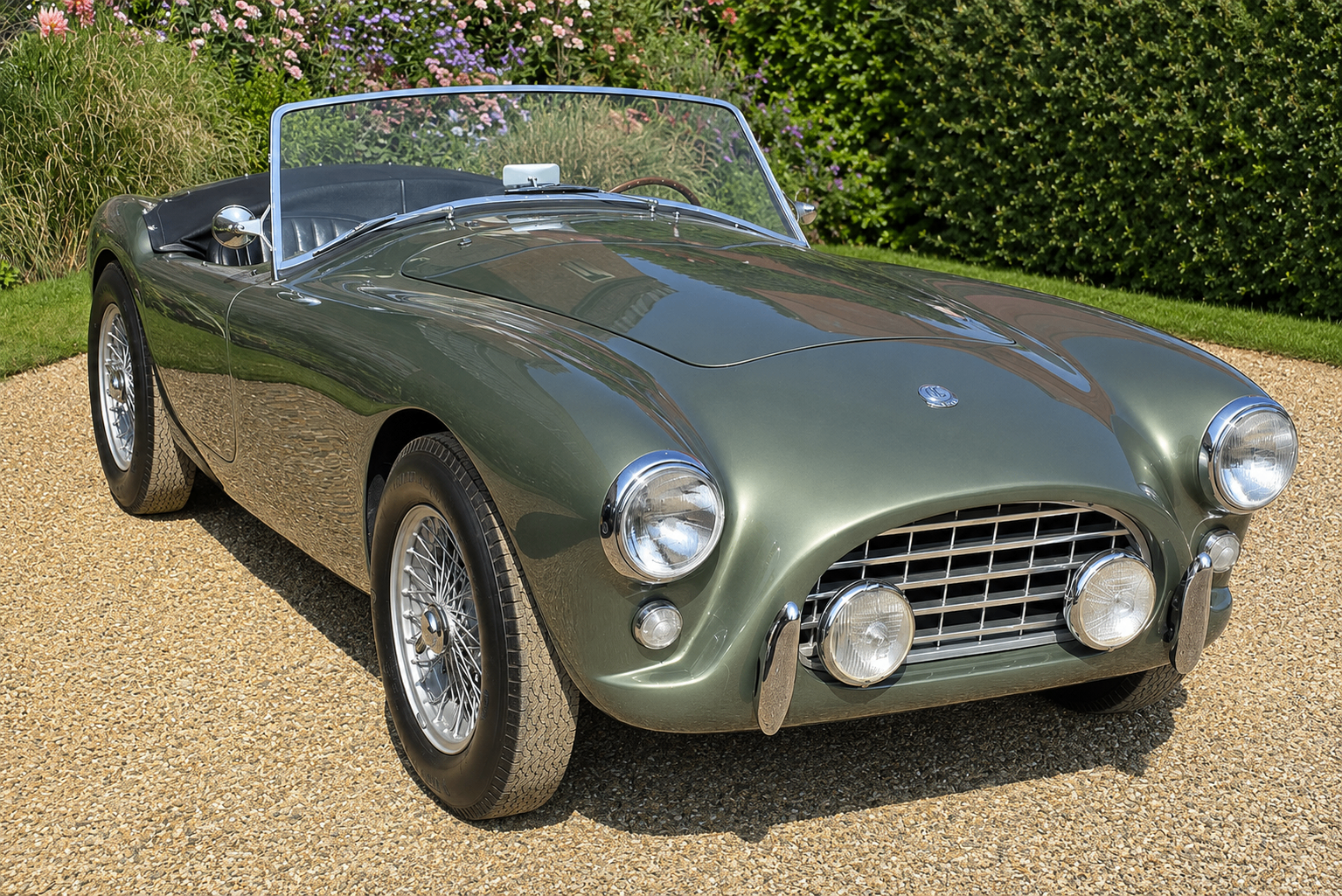
AC Ace
The Tojeiro-designed AC roadster that became the Cobra's donor car — three engine families across a decade, roughly 723 cars in total.
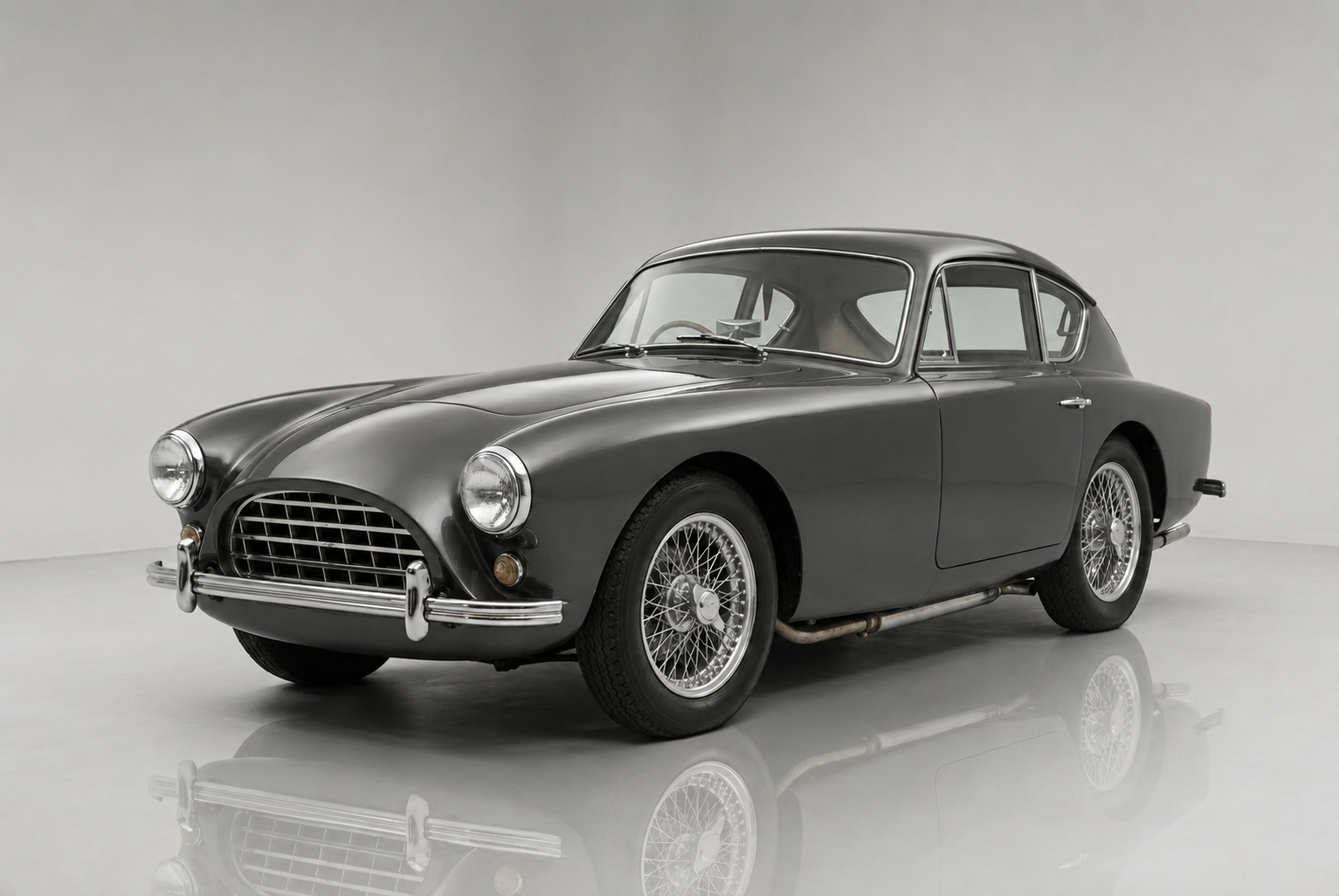
AC Aceca & Greyhound
The fixed-head coupé and 2+2 GT derivatives of the AC Ace — the Bristol-engined Aceca leads the market.
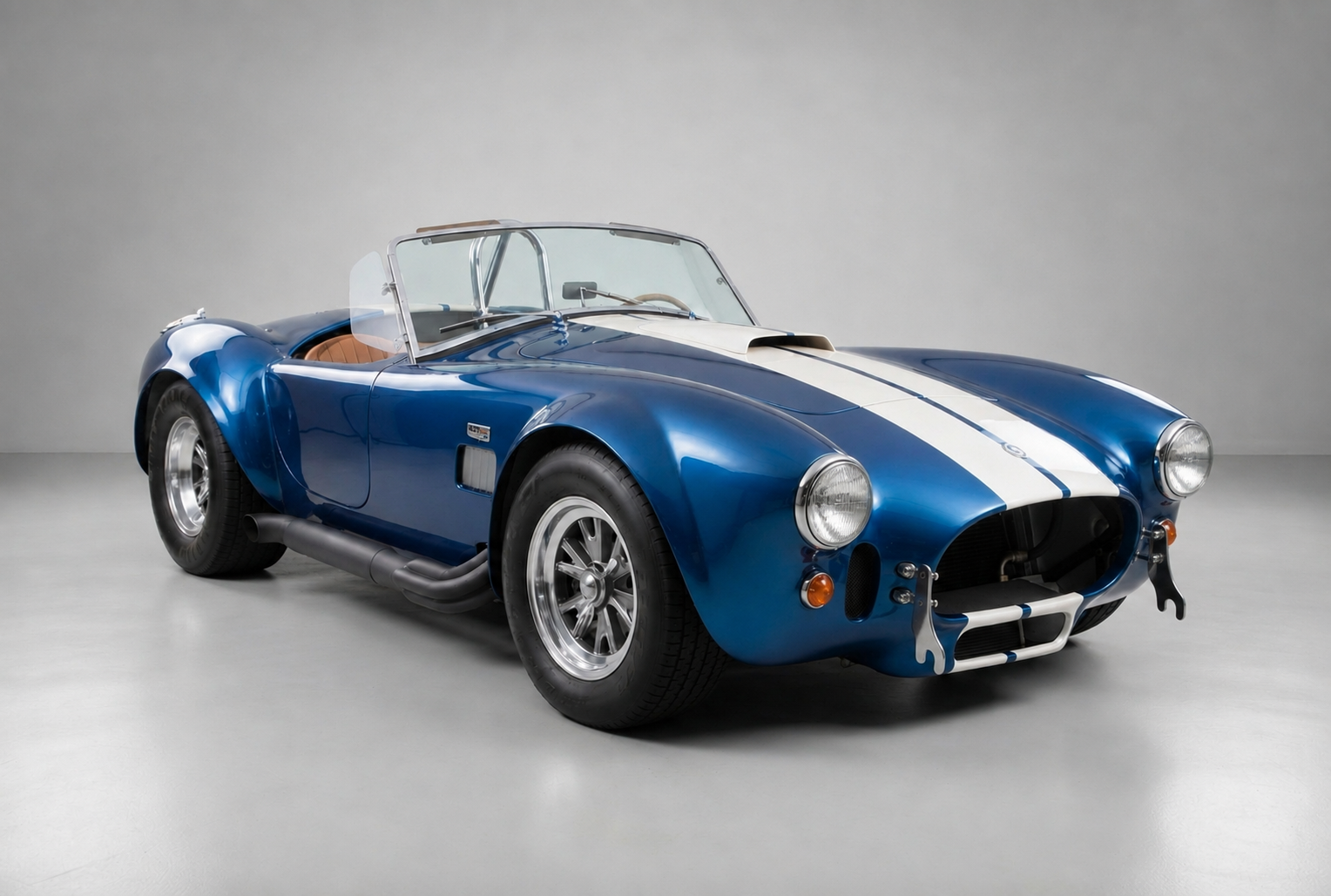
AC Cobra
Carroll Shelby's Anglo-American roadster — 998 original CSX-chassis cars built 1961–1968, from the 260-powered founding run to the big-block 427 S/C.
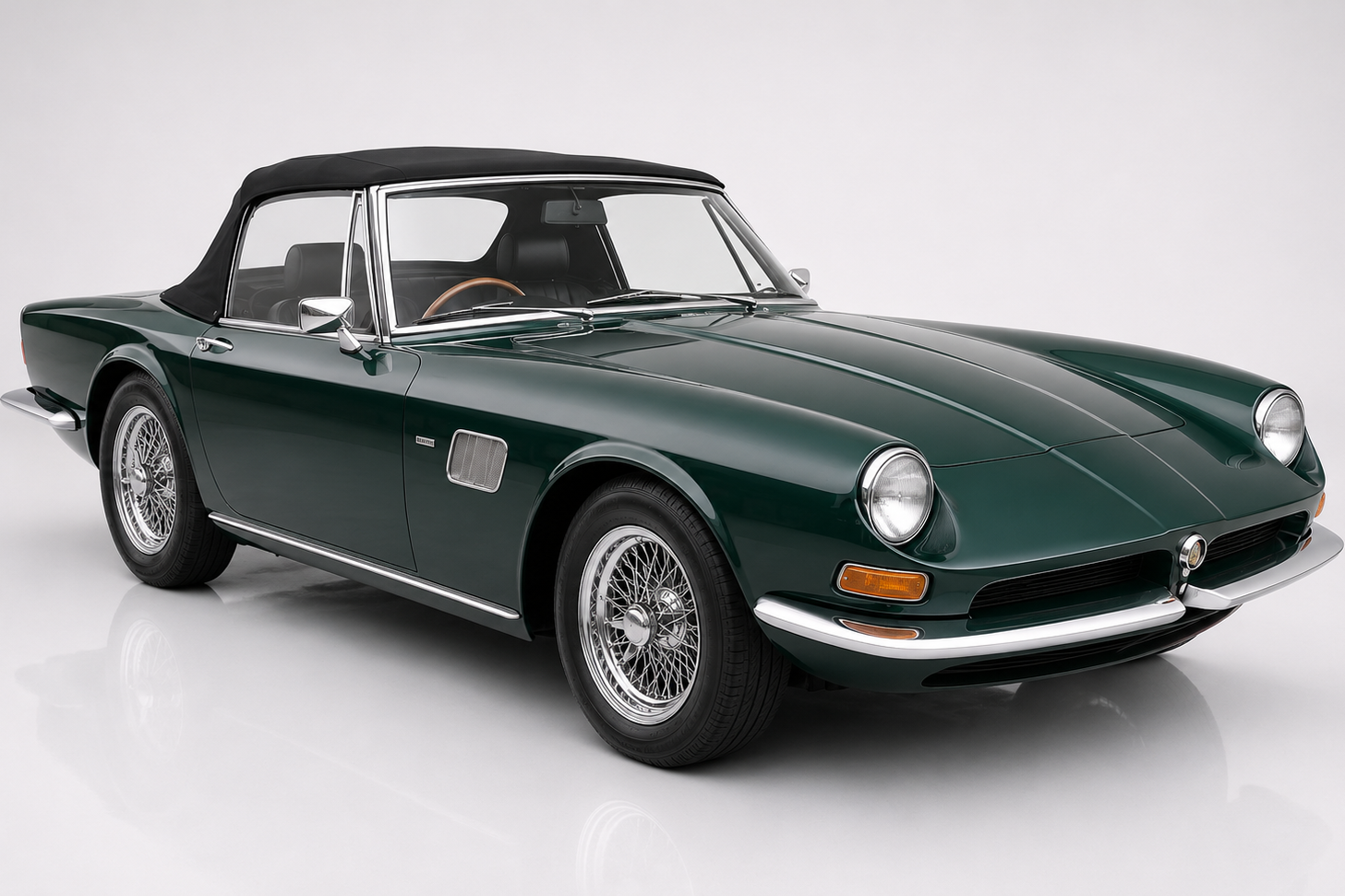
AC 428 Frua
The forgotten Anglo-Italian-American GT — Cobra underneath, Frua couture on top.
Alfa Romeo
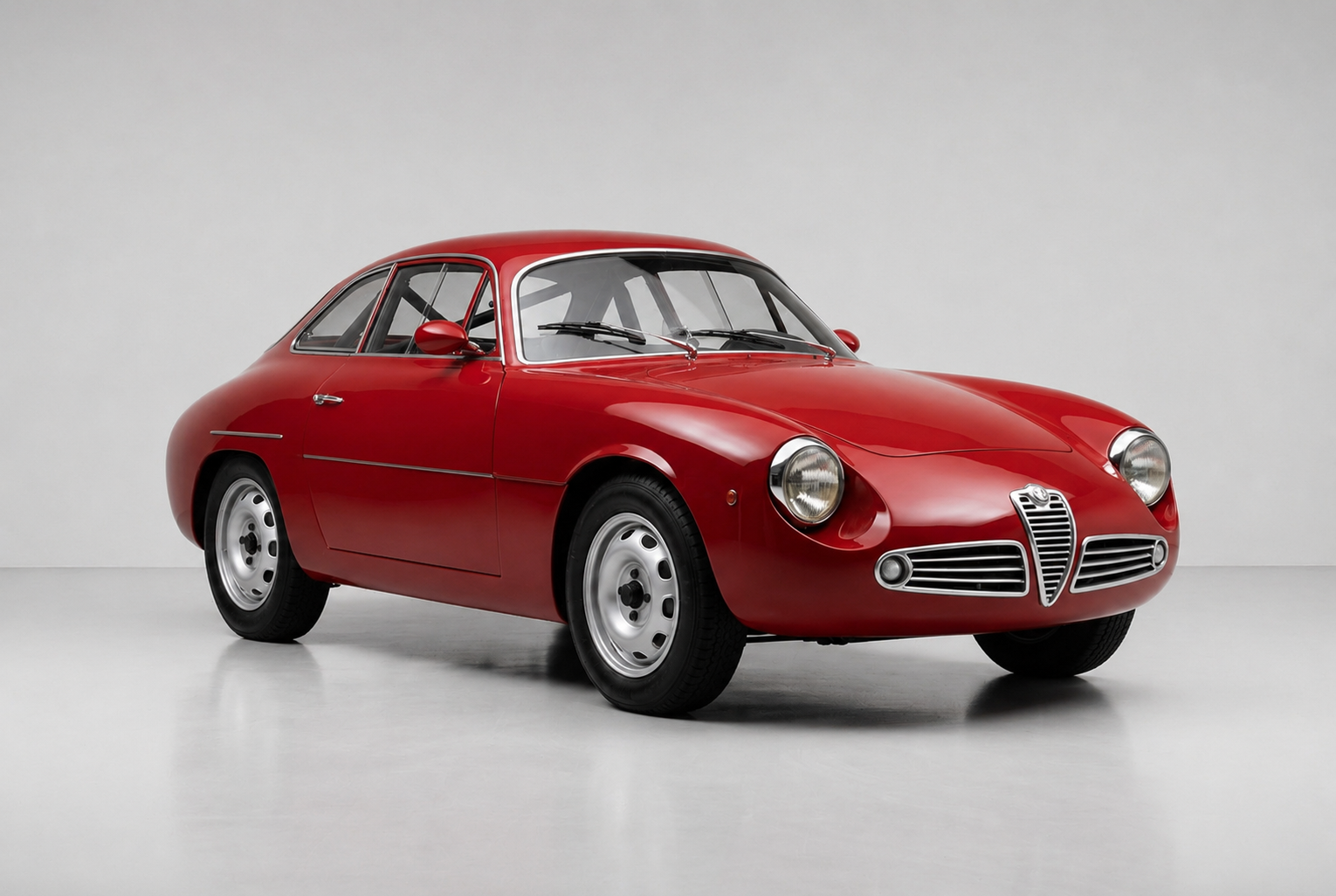
Alfa Romeo Giulietta Sprint Family
The car that established Alfa Romeo in the 1.3-litre performance class — from Bertone Sprint to Zagato SZ.
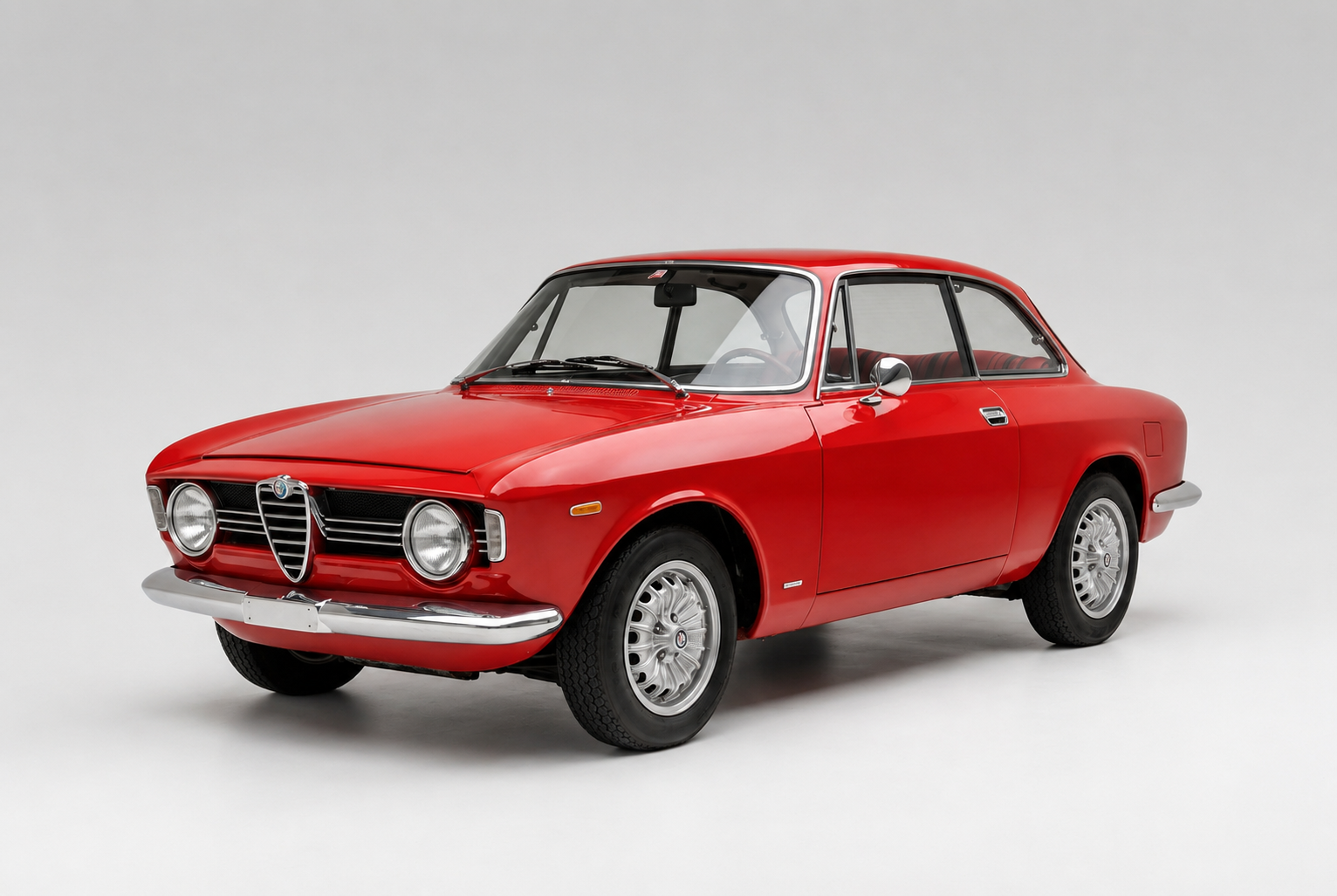
Alfa Romeo Giulia GT (105/115 Series Coupé)
The benchmark affordable Italian classic — Giugiaro at Bertone on the Giulia Berlina platform.
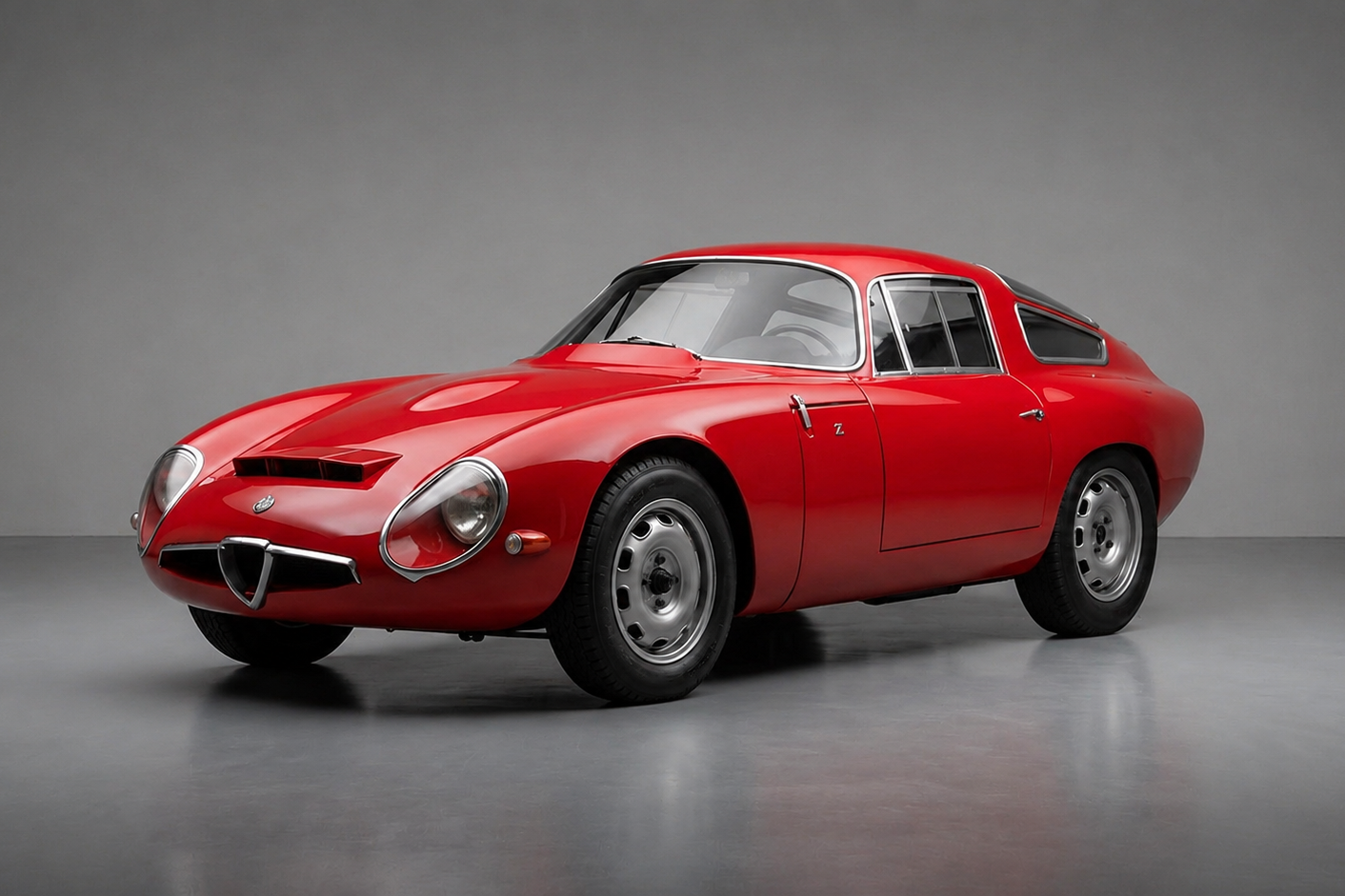
Alfa Romeo Giulia TZ1
Zagato-bodied lightweight Alfa — tubular spaceframe, Kamm tail, twin-cam four; 112 built.
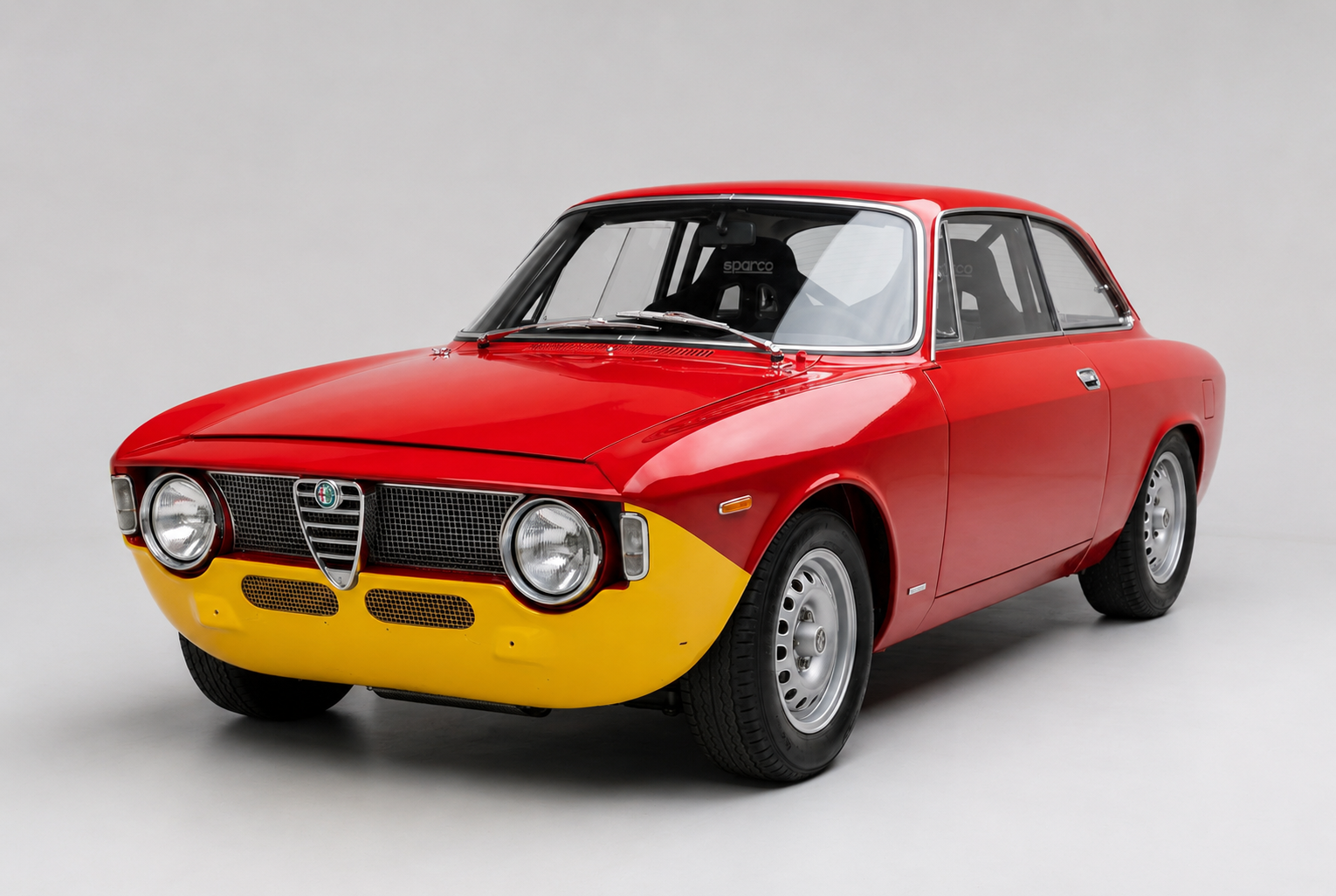
Alfa Romeo Giulia Sprint GTA
The Autodelta lightweight — European Touring Car Champion 1966, 1967 and 1968.
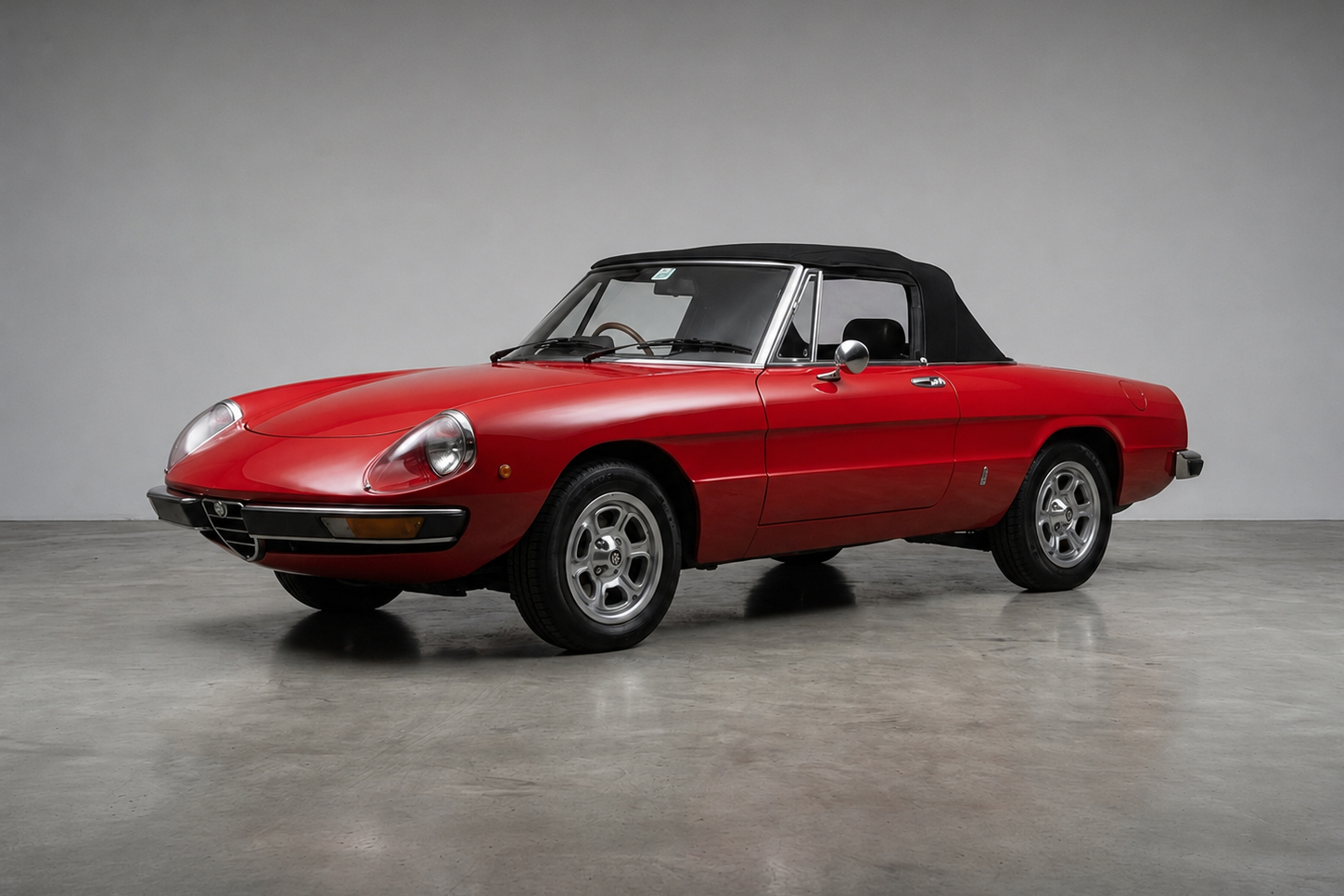
Alfa Romeo Spider (105/115)
Pininfarina's last personally-signed design and Alfa Romeo's longest-lived production car — twenty-eight years of the same Battista-drawn body.
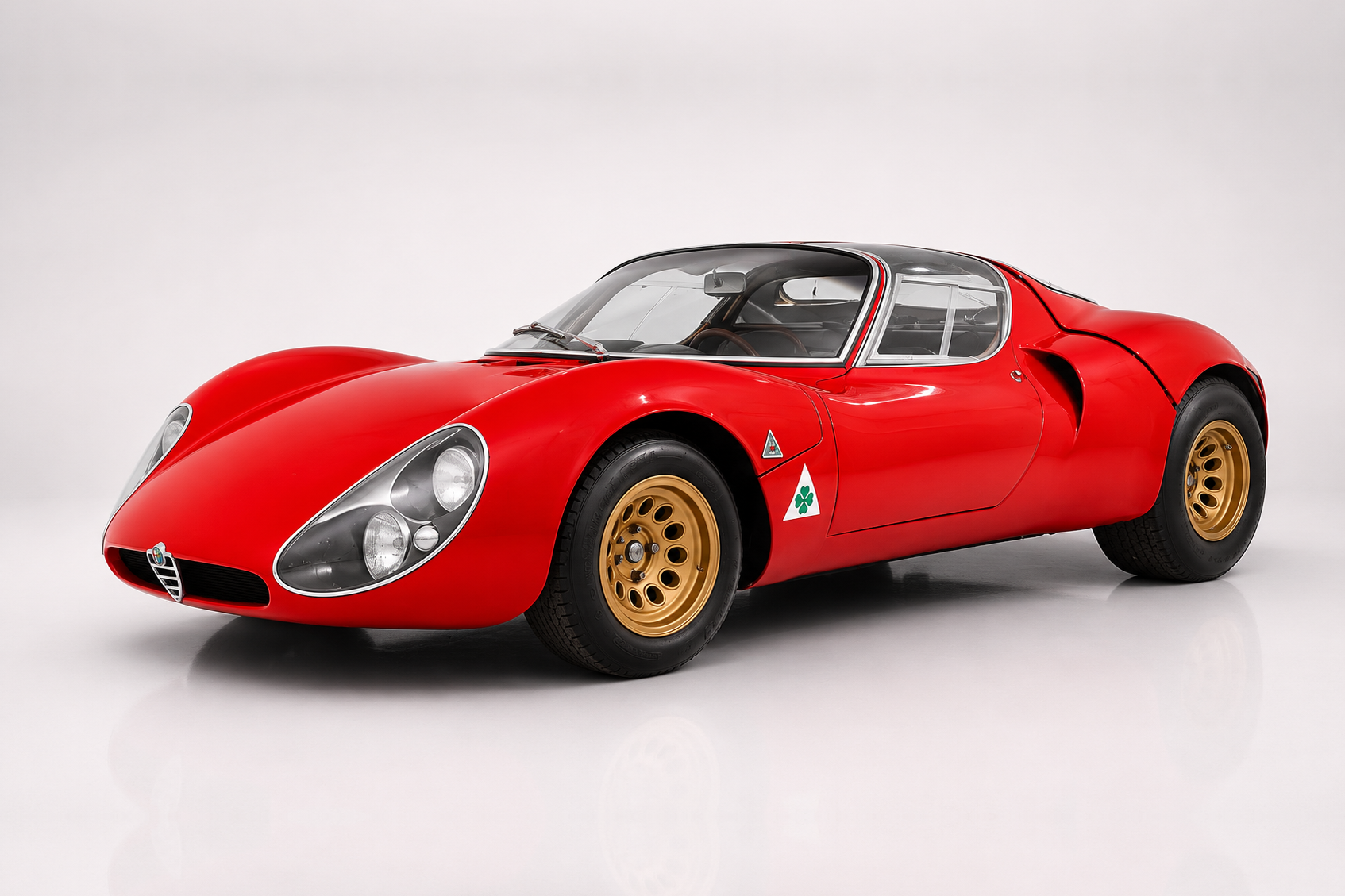
Alfa Romeo 33 Stradale (1967)
Routinely called the most beautiful car ever built — and the first modern supercar.
Alvis
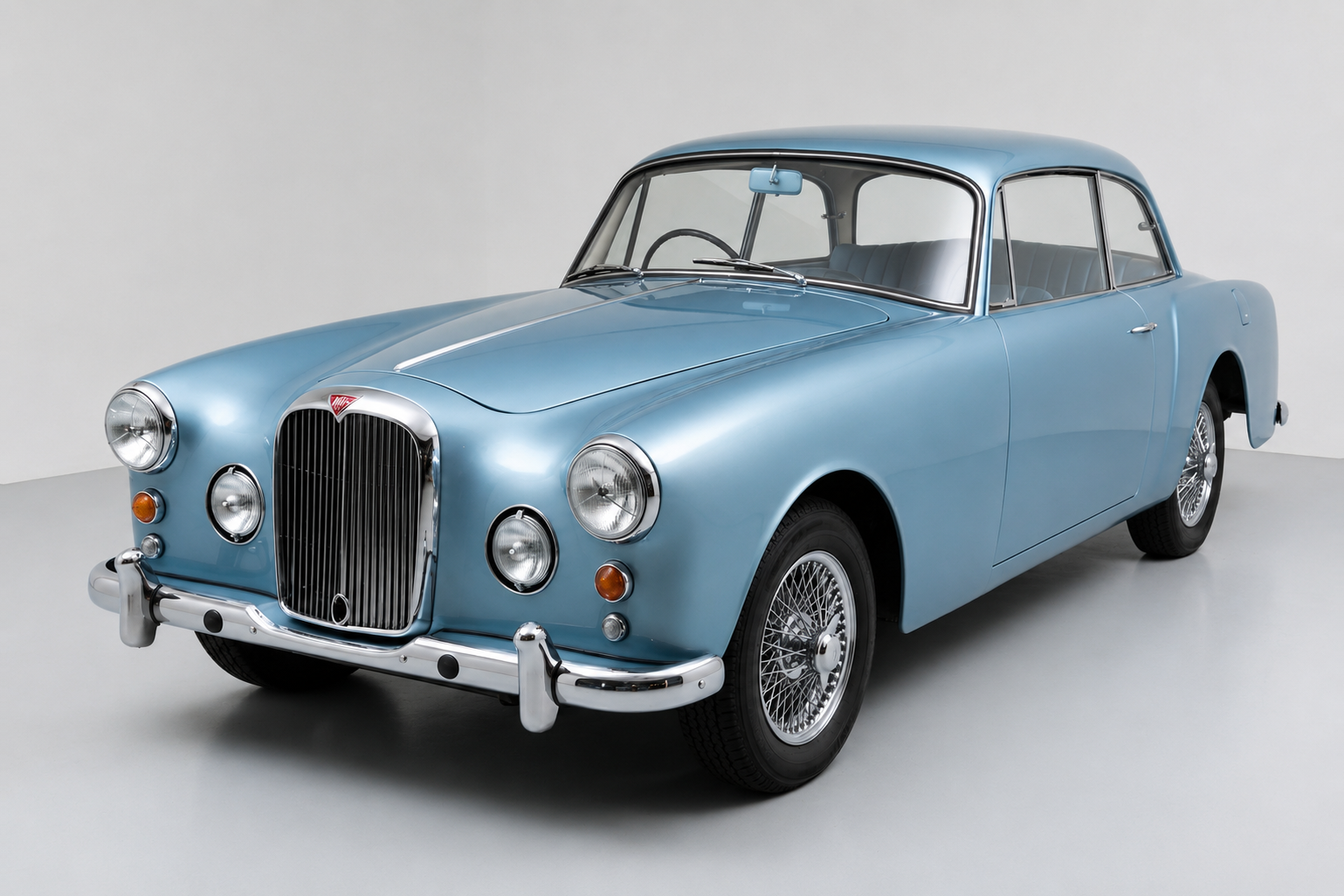
Aston Martin
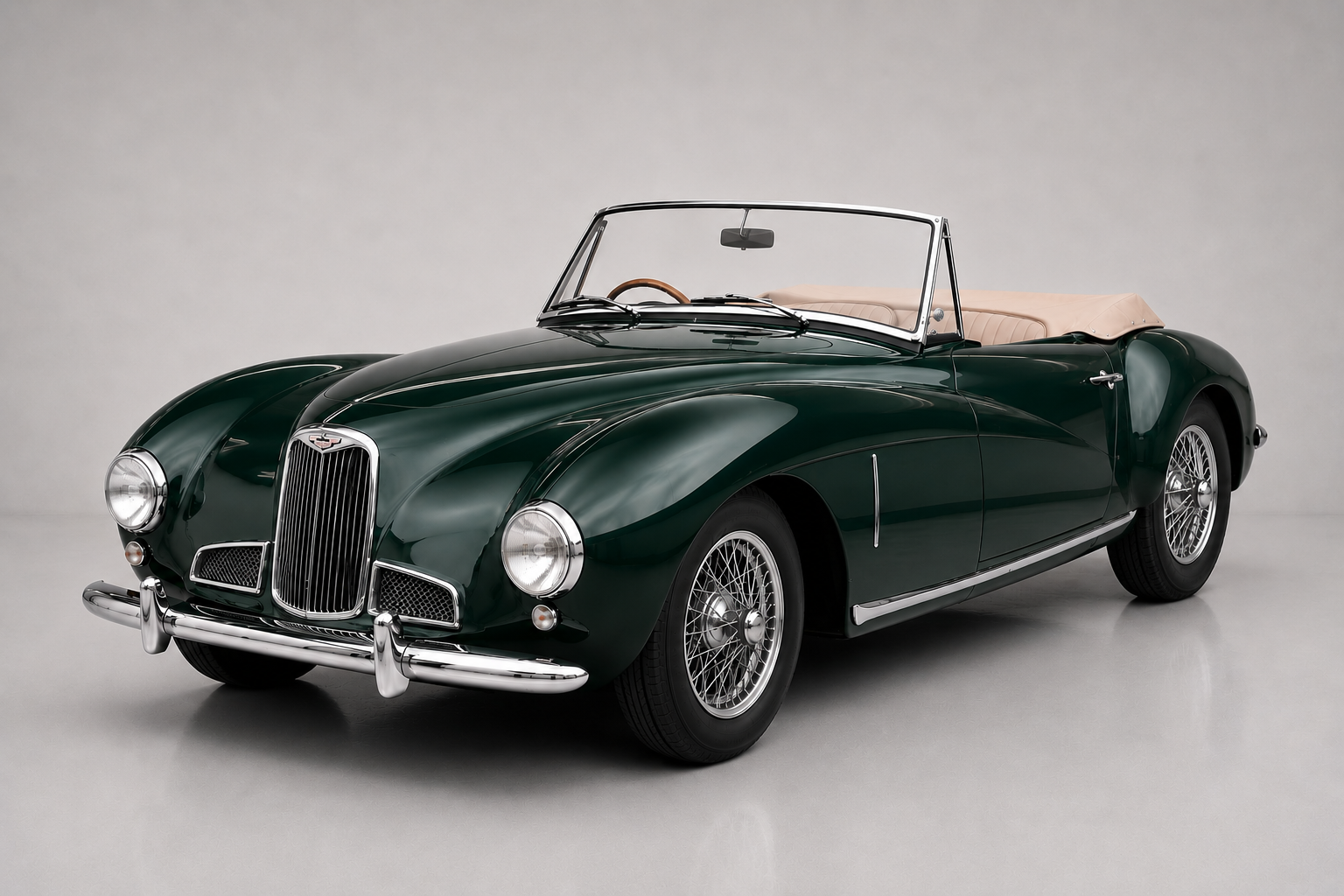
Aston Martin 2-Litre Sports (DB1)
The 15-car David Brown launch model — the car that launched the DB era.
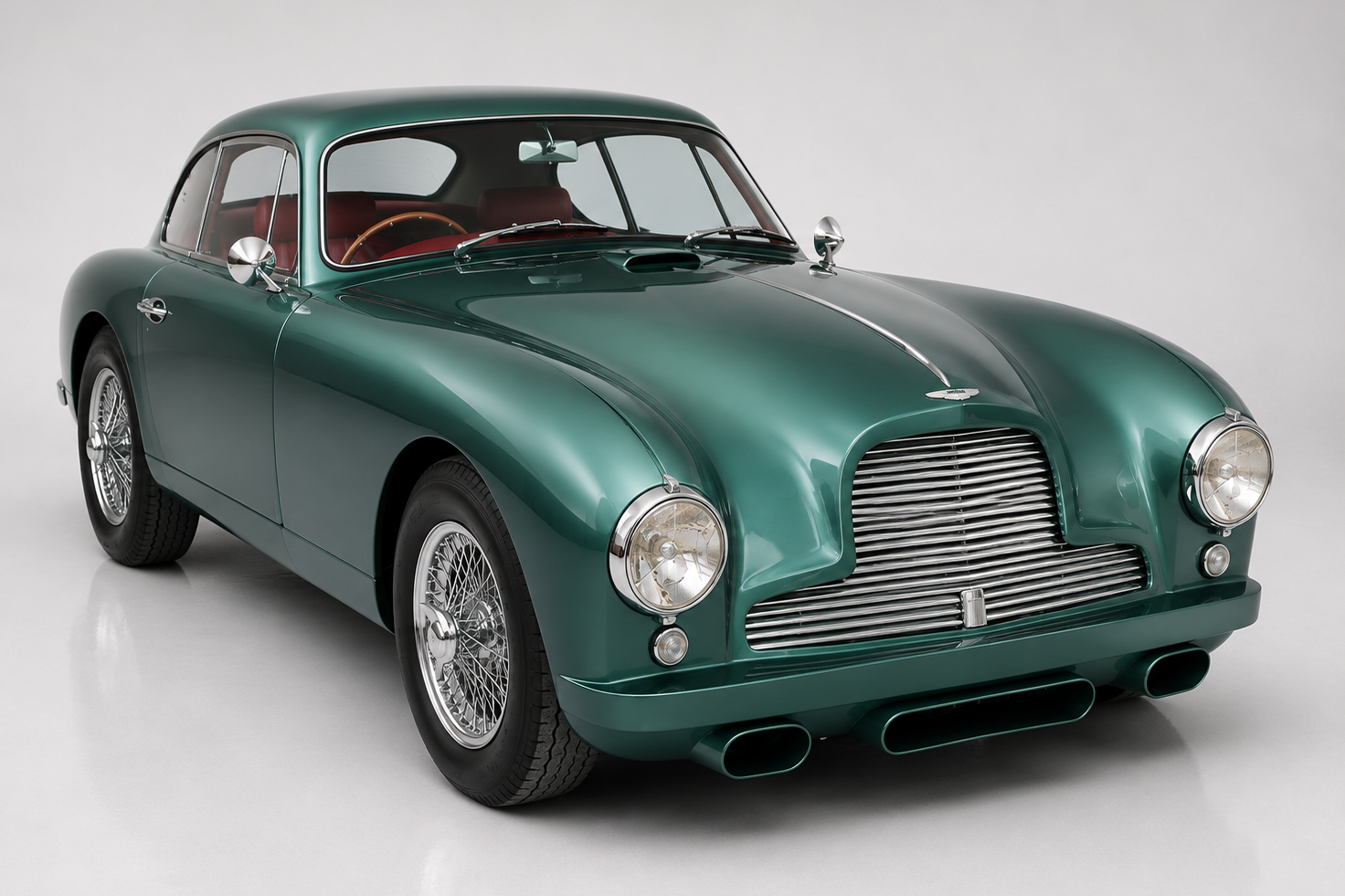
Aston Martin DB2
Aston Martin's first true postwar grand tourer — and the car on which the Vantage nameplate began, as a 125 bhp engine option.
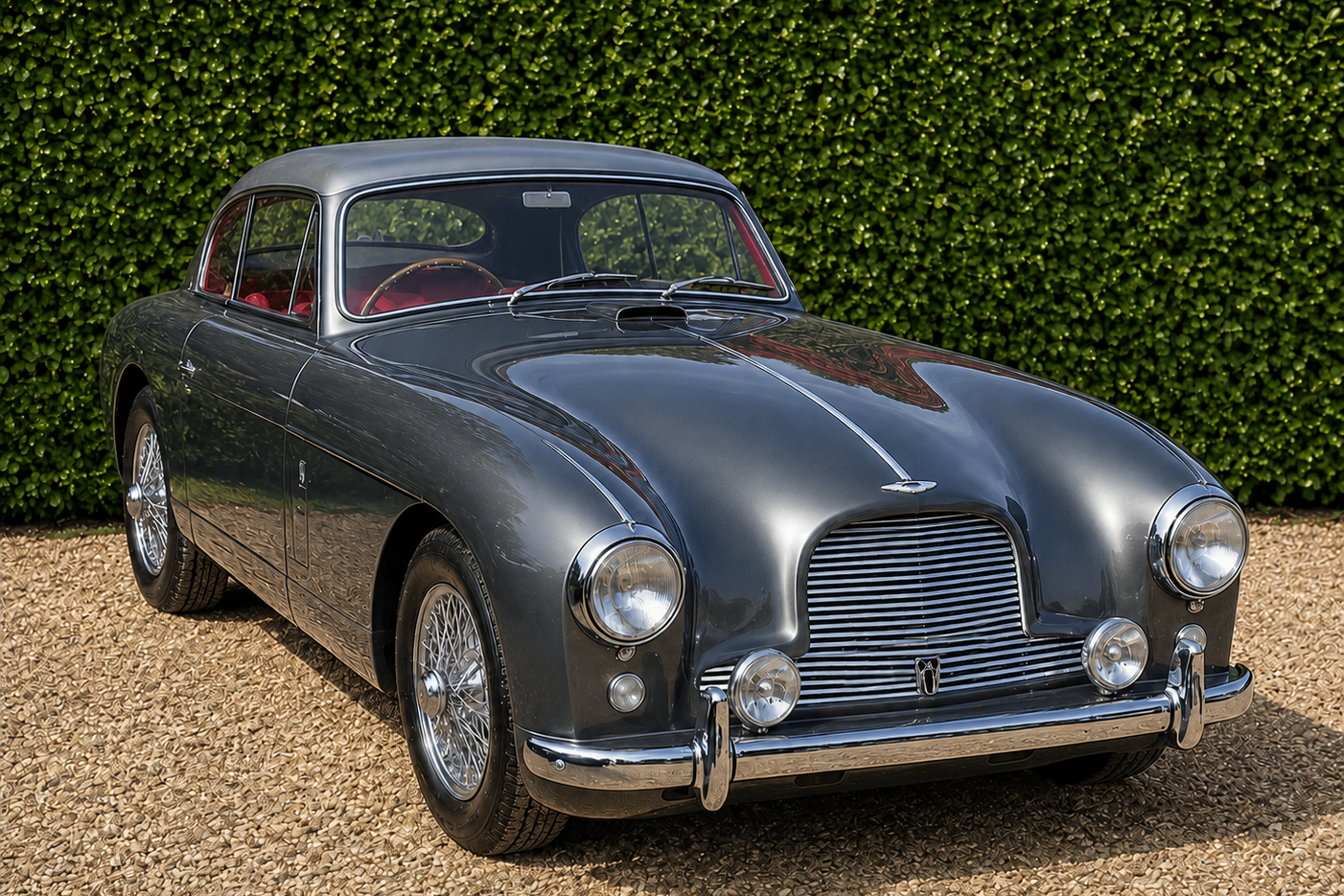
Aston Martin DB2/4
The Feltham-era Aston that added a hatchback tailgate and rear seats to the DB2.
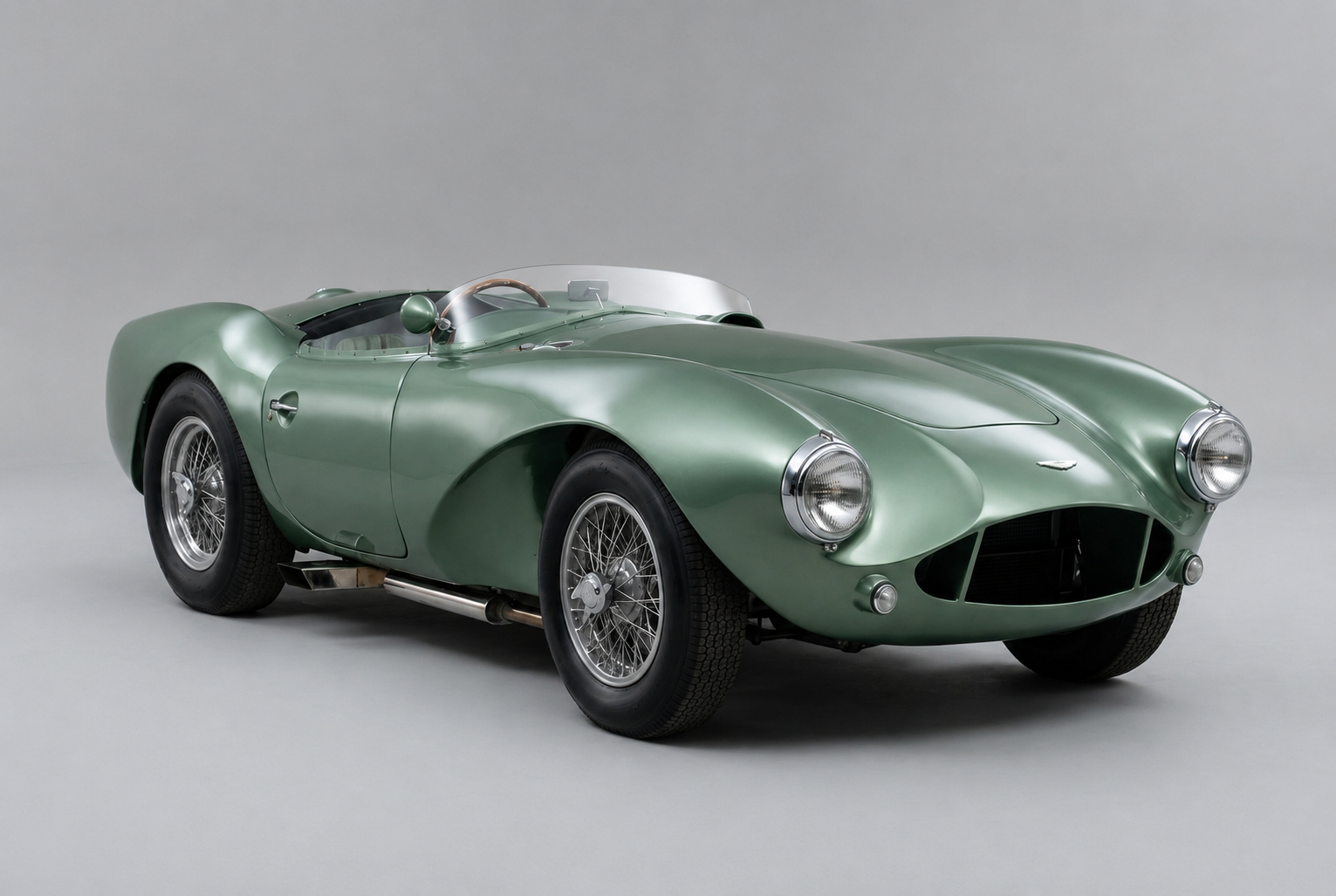
Aston Martin DB3S
Frank Feeley's cutaway-fendered works sports-racer — twice second at Le Mans and the DBR1's direct predecessor.
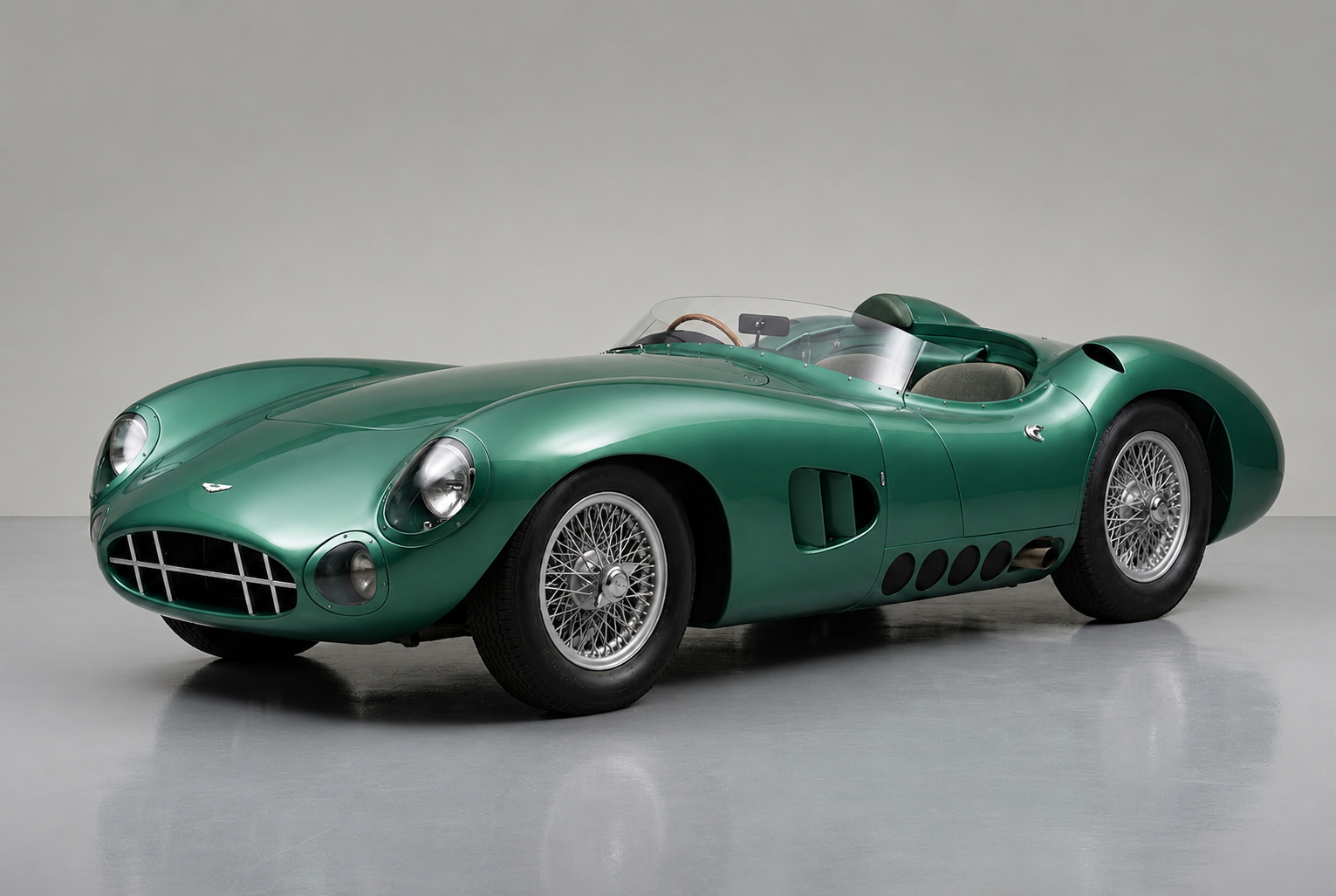
Aston Martin DBR1
The car that won Aston Martin the 1959 World Sportscar Championship and its only outright Le Mans.
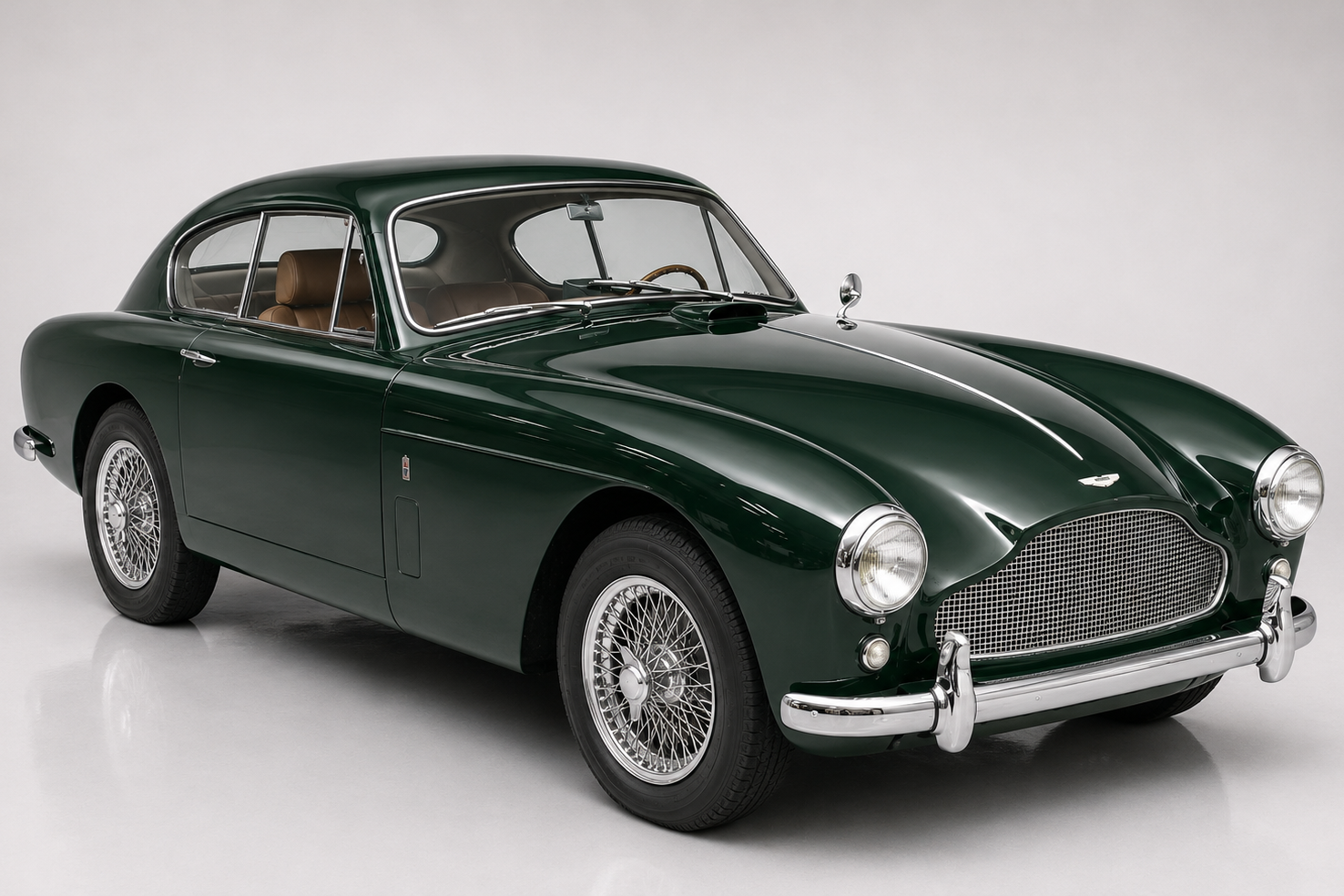
Aston Martin DB Mark III
The last Feltham road car — and the Aston that introduced the DB3S-derived grille shape every subsequent DB has worn.
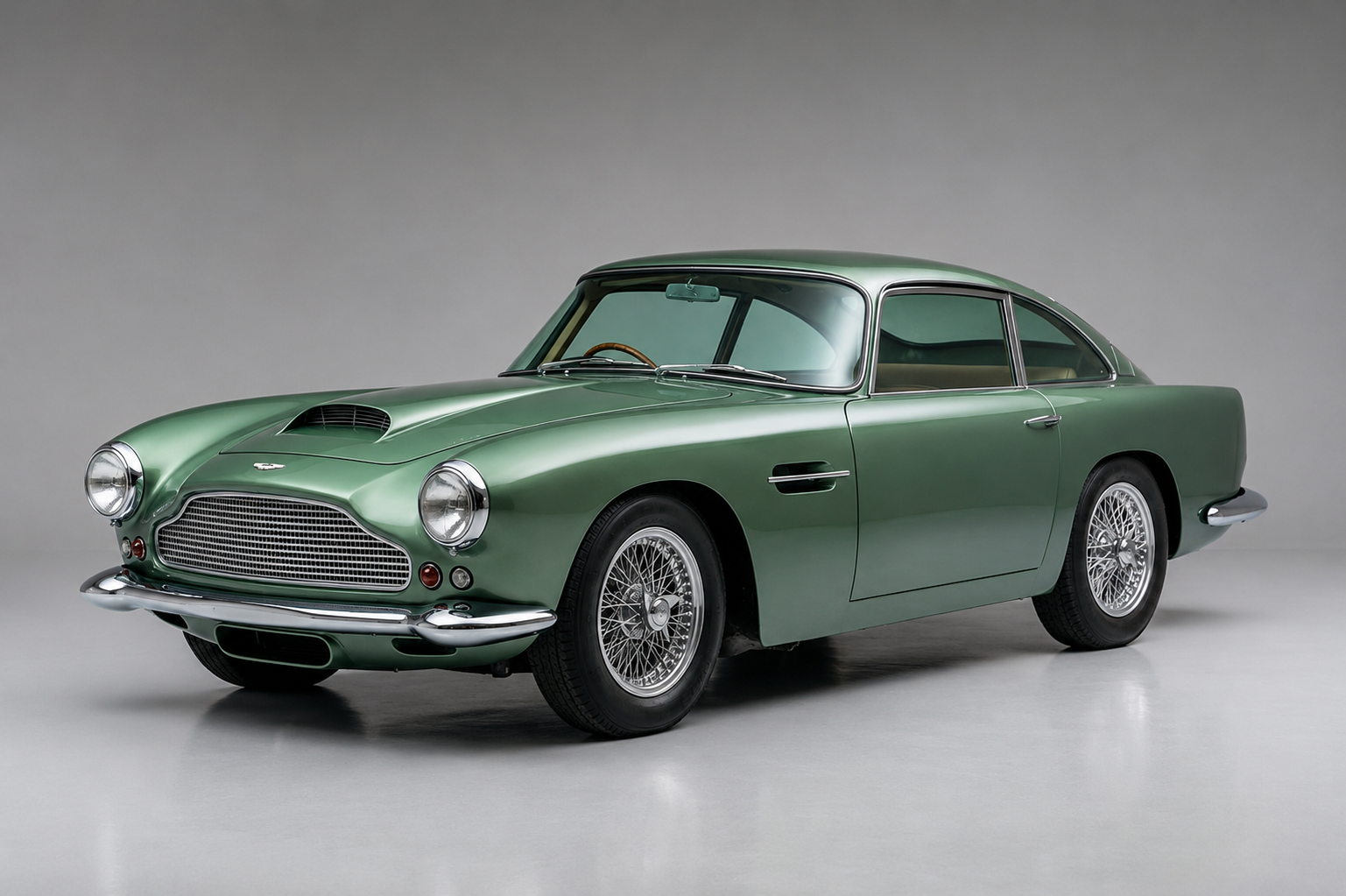
Aston Martin DB4
The Touring-bodied superleggera Aston that established the DB silhouette and underpinned the DB5.
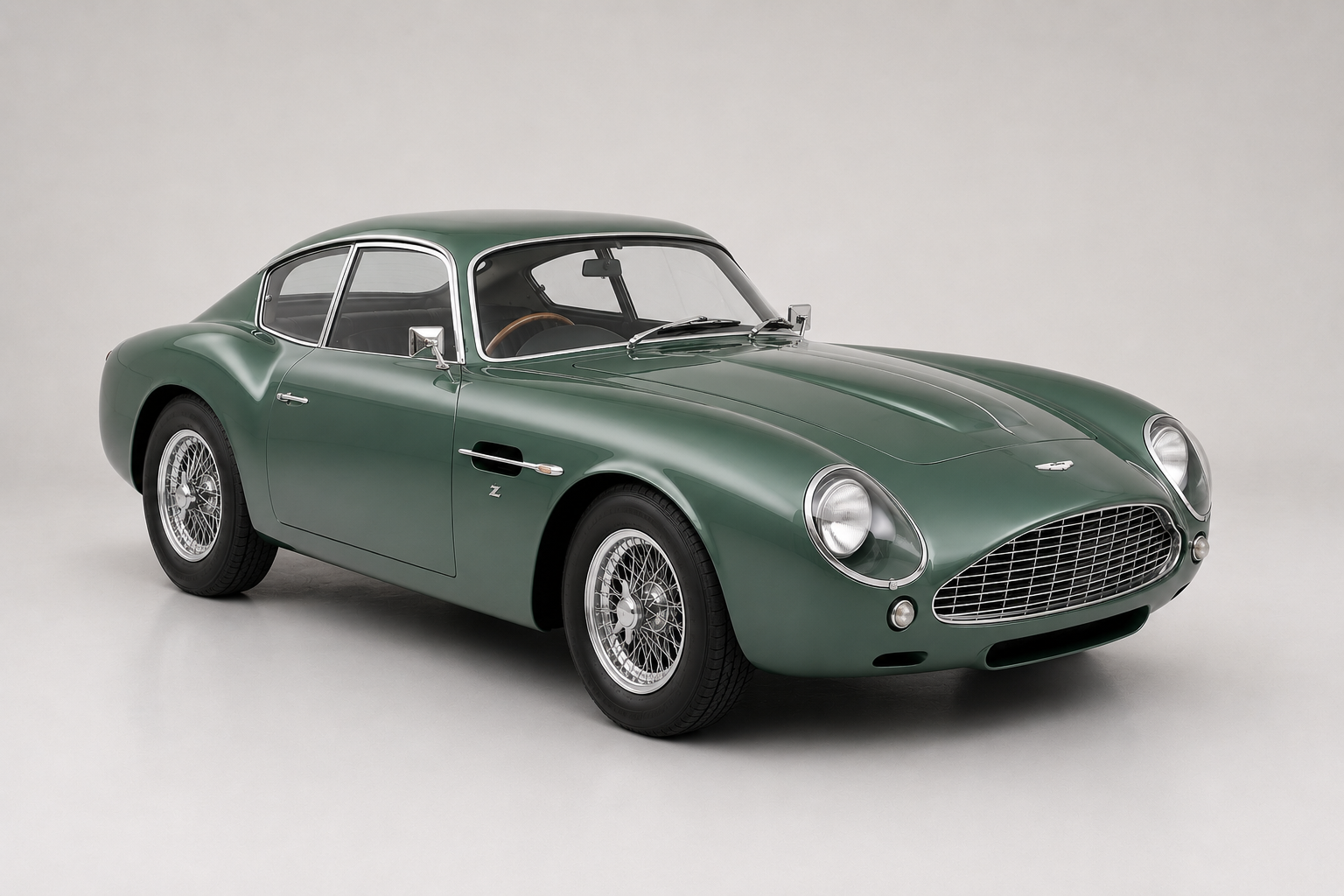
Aston Martin DB4GT & DB4GT Zagato
The lightweight, faired-headlamp short-chassis DB4 — and its 19-car Zagato-bodied elite.
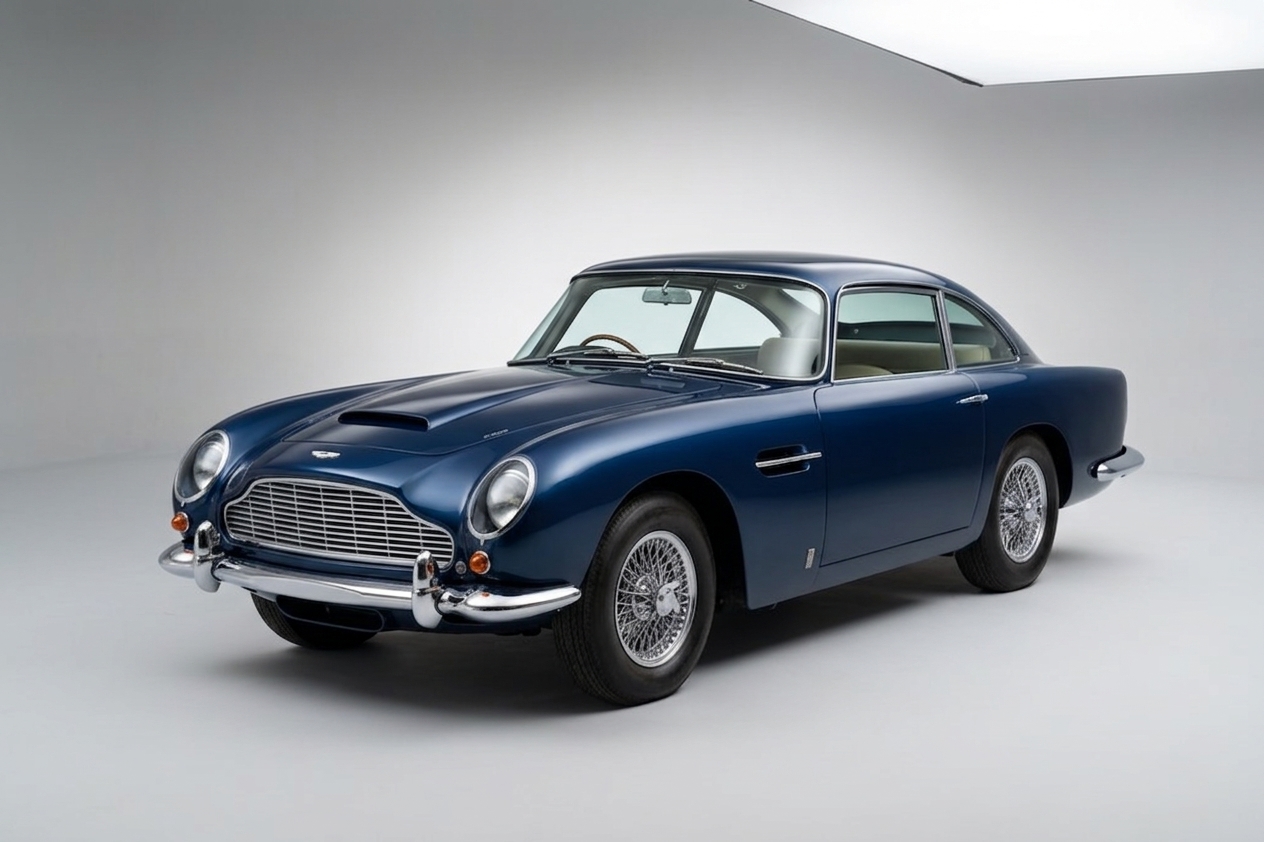
Aston Martin DB5
The world's most famous Aston Martin — the Goldfinger silhouette built on the DB4 platform.
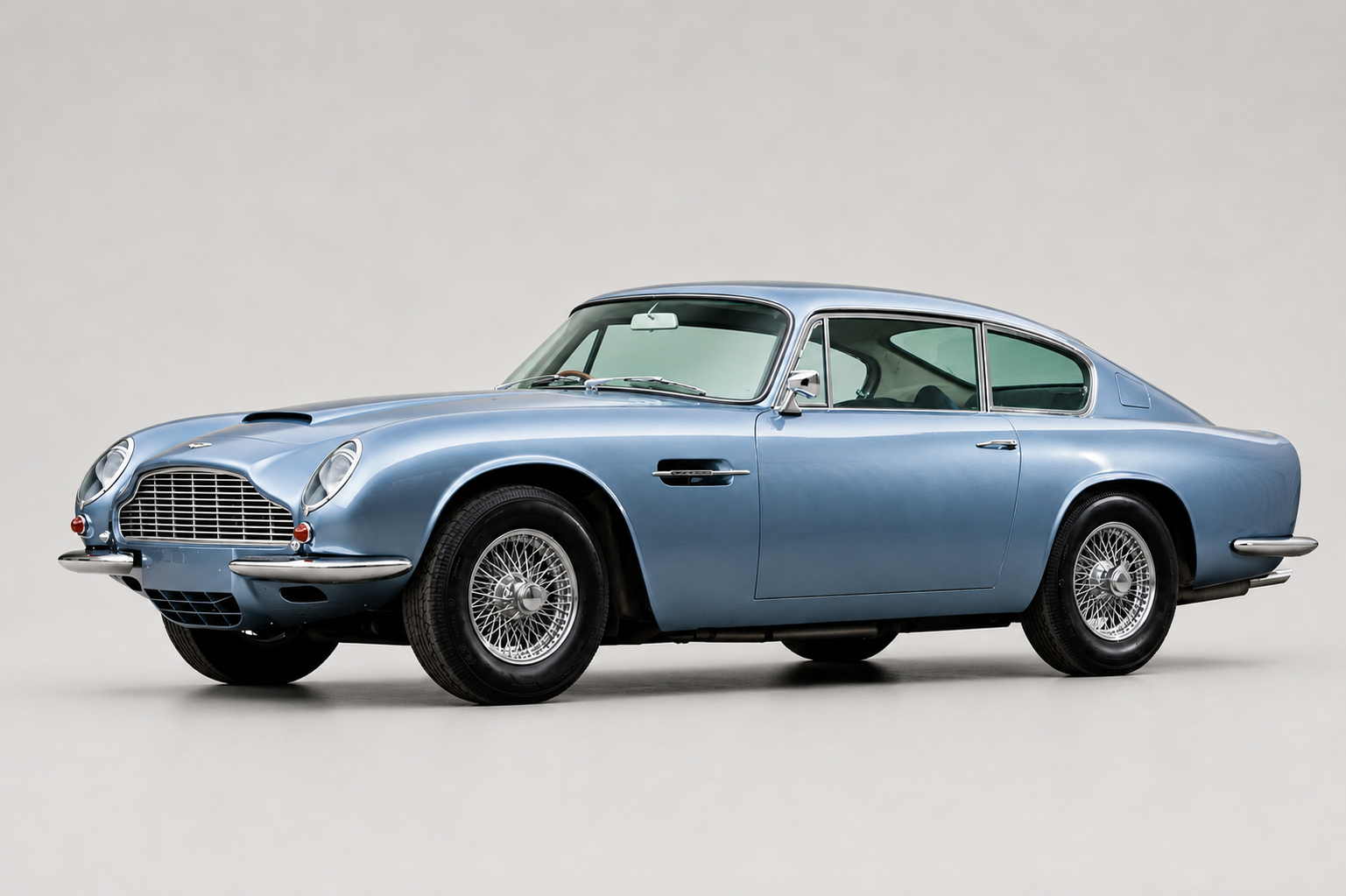
Aston Martin DB6
The final Touring-shaped DB — longer wheelbase, Kammtail, 2+2 practicality and the last of the six-cylinder Newport Pagnell grand tourers.
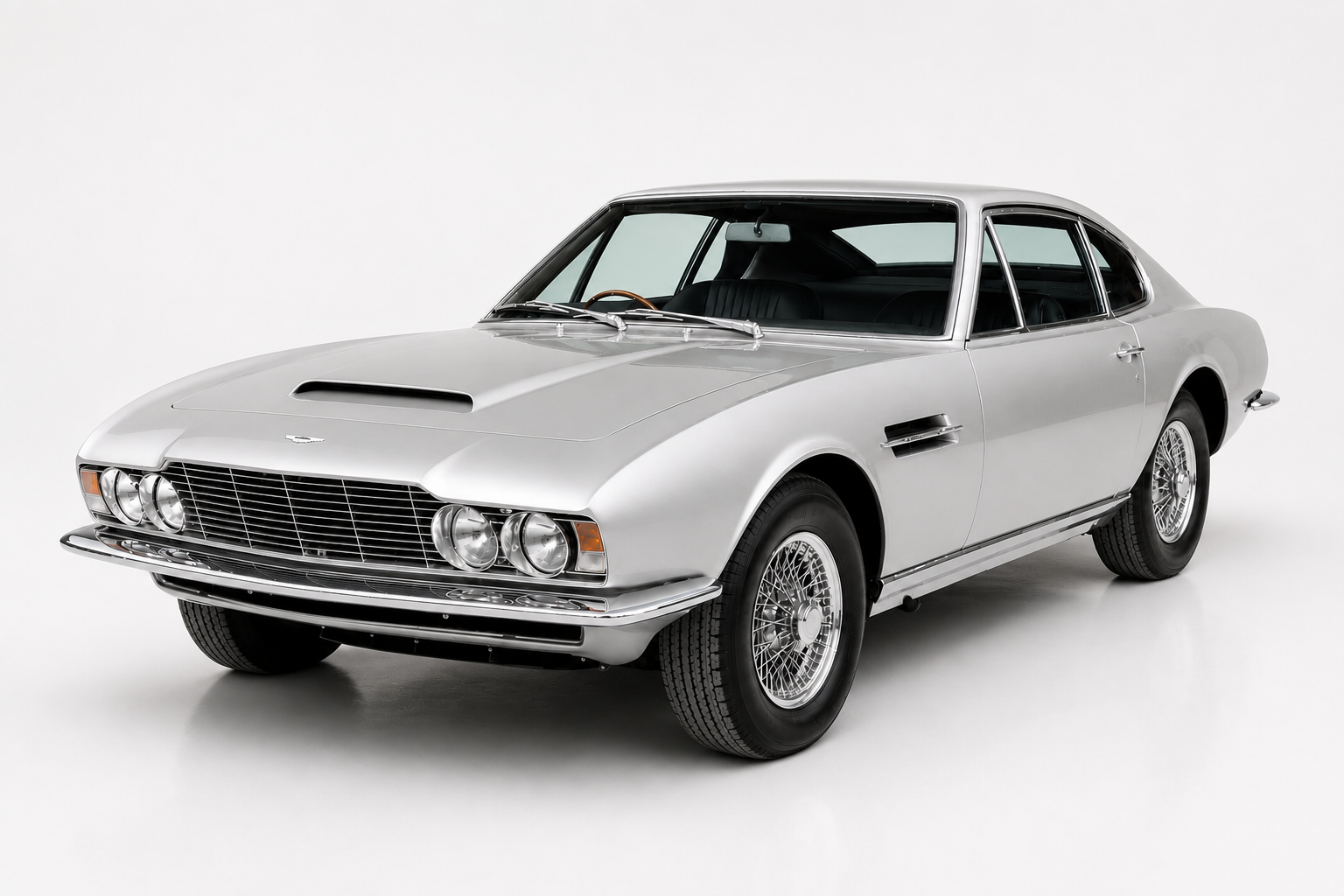
Aston Martin DBS
William Towns's wider, four-seat successor to the DB6 — designed around the forthcoming Tadek Marek V8 that arrived in 1969.
Austin-Healey
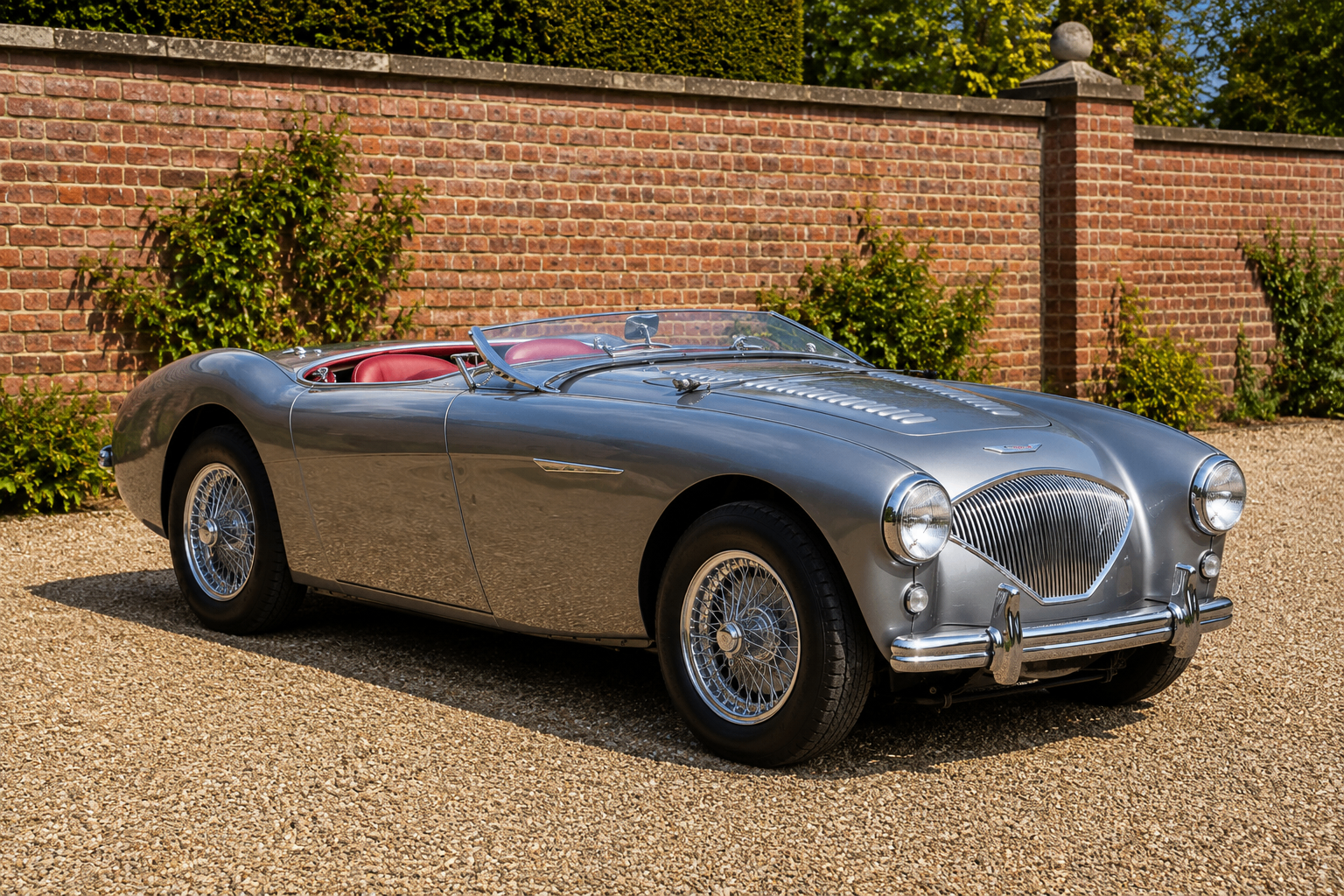
Austin-Healey 100
The car that started the 'big Healey' story — the 2.66-litre four-cylinder Donald Healey / Austin collaboration built by Jensen from 1953 to 1956, culminating in the 100M and the aluminium-bodied 100S racer.
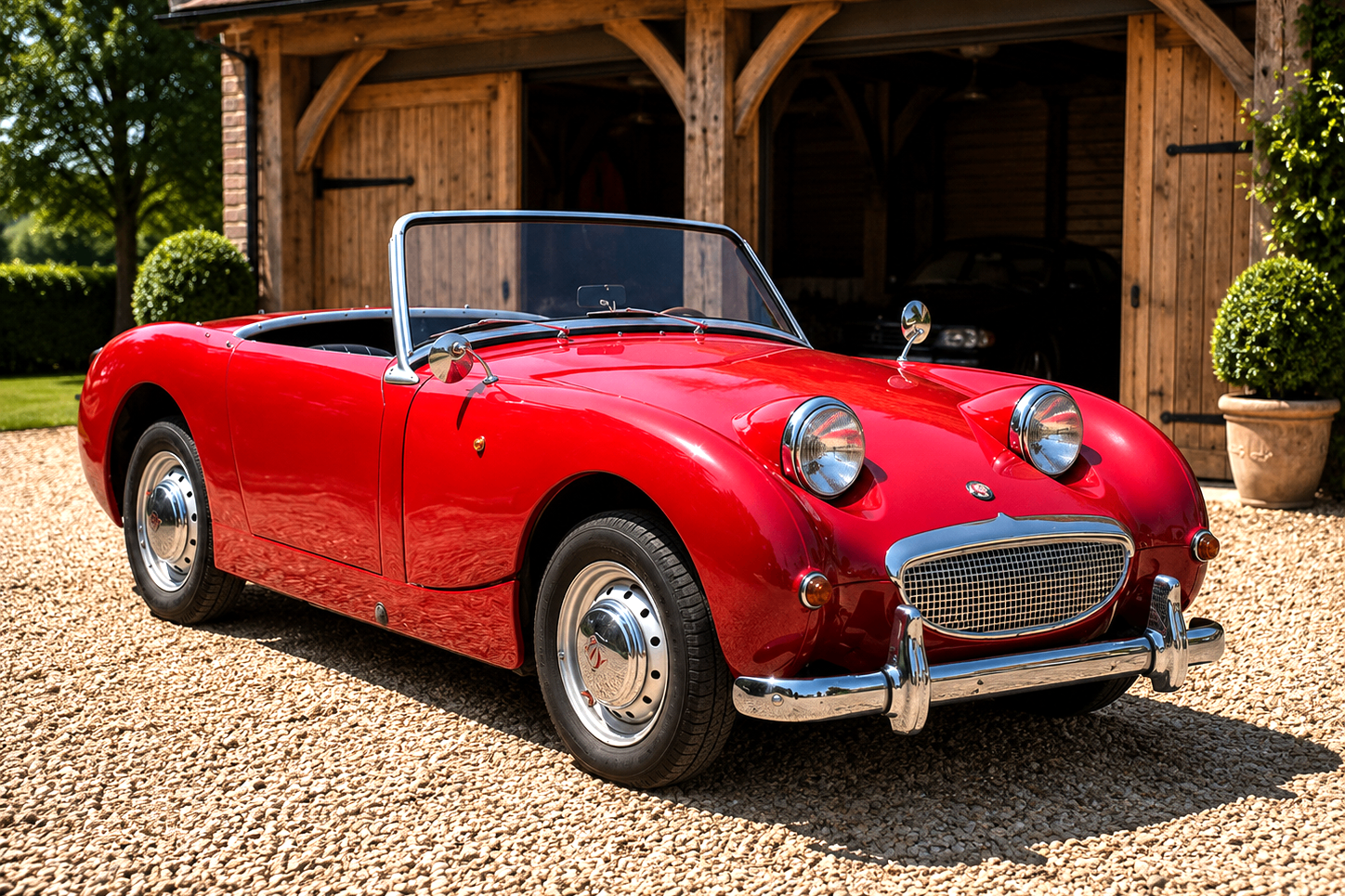
Austin-Healey Sprite Mk I 'Frogeye'
The 948cc BMC 'chap could keep in his bike shed' sports car — the world's first volume-production sports car built on unitary construction, and the founding member of the Spridget family.
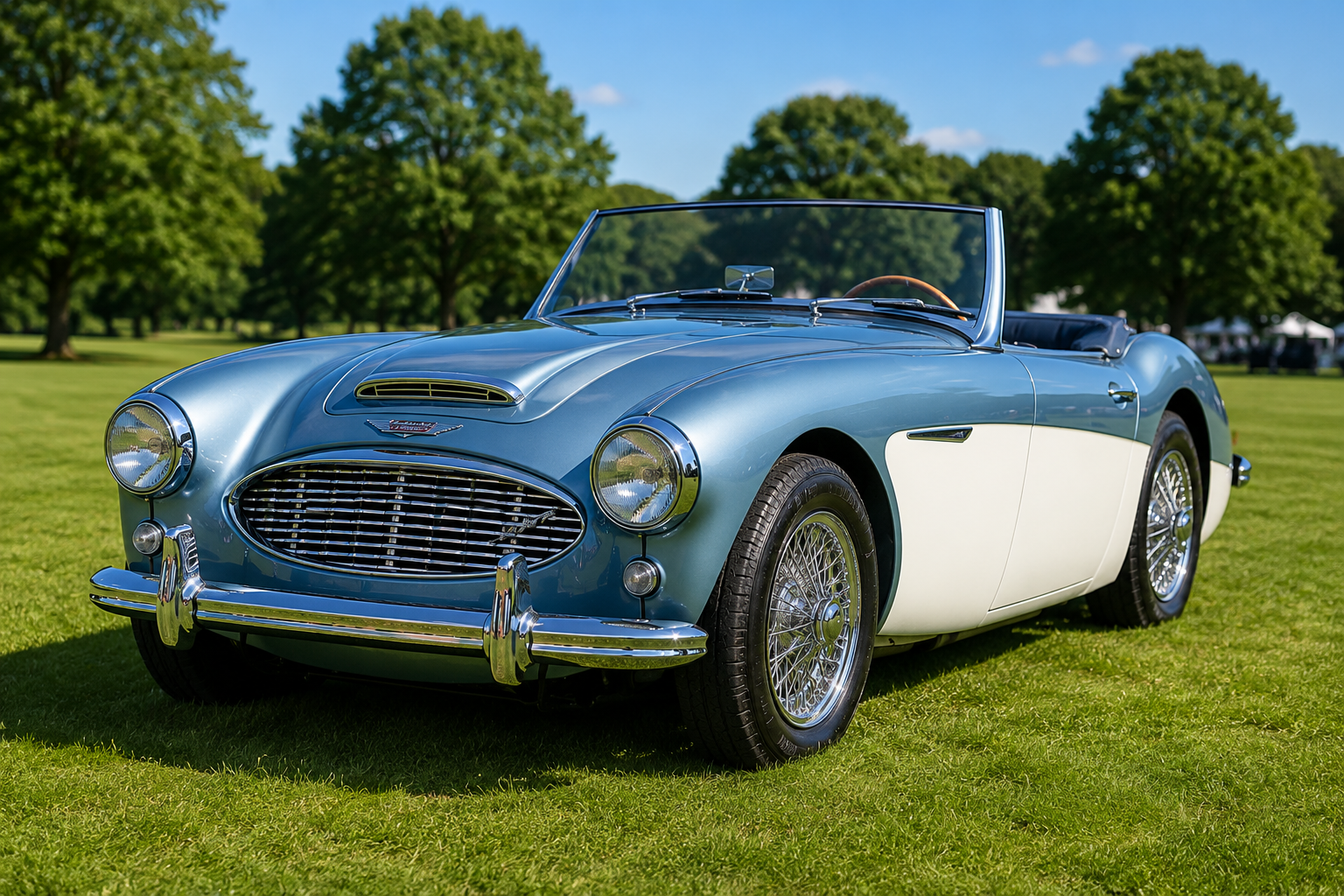
Austin-Healey 3000
The definitive 'big Healey' — BMC's 3-litre inline-six sports car built by Jensen and assembled at Abingdon from 1959 through 1967 across four series and roughly 42,926 cars.
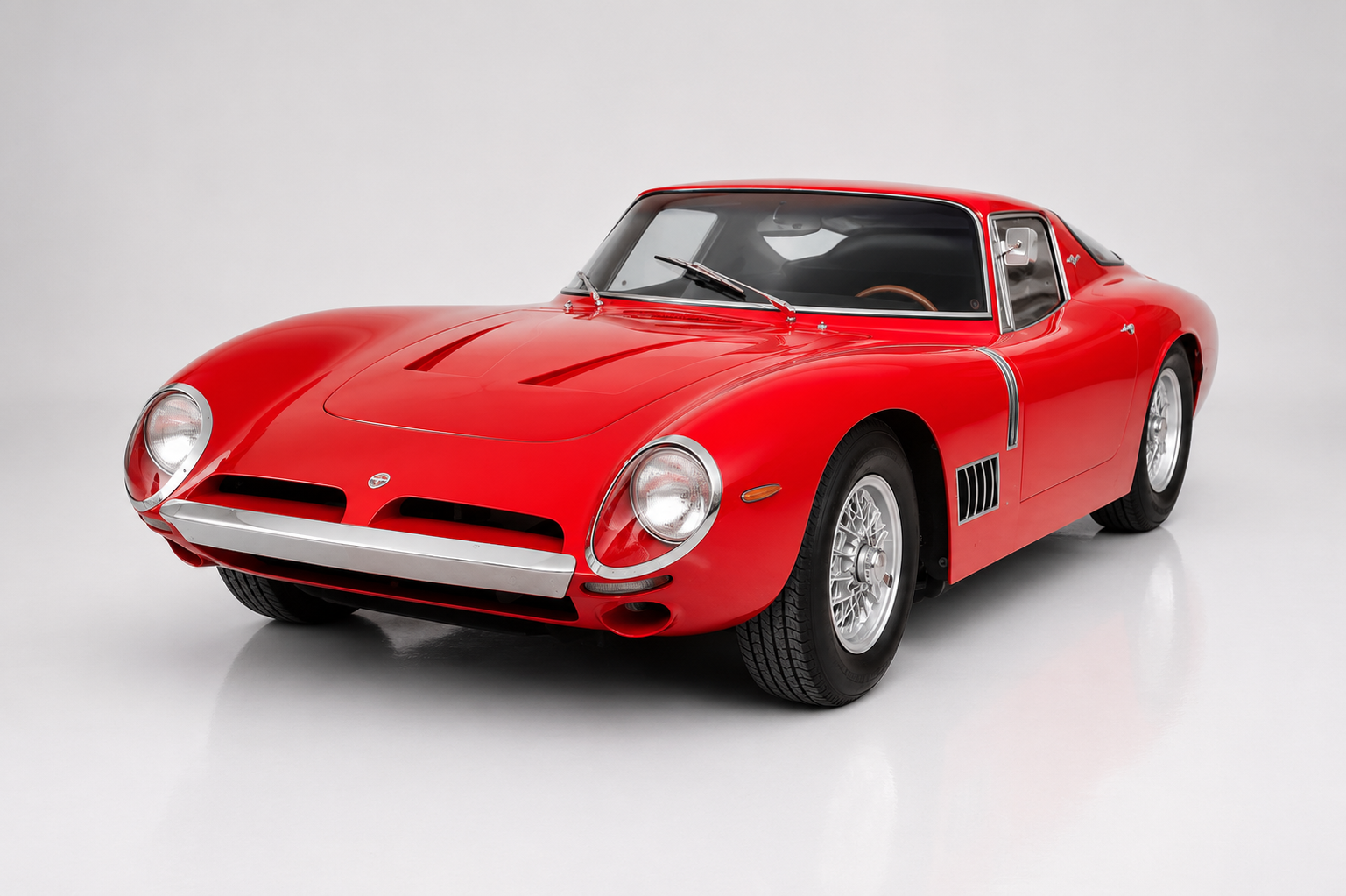
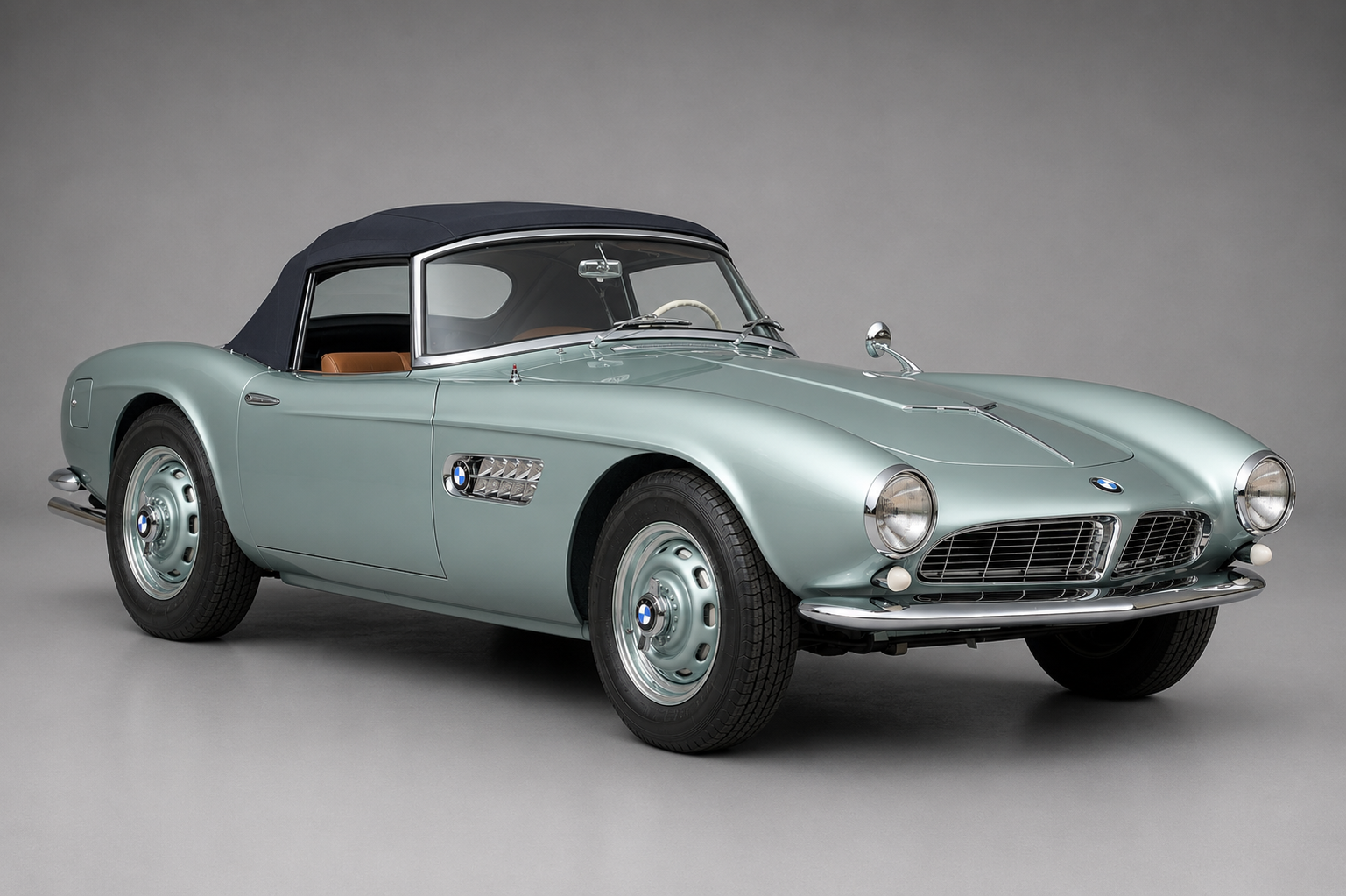
Bristol
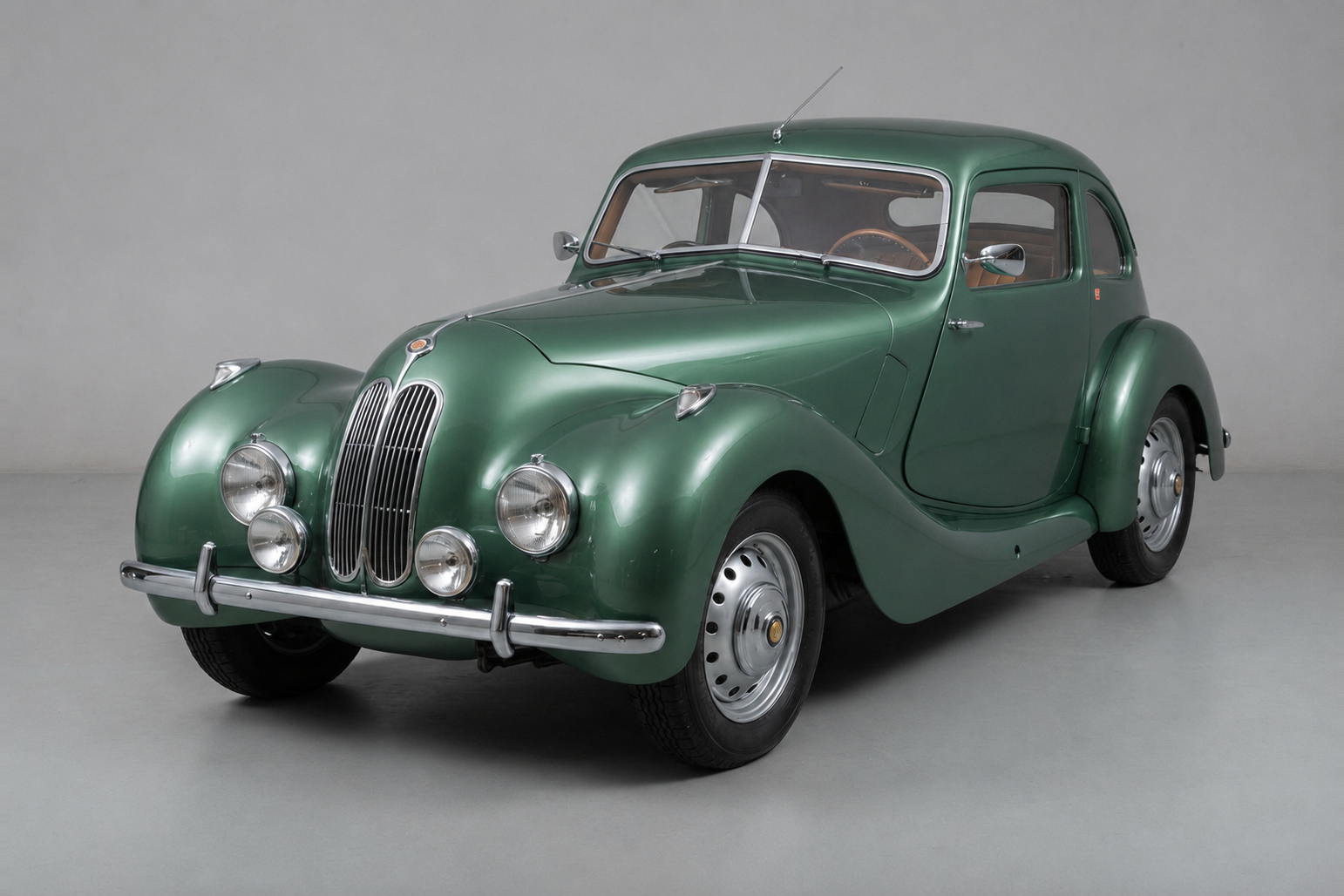
Bristol 400 / 401 / 402 / 403
The first Bristols — BMW 326/327/328 engineering, hand-built by the Bristol Aeroplane Company's car division.
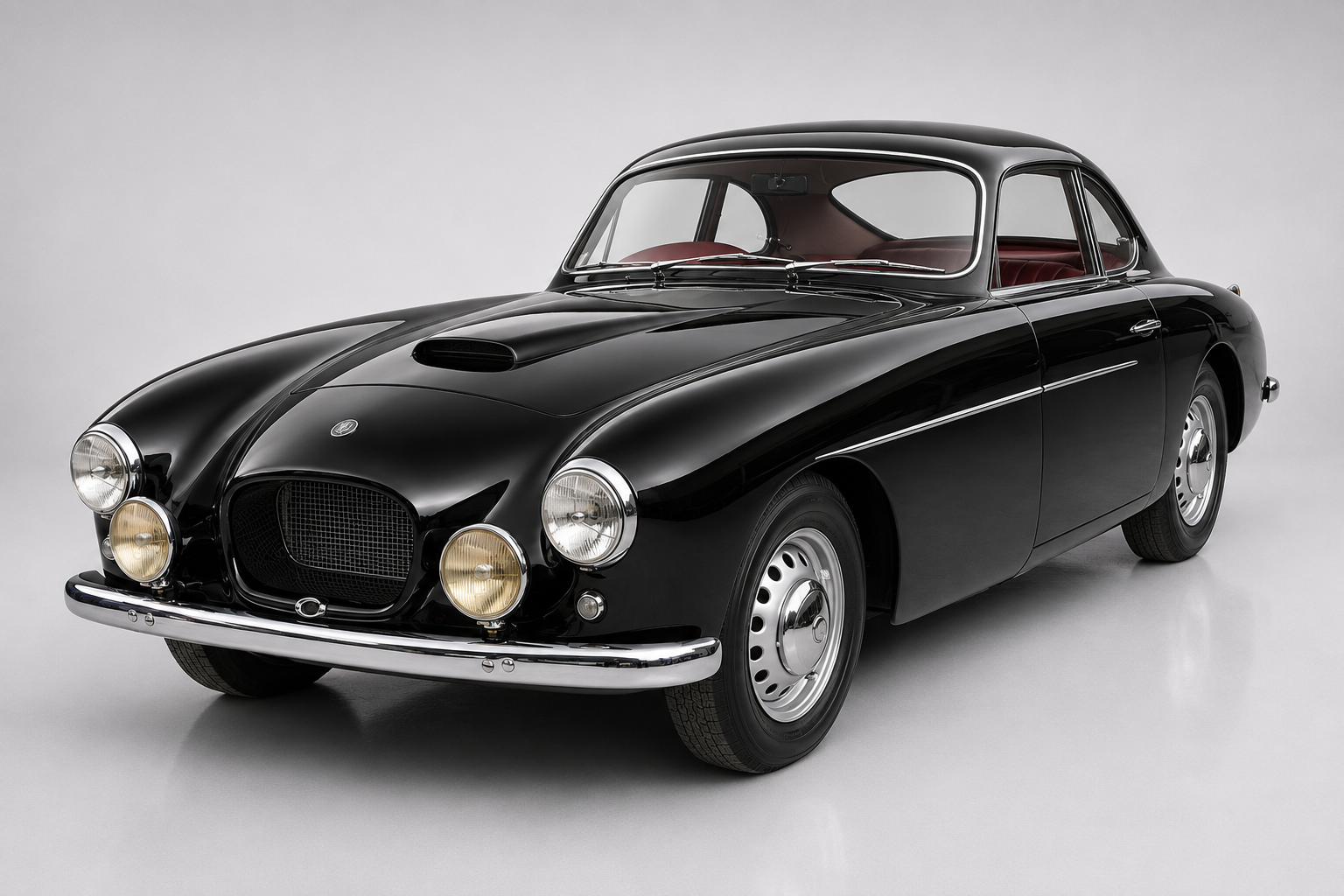
Bristol 404 / 405 / 406
The short-wheelbase 404 'businessman's express', the four-door 405 and the 2.2-litre 406 — the last of the BMW-derived six-cylinder Bristols.
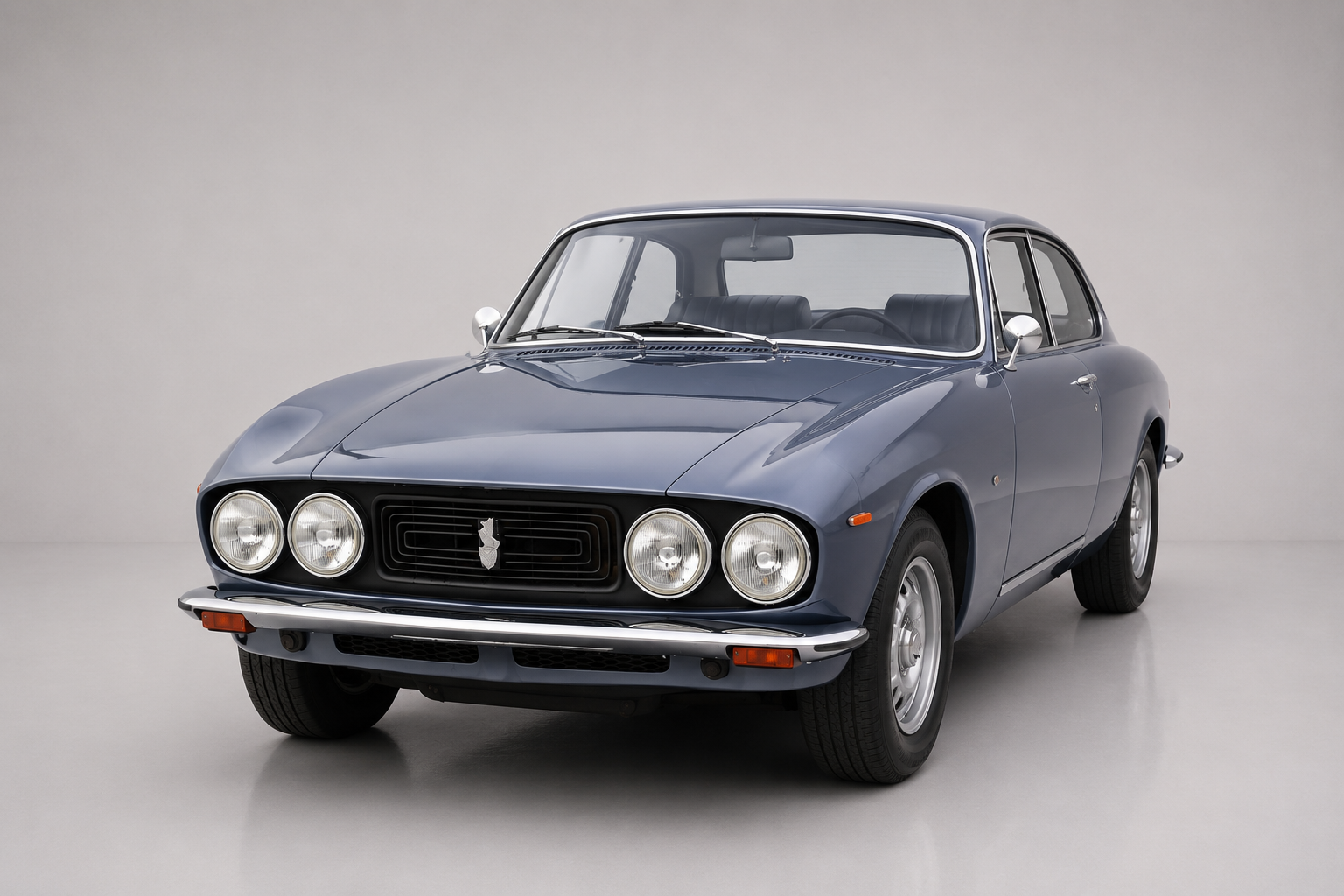
Bristol 407 / 408 / 409 / 410 / 411
The first Chrysler-V8 Bristols — from the 407 to the big-block 411, hand-built Anglo-American GTs.
Chevrolet
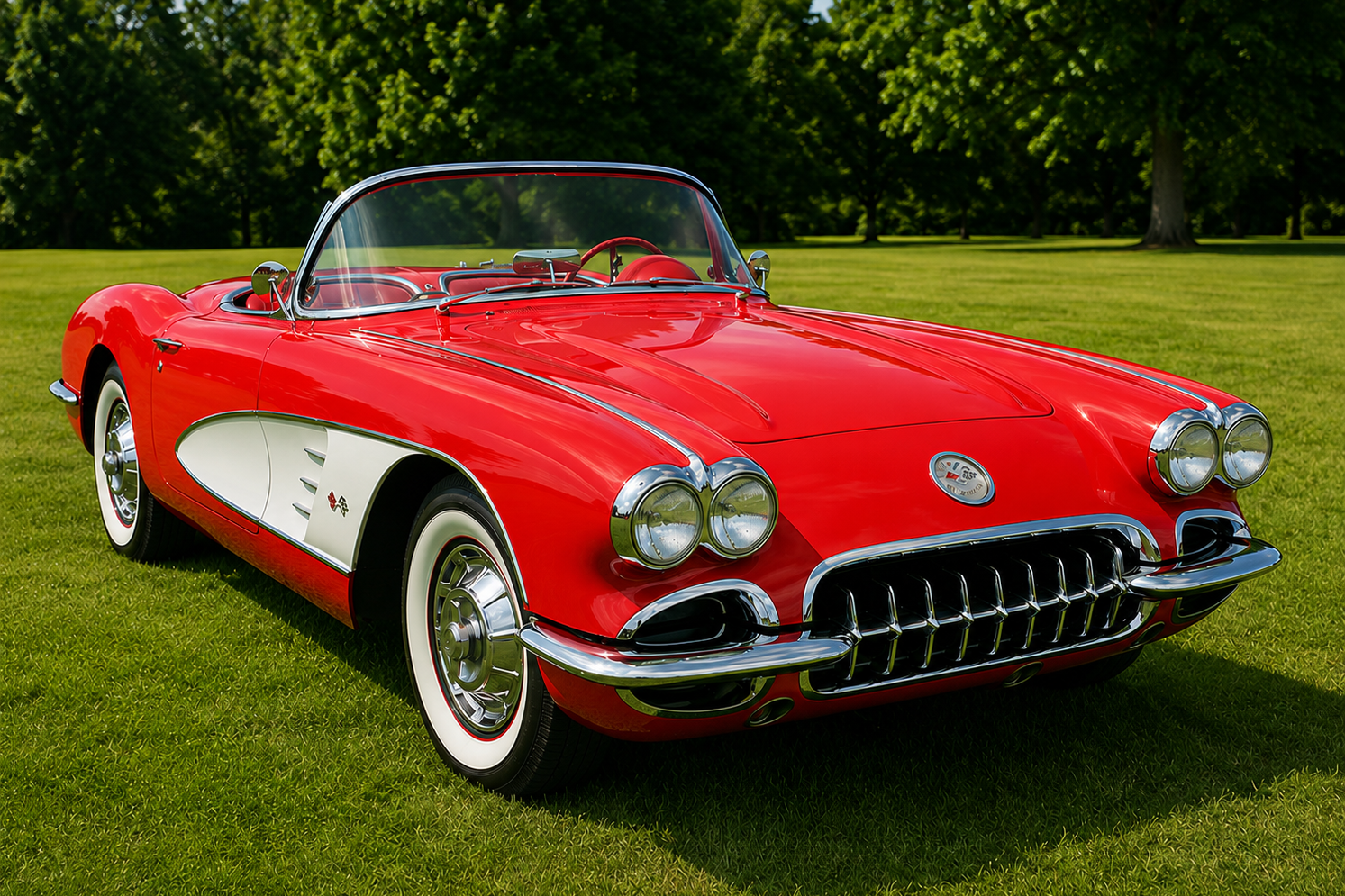
Chevrolet Corvette (C1)
America's original sports car — fibreglass-bodied, V8-powered from 1955, and the foundation of every Corvette that followed.
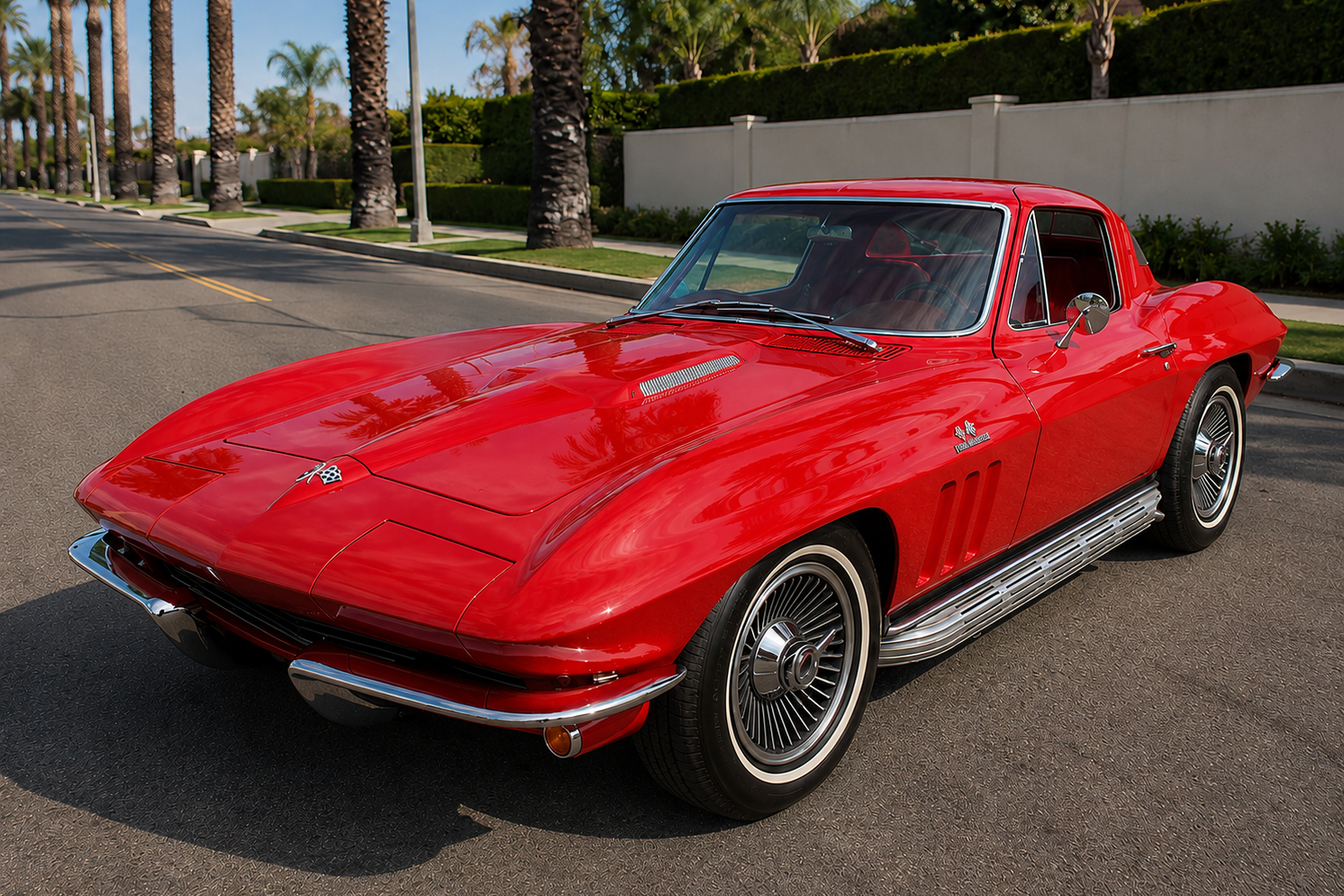
Chevrolet Corvette Sting Ray (C2)
The split-window Sting Ray — five years that produced the most coveted Corvettes ever built.
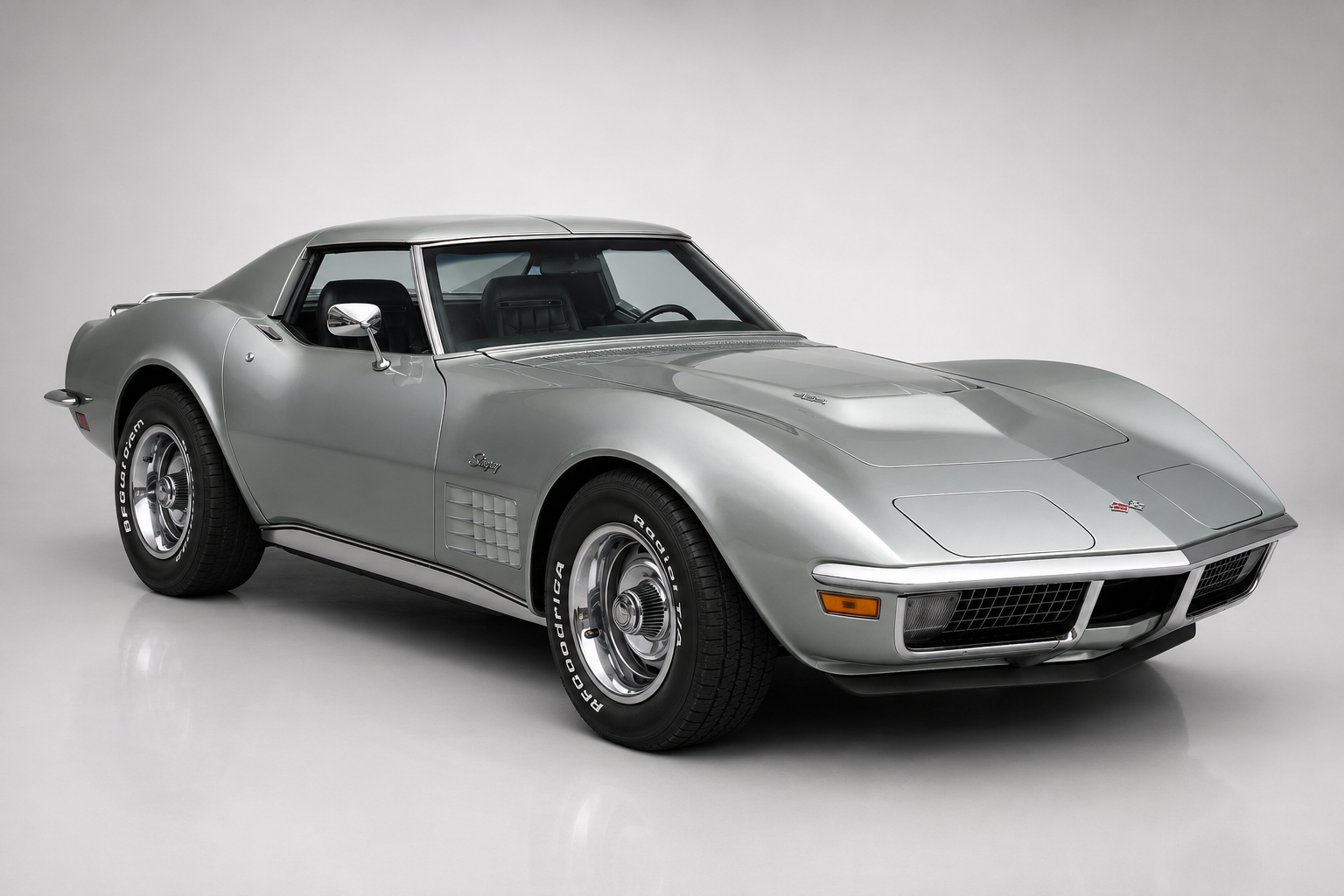
Chevrolet Corvette Stingray (C3)
The shark-styled Corvette that ran for 14 years — collectible at the early big-block end, undervalued in the middle.
Delahaye
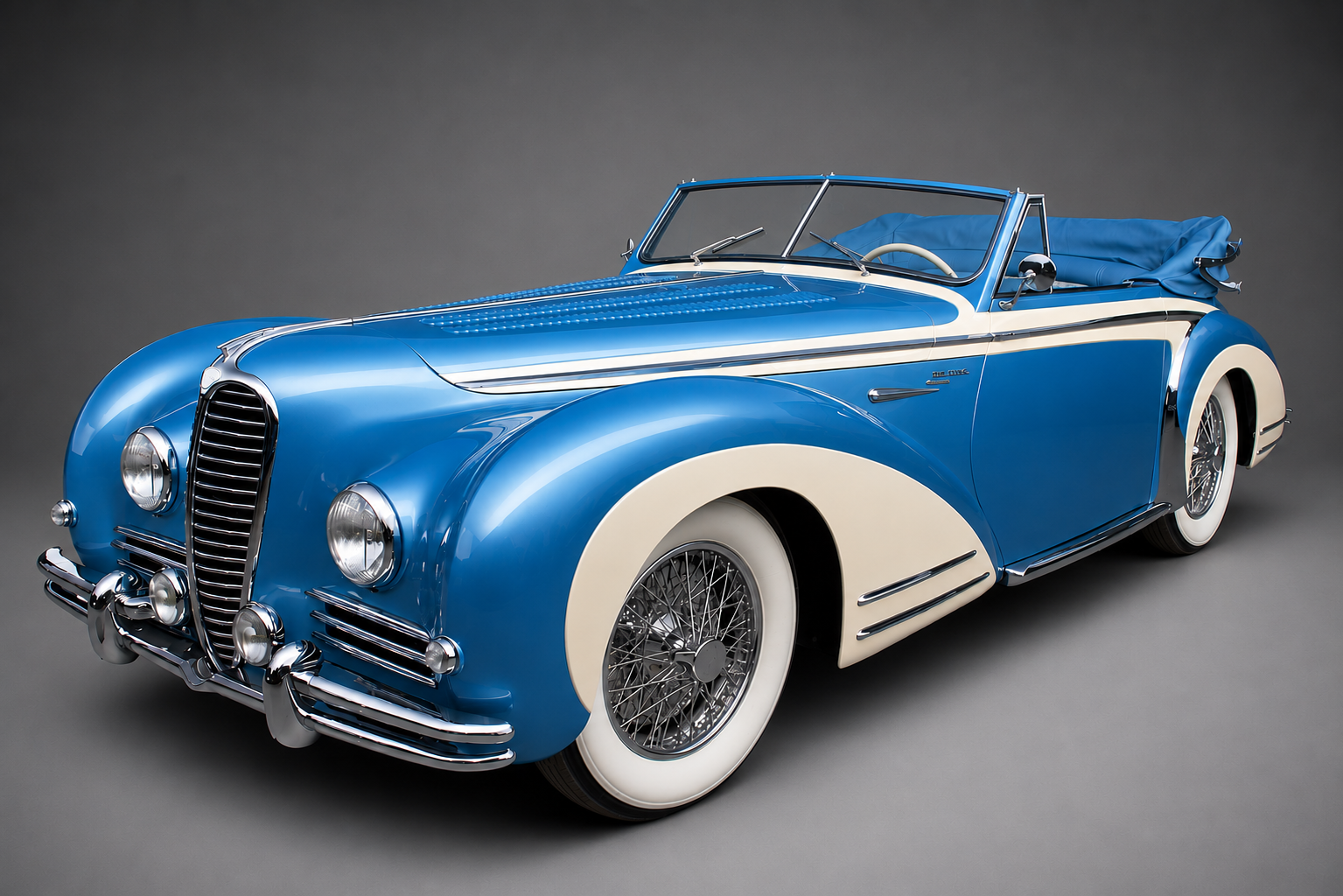
Delahaye 175 / 175S / 178 / 180
Delahaye's post-war 4.5-litre flagship — three wheelbases, one chassis, and the last great platform for French coachbuilding.
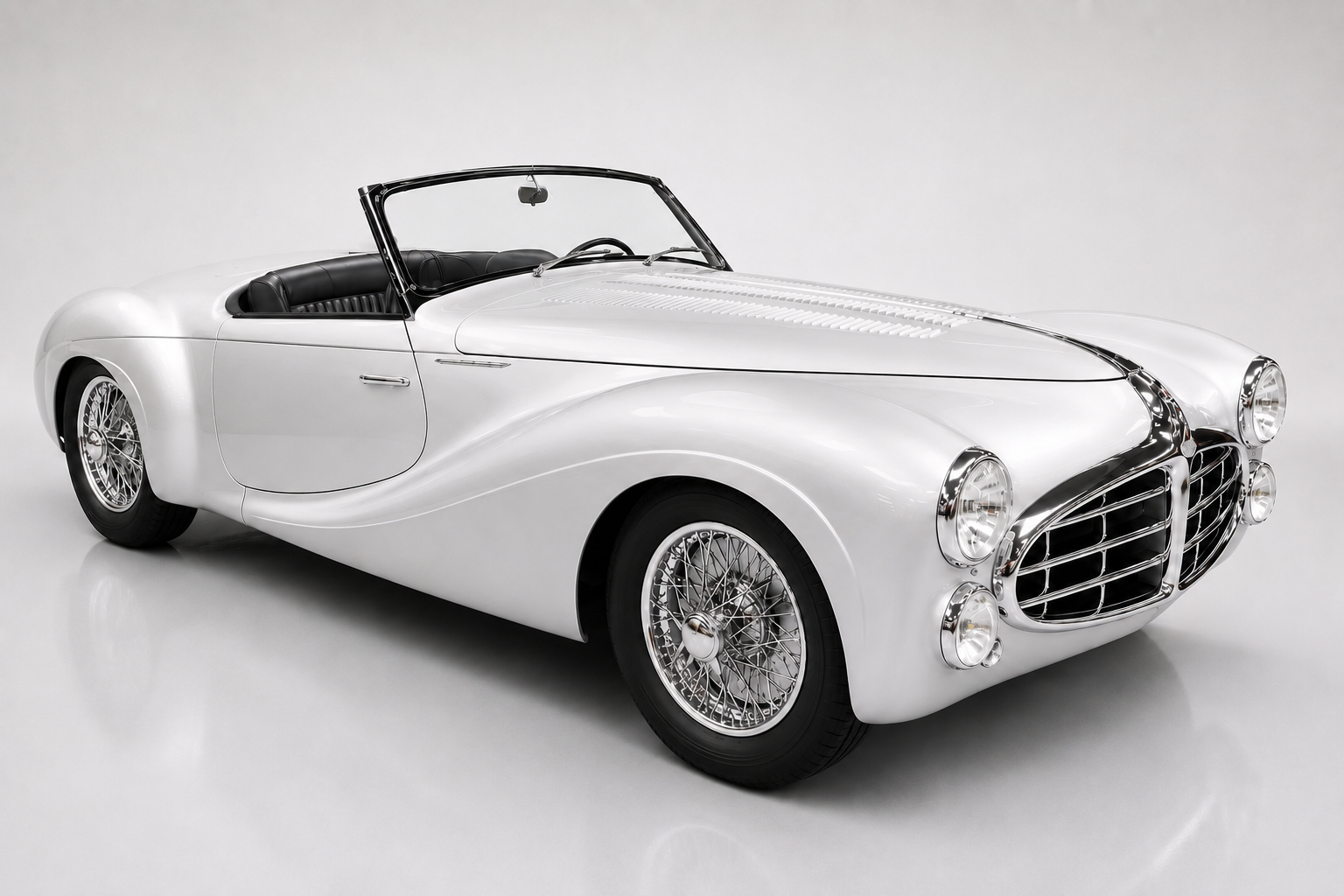
Delahaye Type 235
The last Delahaye — a 1950s ponton-bodied evolution of the 135, sold as a coachbuilt chassis.
Ferrari
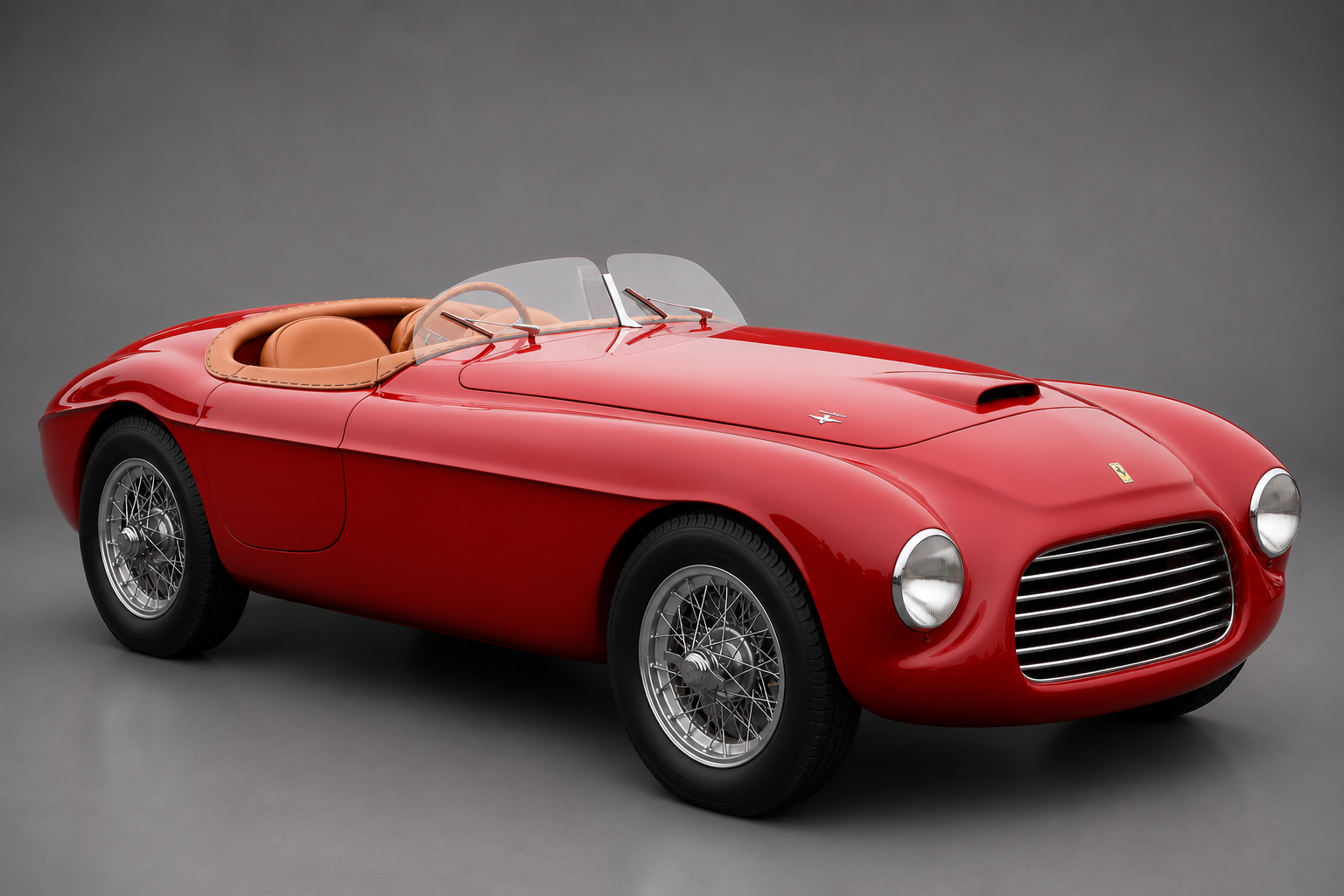
Ferrari 166 MM
Ferrari's first series sports racer, named for the marque's 1948 Mille Miglia victory — and winner of the 1949 Mille Miglia and Le Mans.
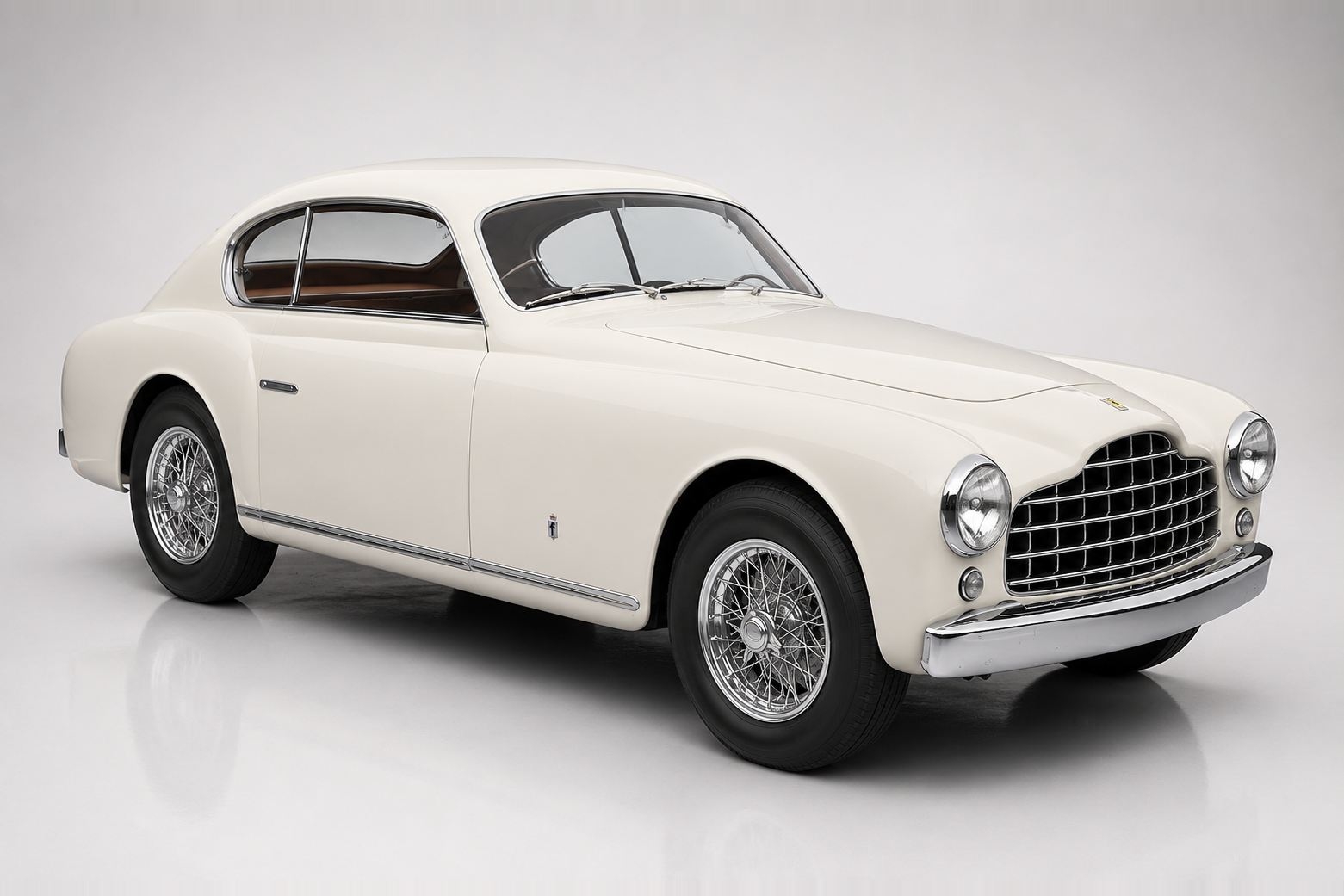
Ferrari 195 Inter
The 195 Inter is Ferrari's grand touring answer to the 195 S — an individually coachbuilt Colombo V12 road car from the marque's earliest years.
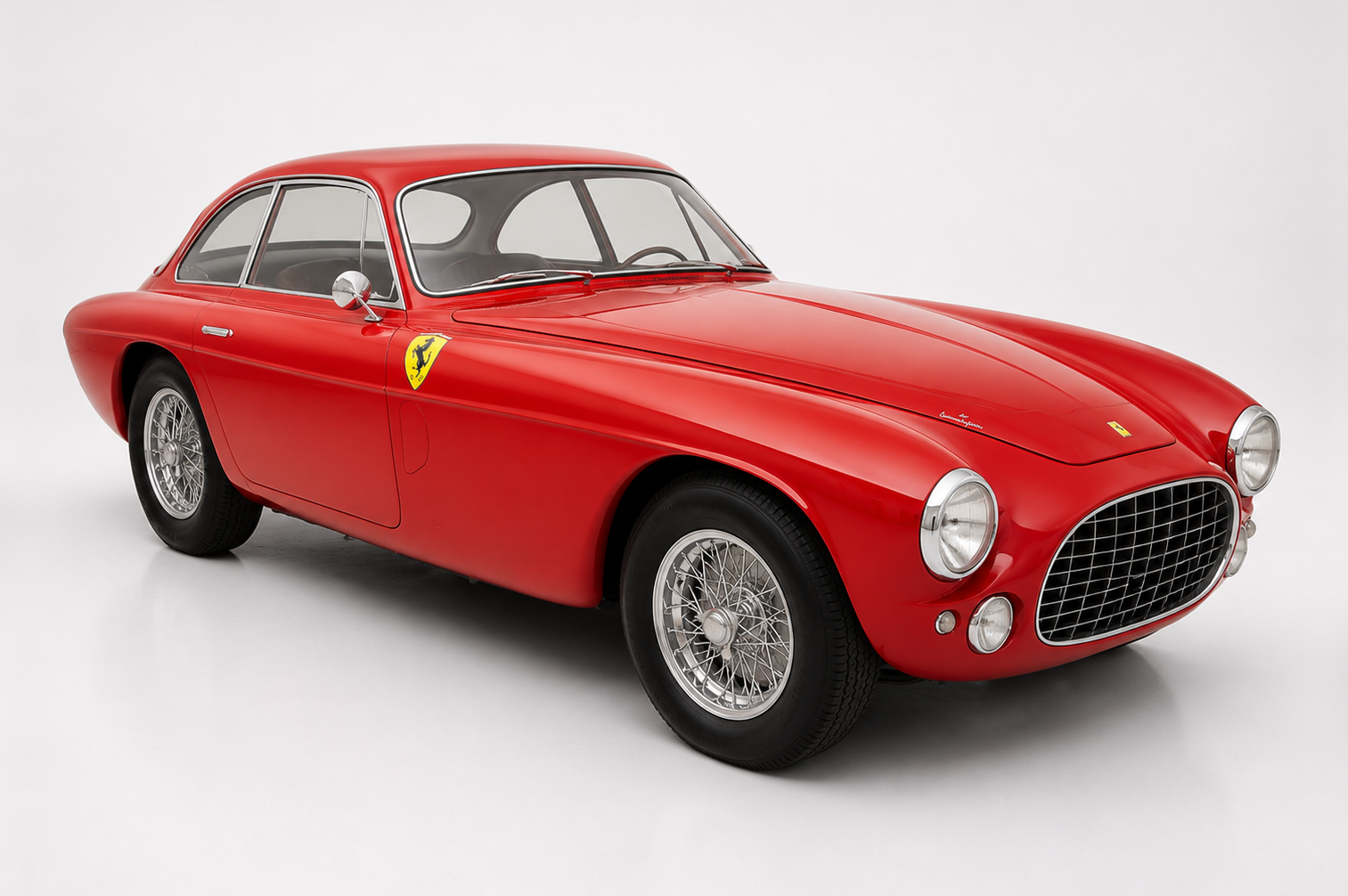
Ferrari 340 (America, Mexico & MM)
Ferrari's first Lampredi-engined road and competition family — America, Mexico and MM.
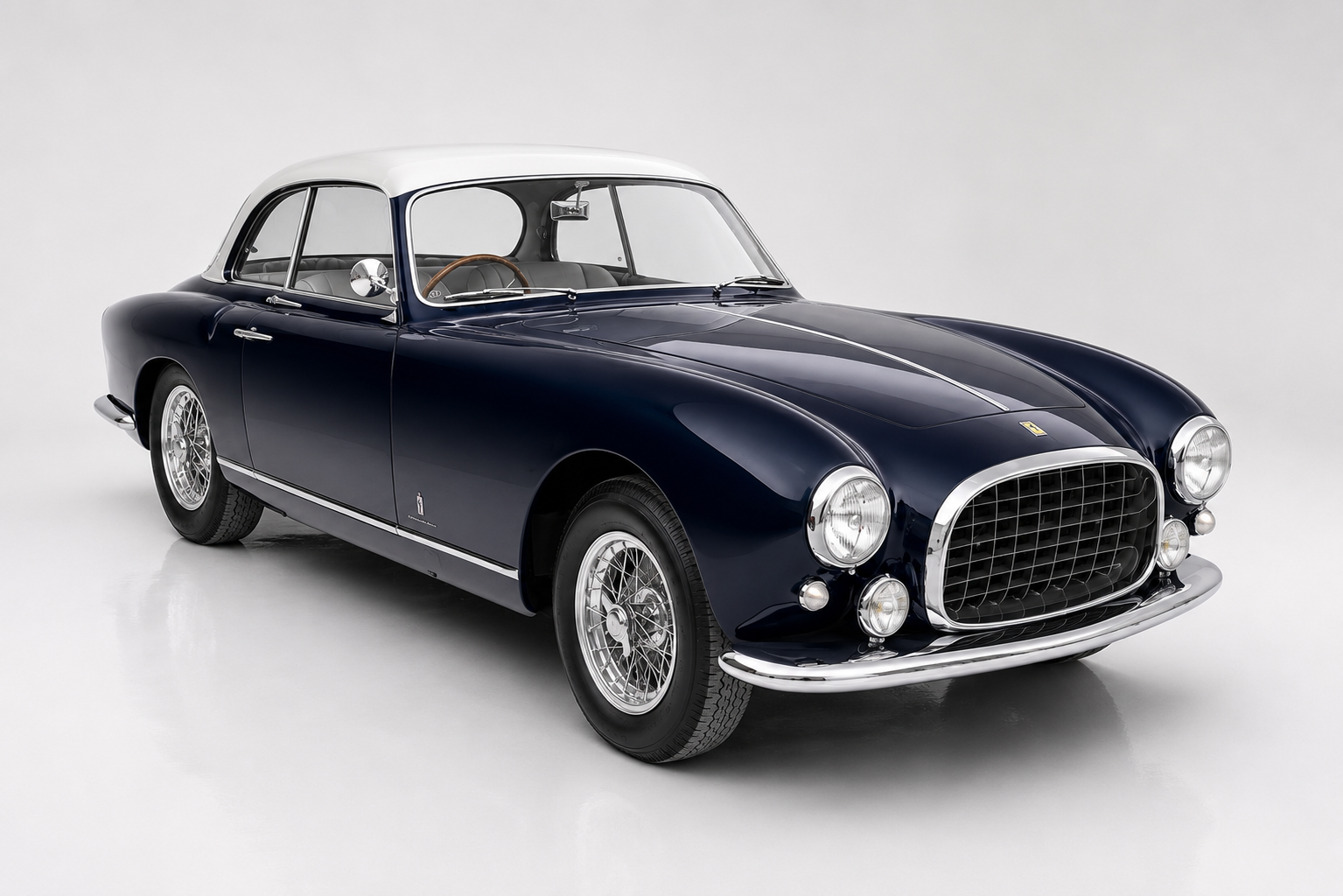
Ferrari 212 Inter
The 212 Inter turned Ferrari into a road-car maker rather than a racing team that sold cars — and was the first Ferrari bodied by Pinin Farina.
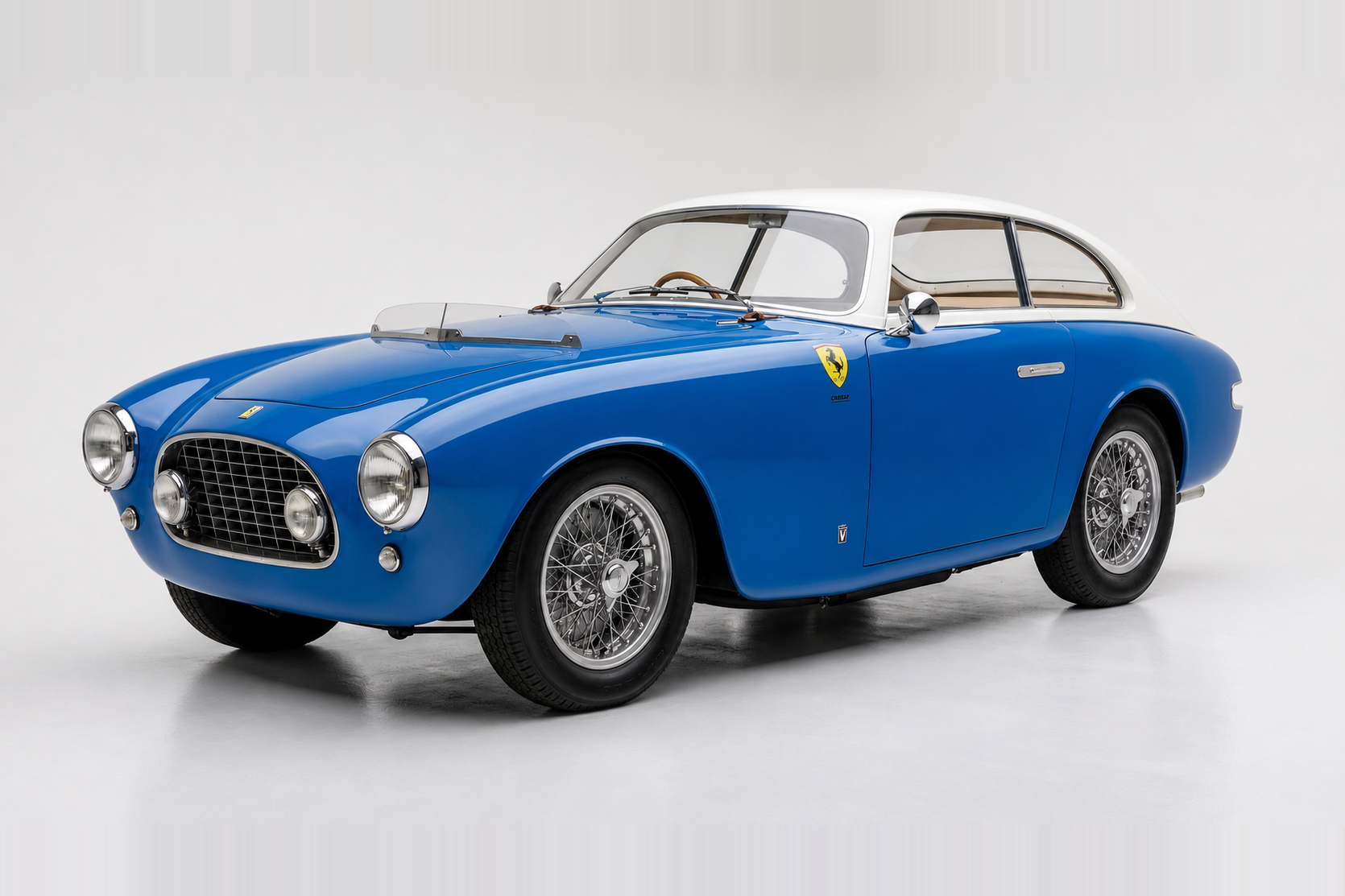
Ferrari 225 S
The 225 S is a 1952 works-supported sports racer — the final iteration of the Colombo V12 before the 250 family took the engine to three litres.
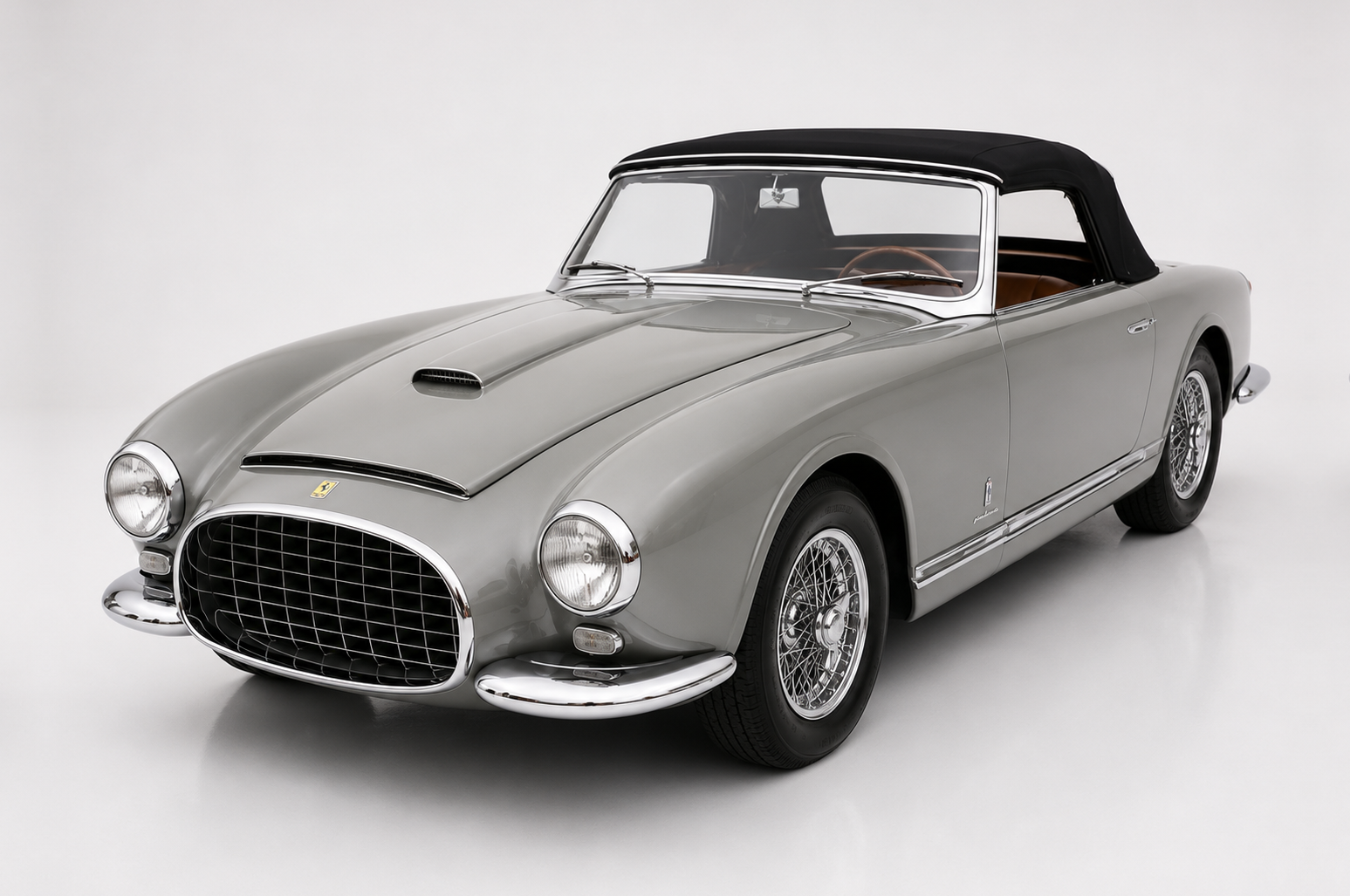
Ferrari 342 America
Luxury Lampredi V12 GT bridging the 340 family and the Ferrari 375 America.
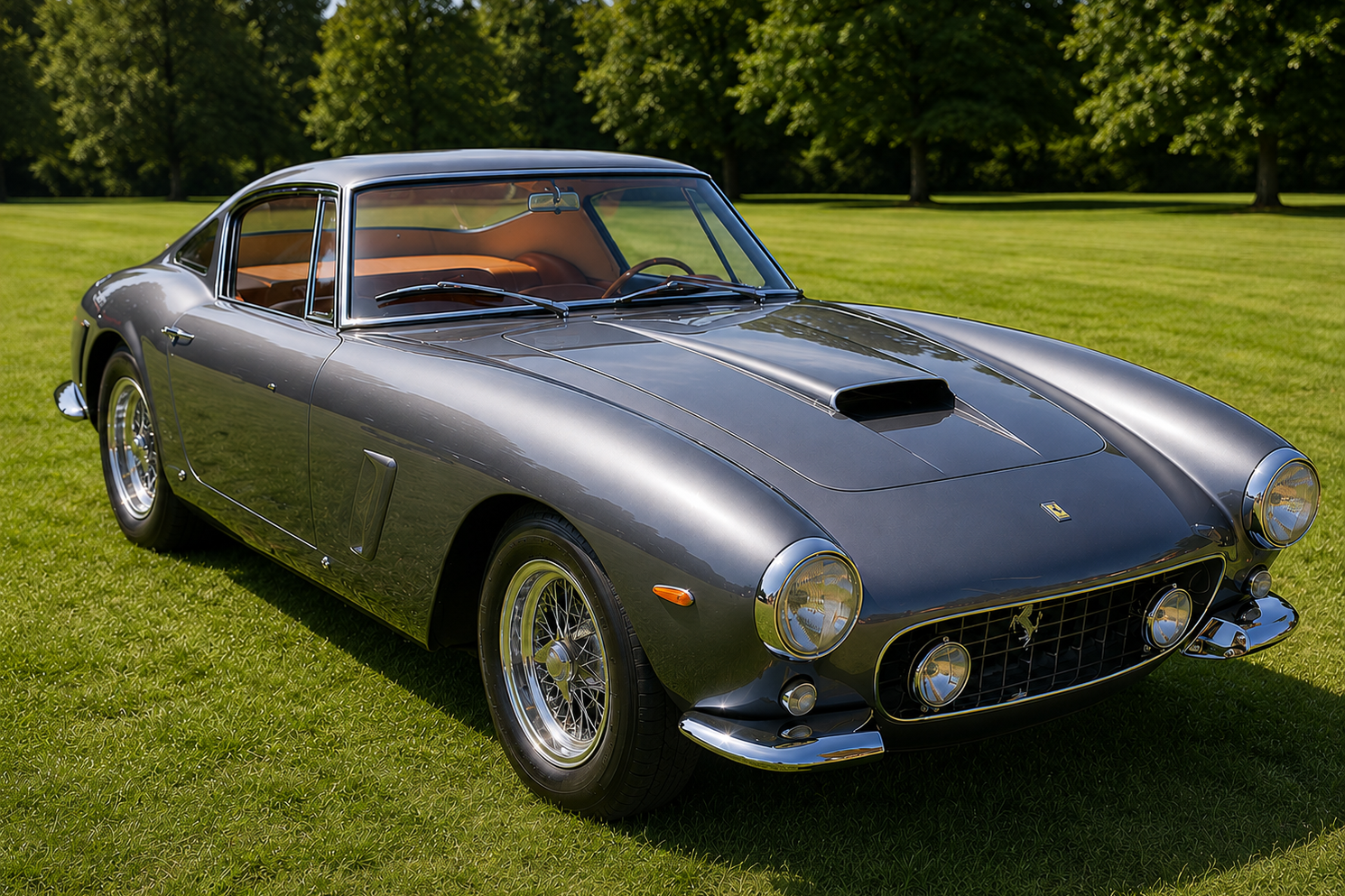
Ferrari 250 GT
The complete Ferrari 250 GT road-car family — from the Lampredi-engined Europa to the Colombo-V12 SWB, Lusso and GTE — the range that defined Ferrari as a road-car maker.
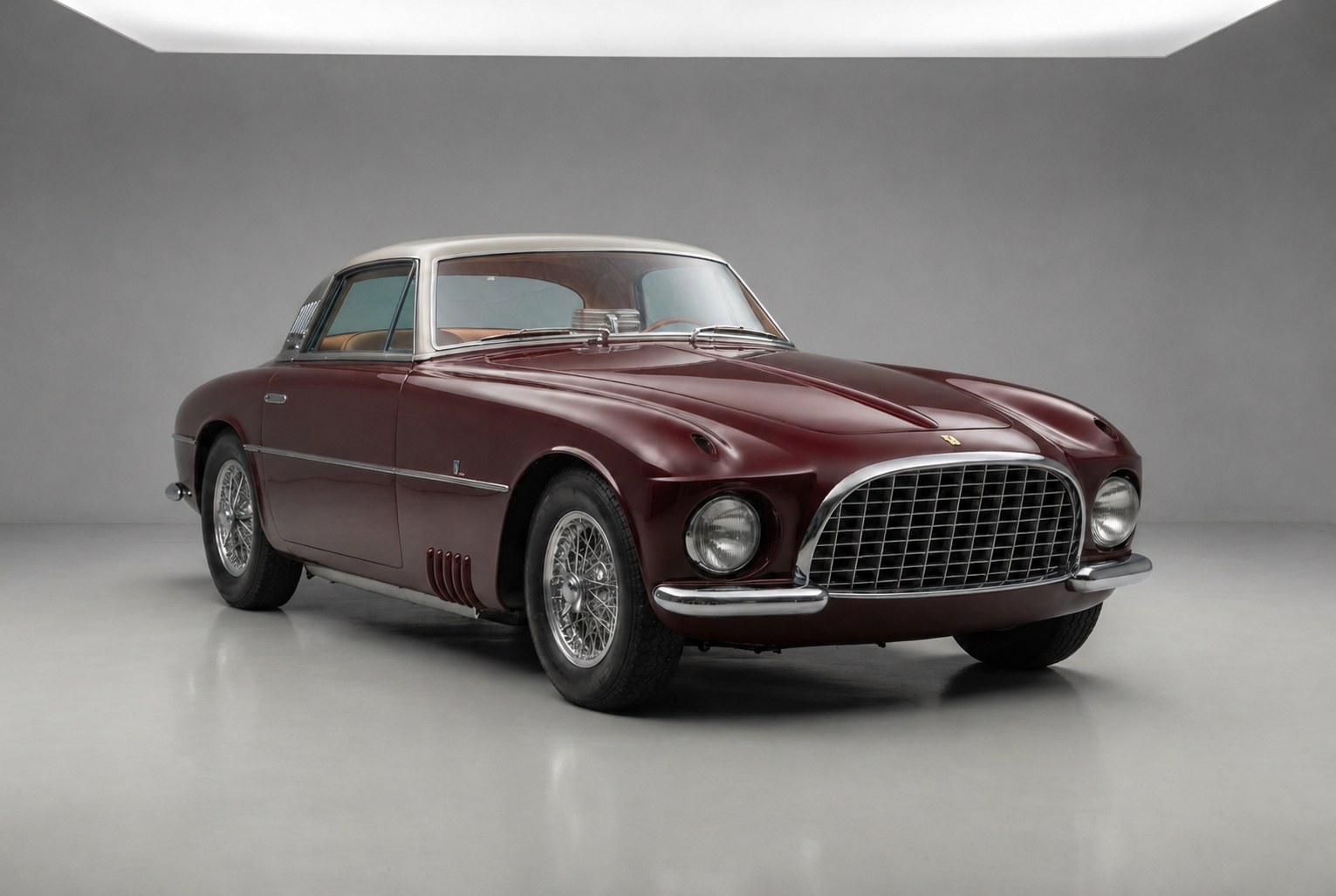
Ferrari 375 (America, MM & Plus)
Lampredi V12 flagship line — America road GT, MM competition car and Plus works racer.
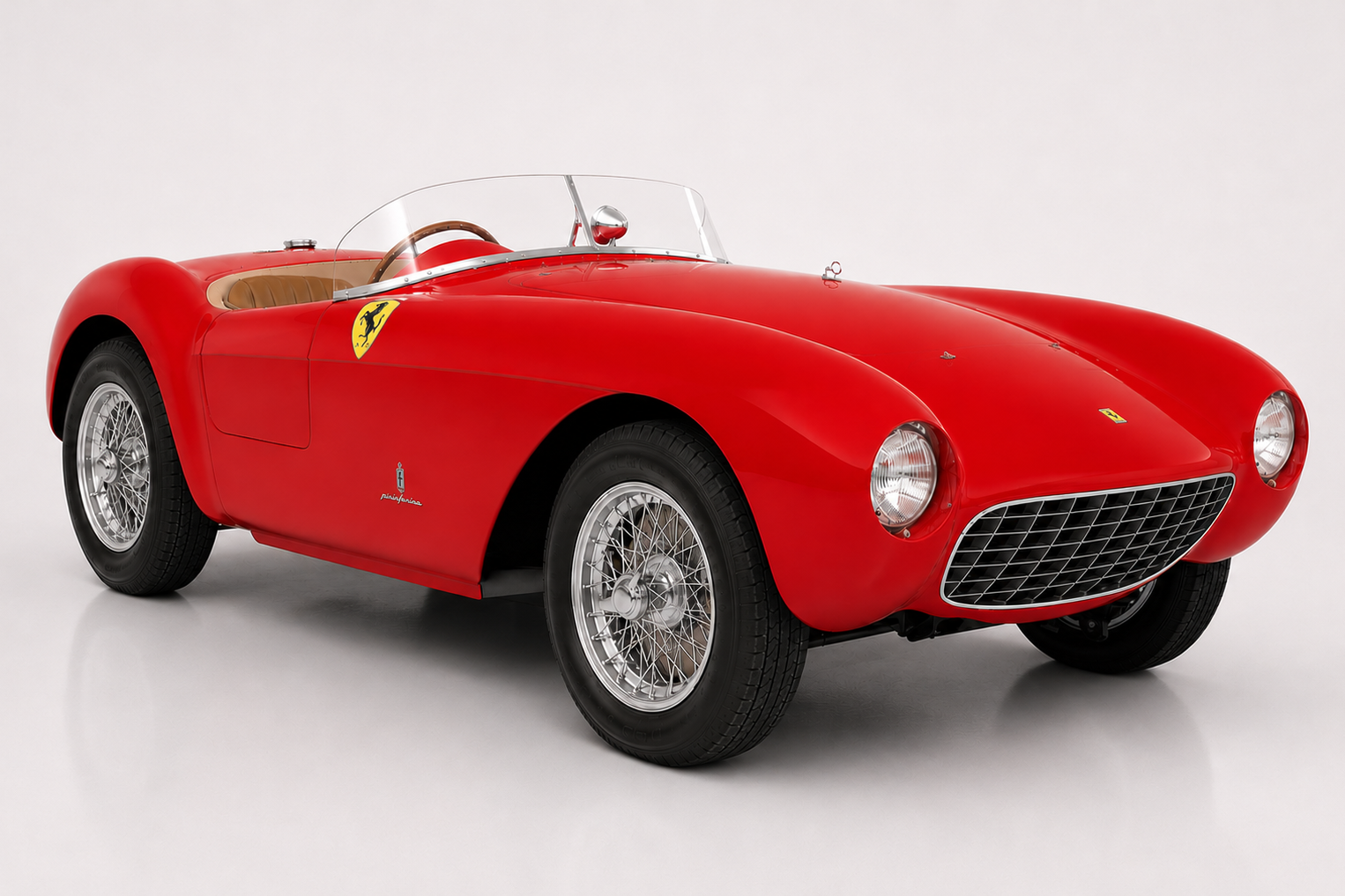
Ferrari 500 Mondial
Ferrari's first customer four-cylinder sports racer — named for Ascari's back-to-back world championships.
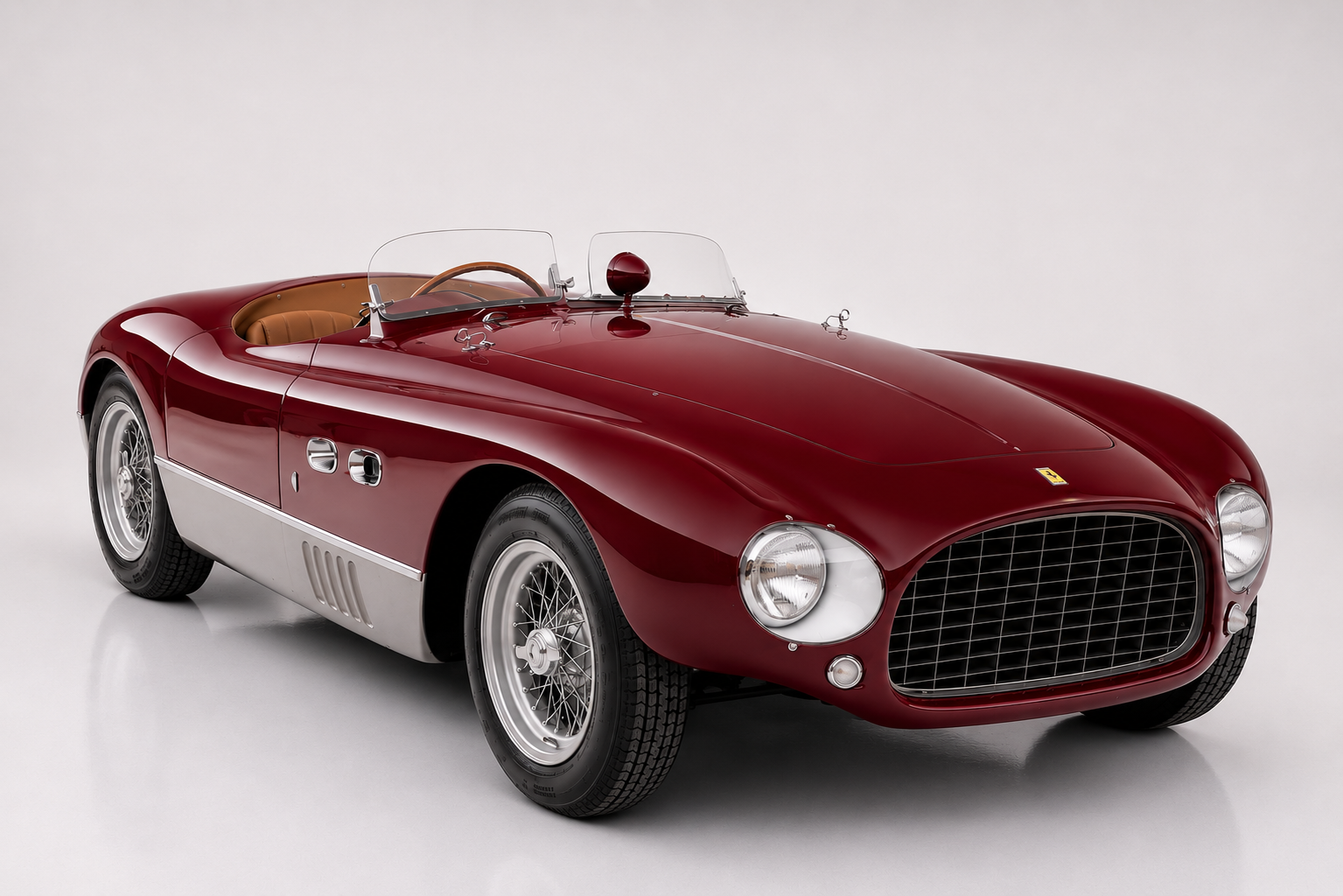
Ferrari 625 TF
Ferrari's first four-cylinder sports racer — three cars, and chassis histories tangled with the 735 S.
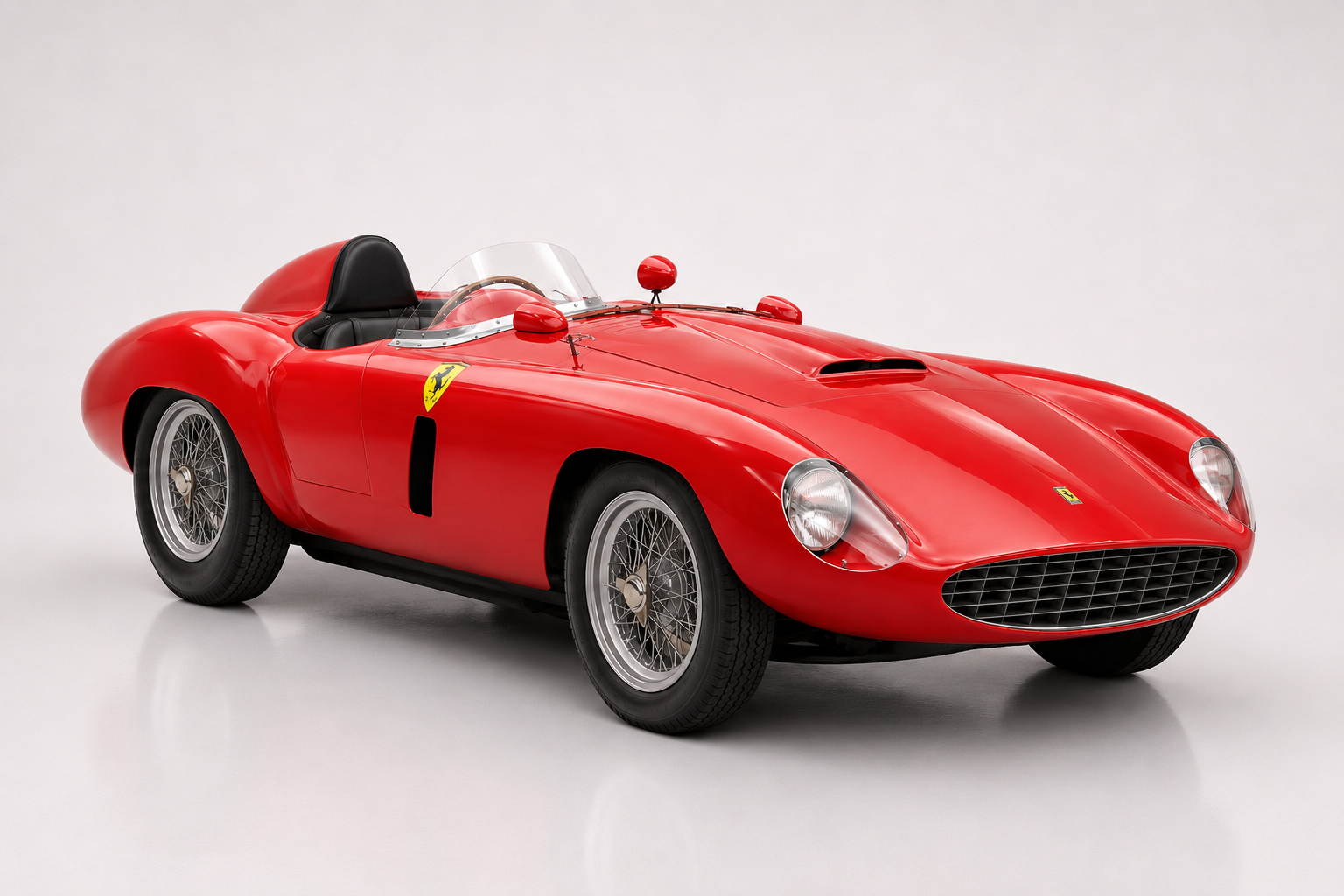
Ferrari 735 S & 735 Mondial
Big-engined sibling of the Ferrari 625 TF and the direct ancestor of the 750 Monza.
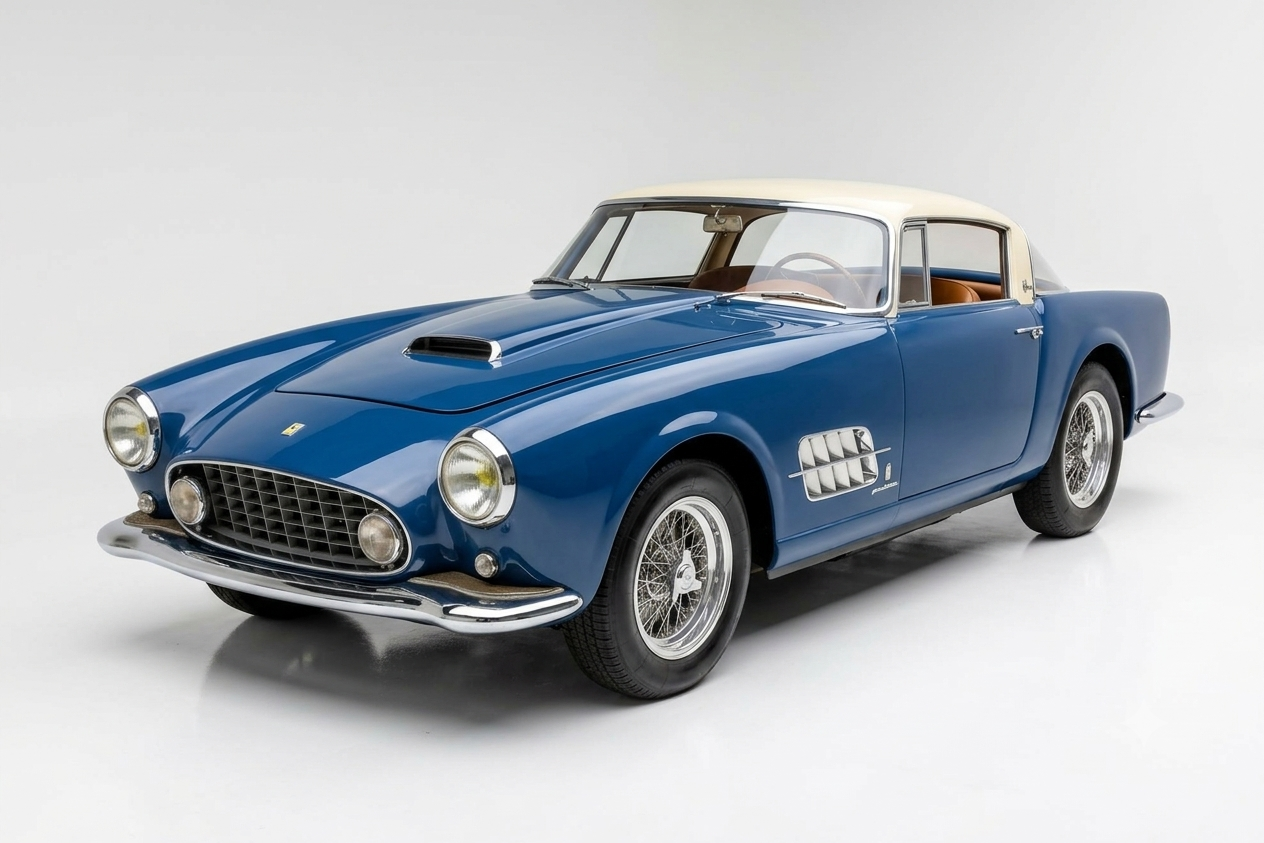
Ferrari 410 Superamerica
Coachbuilt Lampredi V12 flagship succeeding the Ferrari 375 — presented as a rolling chassis at Paris 1955.
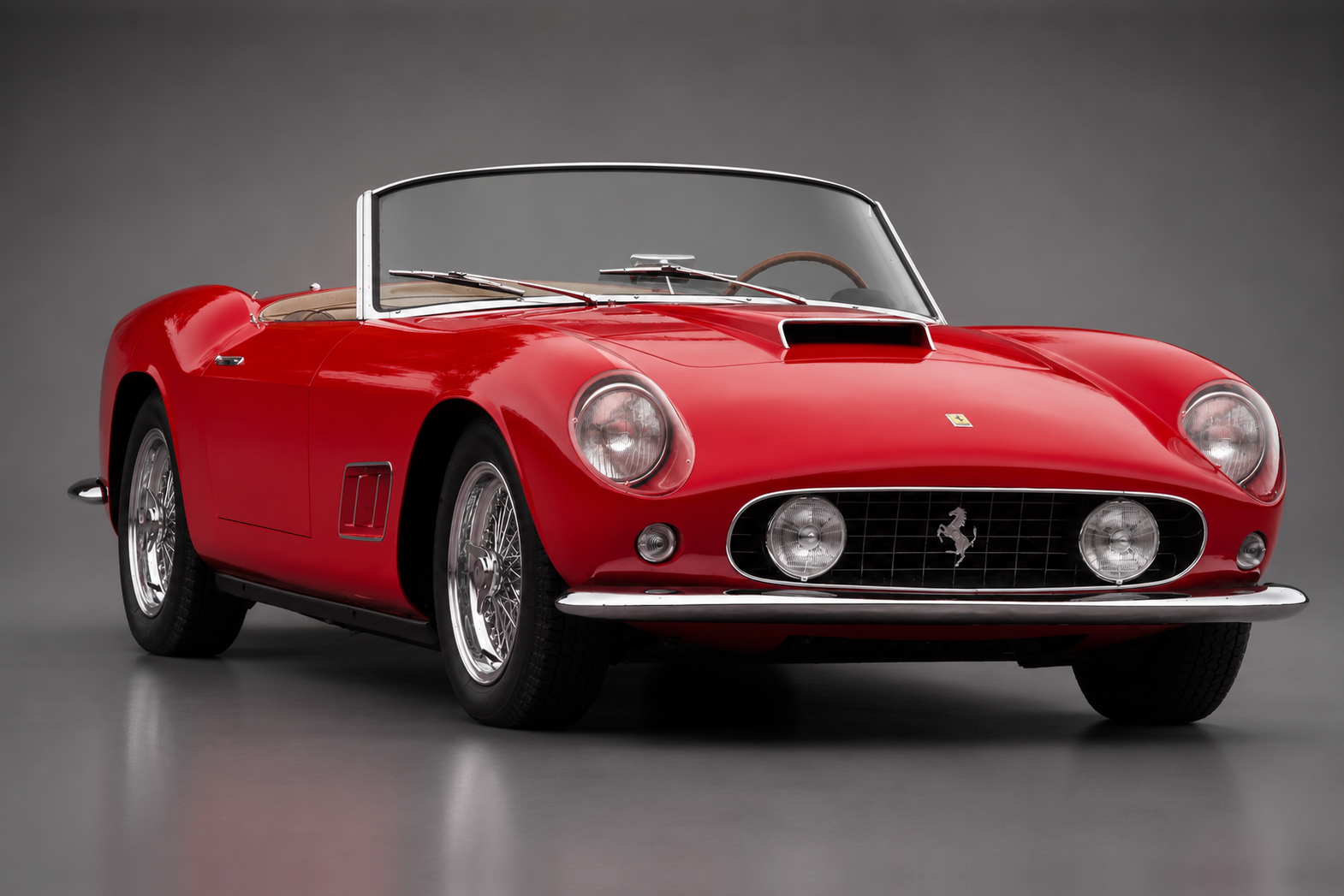
Ferrari 250 GT California Spider
Scaglietti-bodied open 250 GT commissioned by Ferrari's North American importers — built in two forms on the long and short 250 GT chassis, in fewer than 110 examples combined.
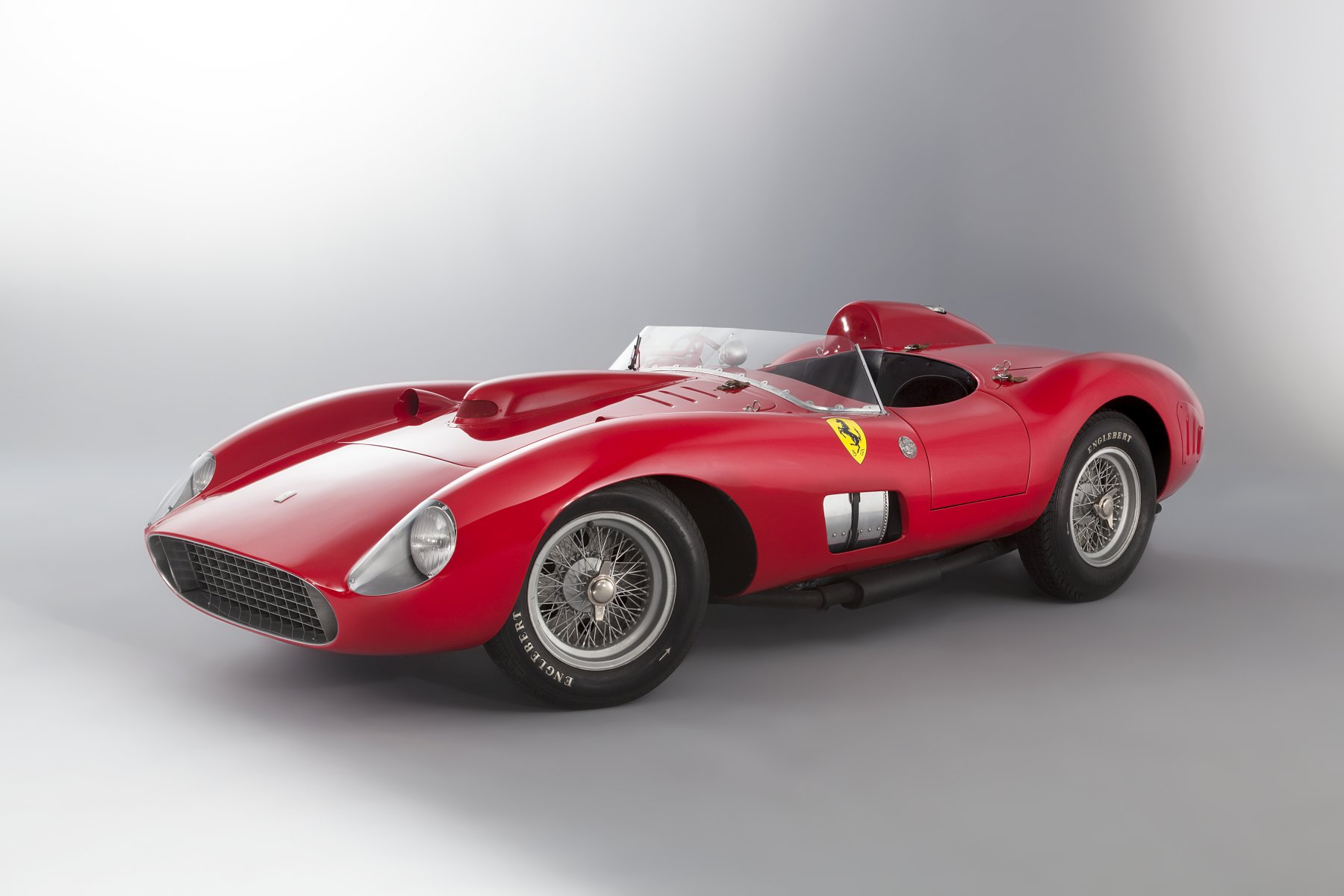
Ferrari 335 S
A works sports racer built to answer the Maserati 450S — four cars, one of the most consequential entries in Ferrari's competition history.
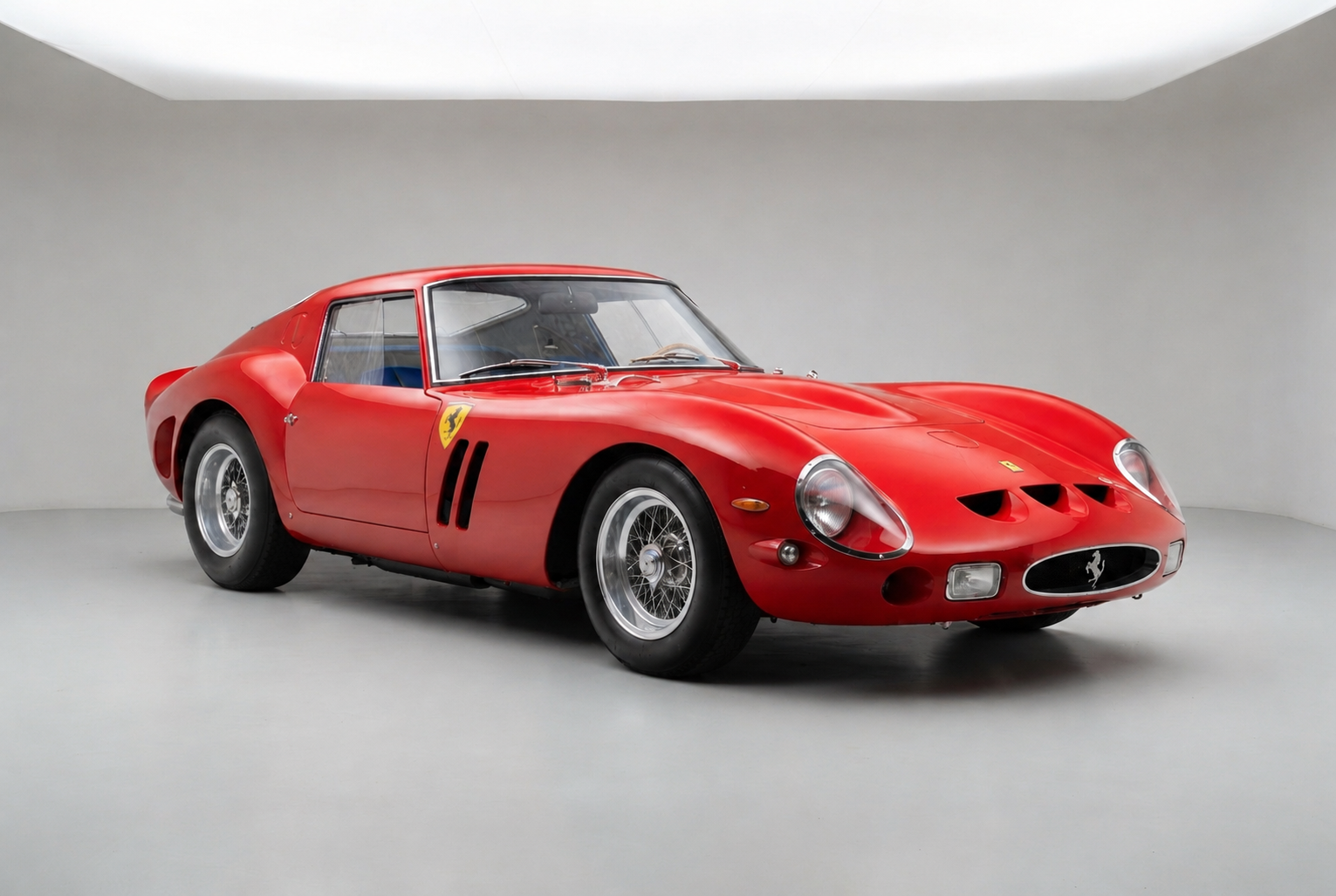
Ferrari 250 GTO
The most valuable production Ferrari ever built — and the apex of the front-engined V12 GT racing era.
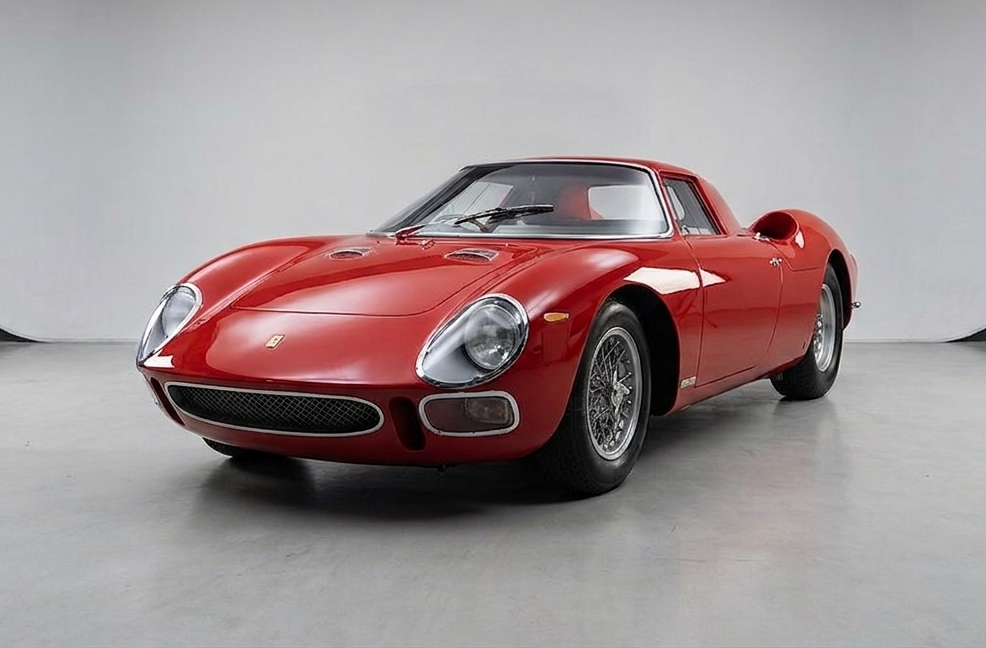
Ferrari 250 LM
The last Ferrari to win Le Mans overall — 32 built, mid-engined, Scaglietti-bodied, and the closing chapter of the 250-series bloodline.
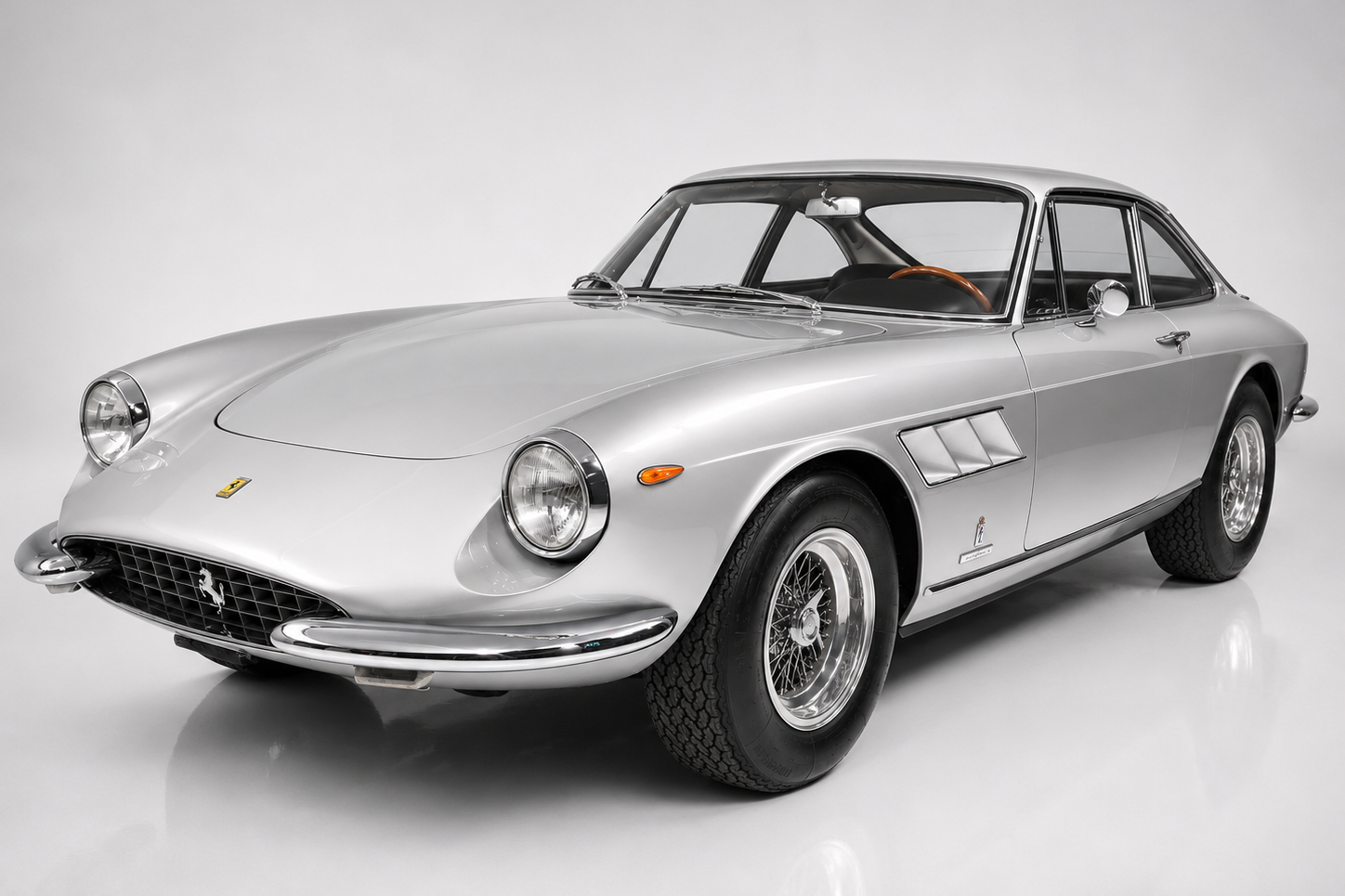
Ferrari 330
Ferrari's mid-1960s 4.0-litre Colombo-derived V12 family — the 330 America, 330 GT 2+2, and the Pininfarina-bodied 330 GTC and GTS that share their short-wheelbase chassis with the 275 GTB.
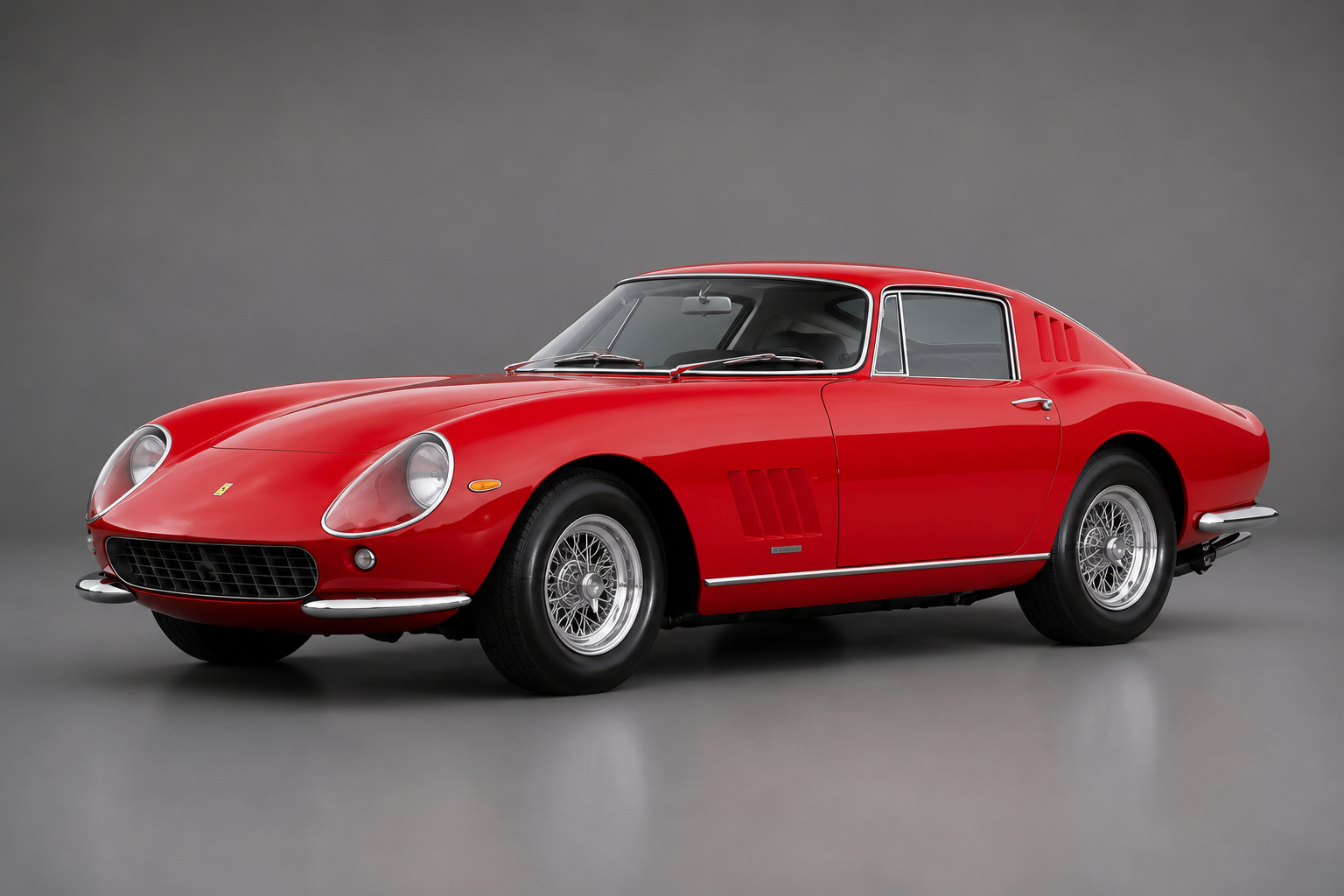
Ferrari 275
The full 275 family — GTB, GTS, GTB/4 and the competition and NART Spider derivatives — Ferrari's first transaxle road cars and the bridge between the 250 GT era and the Daytona.
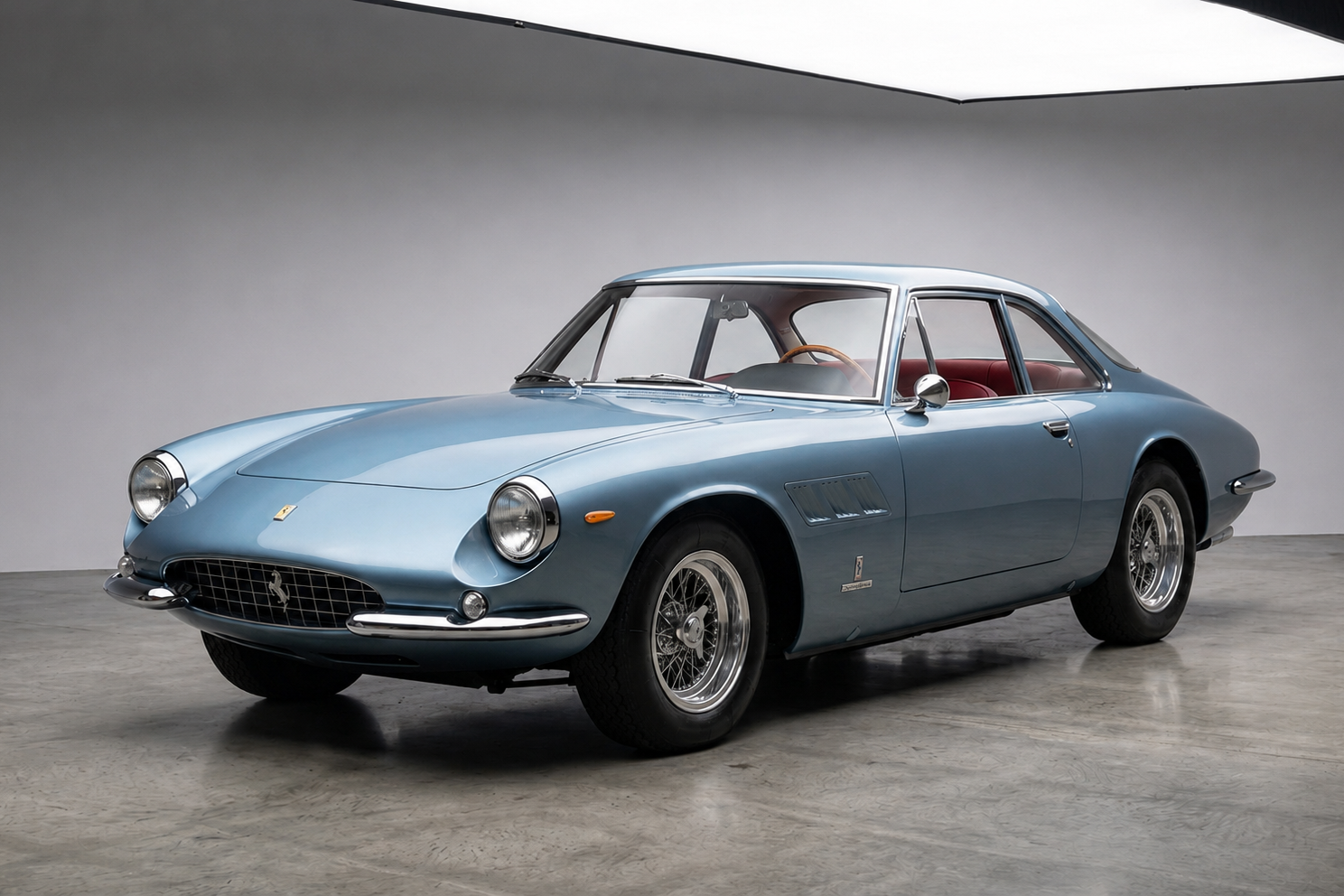
Ferrari 500 Superfast
Maranello's mid-1960s flagship two-seater V12 — 36 cars, 5-litre Colombo-lineage V12, Pininfarina bodywork over a Scaglietti-completed shell.
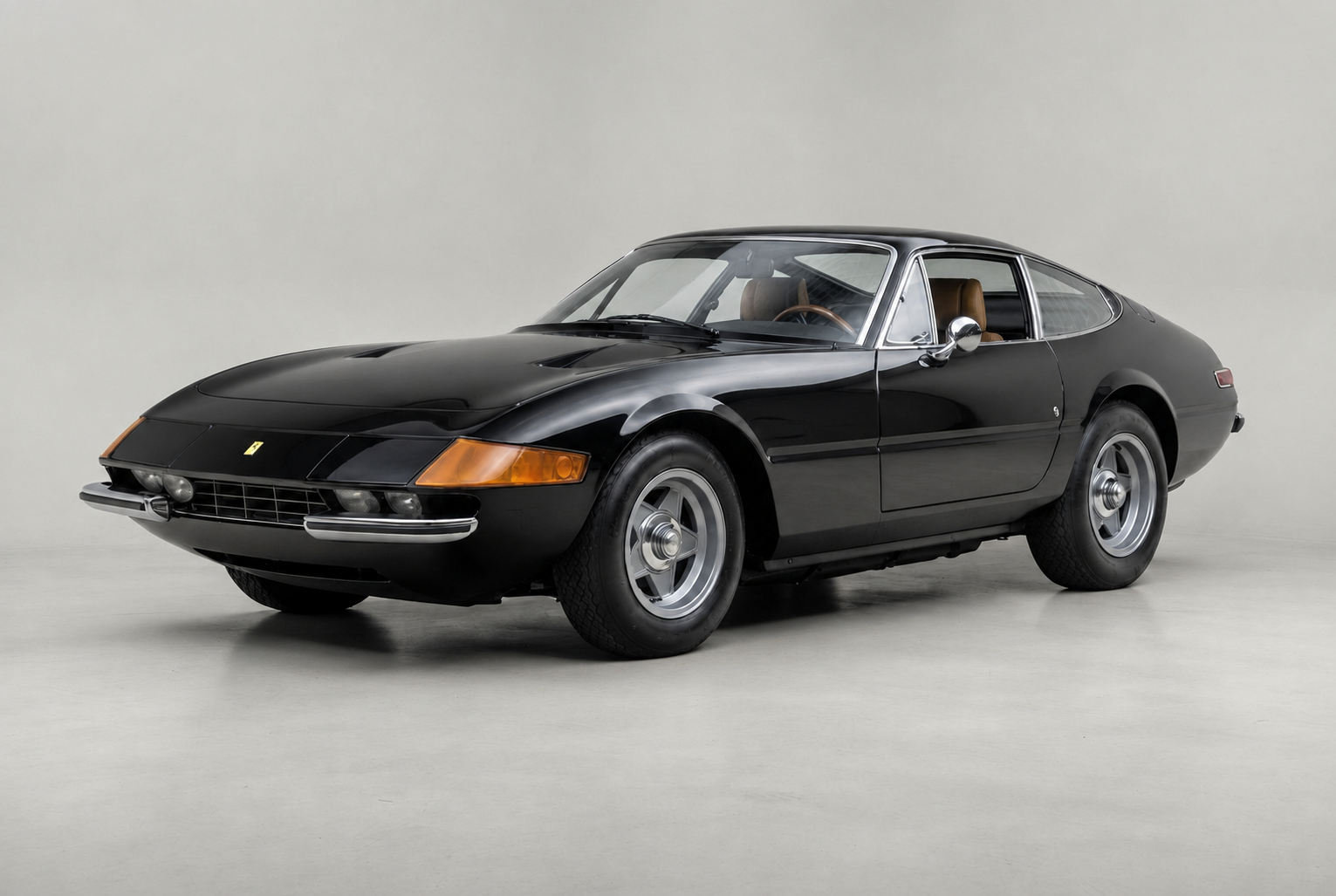
Ferrari 365
The full Ferrari 365 front-V12 family — from the rare 365 California and the 'Queen Mary' 365 GT 2+2 through the 365 GTC and GTS to the 365 GTB/4 Daytona and its factory Spider and Competizione derivatives.
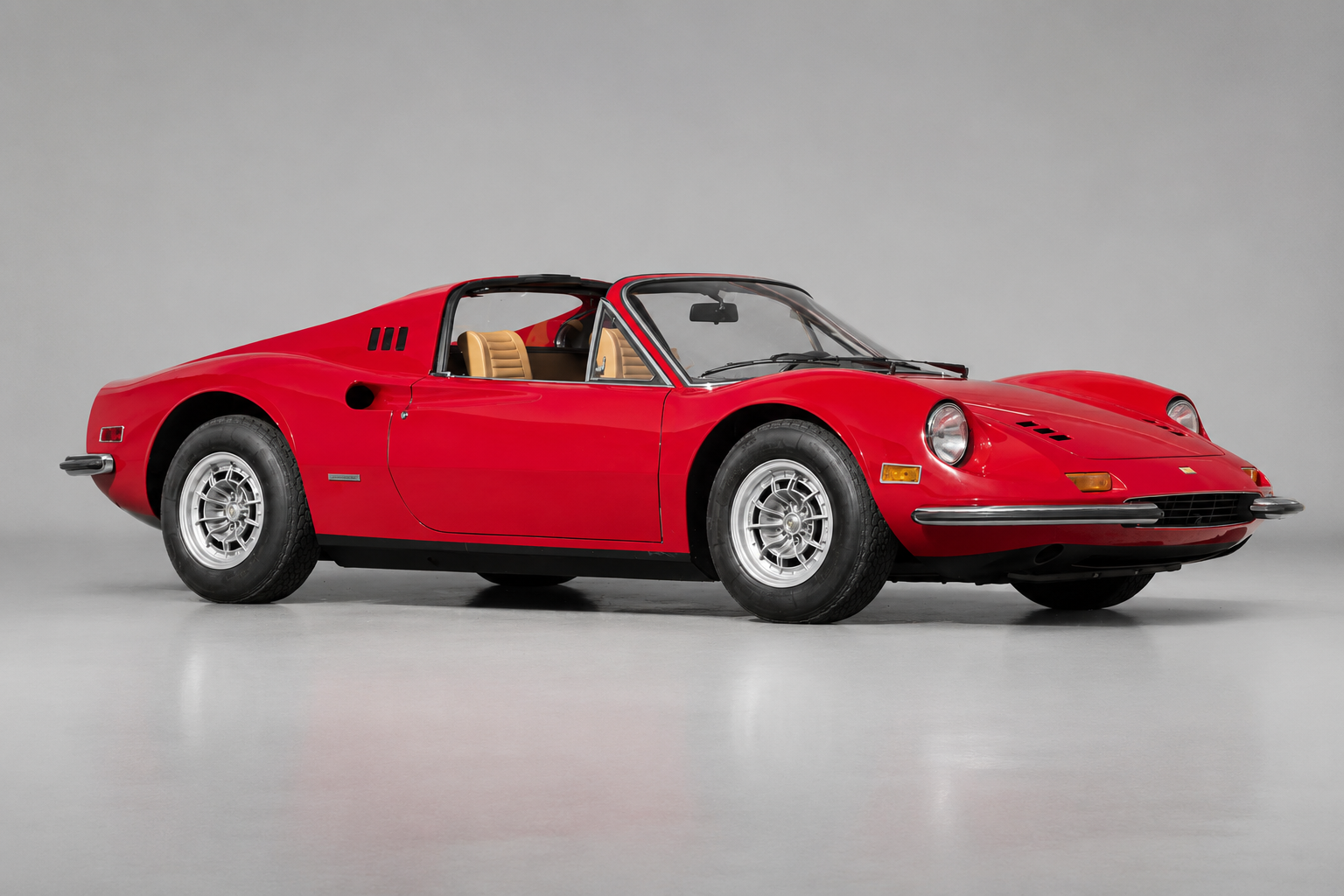
Ferrari Dino 246 GT / GTS
Ferrari's mid-engined V6 berlinetta — the most balanced classic Ferrari for actual driving.
Fiat
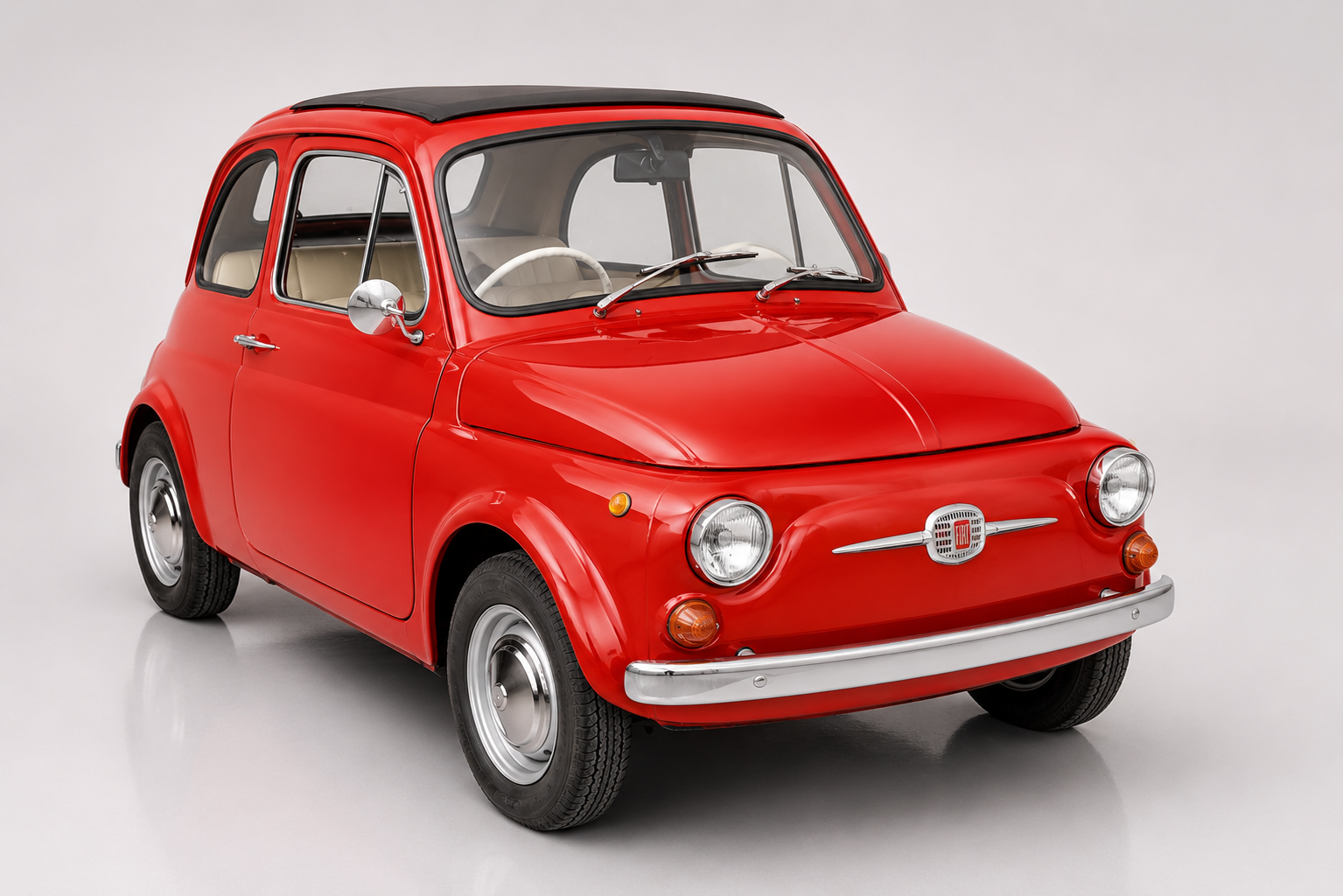
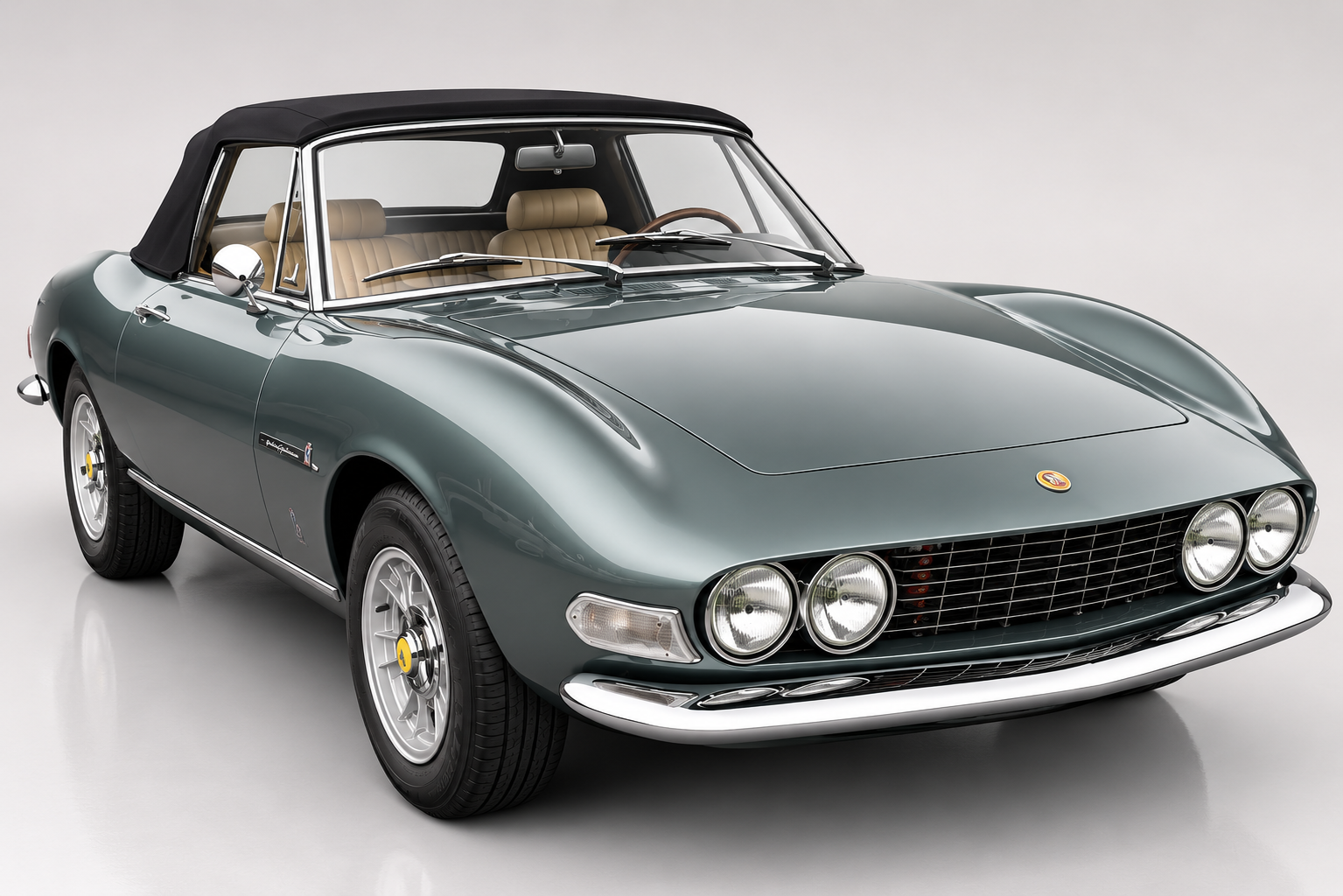
Ford
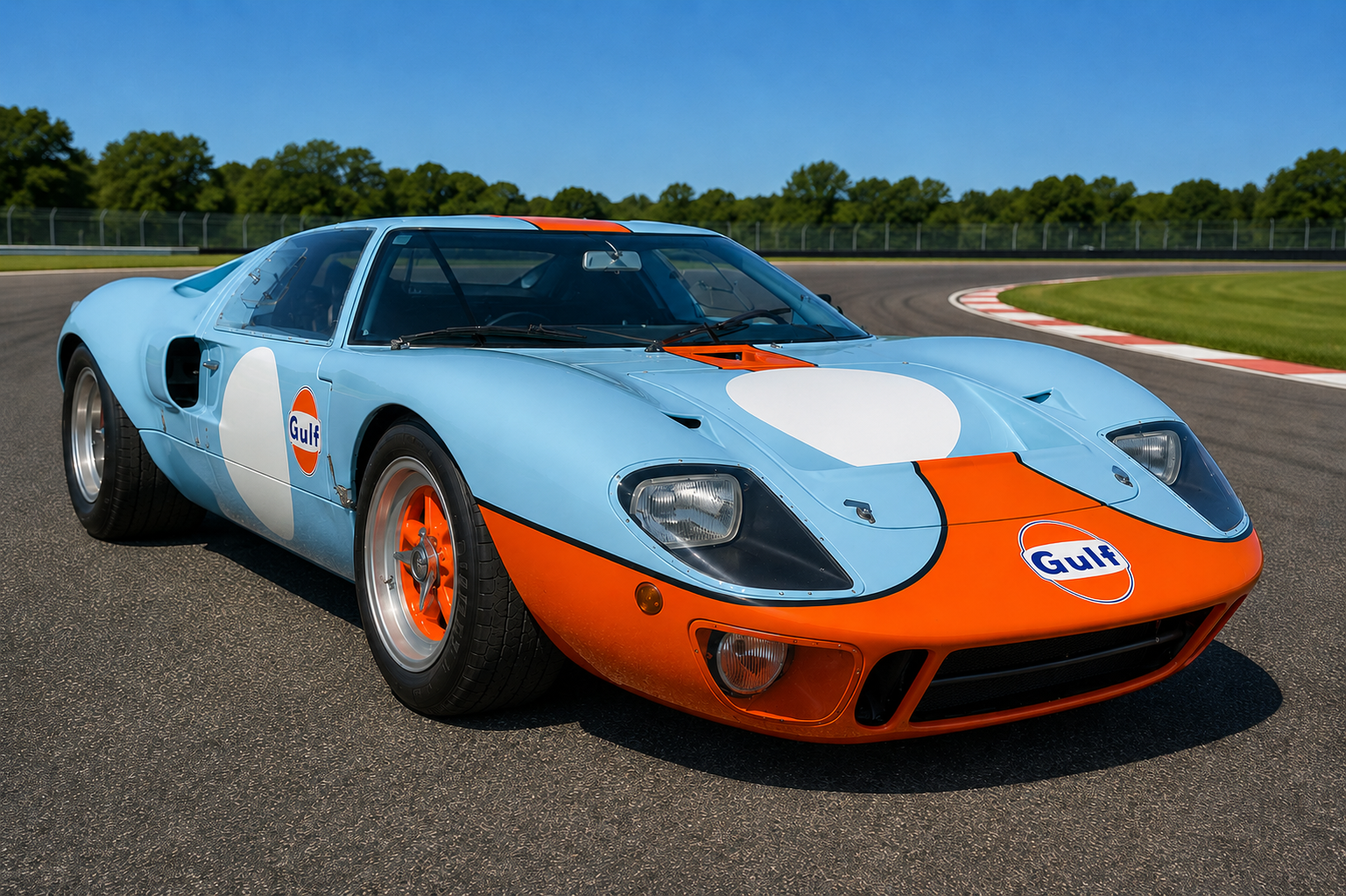
Ford GT40 (original)
Le Mans four-time winner — the original mid-engined Ford that defeated Ferrari at Le Mans from 1966 to 1969.
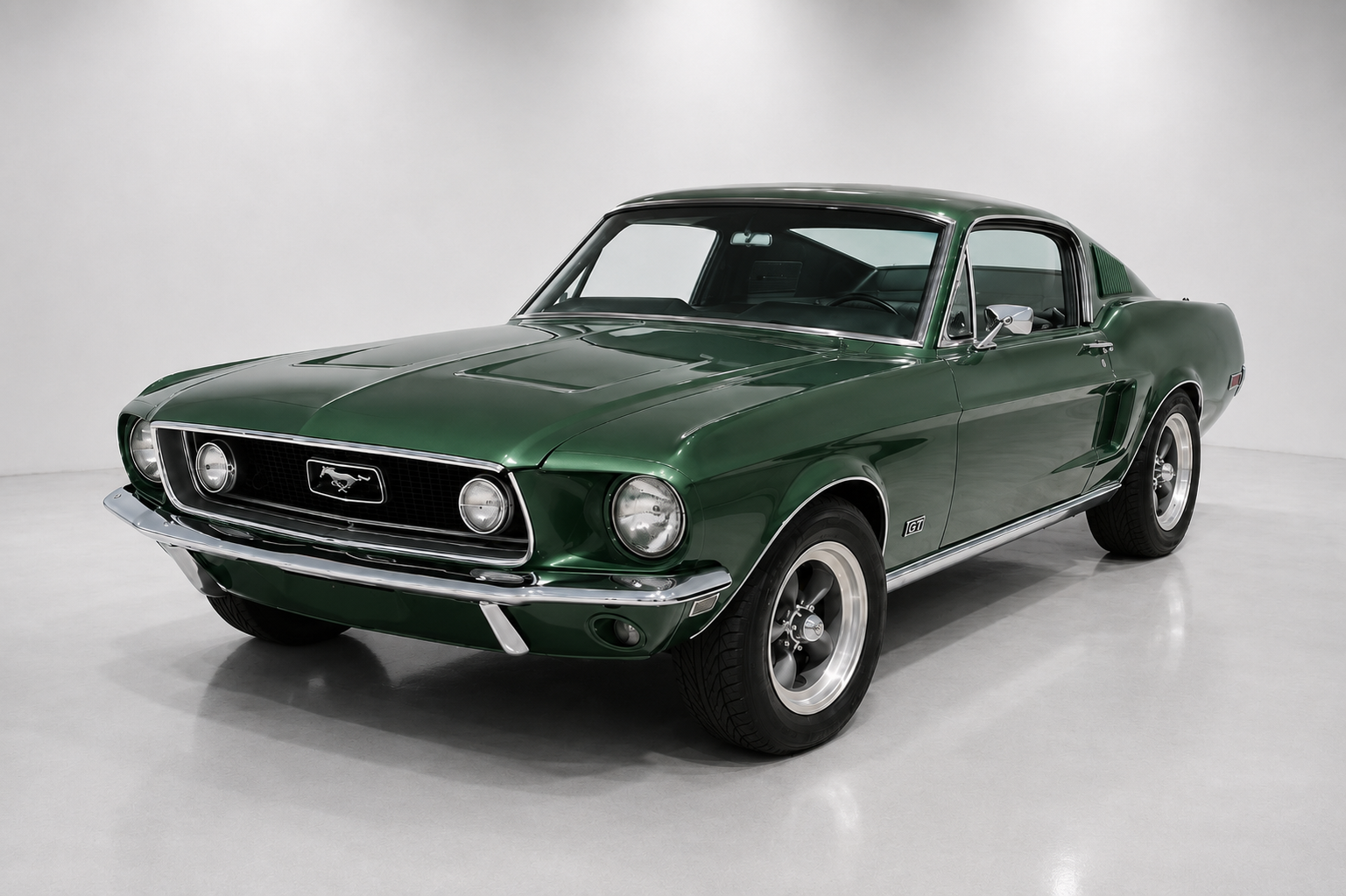
Ford Mustang (Classic 1965–1973)
America's pony car at its peak — from the original 1965 hardtop to the 1969–70 Boss derivatives and the Shelby GT350/GT500.
Jaguar
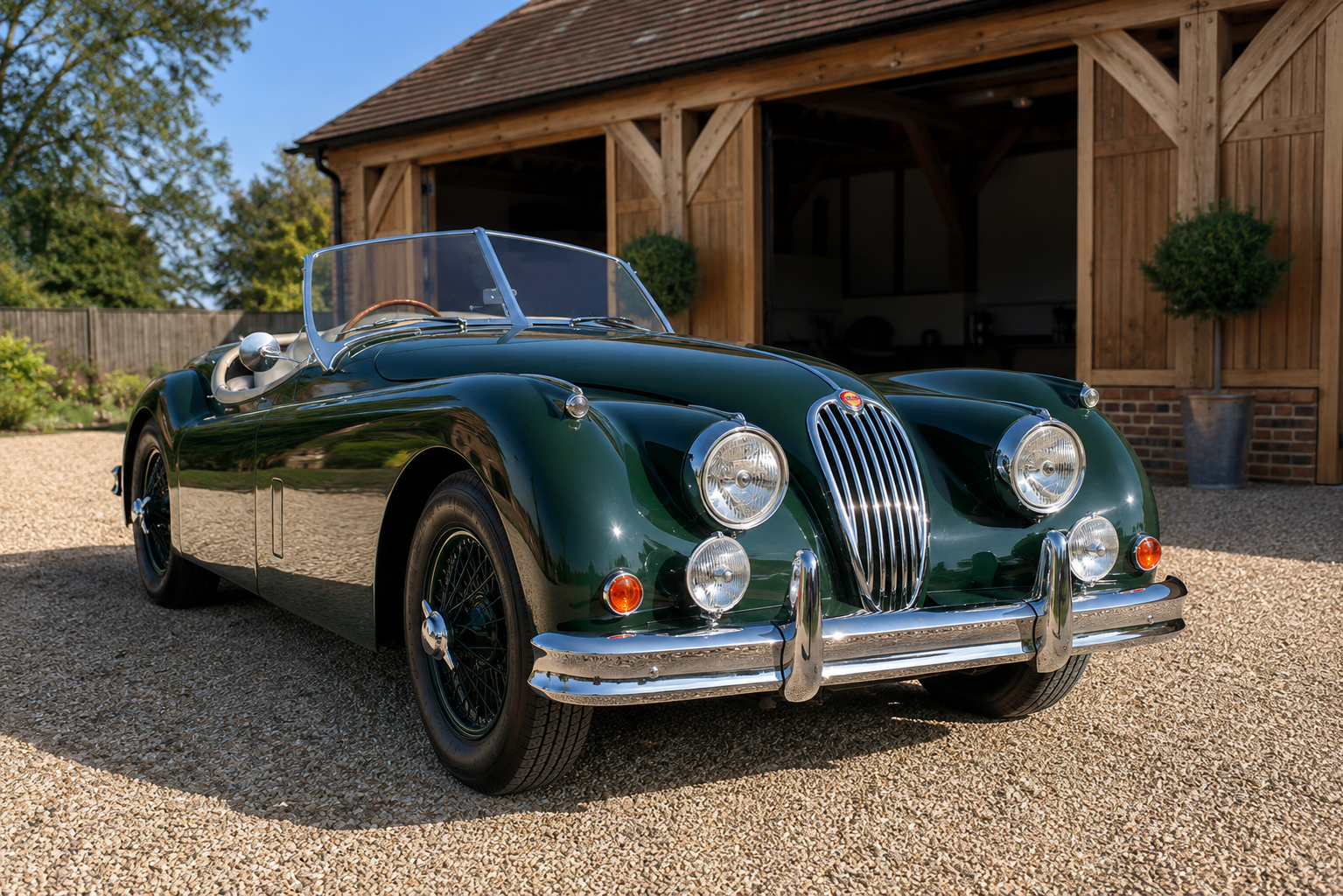
Jaguar XK
Jaguar's post-war sports car dynasty — the XK120, XK140 and XK150, built around the twin-cam XK inline-six.
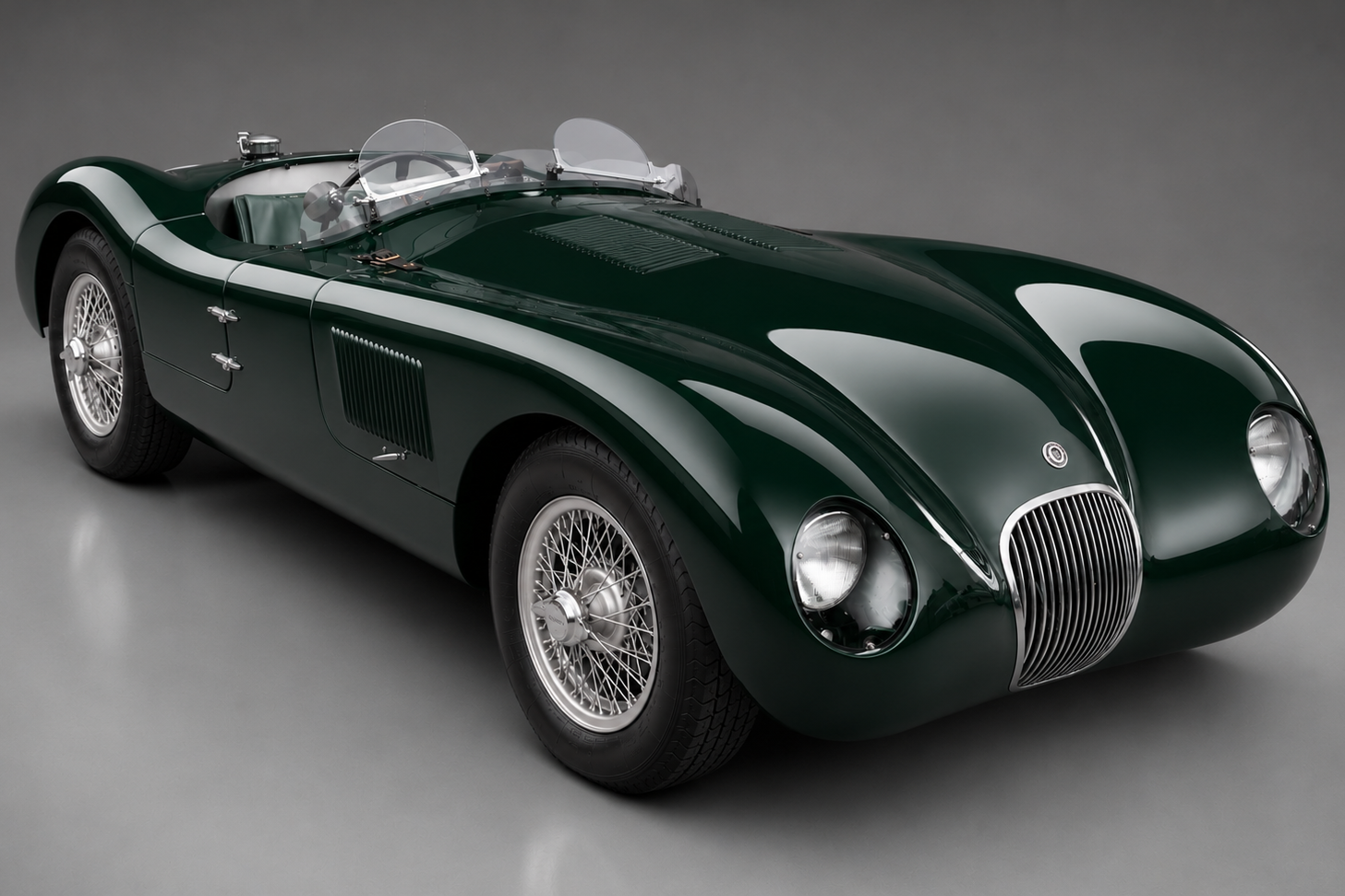
Jaguar C-Type
Jaguar's first purpose-built competition car — two Le Mans wins in three years, and the first car to win the race on disc brakes.
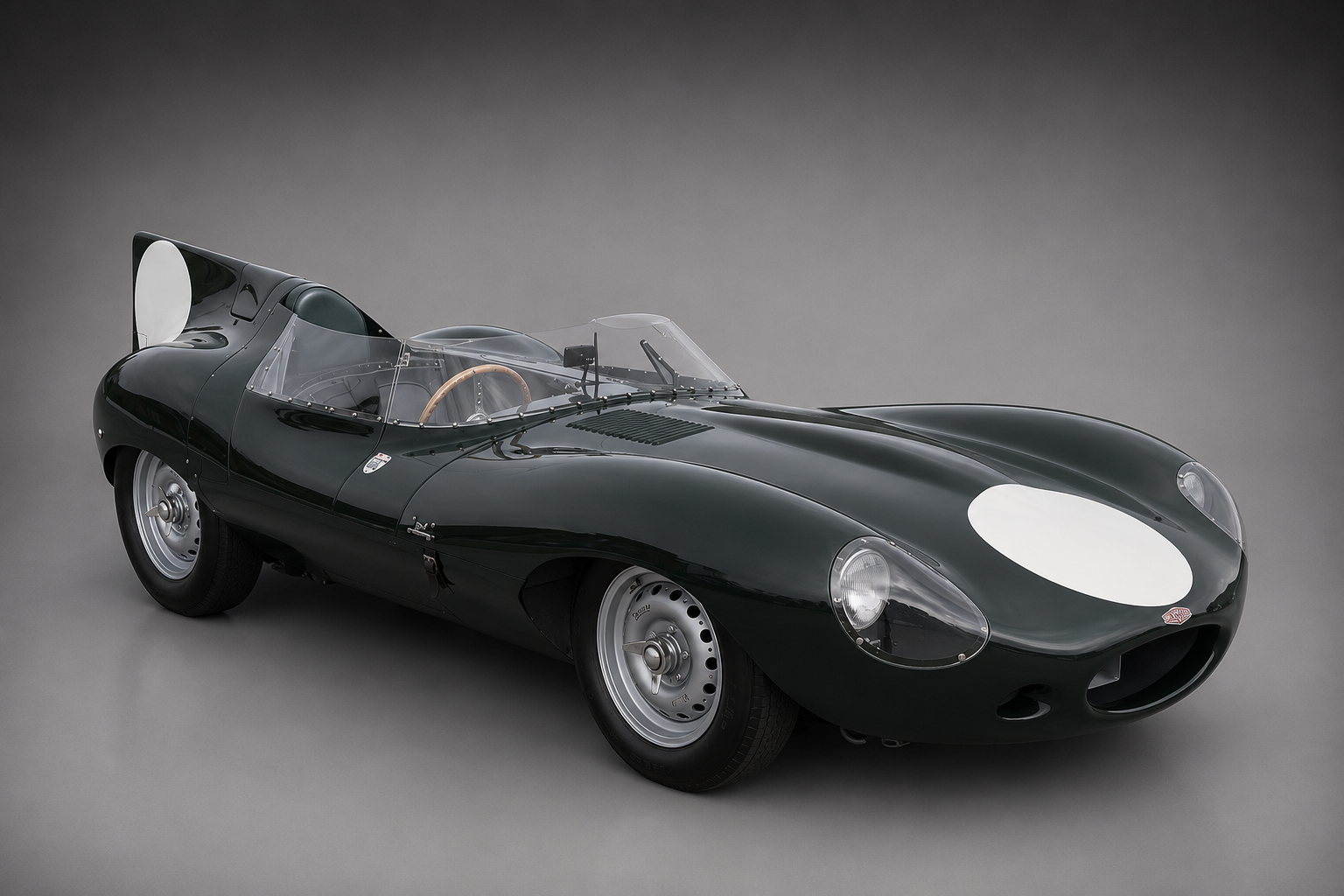
Jaguar D-Type
Le Mans-winning, monocoque-construction Jaguar racing car — three consecutive Le Mans victories and the basis of the XKSS.
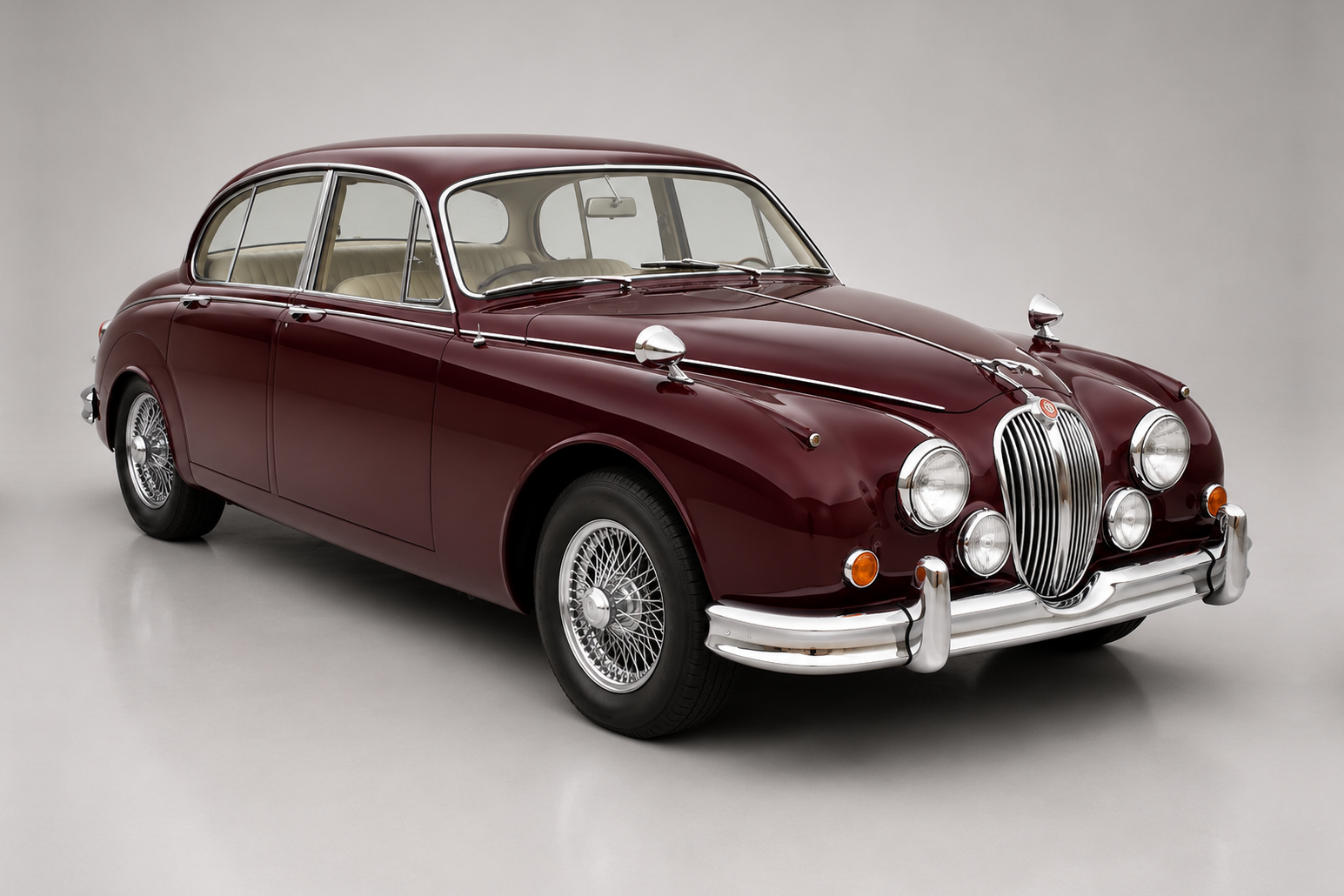
Jaguar Mk2 (incl. 240/340)
Lyons' 'grace, pace and space' sports saloon — in 3.8 form, the fastest production saloon in the world in its day.
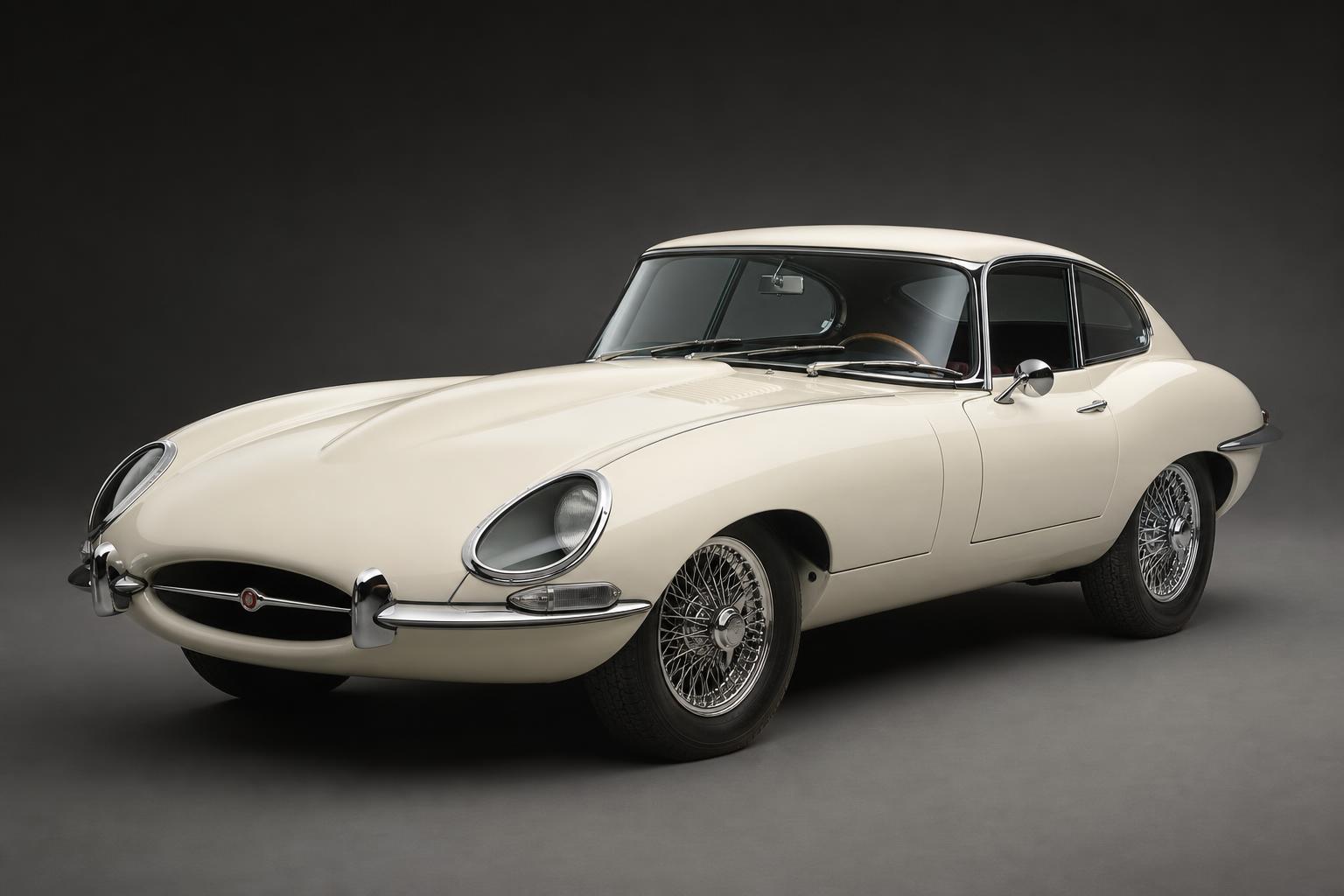
Jaguar E-Type
The car Enzo Ferrari reportedly called the most beautiful ever made — and the defining British sports car of the 1960s and early 1970s.
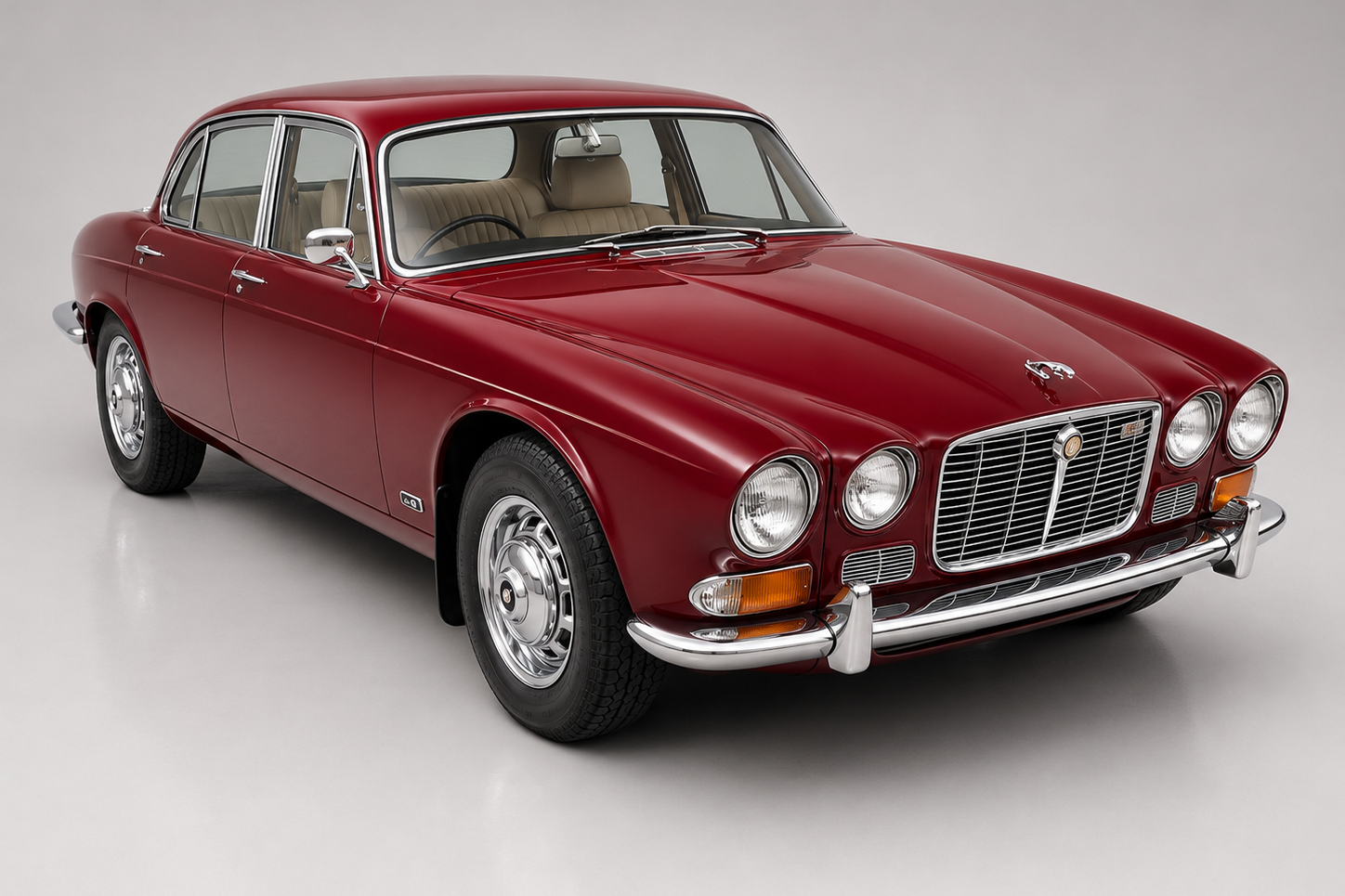
Jaguar XJ6 Series 1
The last saloon developed under Sir William Lyons — 'the finest Jaguar ever'.
Lamborghini
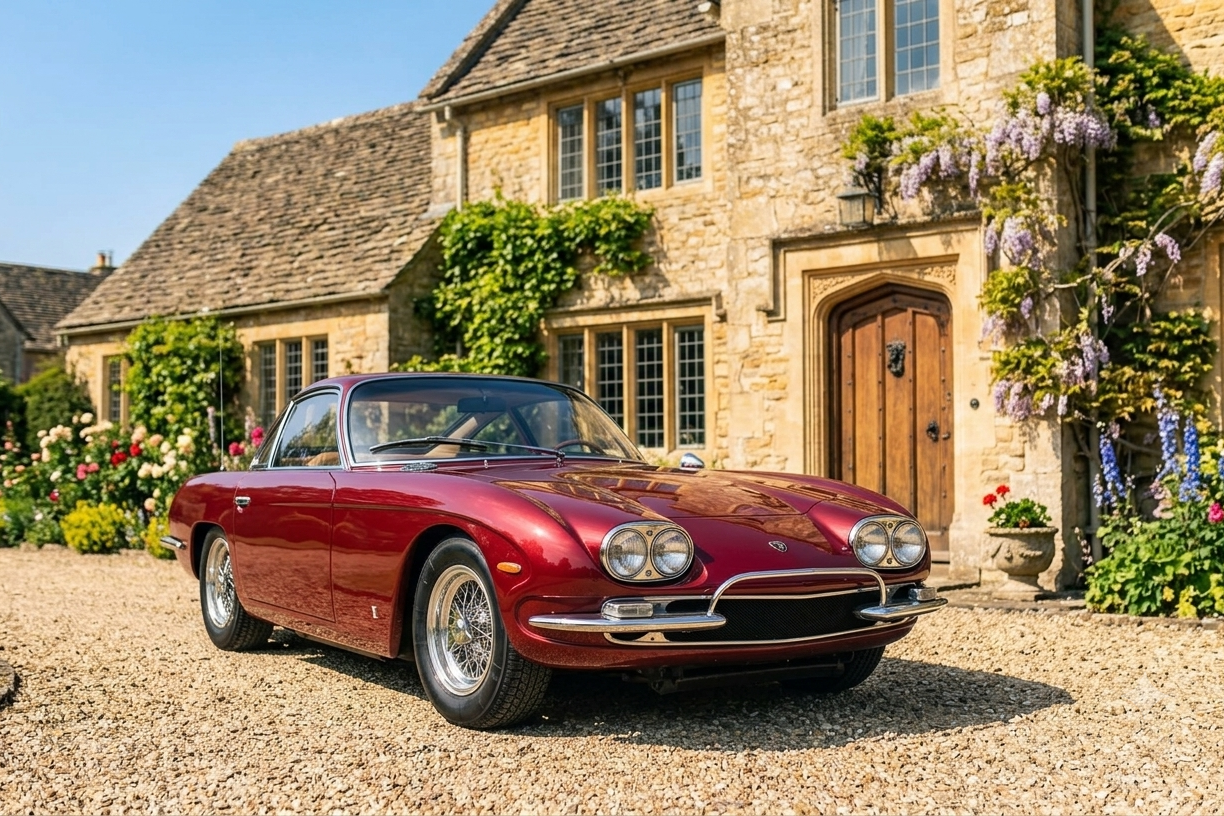
Lamborghini 400 GT
Touring-bodied, front-engined V12 Lamborghini — Sant'Agata's second production model and the founding chassis of the Islero–Jarama V12 GT line.
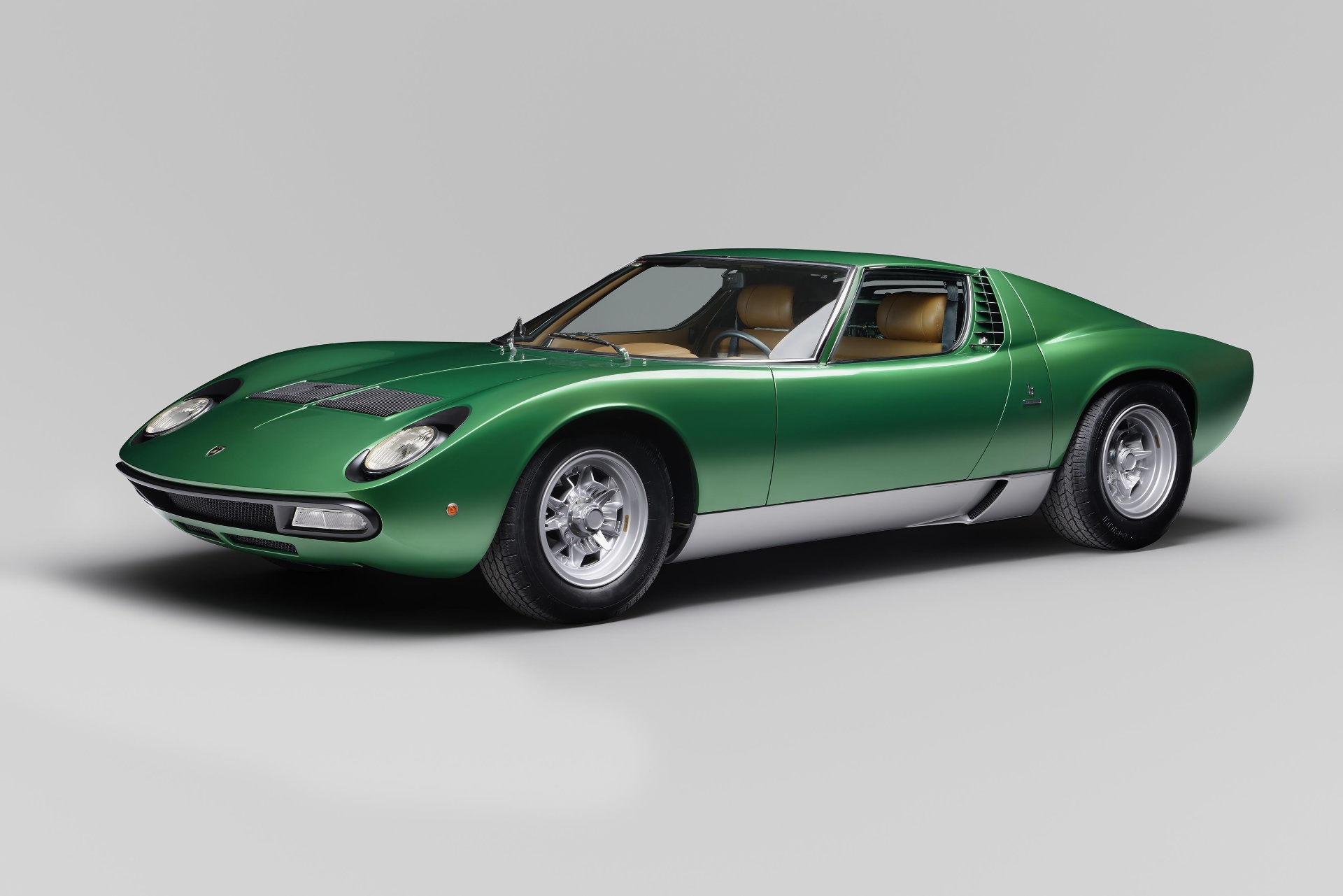
Lamborghini Miura
The mid-engined V12 Bertone Berlinetta that defined the modern supercar.
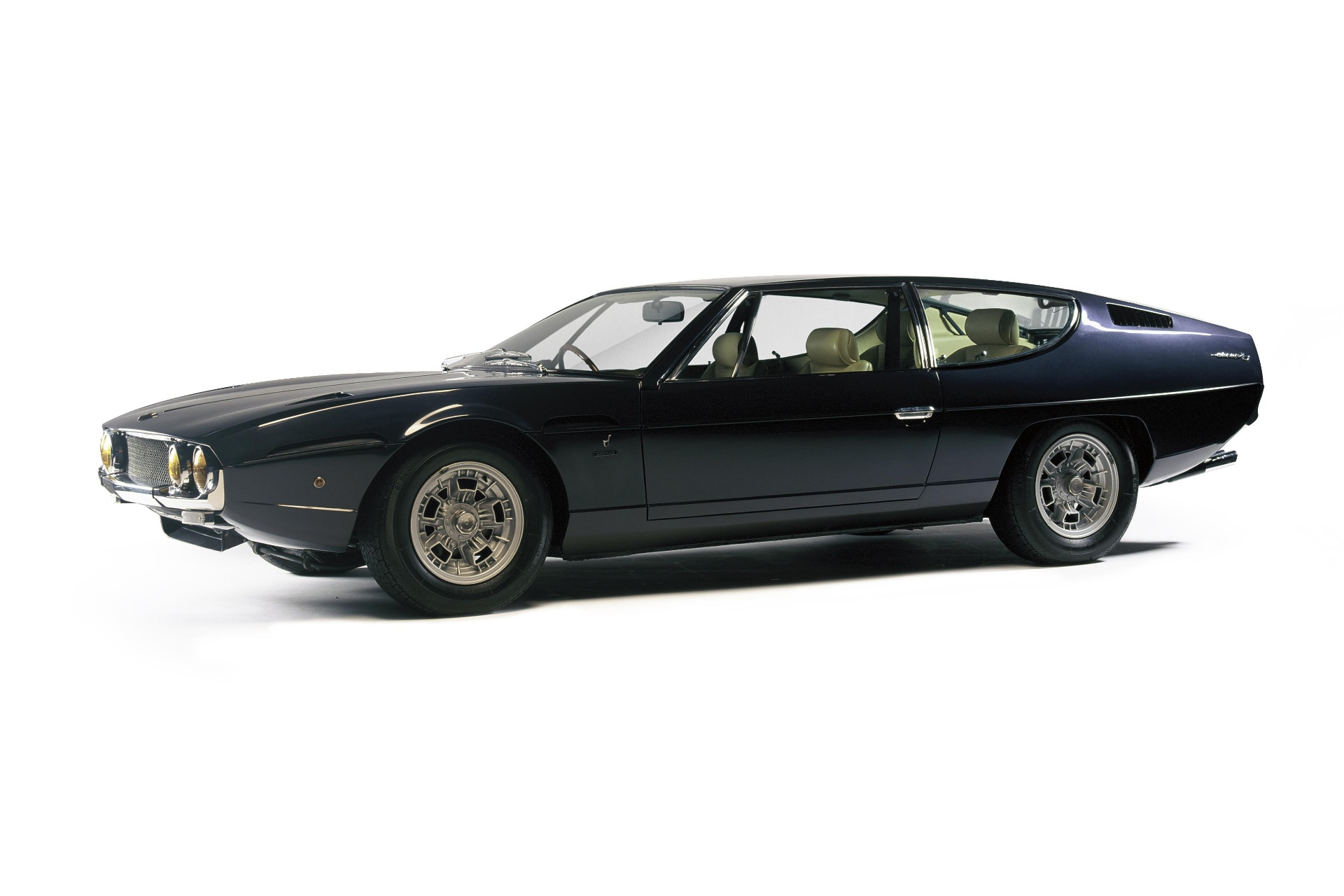
Lamborghini Espada
Lamborghini's four-seat V12 grand tourer — Marcello Gandini's low, wide and unmistakable answer to the GT 2+2.
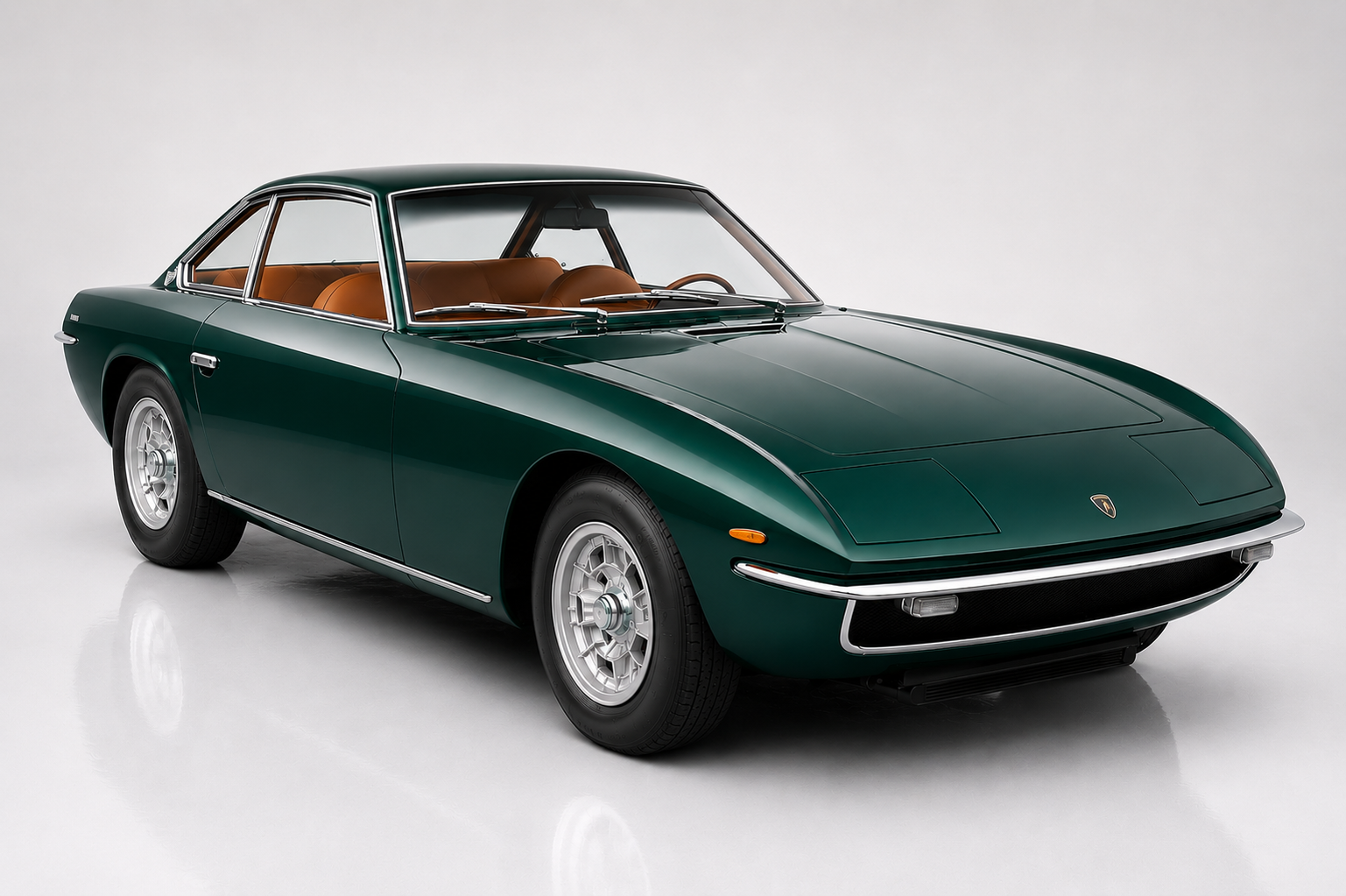
Lamborghini Islero
The conservative 400 GT replacement — Marazzi's clean-lined coupe and Ferruccio's own daily driver.
Lancia
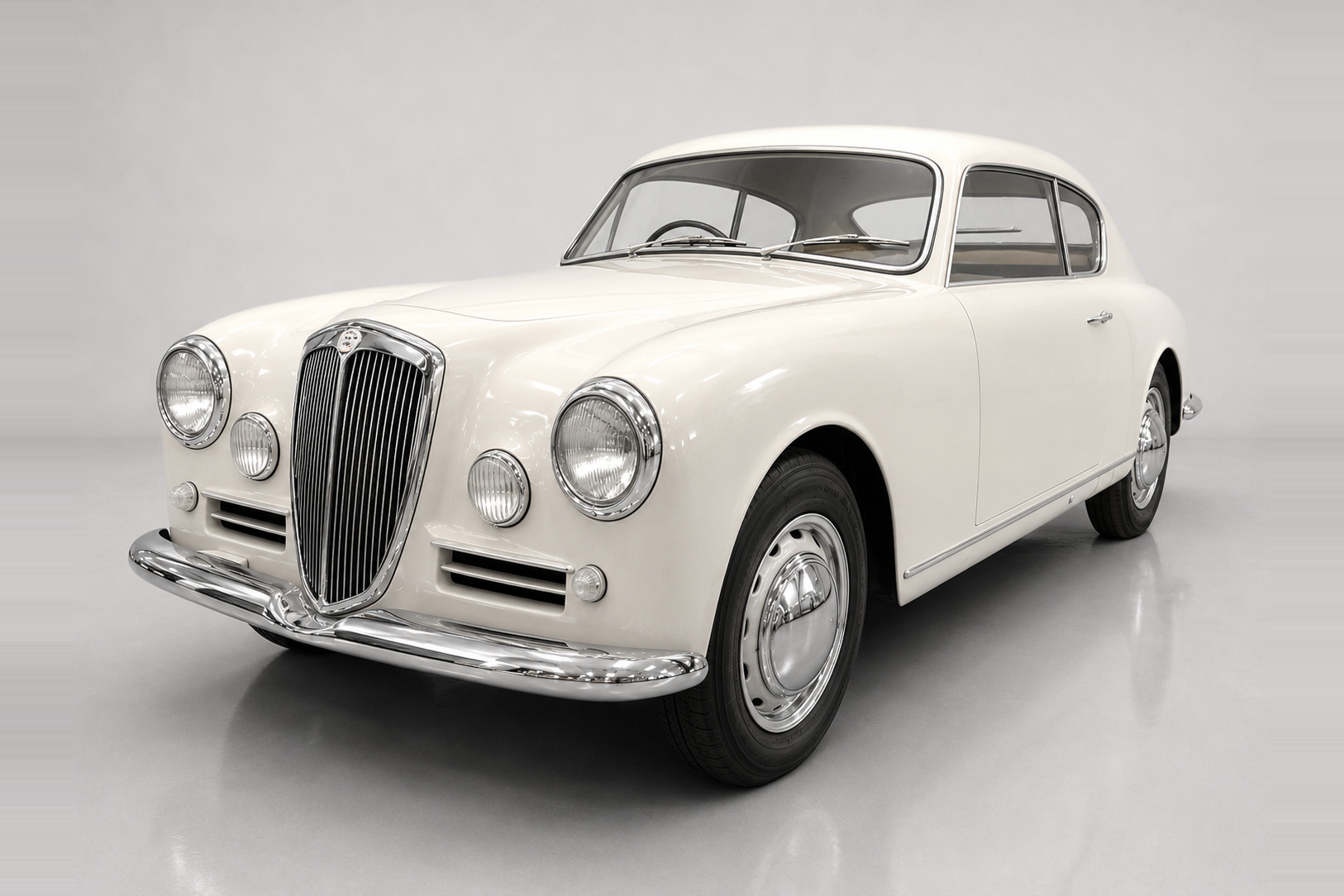
Lancia Aurelia B20 GT
Widely regarded as the first modern grand tourer — a Pininfarina-built coupé on Vittorio Jano's Aurelia.
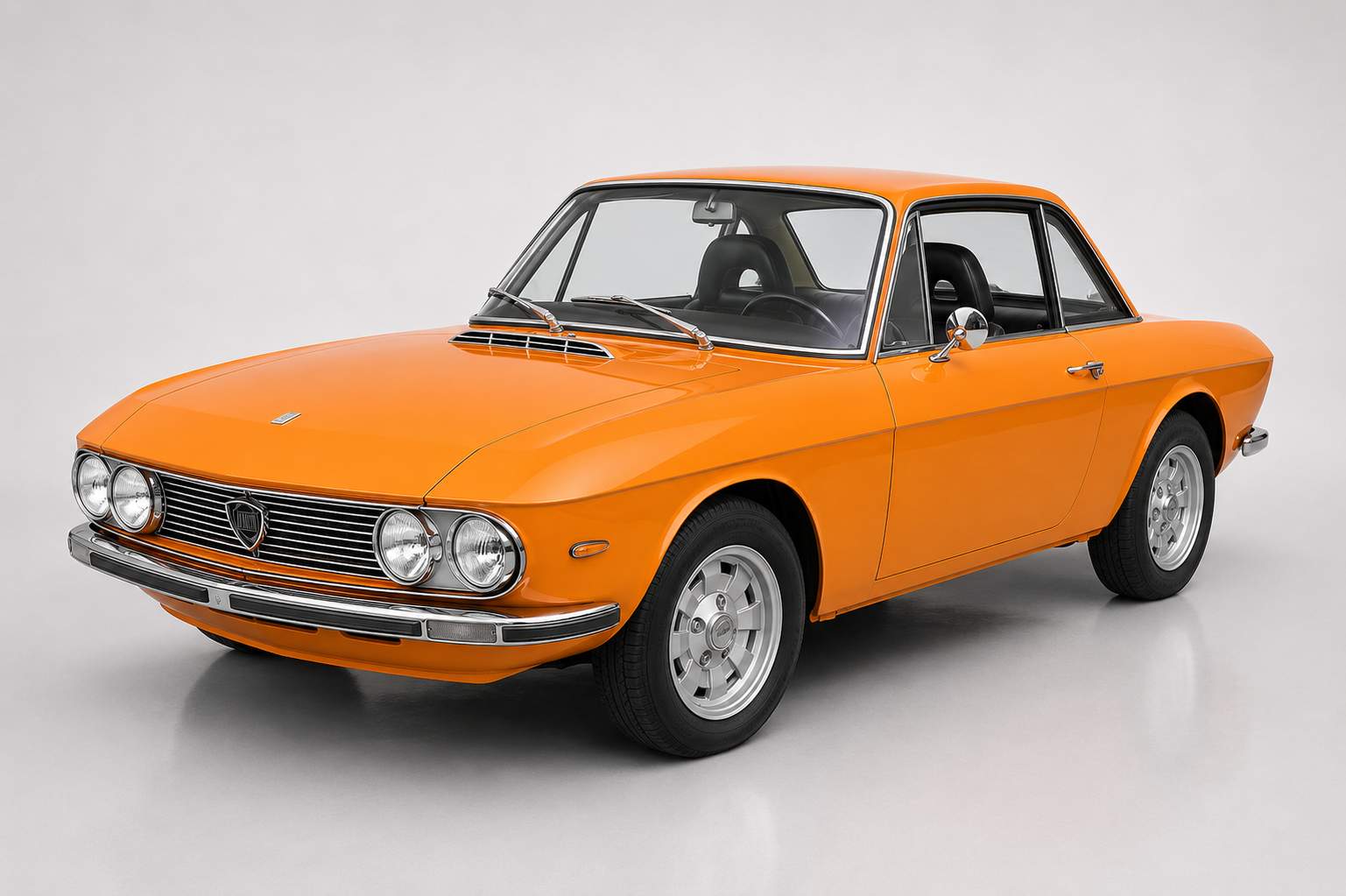
Lancia Fulvia Coupé
A jewel-like front-wheel-drive coupé on a narrow-angle V4 — and the car that took Lancia rallying.
Lotus
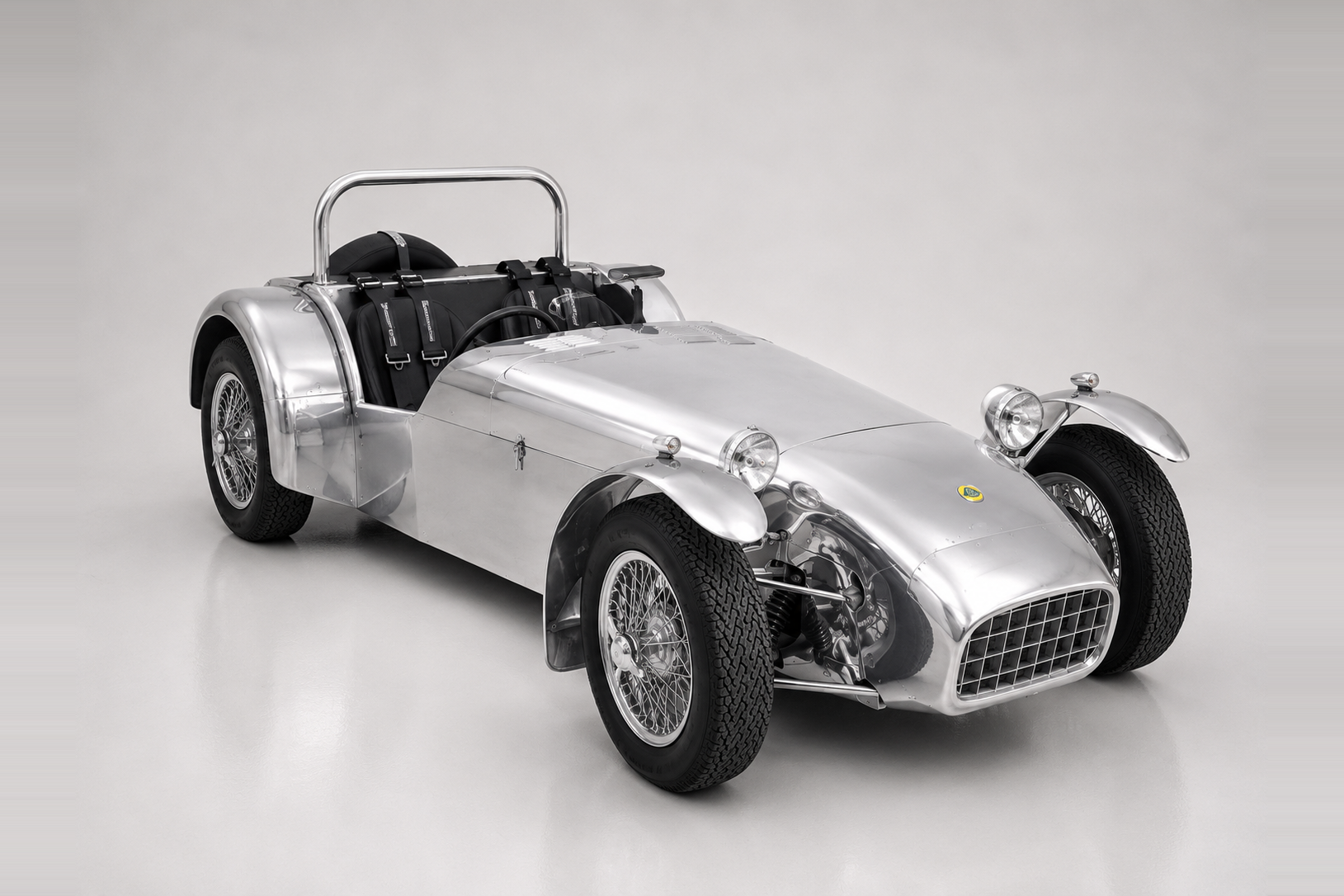
Lotus Seven
Colin Chapman's purest expression of 'simplify and add lightness' — a featherweight spaceframe roadster whose design lives on as the Caterham Seven.
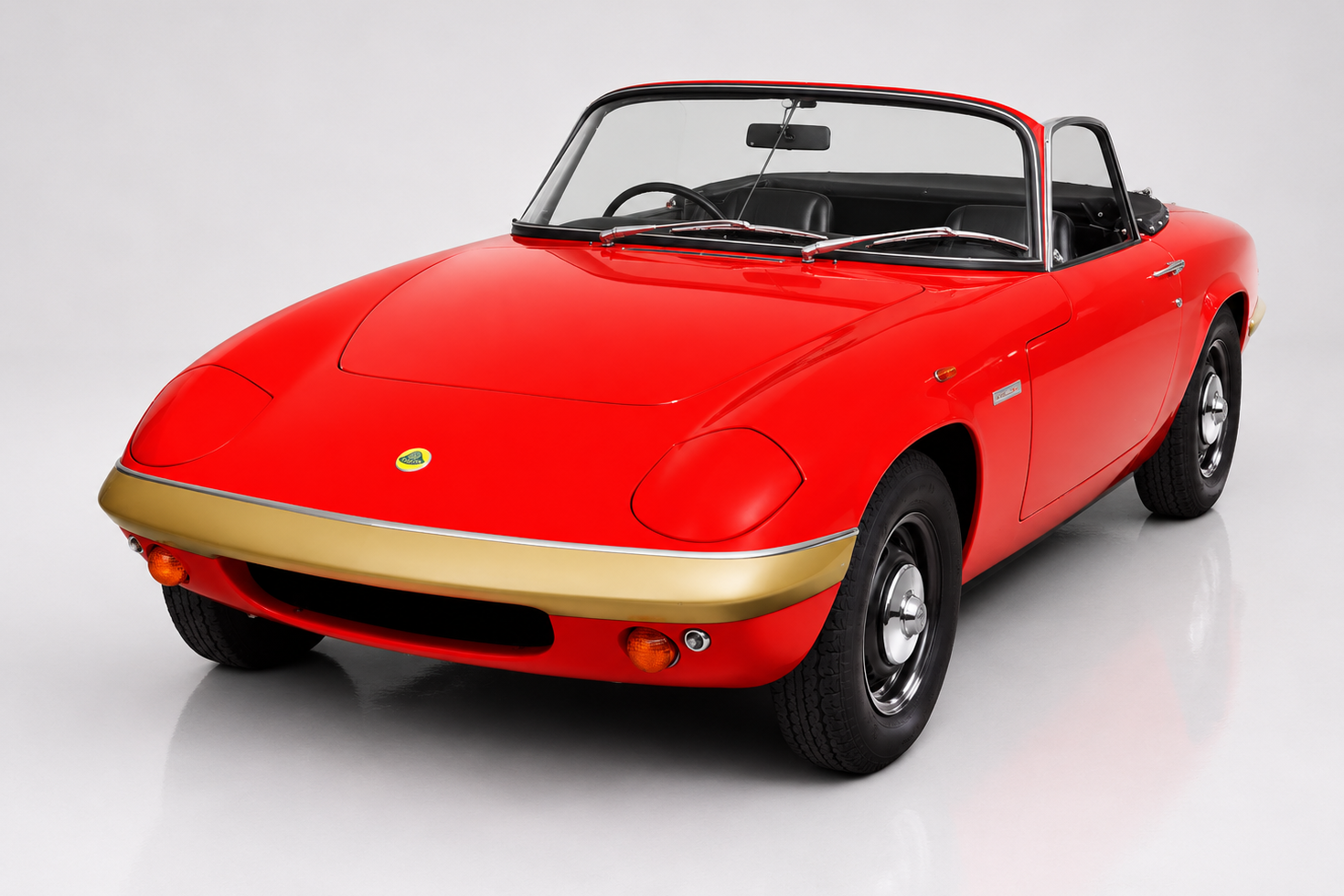
Lotus Elan
Chapman's masterpiece — the car that funded a decade of Grand Prix wins.
Maserati
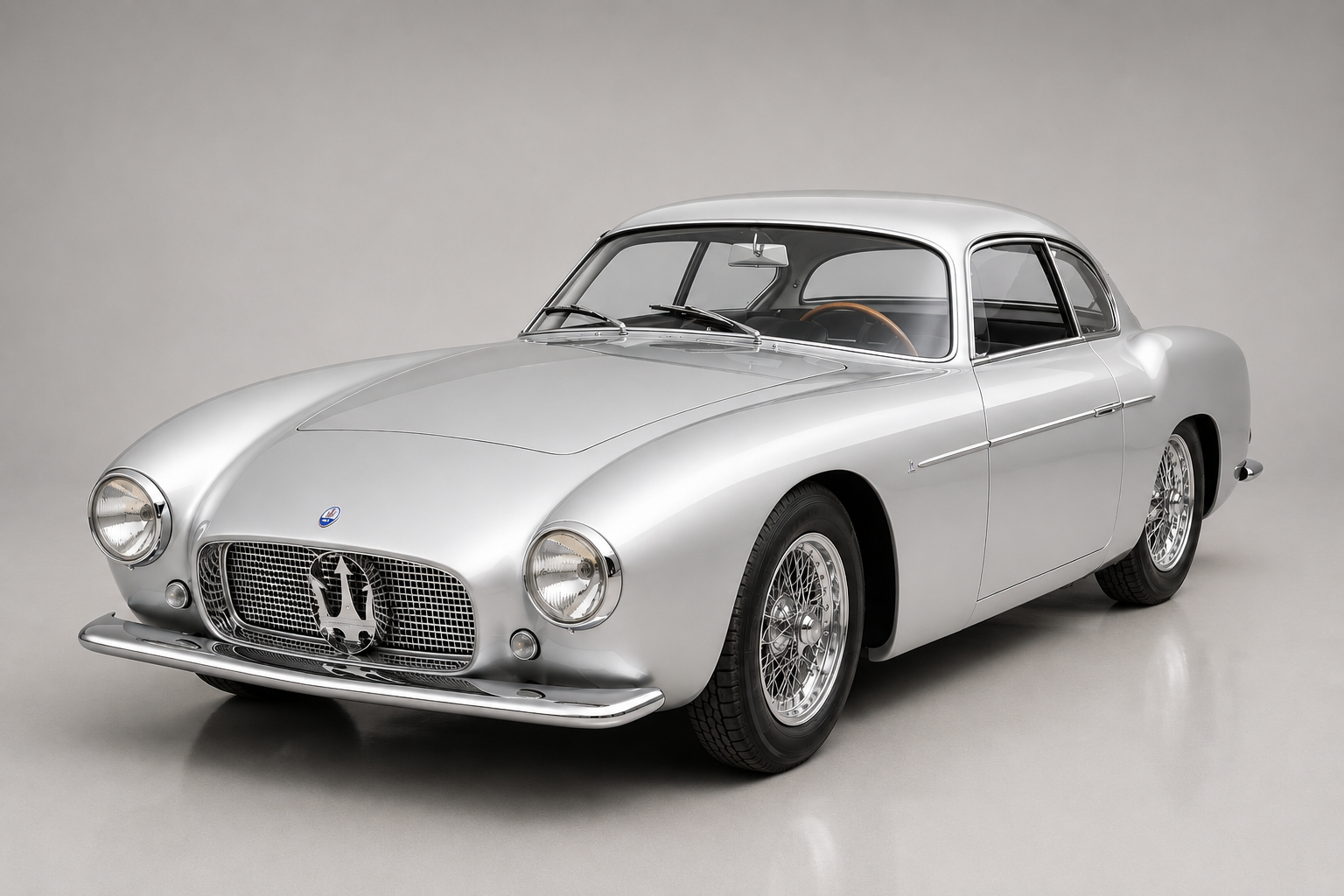
Maserati A6 (1500 / G 2000 / G/54)
Maserati's first road cars — built after the brothers' departure under Orsi ownership; A6 1500, A6G 2000 and A6G/54.
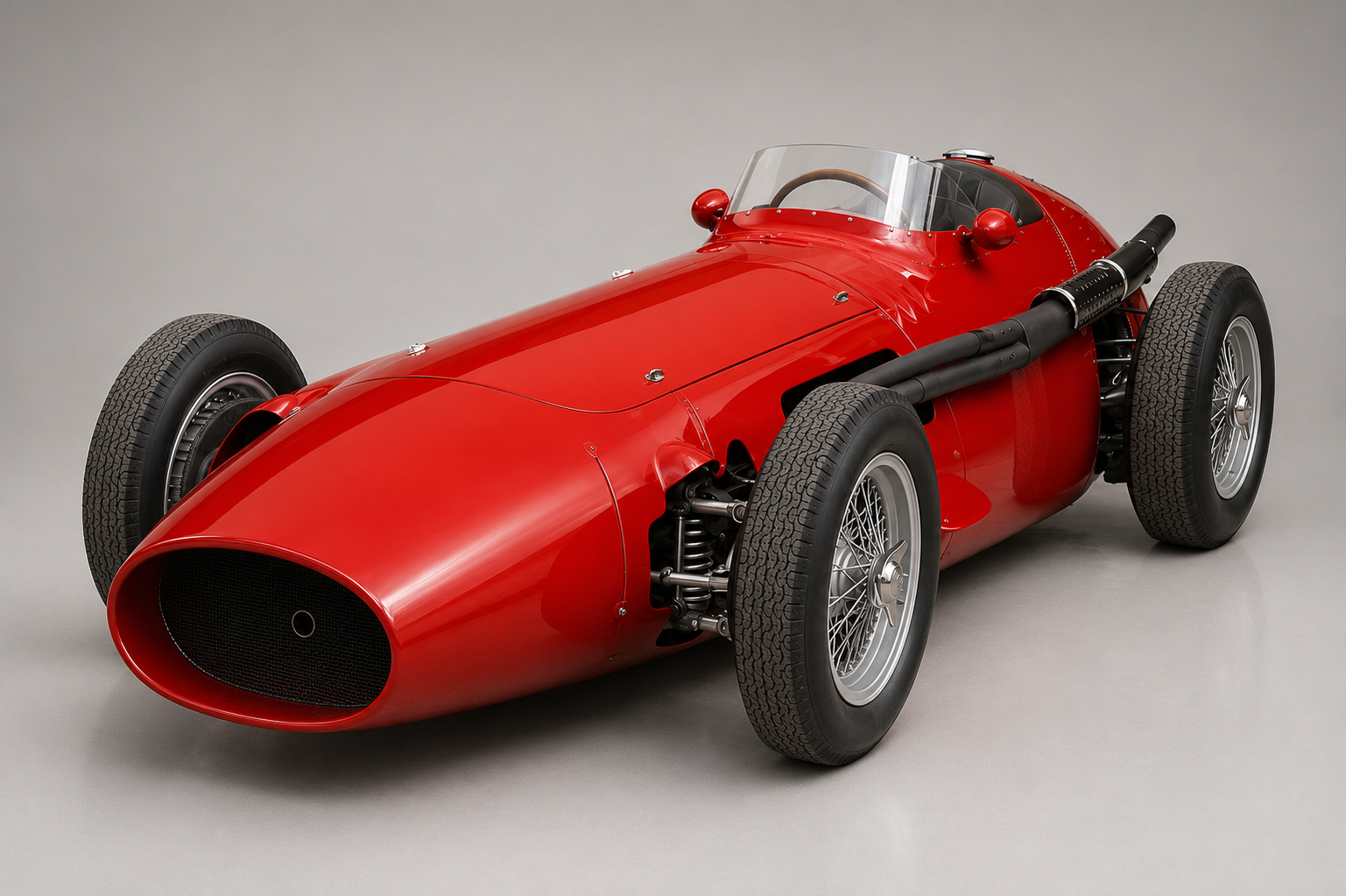
Maserati 250F
The definitive front-engined Grand Prix car — Fangio's fifth World Championship, the 1957 Nürburgring drive, and 46 GPs of history.
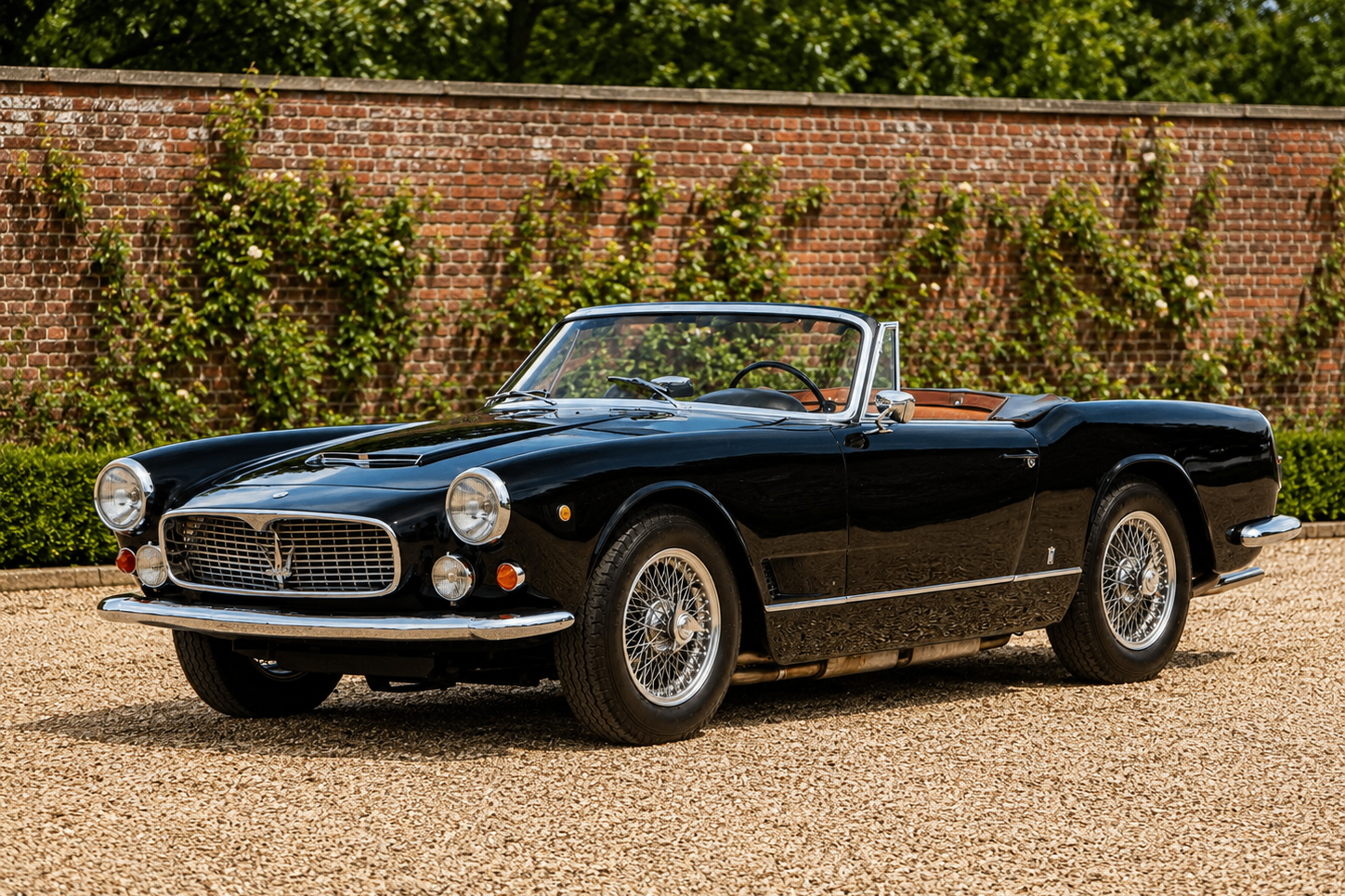
Maserati 3500 GT
Maserati's first series-production road car — a hand-built Modenese GT with a detuned 350S-derived twin-cam 3.5-litre six, produced 1957–1964 in Touring Superleggera coupé, Vignale Spyder and a handful of coachbuilt one-off forms; the car that transitioned Maserati from a boutique racing constructor into a viable road-car manufacturer.
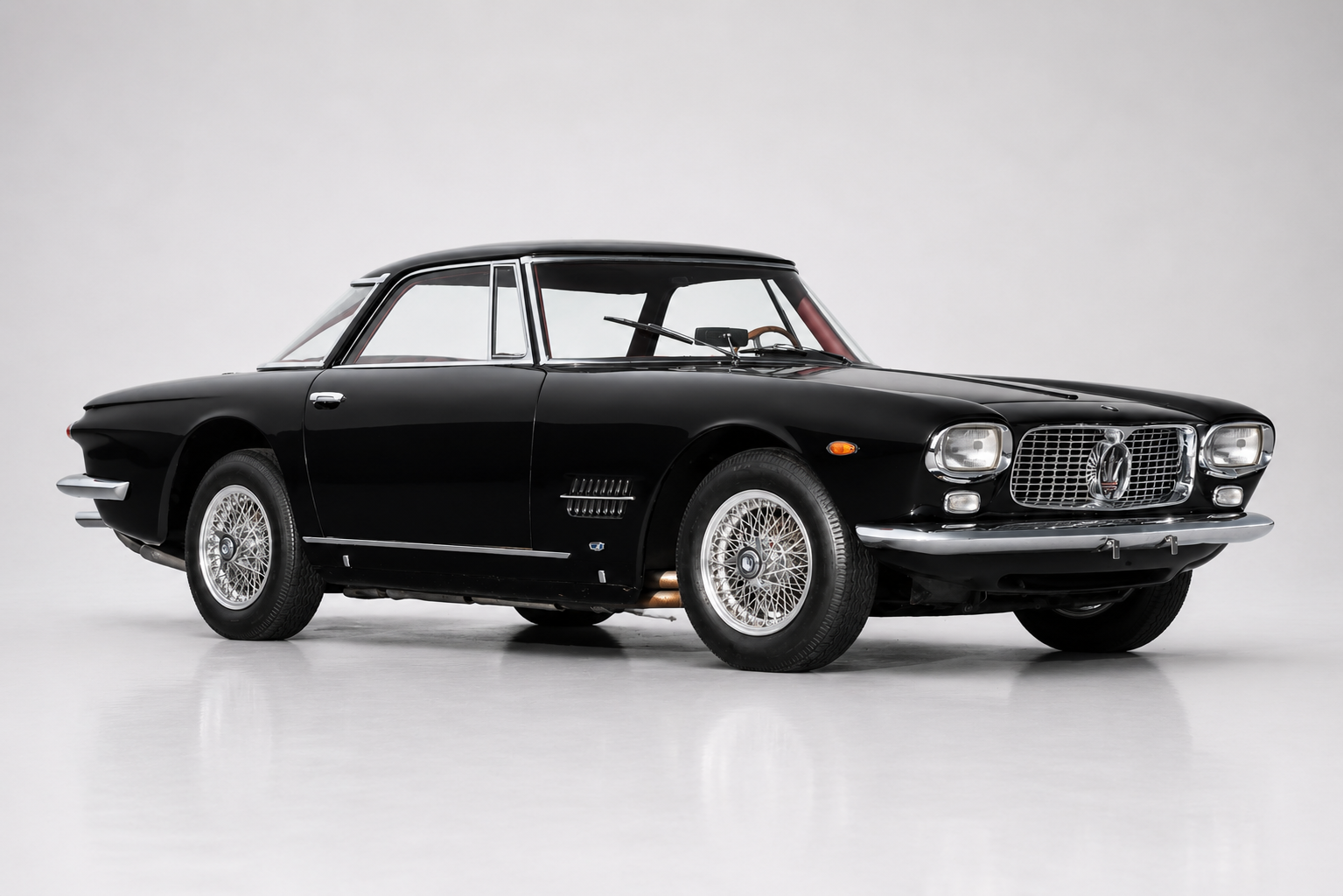
Maserati 5000 GT
The Shah of Persia's commission — Alfieri's 450S racing V8 in a reinforced 3500 GT chassis; 34 built across eight coachbuilders.
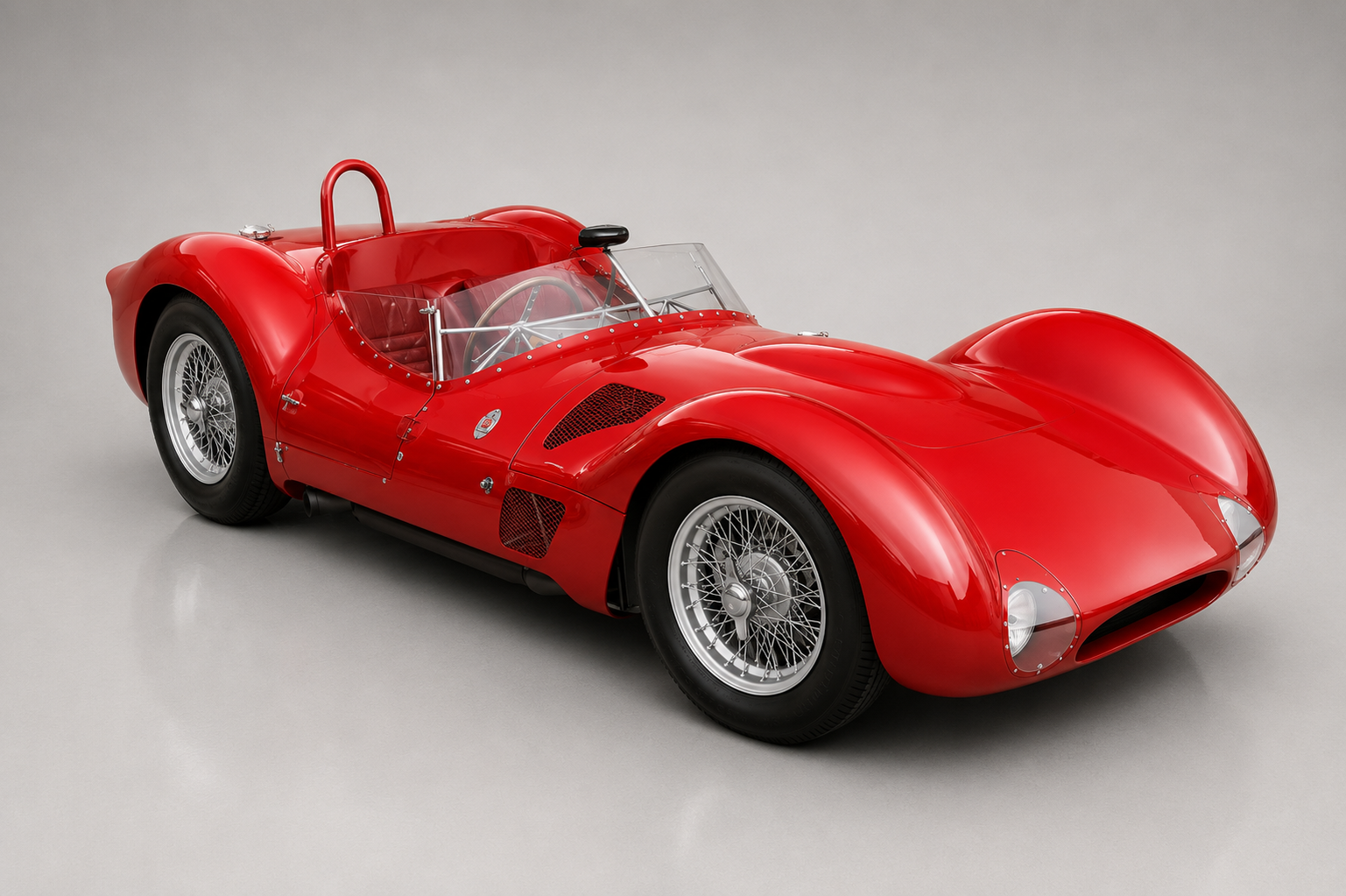
Maserati Tipo 60/61 "Birdcage"
Alfieri's spaceframe masterpiece — ~200 small-diameter tubes at 36 kg, engine canted 45°, Moss on debut at Reims 1959.
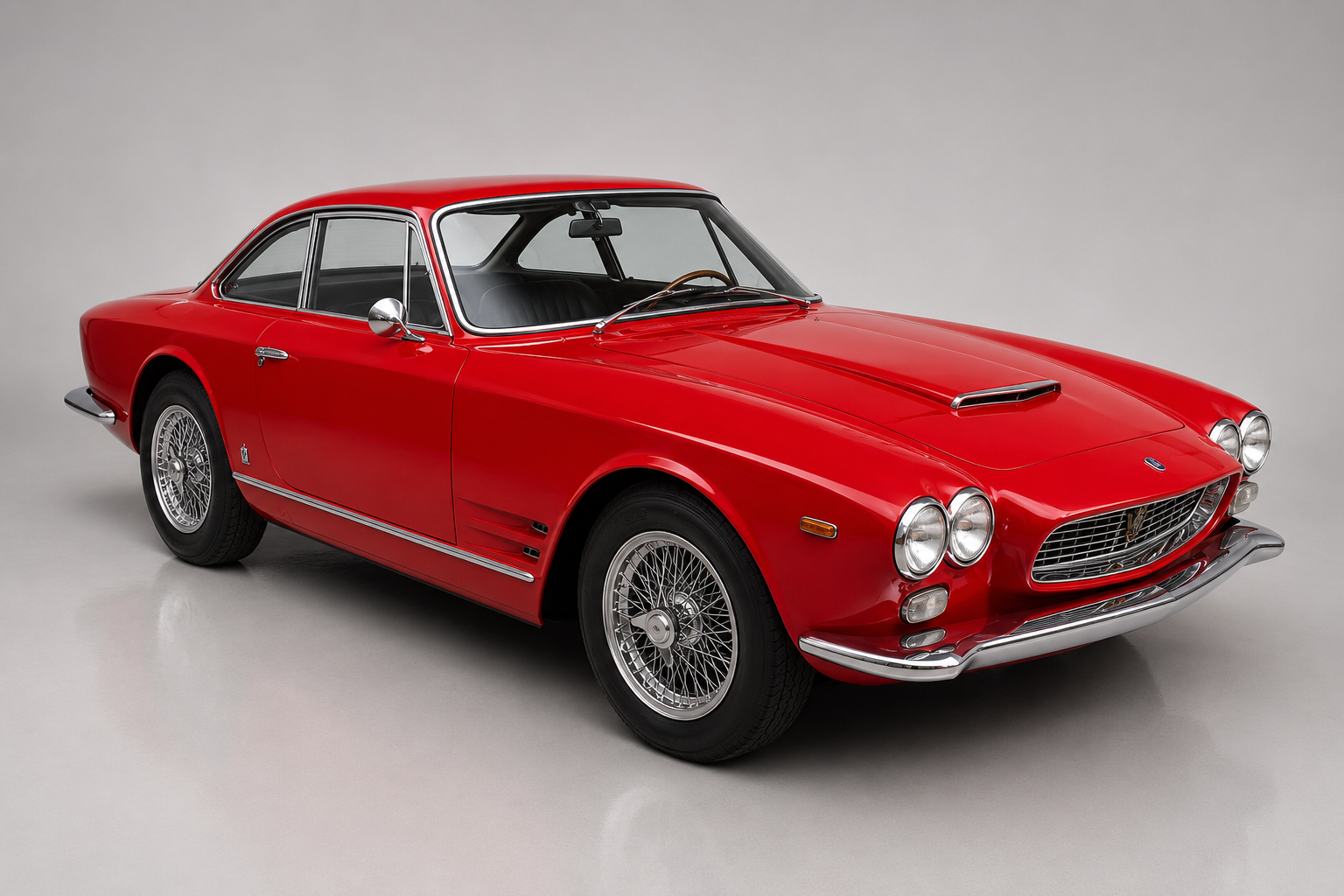
Maserati Sebring
The shortened-wheelbase 3500 GTI development for the American market — Michelotti at Vignale, named for Maserati's Sebring wins.
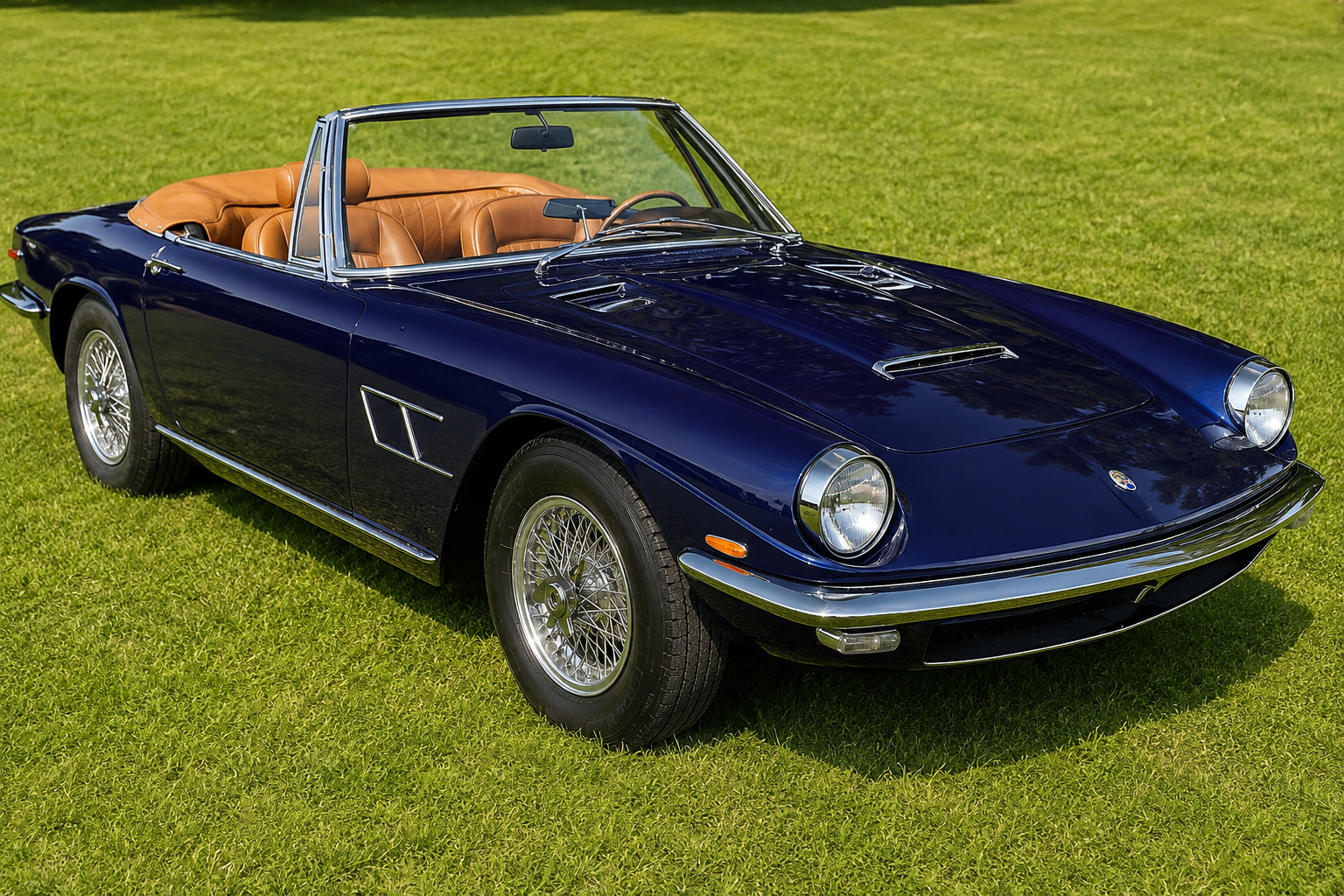
Maserati Mistral
The last Maserati road car to run the twin-plug DOHC six derived from the 350S sports-racer — a Frua-designed, Maggiora-bodied two-seat GT built 1963–1970 in coupé and small-production Spyder form; the direct successor to the 3500 GT / Sebring and immediate predecessor of the V8-powered Ghibli.
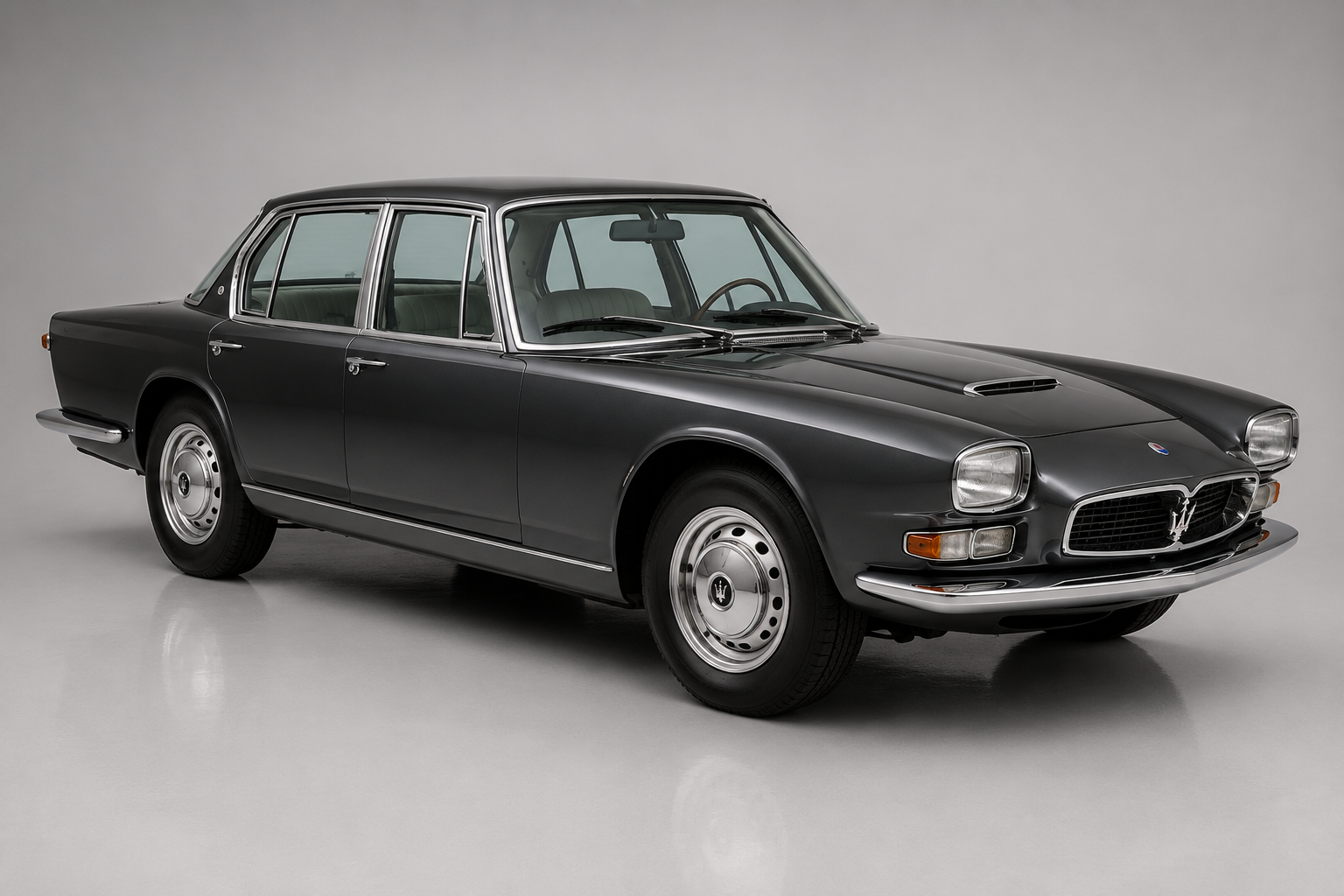
Maserati Quattroporte I
The world's template for the super-saloon — Frua design, Vignale build, Turin October–November 1963.
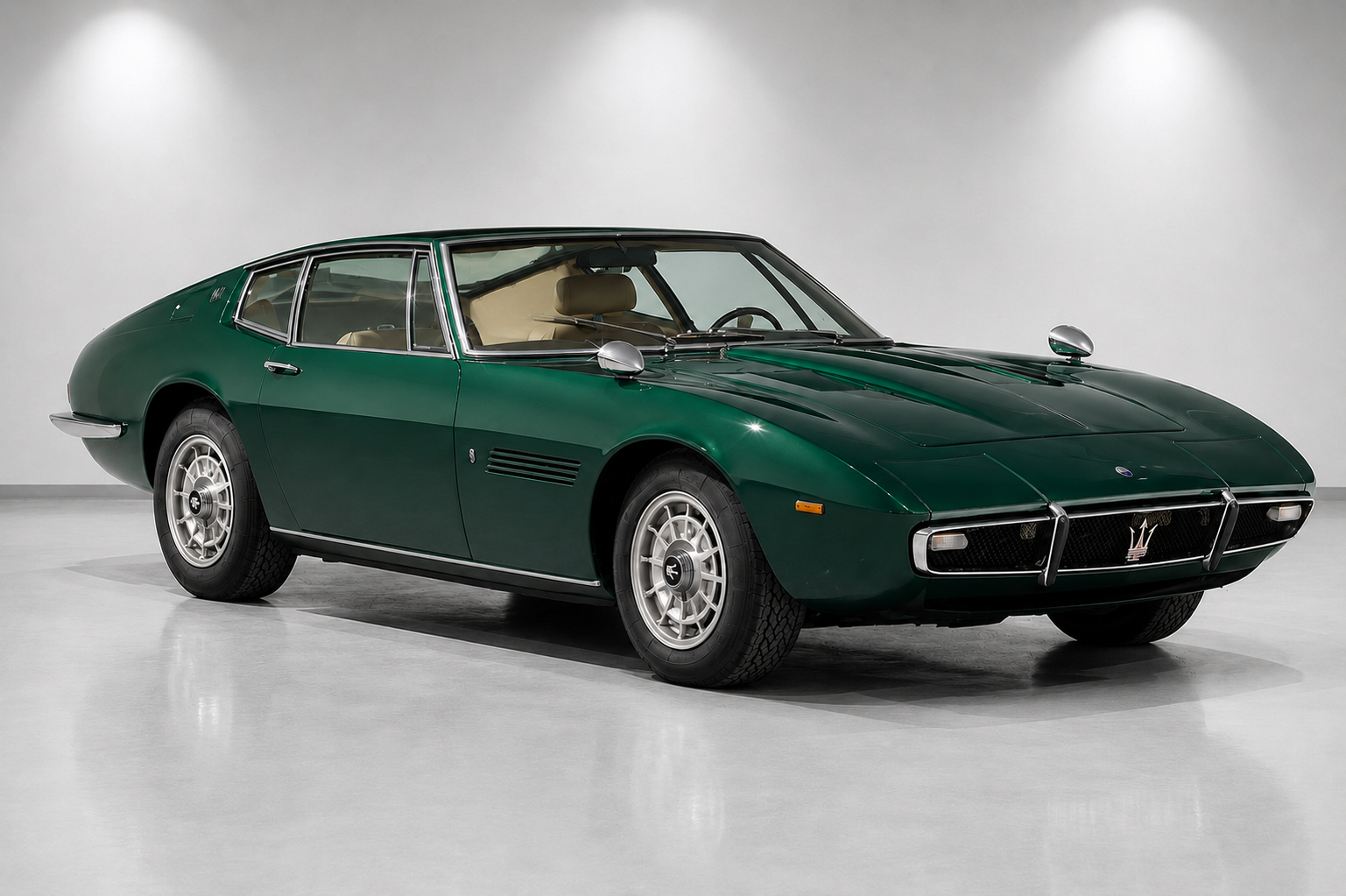
Maserati Ghibli (Tipo 115)
Giorgetto Giugiaro at Ghia — the long-bonneted Maserati V8 GT, in 4.7- and 4.9-litre SS form.
Mercedes-Benz
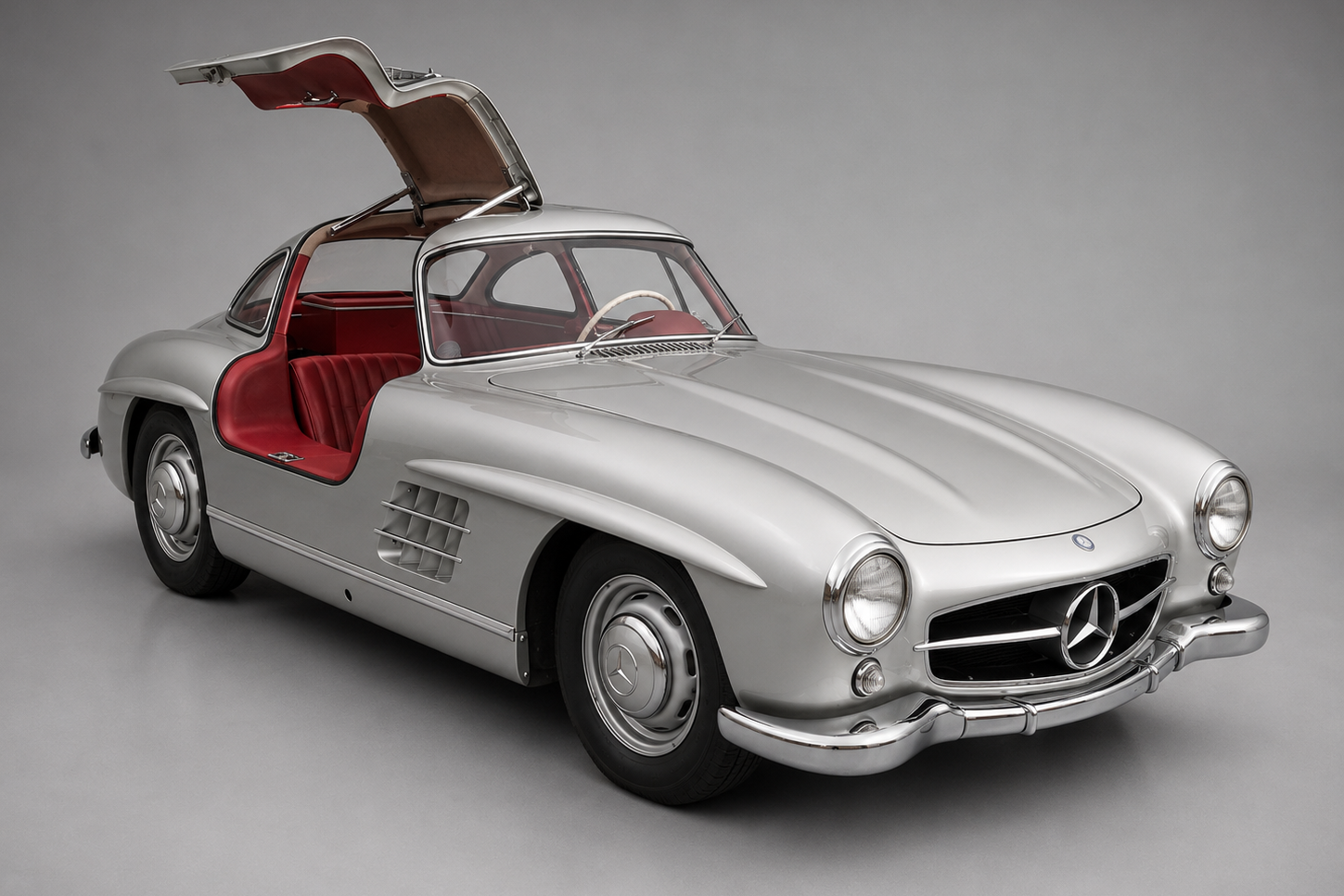
Mercedes-Benz 300 SL Gullwing
Mercedes-Benz's post-war icon in coupe form: gullwing doors, spaceframe chassis and permanent blue-chip status.
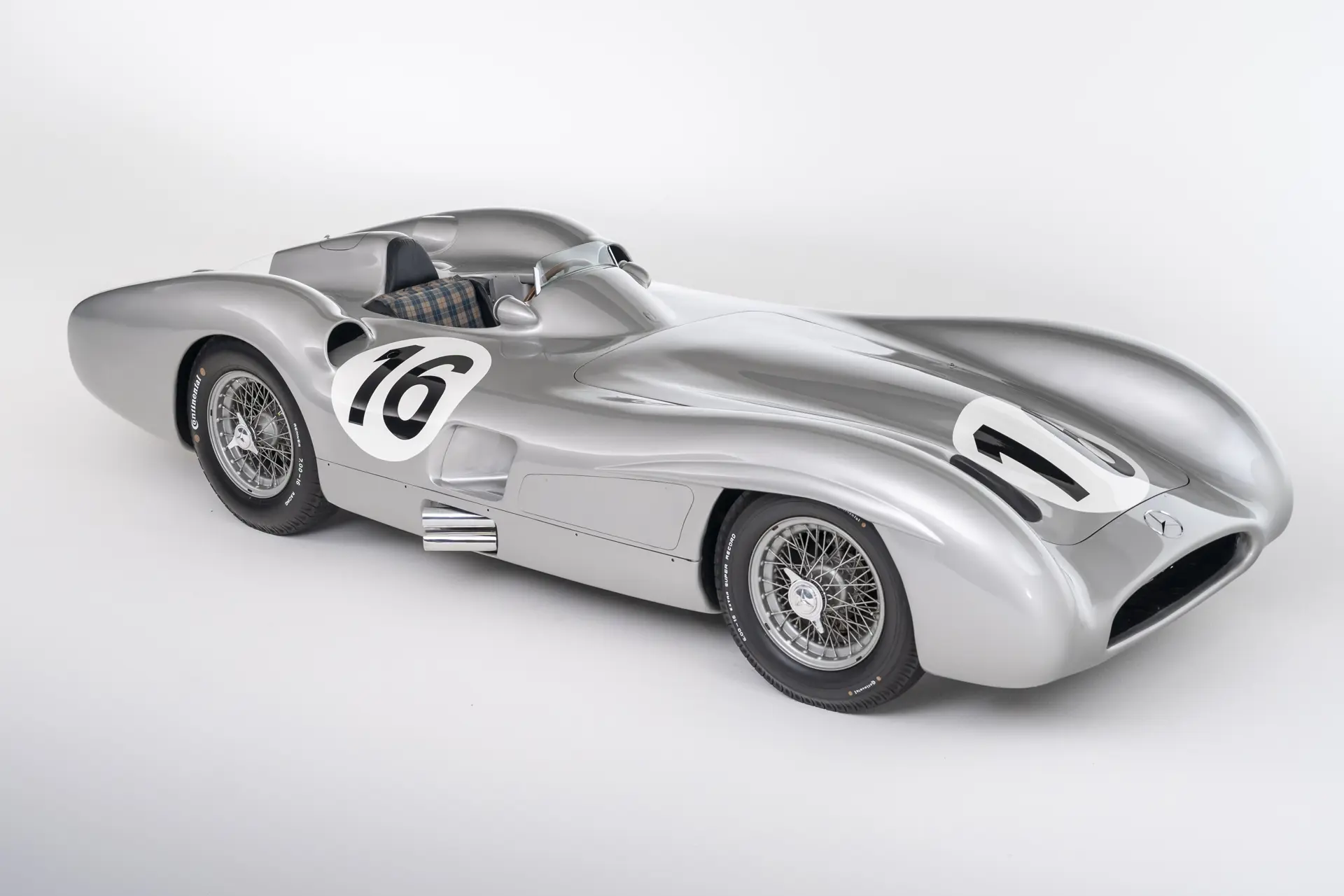
Mercedes-Benz W196
The 2.5-litre Silver Arrow — Fangio's 1954 and 1955 titles, Moss's first GP win at Aintree, 9 wins from 12 GPs.
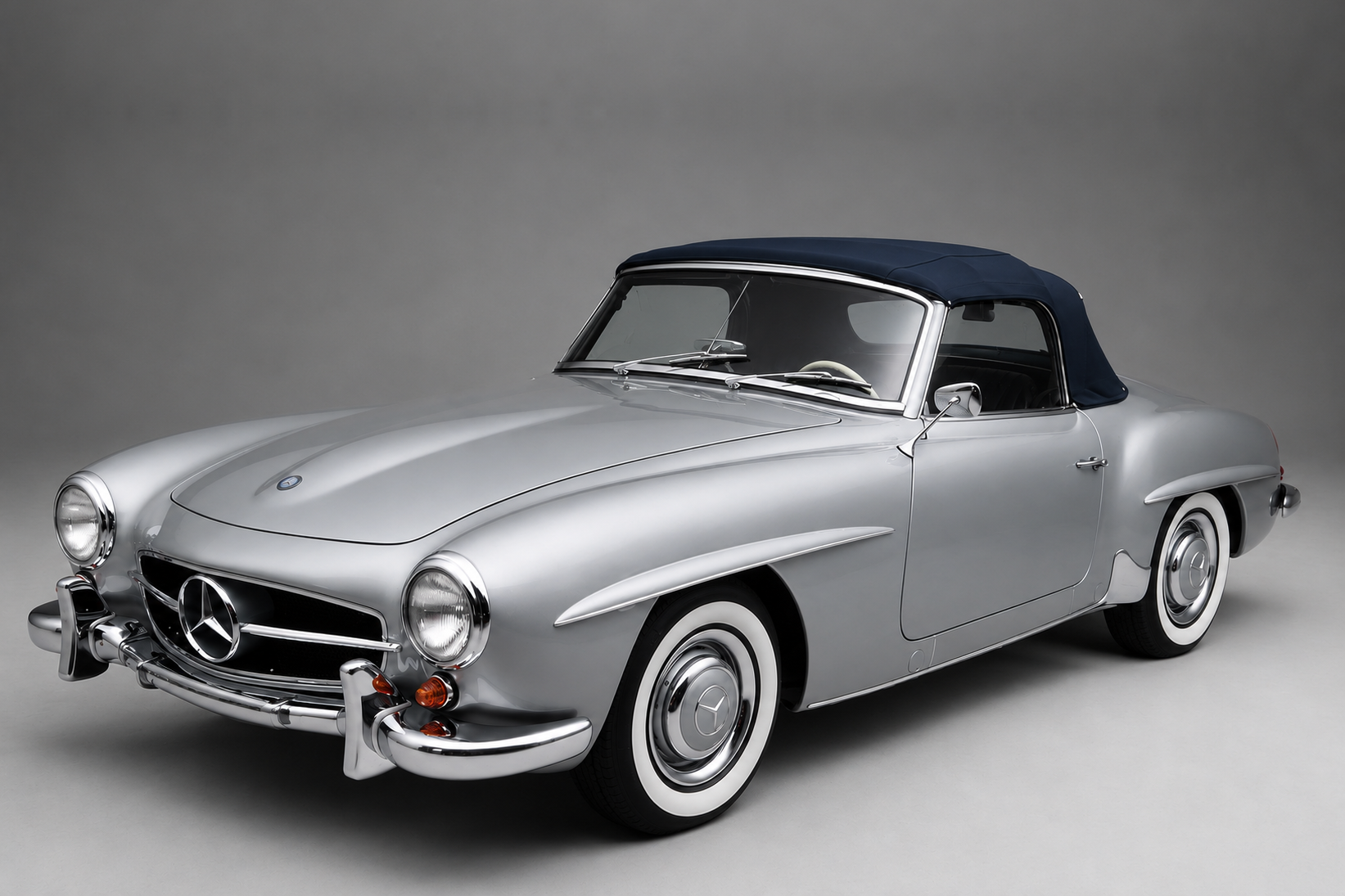
Mercedes-Benz 190 SL
Postwar Mercedes roadster styled in lockstep with the 300 SL — a 1.9-litre, four-cylinder elegance over performance.
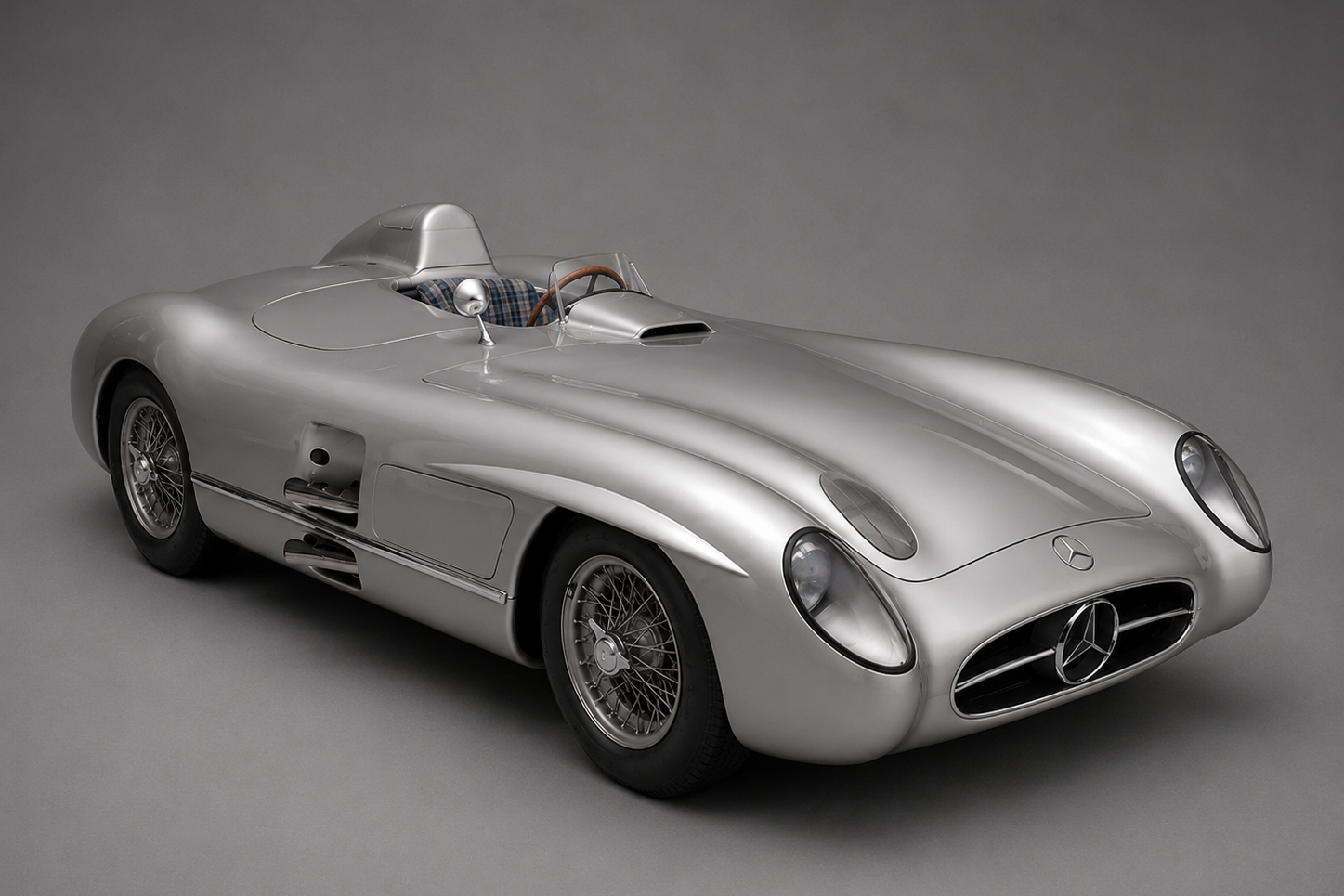
Mercedes-Benz 300 SLR
Mercedes-Benz's 1955 World Sportscar Championship car — 2.98-litre desmodromic straight-eight, ten built including the two Uhlenhaut Coupés.
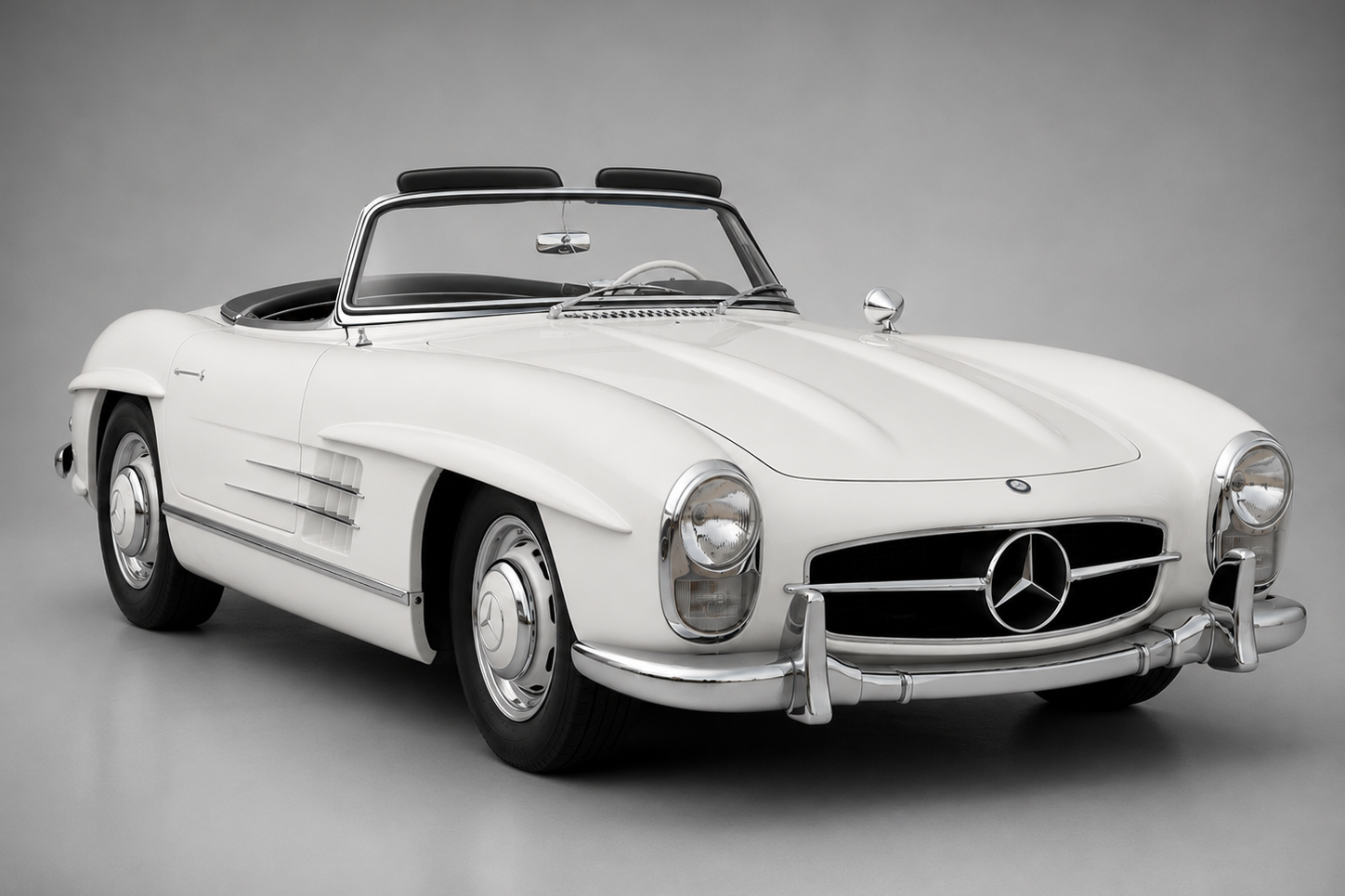
Mercedes-Benz 300 SL Roadster
The open, more usable W198: same fuel-injected straight-six, softer chassis, and a more forgiving ownership proposition than the Gullwing.
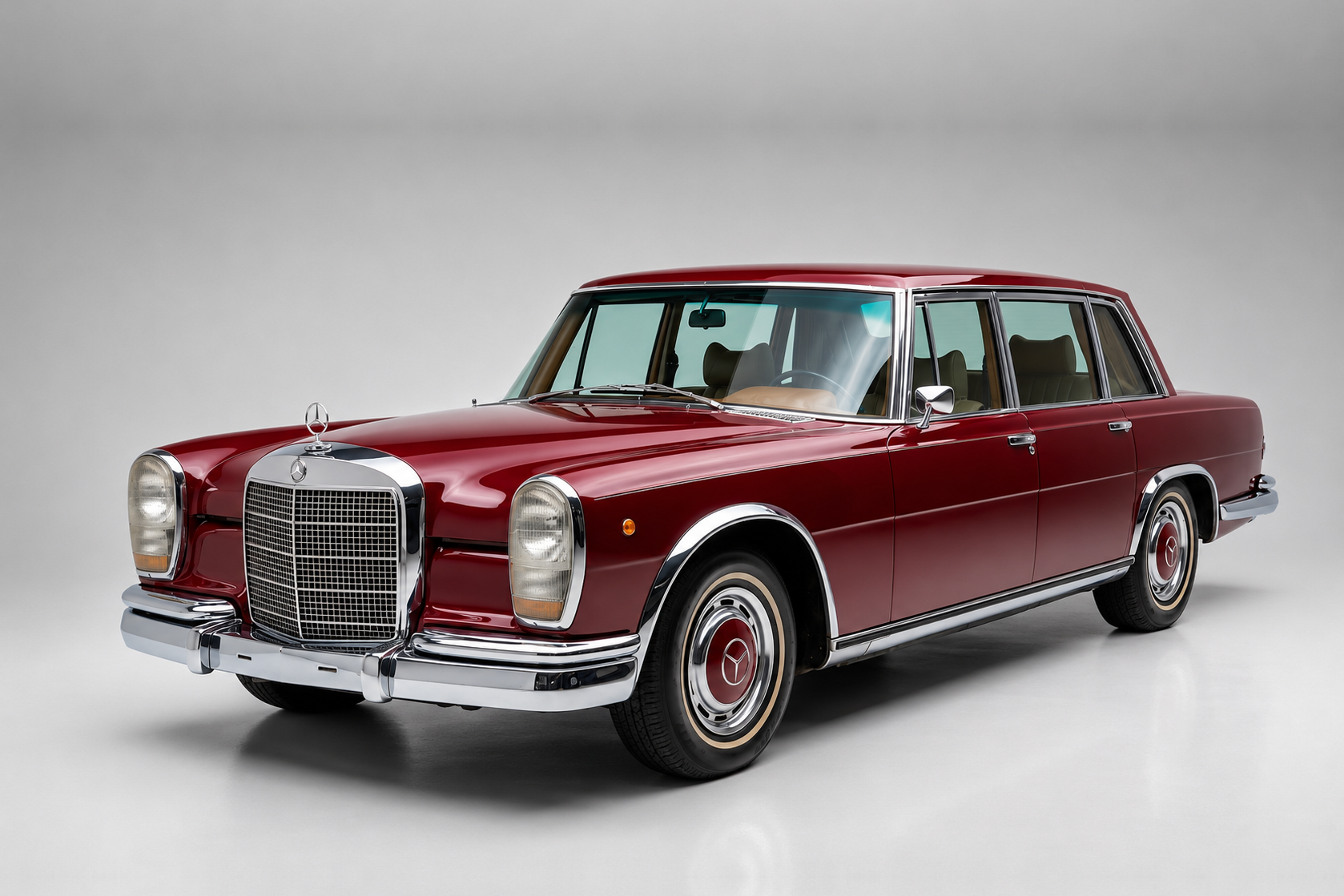
Mercedes-Benz 600 'Grosser' (W100)
The ultimate post-war state limousine — Geiger and Bracq's W100, the M100 6.3 V8 and hydraulic everything.
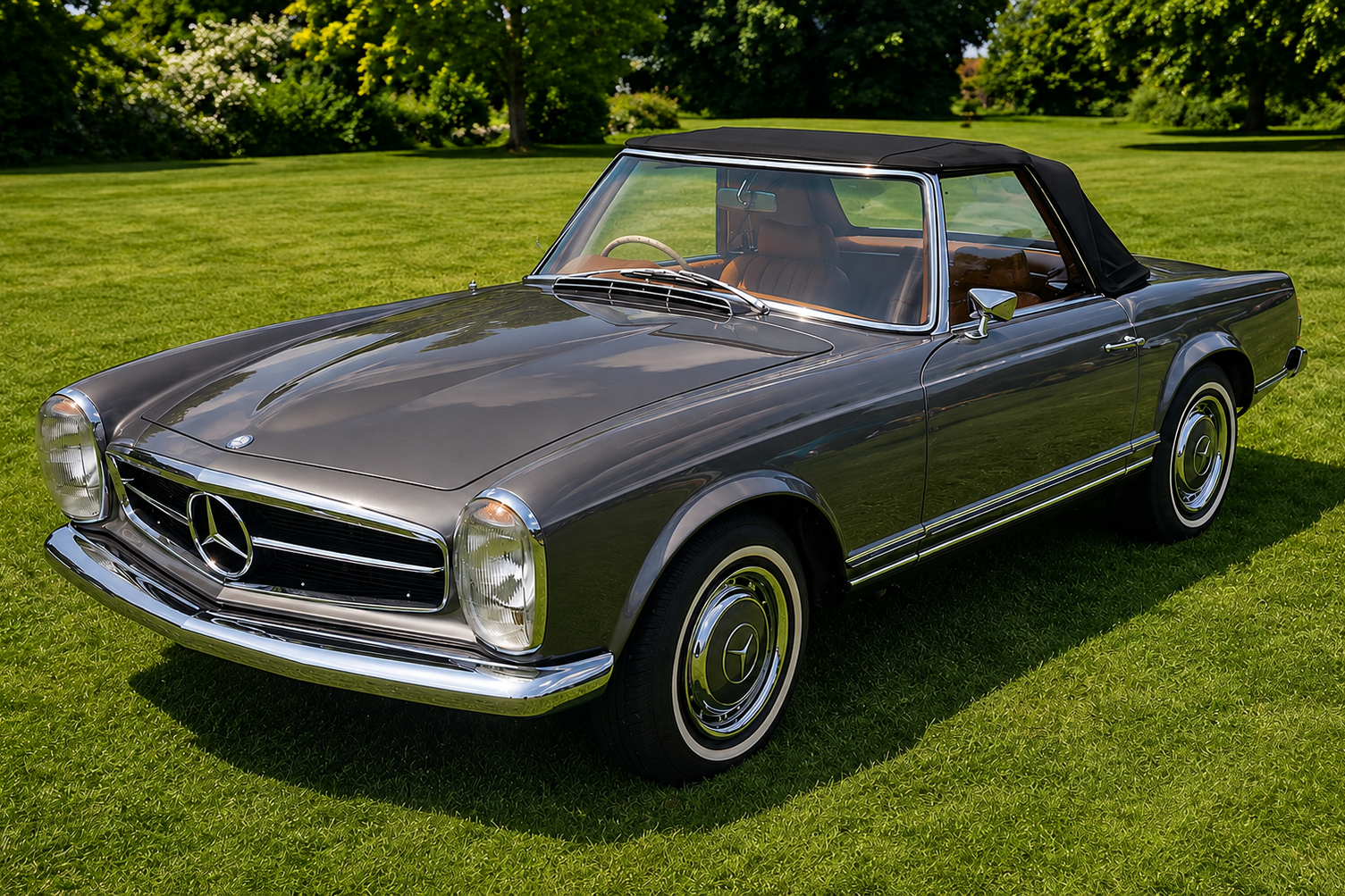
Mercedes-Benz Pagoda (W113) 230/250/280 SL
Paul Bracq's concave-roof masterpiece — the elegantly proportioned SL of the 1960s, in three displacements.
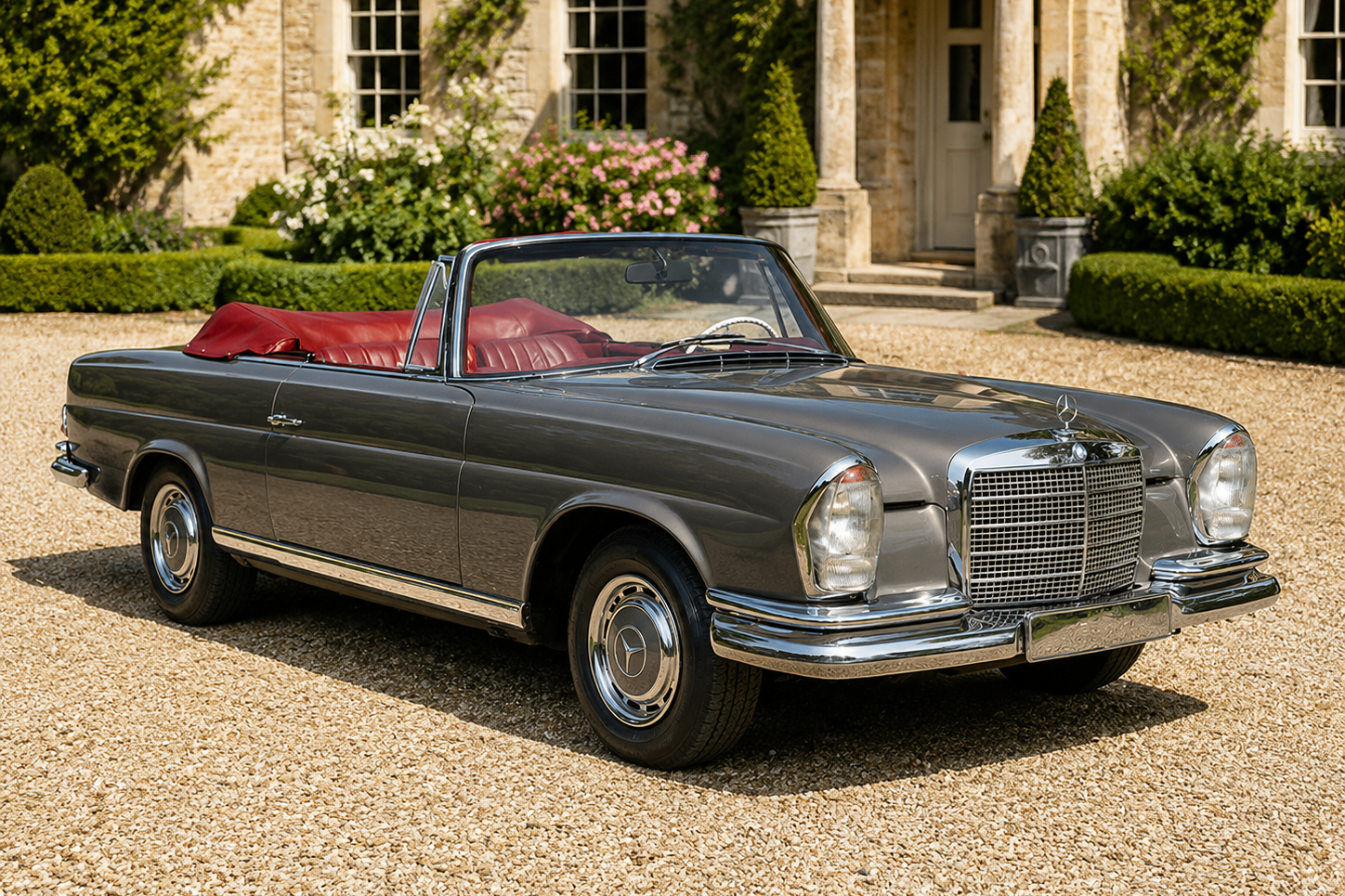
Mercedes-Benz 280 SE 3.5 Cabriolet
Mercedes-Benz's last truly hand-built cabriolet — the 1969–1971 W111 with the new M116 3.5-litre V8, of which only 1,232 were completed across three years (RM Sotheby's Monterey 2024 catalogue).
MG
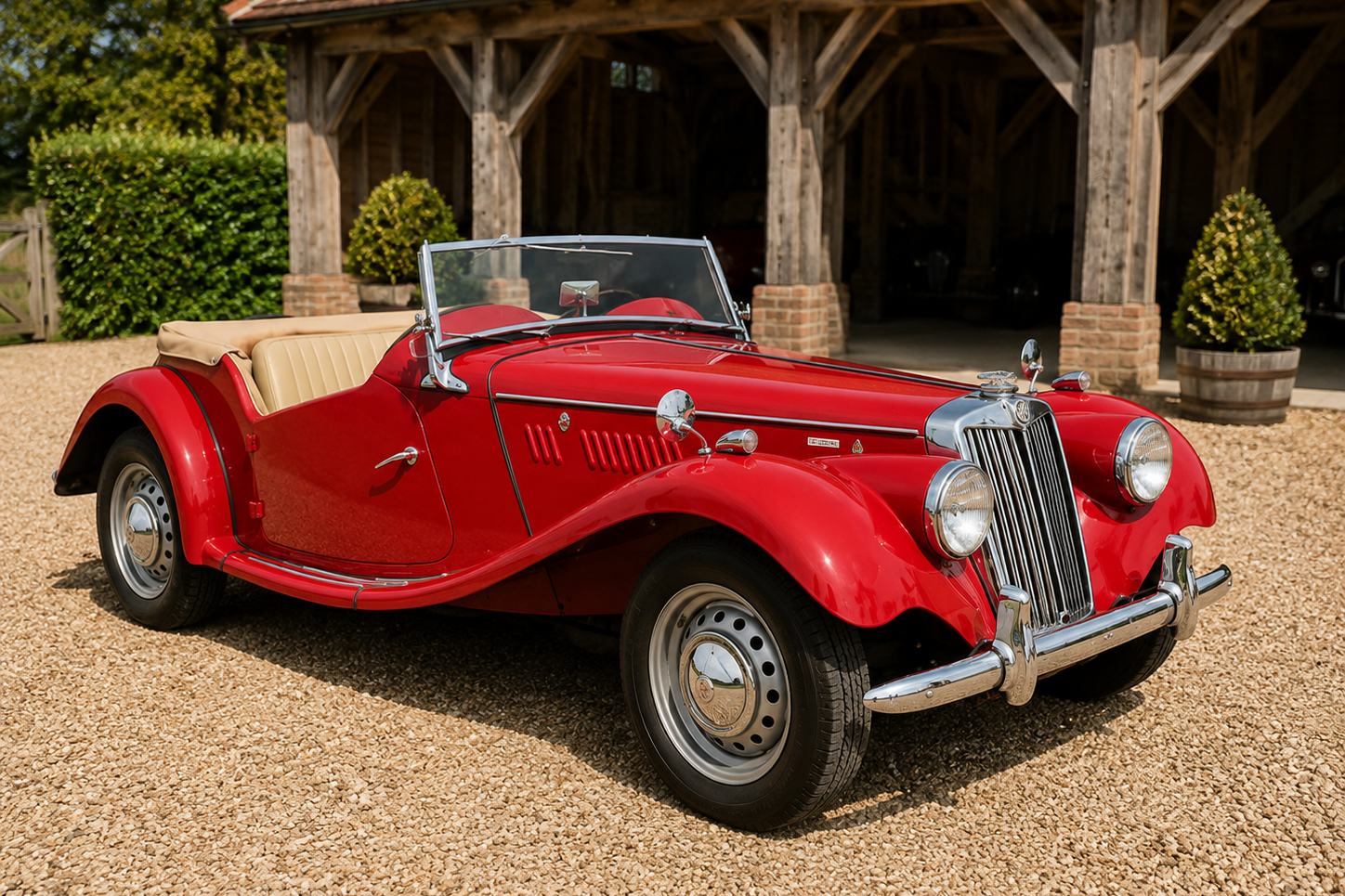
MG TF
The last of the T-Series MGs — a hand-built, ash-framed roadster whose sloping radiator and faired-in headlights bridged pre-war MG to the MGA.
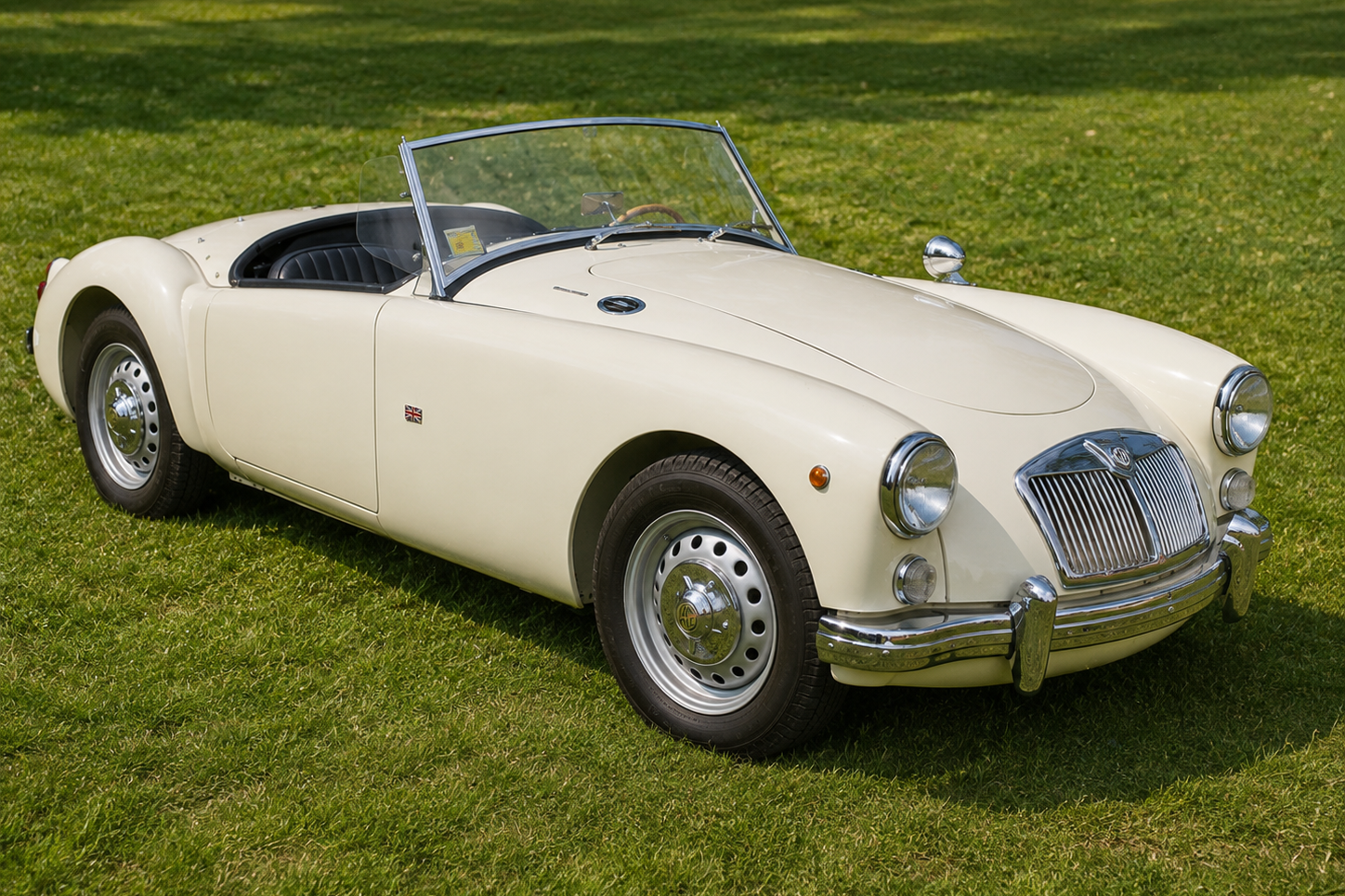
MG MGA
MG's first modern post-war sports car — a clean-sheet, full-envelope roadster and coupé whose sweetest collector stories are the Twin Cam and Mk II Deluxe.
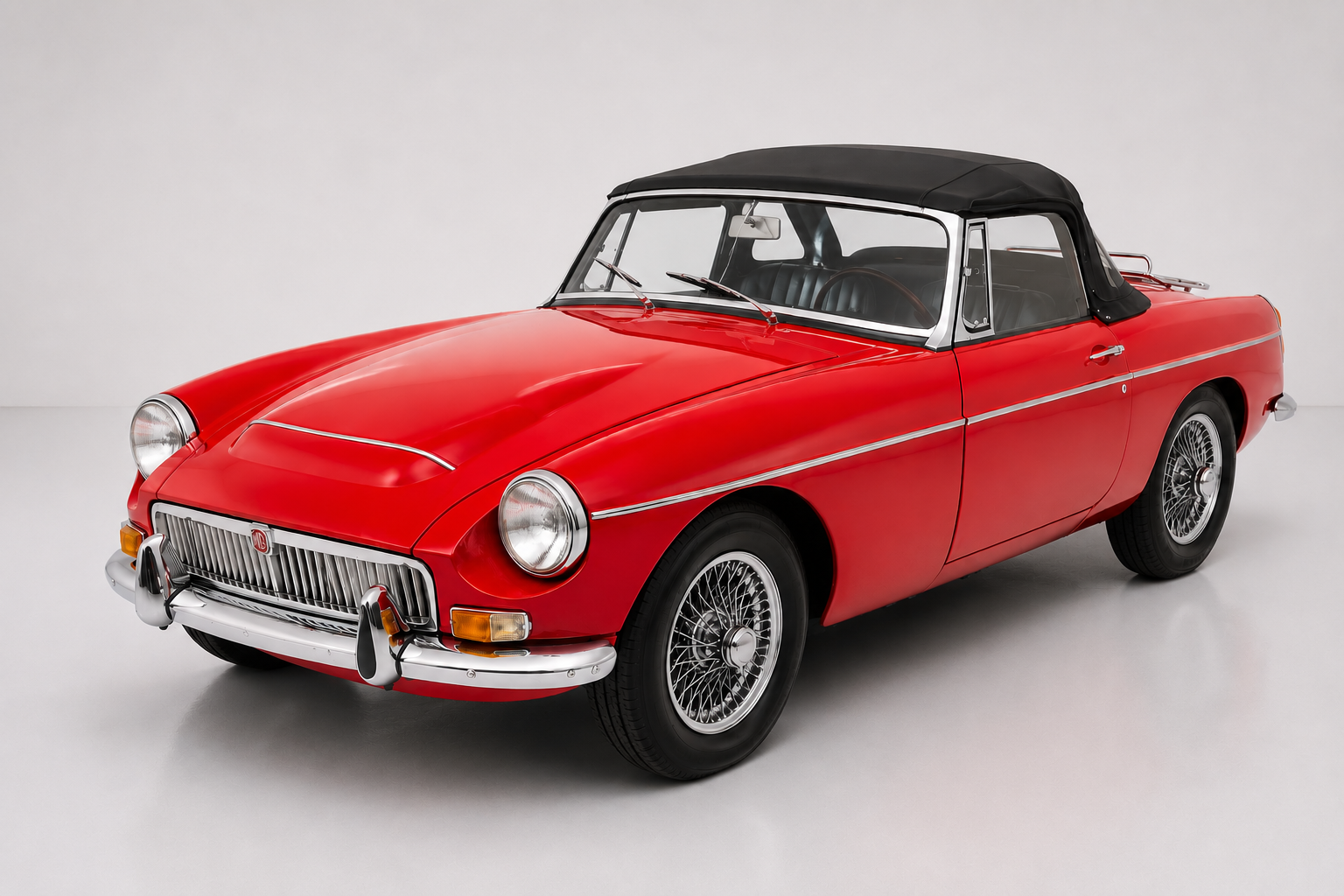
MG MGC (Roadster & GT)
ADO52 — the six-cylinder MGB, unveiled at the 1967 Earls Court Motor Show as the most powerful MG sports car yet built.
Porsche
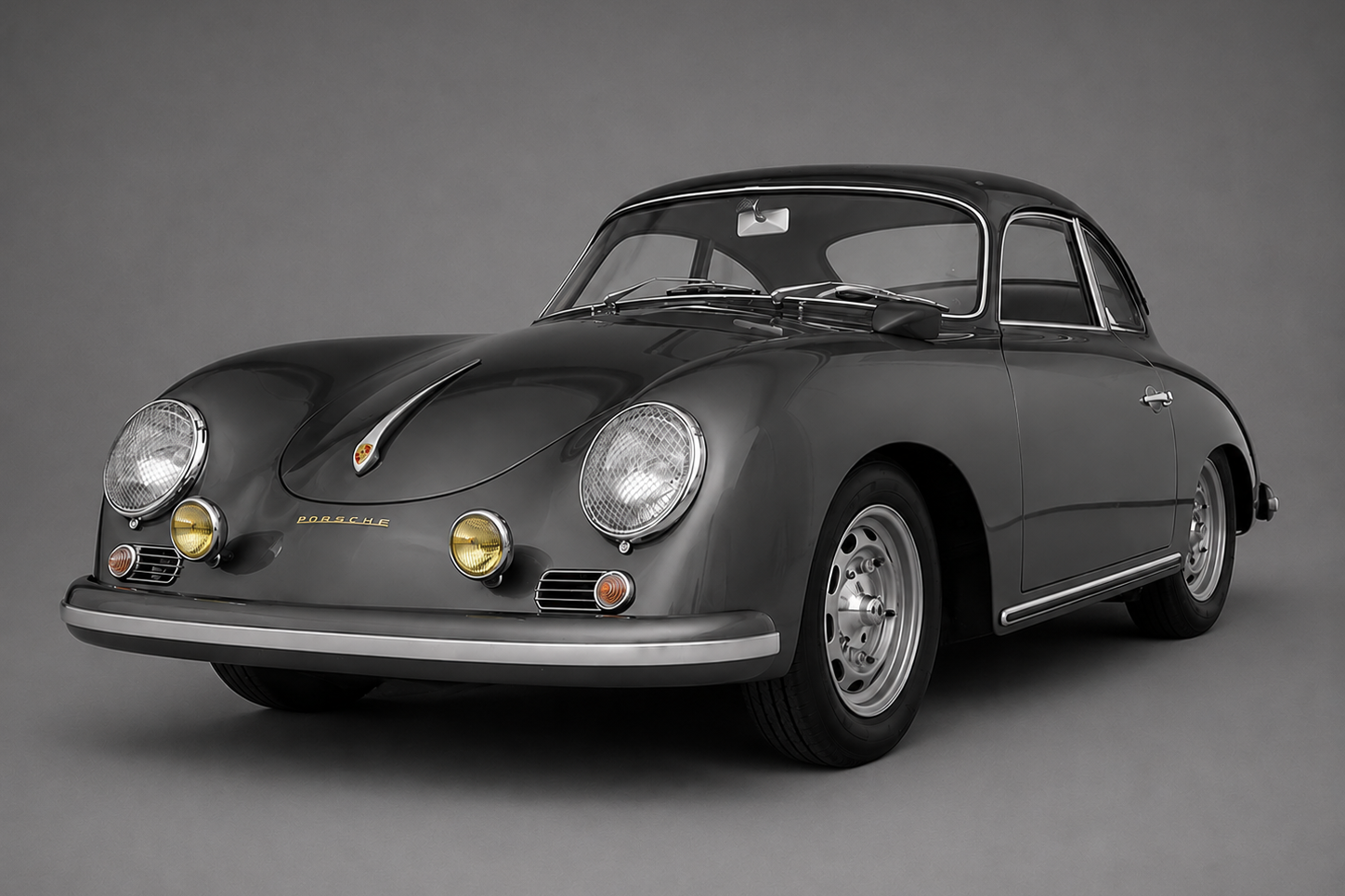
Porsche 356
The first Porsche road car — the design and engineering blueprint for every 911 that followed.
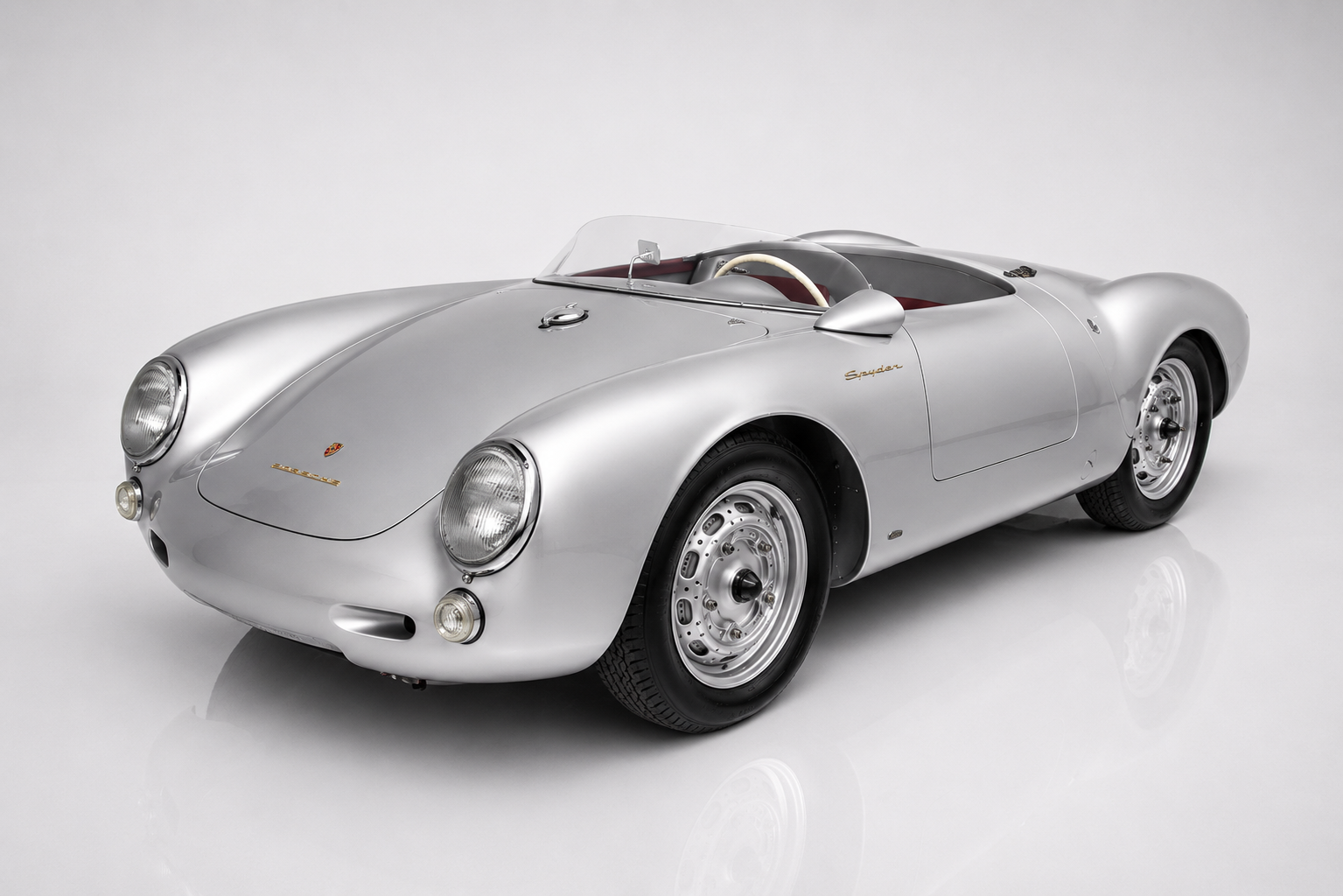
Porsche 550 Spyder
Porsche's first purpose-built racer — the 'Giant Killer', and the car James Dean called Little Bastard.
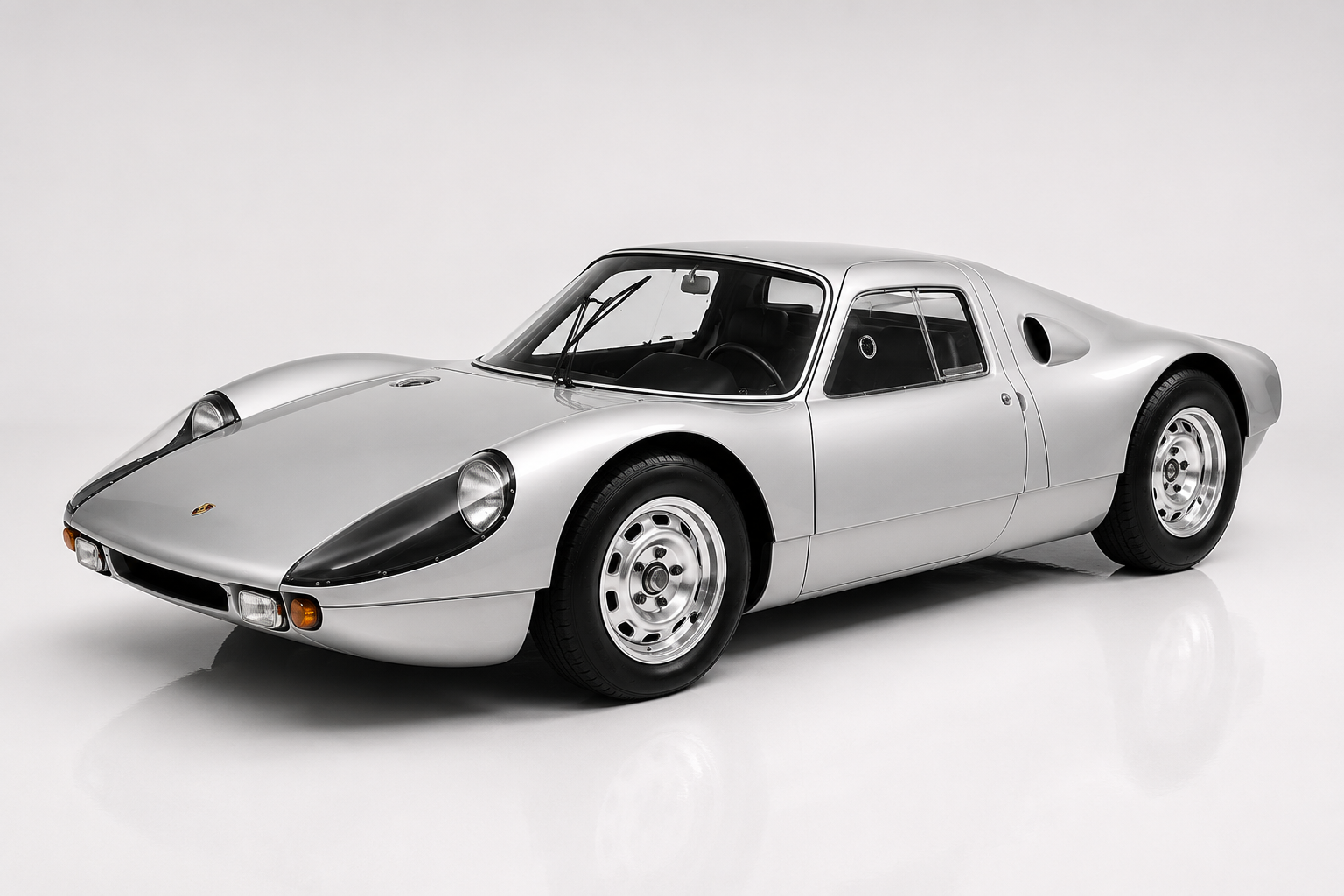
Porsche 904 Carrera GTS
'Giant Killer' — Porsche's first fibreglass road-racer and Butzi Porsche's masterpiece.
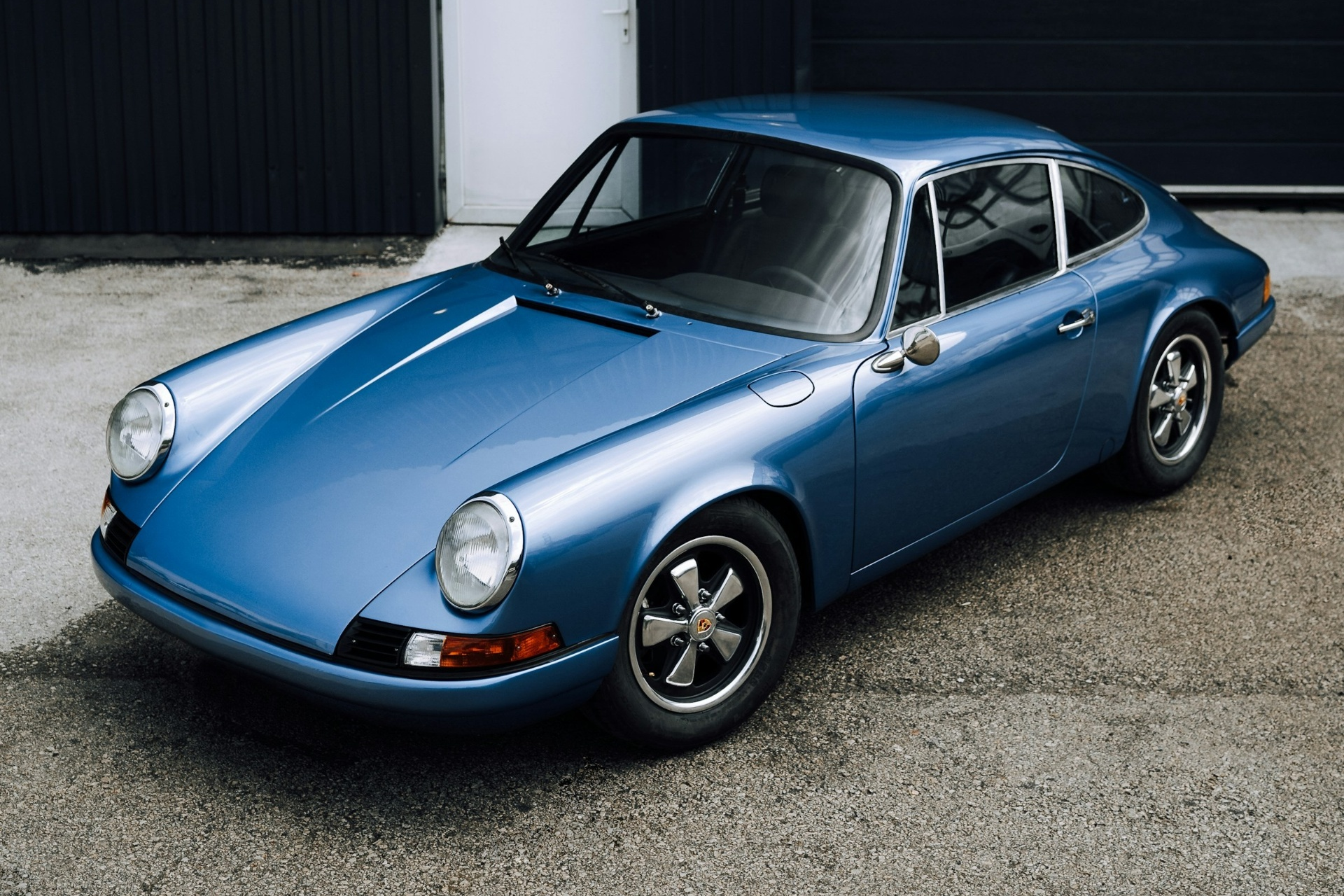
Porsche 911 (Classic Long-Hood)
The original air-cooled 911 — the long-hood, pre-impact-bumper foundation of every later Porsche sports car.
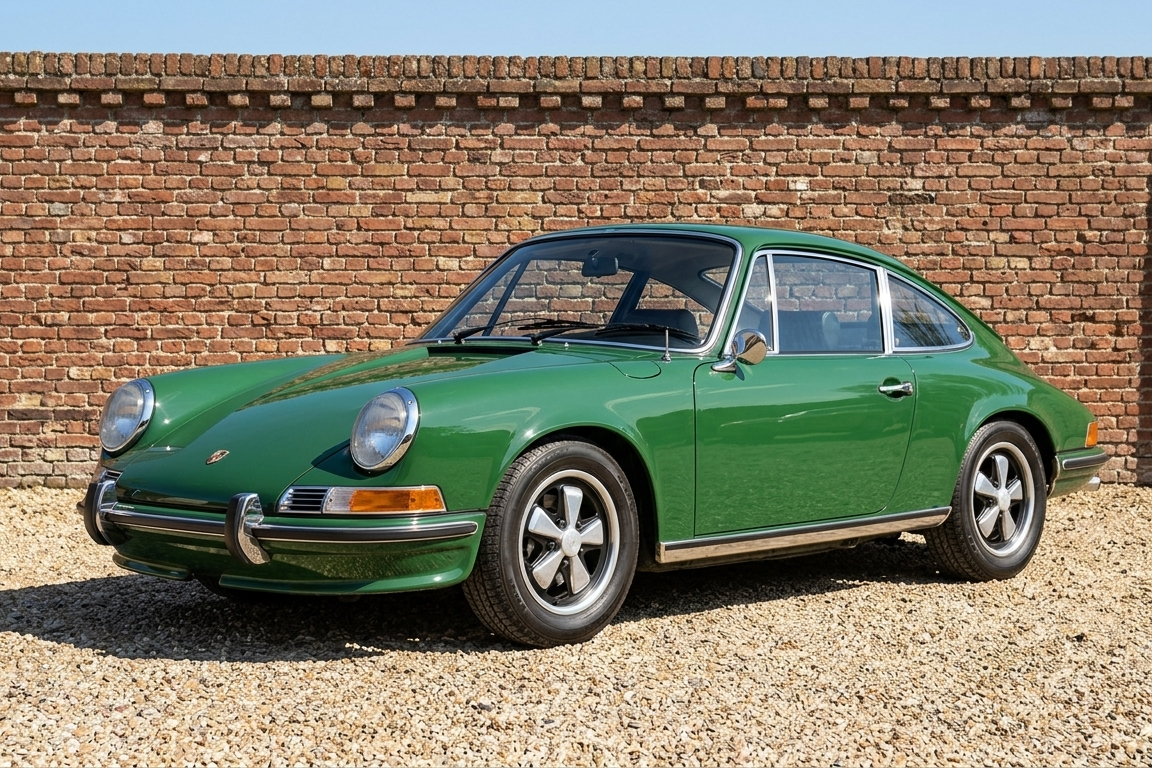
Porsche 912
The four-cylinder 911 — 356 heart, early 911 body, and the balanced-handling secret of the air-cooled world.
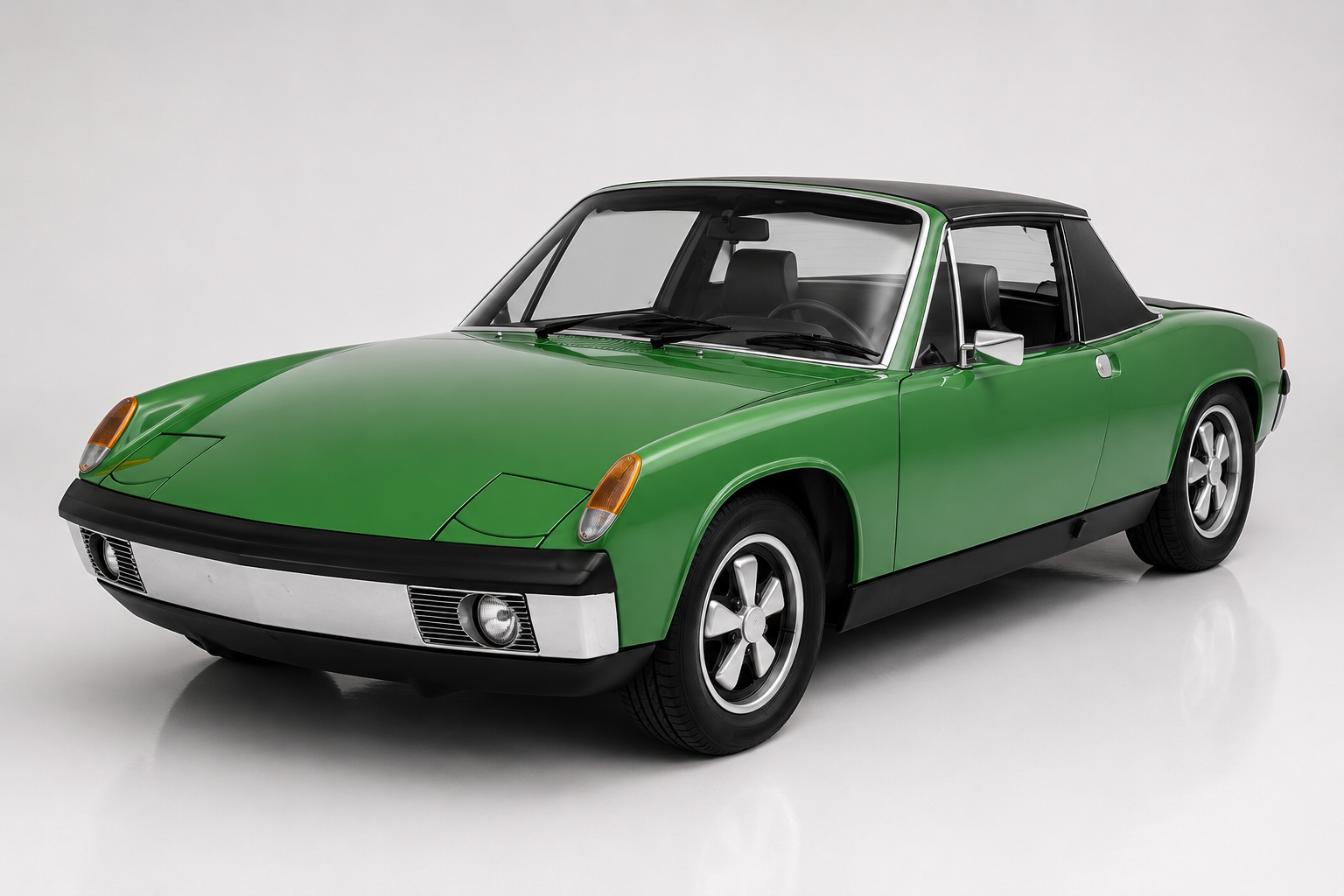
Porsche 914
Porsche's first mid-engine road car — long dismissed as 'the VW-Porsche', now a respected classic.
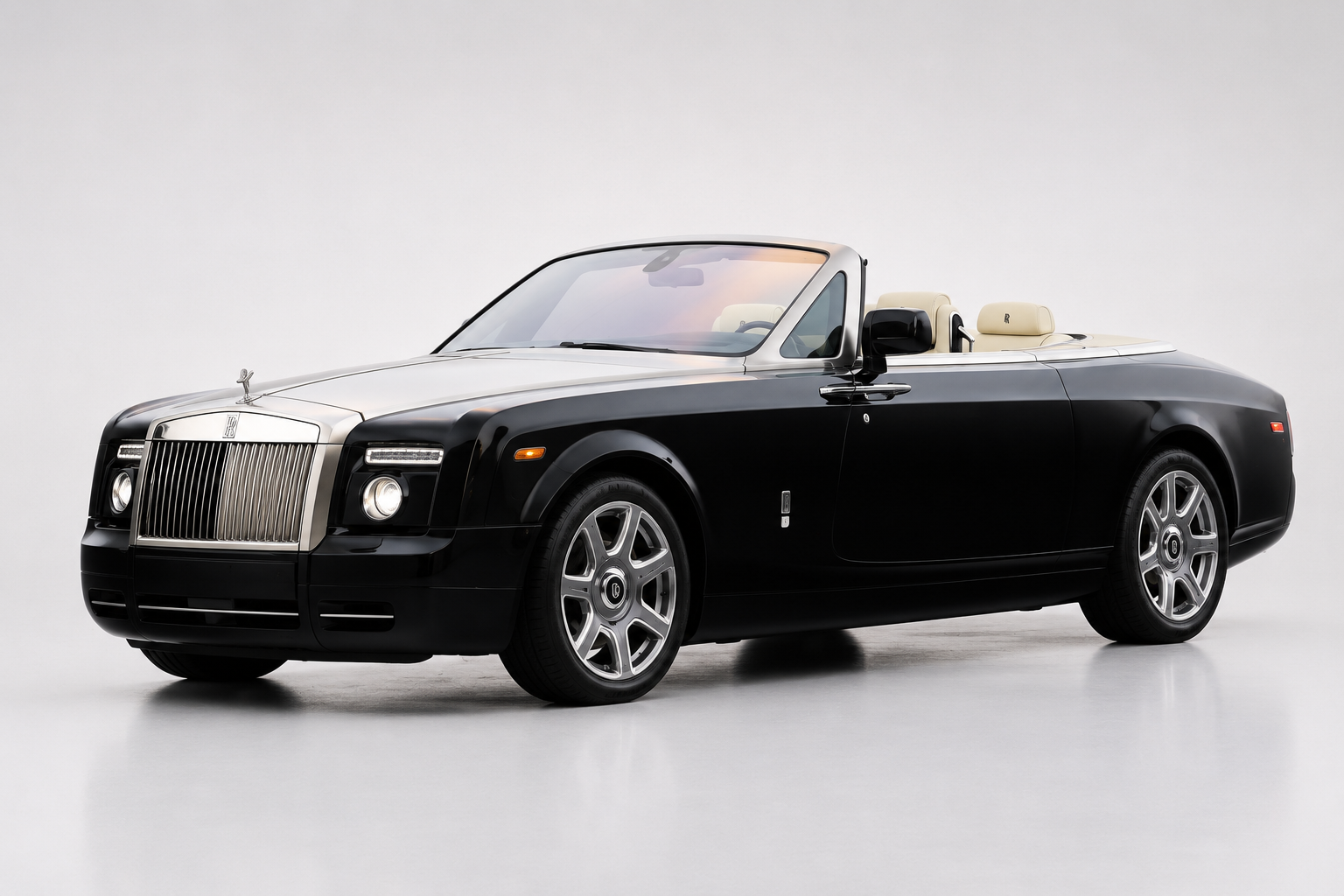
Shelby
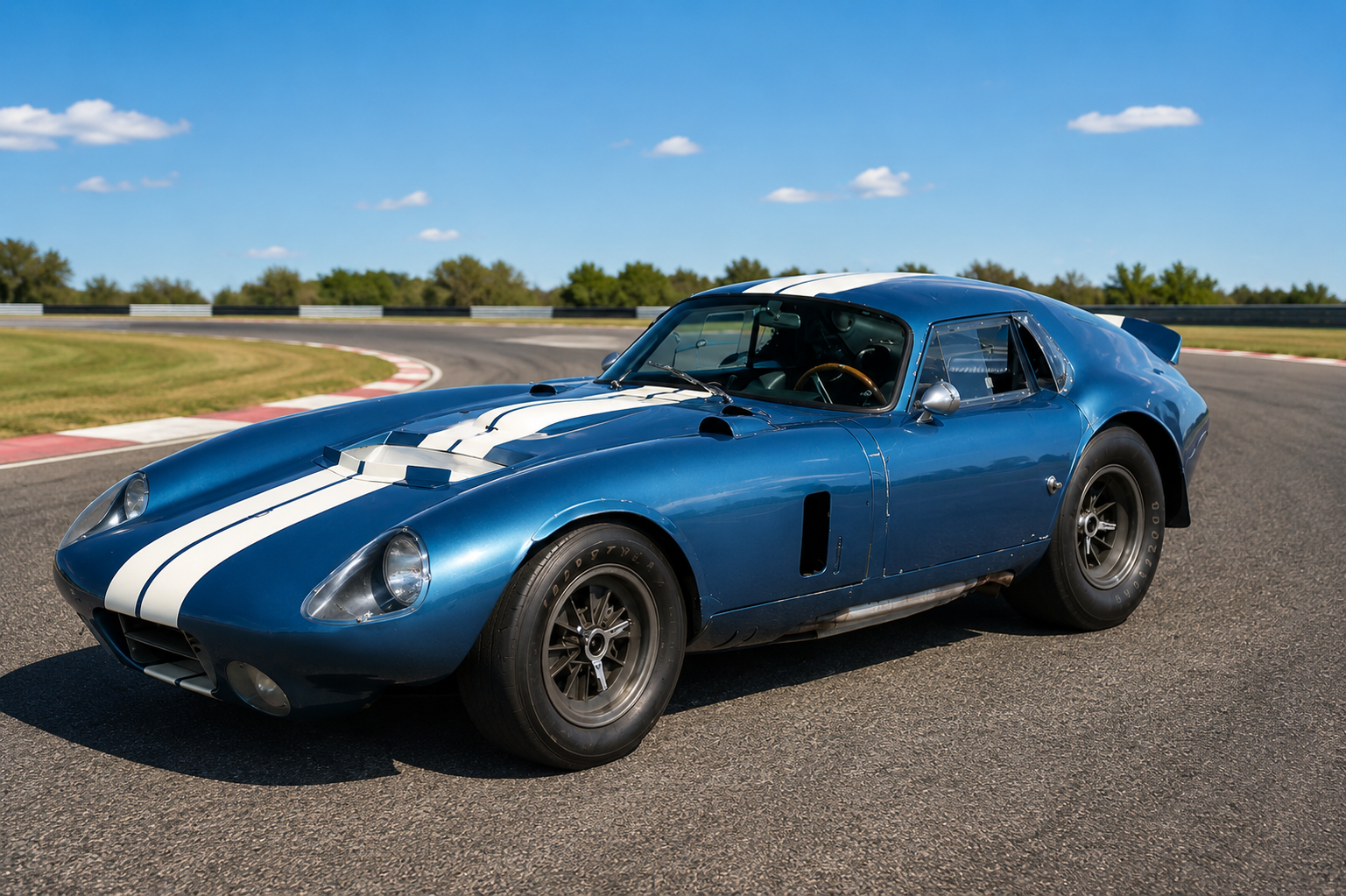
Shelby Daytona Coupe
Six cars, one Peter Brock silhouette, and the first FIA World Sportscar Championship GT class ever won by an American manufacturer.
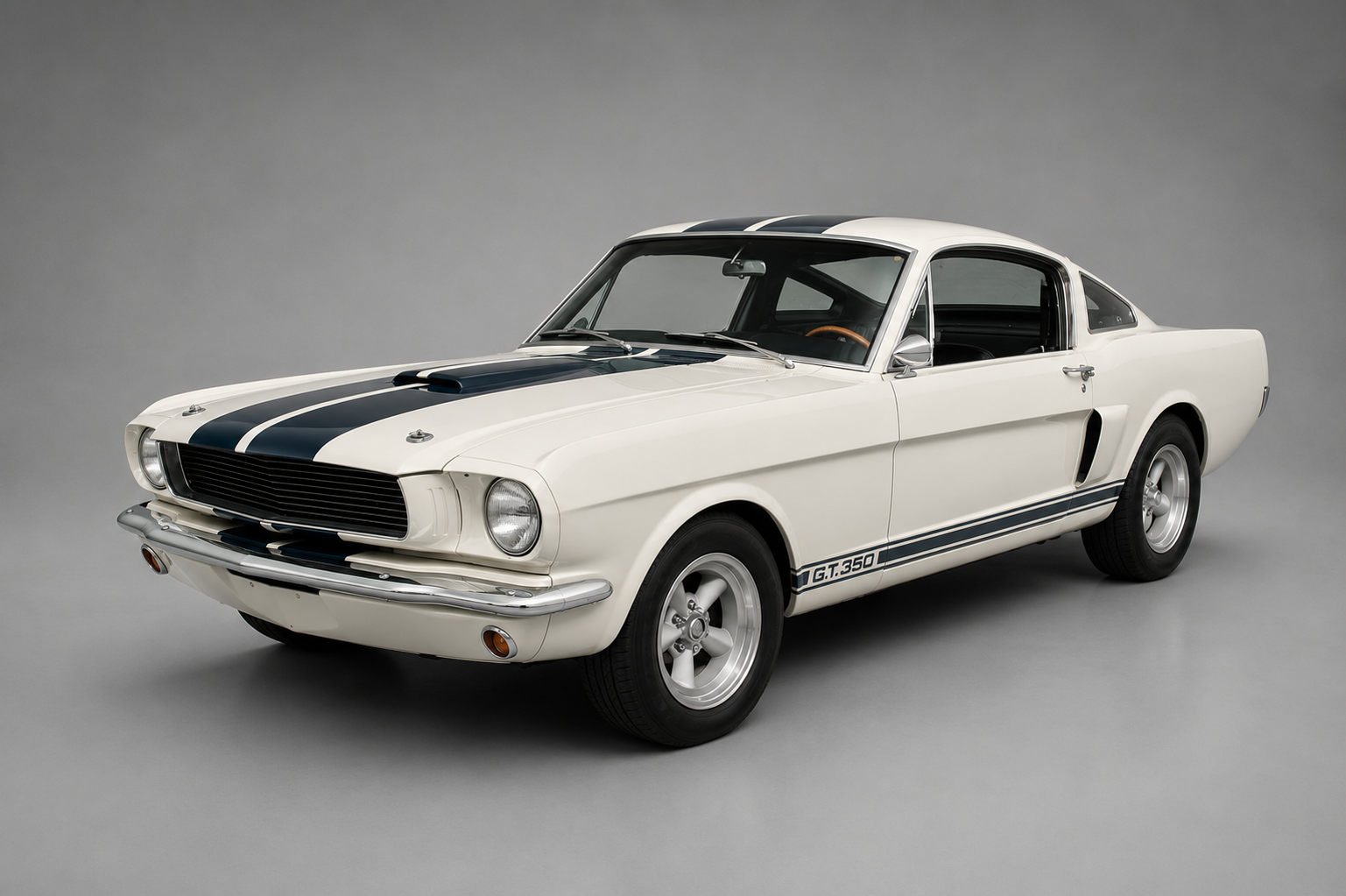
Shelby GT350
The canonical Shelby Mustang — from the 1965 SCCA B-Production R-model to the Ford-built cars of 1969–70.
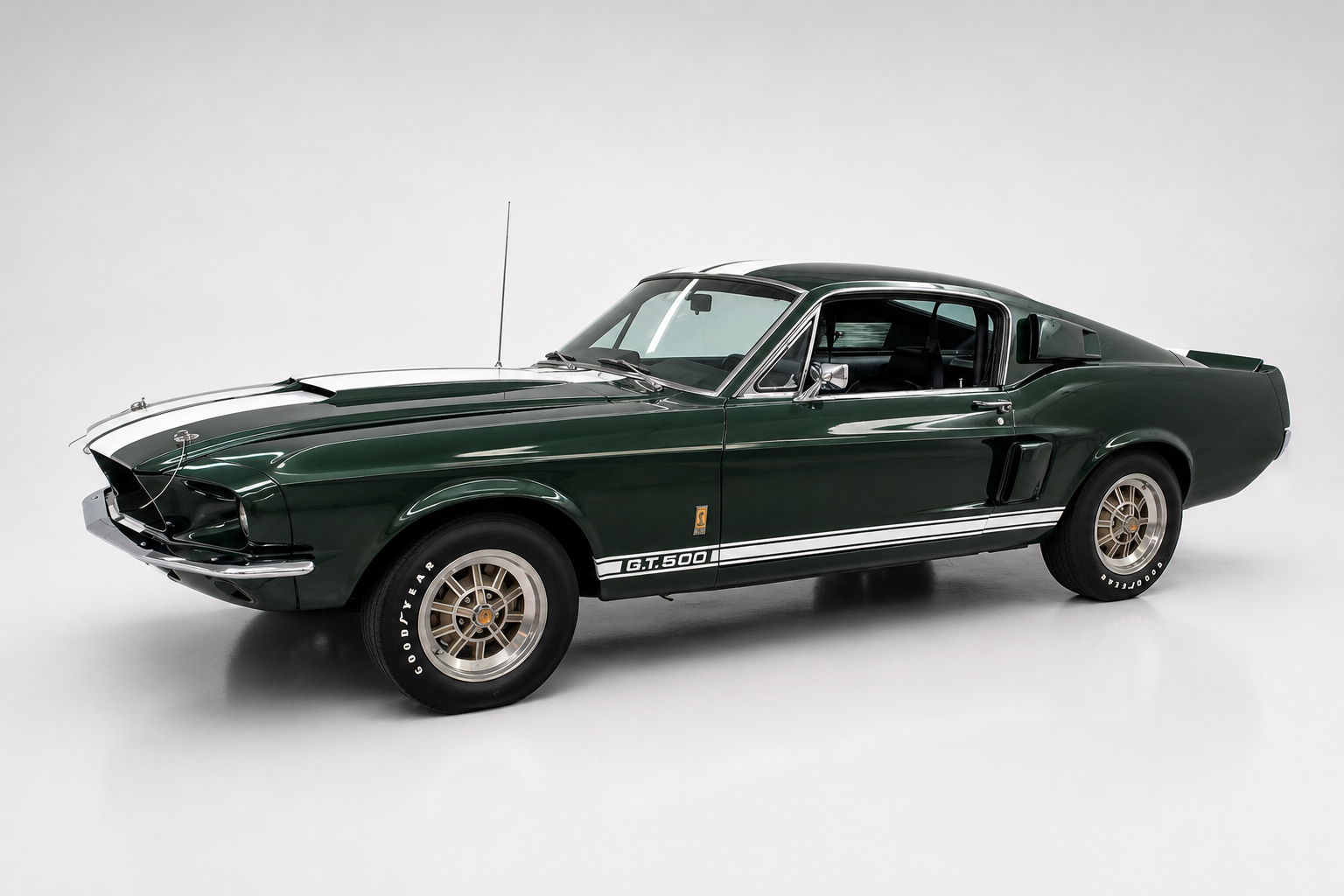
Shelby GT500
Carroll Shelby's big-block Mustang across its full 1967–1970 run — from the launch 428 Police Interceptor cars to the 428 Cobra Jet KR and the restyled 1969–70 SportsRoof.